As I note at the start of each of these "Melting Pot" posts, I've written multiple times about the subject coin(s) - this time the Landing of the Pilgrims Tercentenary Half Dollars - and prefer not to repeat too much of those previous posts here, so check out the links below for my previous posts on the topic coin(s) which provide more detail about the anniversary, the coins themselves and the involvement of the US Congress that brought about their creation.The Landing of the Pilgrims coin program was a two-year program, with its second year producing the "Small Date" version of the half dollar; the coins were struck each year at Philadelphia.
Public Law 66-203 (May 12, 1920) authorized the striking of up to 300,000 silver half dollars to help commemorate the 300th anniversary of the 1620 landing of English settlers in present-day Massachusetts.
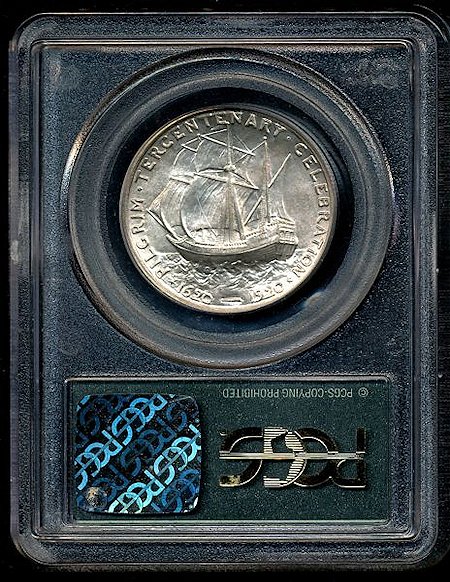
The US Mint struck 200,000 of the authorized coins in Philadelphia during October 1920. The coins soon thereafter went on sale at banks throughout Boston and Plymouth - primary sites of the anniversary celebrations - soon after; mail orders were also filled (in plain packaging). Short-term sales of the "1620-1920" dual-dated coin were reasonable - >125,000 - but did not exhaust the entire 200,000 coins of the first batch.
As it geared up for its planned 1921 celebration events, the Tercentenary Commission requested that the 100,000 coins still available from its authorization be struck and dated "1921" to distinguish them from the first-year coins and to help generate additional sales.
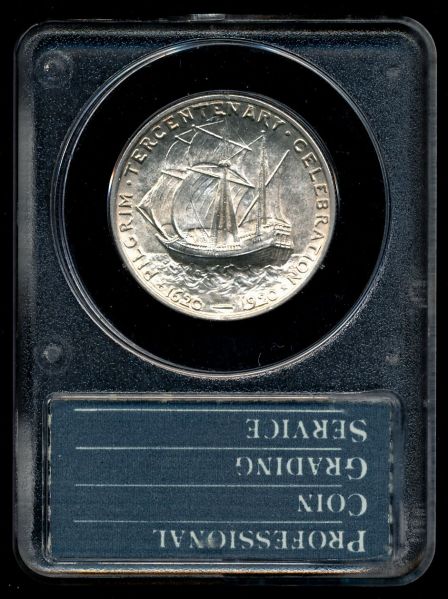
New legislation was not needed, however, as no design or specification changes were requested for the coin - just the balance of the original authorization. The Mint struck the coins as requested, and added a small "1921" to the obverse of the coin (leaving the "1620-1920" dual anniversary dates within the reverse design untouched); it was standard practice for the Mint to indicate the year of striking on the coins it produced.
Sales of the new coin, however, were disappointing. It appears that the bulk of the souvenir-seeking general public were content with their "1920" coin and, so, sales of the 1921-dated coins were primarily made to coin collectors. In the end, 48,000 1920-dated and 80,000 of the 1921-dated coins were returned to the Mint to be melted - in total, 128,000 of the 300,000 coins struck (~42.7%) were returned.
So, the net distribution for the 1920-date coin was ~152,000, and for the 1921-dated coin ~20,000. This net mintage differential between the two years helps explain the market premium attached to 1921-dated coins.
ICYWW: Both years of the coin were sold for $1.00 each.
1920 Landing of the Pilgrims Tercentenary Half Dollar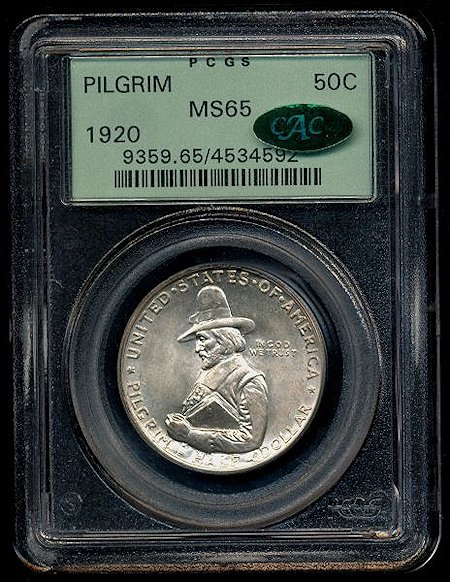
 1921 Landing of the Pilgrims Tercentenary Half Dollar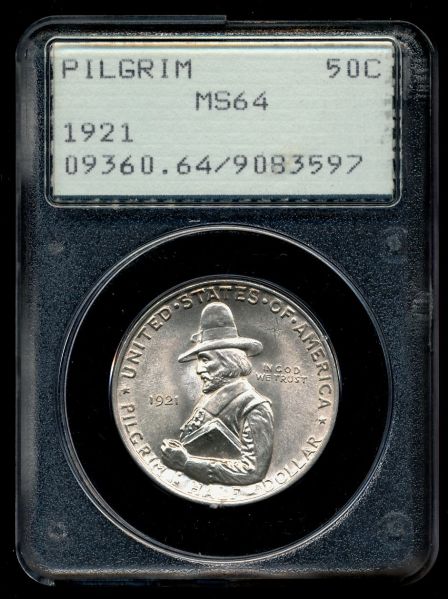
For other of my posts about commemorative coins and medals, including more on the "Pilgrim" half dollars, see:
Commems Collection.For a list of posts specifically about the Design Details of the 1920-21 Landing of the Pilgrims Tercentenary Half Dollars, see:
-
Design Discussions - 1920-21 Landing of the Pilgrims Tercentenary 









 Posted 06/10/2023 09:52 am


 Uncirculated American Silver Eagles


