Wrapping things up here in Part III with a discussion of the US Mint, filling coin orders and helping ensure a fair distribution.
Previous installments of this series can be found here:
- Part I
- Part IIWith its late February 1937 design approval, the Commission of Fine Arts (CFA) put the US Mint "on the clock" with relatively little time left. The Act that authorized the 1938 New Rochelle Half Dollar stipulated an expiration of coining authority of one year after its enactment. The bill was signed into law on May 5, 1936, so only about two and one-half months remained for the US Mint to get the coin on its production schedule and strike 25,000 coins.
The Mint jumped into action, the first step was preparing the necessary coinage dies; the Coin Committee was charged $300 for the preparation and the Treasury required payment in advance - payment was made on March 2, 1937.
The coins were struck in early April 1937 and delivered to the Coin Committee at its temporary offices on the second floor of the First National Bank of New Rochelle. The Coin Committee had, once again, to pay in advance - this time $12,500 (face value) for the coins. Fortunately, the Committee had received many orders for its coin and had the funds on hand to pay the Treasury/Mint.
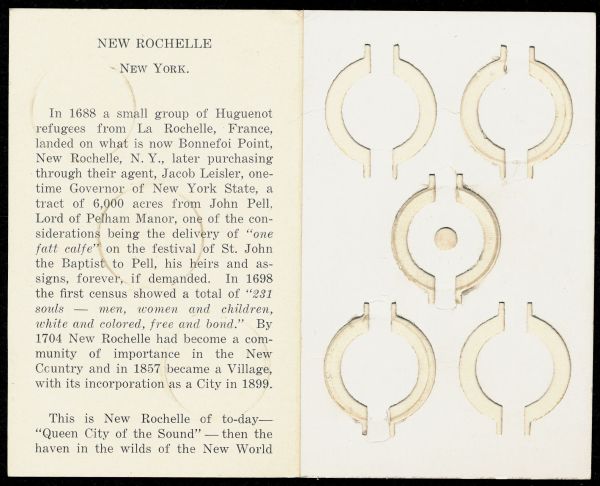
The Coin Committee had printed one-, two-, five- and ten-coin holders/mailers that included brief notes about New Rochelle's history and the coin.
1938 New Rochelle, NY 250th Anniversary -- Original Five-Coin Holder, Exterior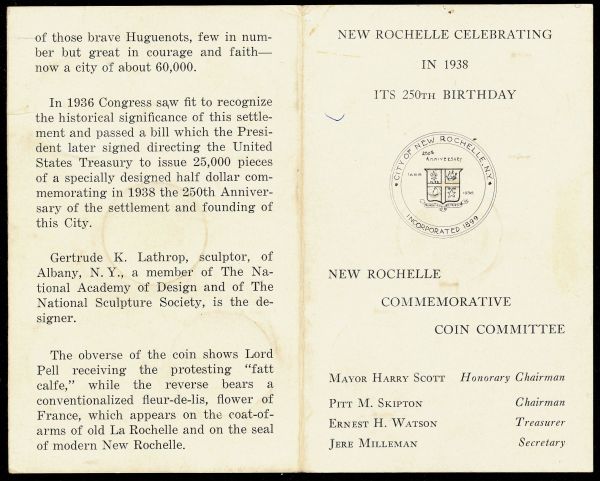 1938 New Rochelle, NY 250th Anniversary -- Original Five-Coin Holder, Interior
 1938 New Rochelle, NY 250th Anniversary -- Original Two-Coin Holder, Interior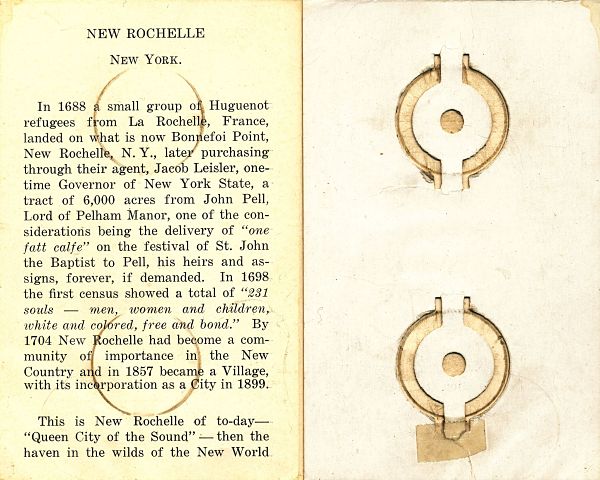
The Coin Committee used a team of six (five women, one man) to fill the orders it had received, and set up an "assembly line"for the process - "one person putting the coin in container and passing it to the next who filled the envelope and passed to the next, who sealed it and passed it over to the shipping clerks, who, two in number, checked with each other as to the address on the envelope and registry sheet and put it in a container for the mail." The team was trained on the proper handling of the coins, and was responsible for verifying the count of coins in each of the bags delivered by the Mint (all of the coins were delivered in bags vs. rolls - the only way the Mint would deliver them even though the Committee requested, and was willing to pay for, rolls to minimize bag marks on the coins).
The coins were delivered to the Post Office in groups, with an armed escort sent by the New Rochelle Police Department for protection. In addition to the coins ordered by mail, a teller window was opened in the bank to handle small, in-person coin sales.
The Committee appears to have handled the coin's distribution fairly as few, if any, complaints arose about it. IMO, it was a clear case of a coin collector (Skipton) overseeing things for the benefit of his fellow collectors.
Gertrude Lathrop and New Rochelle Mayor Harry Scott visited the production line, as did members of the local press - the photo-op proved too good to miss as Coin Committee members, Lathrop and Mayor Scott posed for a picture for the local newspaper.
Ultimately, approximately 9,700 coins remained unsold when the Committee ended sales; they were returned to the Mint to be melted. The coin has a net mintage of ~15,250 (including 50 proof-like examples struck once (vs. twice) on proof blanks).
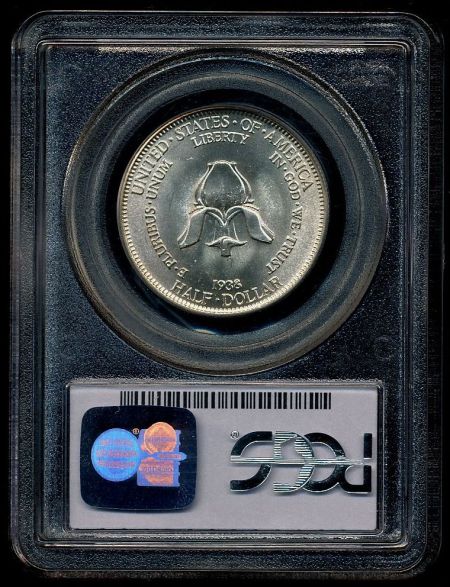
(Side Note: Westchester County Coin Club members are reported to have purchased hundreds of the half dollars at face value at the sale's end before the remainders were sent back to the Mint.1938 New Rochelle, NY 250th Anniversary Half Dollar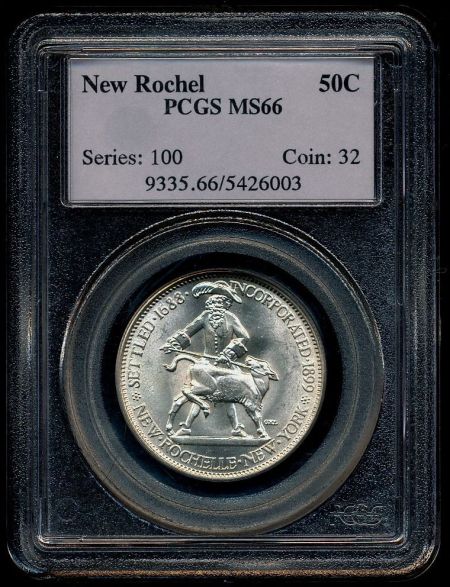
For other of my posts about commemorative coins and medals, including a number about the New Rochelle, see:
Commems Collection - follow the "US Classic" link.







 Posted 05/21/2024 1:42 pm