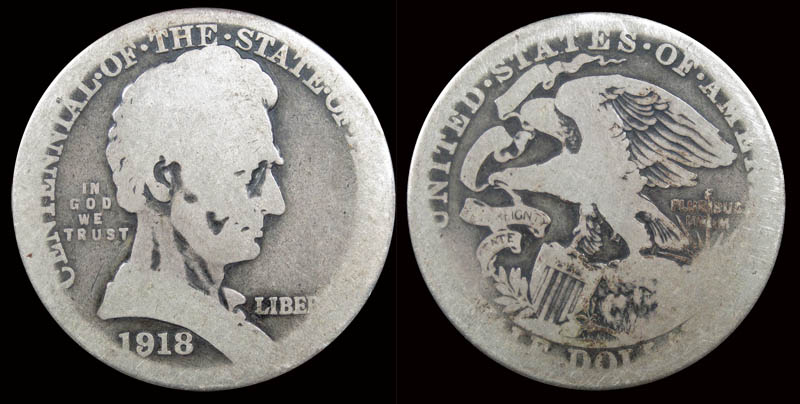
Here are a few quick factoids about the 1918 Illinois Statehood Centennial Half Dollar:
Tidbit #1I've discussed before how the first bill that proposed the Illinois Statehood Centennial Half Dollar called for 200,000 of the coins. While the bill was being considered/reviewed by the House Committee on Coinage, Weights, and Measures, the mintage limit was reduced to 100,000. The recommended change was subsequently authorized by the House of Representatives ("House") and Senate, before being signed into law by President Woodrow Wilson.
Contemporary media reports of the time did not always track with reality. Some reports featured the correct 100,000 mintage figure, others continued to use the original 200,000 coin limit and one I've seen stretched the limit to 500,000 coins! You just never know what sources you can believe!
Tidbit #2Though the Illinois Centennial celebrations ended in 1918, the half dollars continued to be publicly available, at $1.00 each, in 1919 from multiple outlets across the State.
The Illinois Centennial Commission desired "that every citizen of the state obtain one as a souvenir of the Centennial year." (ICYWW: The Illinois population in 1918 was approximately 6.3 million; with a mintage limit of 100,000, less than 1.6% of the population could have owned one of the coins. So much for "desires"!)
Even the extended effort, however, did not result in a sell-out of the coins. Approximately 30,000 of the coins turned up in Springfield a decade and a half later. Check out: -
1918 Illinois Statehood Centennial - 1933 Bank Holiday for more about these "forgotten" coins.
Tidbit #3The Illinois Centennial Commission distributed its half dollars to county-level Centennial organizations across the State, with the distribution based on population - the larger the population the more coins received. The coins were sold for $1.00 each, with net proceeds being used to help fund local Centennial celebrations or being donated to organizations that supported war (i.e., World War I) relief efforts.
FYI: In 1918, the most populous Illinois County was Cook (~3 million), the least populous was either Hardin or Putnam (a near dead heat at ~7,500!). (Note: Chicago is located in Cook County.)
Tidbit #4The Illinois Statehood Centennial Half Dollar commemorated the 100th Anniversary of Illinois achieving Statehood - a milestone achieved on December 3, 1818. Illinois expanded upon milestone, and celebrated its "Centennial Year" throughout the State throughout the year.
Before a territory can become a State, it must draft a Constitution that is deemed by the United States ("US") Congress to be in sync with the US Constitution. Illinois was directed to create such a document via the 1818 Enabling Act signed into law by US President James Monroe in early 1818.
Illinois held a Constitutional Convention in August 1818 to draft and approve a Constitution. The Illinois Constitution was adopted on August 26, 1818. This date was celebrated by the Illinois Centennial Commission ("Commission") - the commemorative coin's sponsor - on the closing day of the
Illinois State Fair and Centennial Exposition via presentation of the historical pageant "The Masque of Illinois" by Wallace Rice.
Based on the half dollar's distribution method (see Tidbit #3), coin proceeds were not a primary funding tool for the pageant's development or staging (though direct coin sales by the Commission did make some funds available).
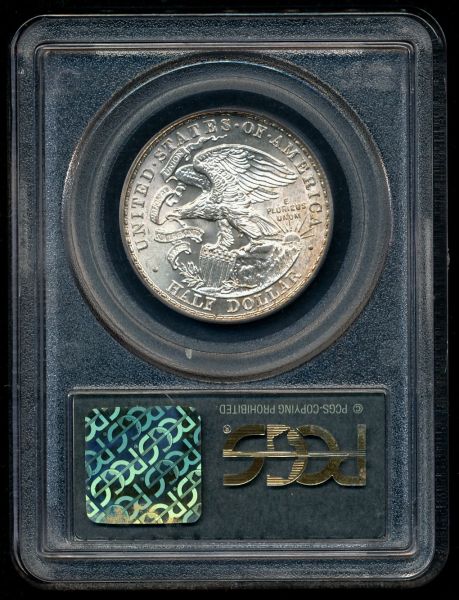
1918 Illinois Statehood Centennial Half Dollar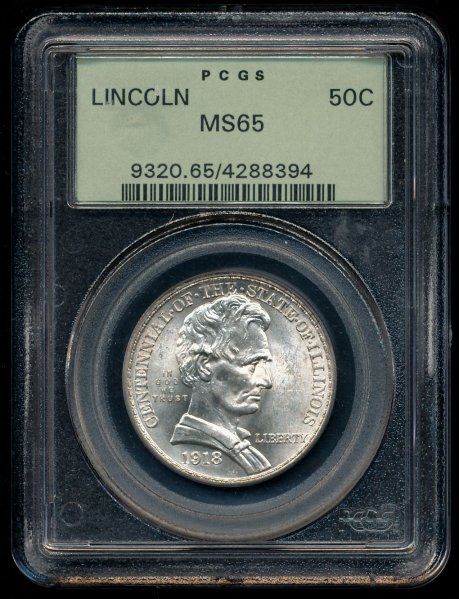
 Tidbit #3
Check out this related thread about the 1918 Illinois Statehood Centennial Half Dollar:
-
1918 Illinois Statehood Centennial - TriviaFor other of my posts about commemorative coins and medals, including other "Tidbit" stories, check out:
Commems Collection









 Posted 01/07/2026 7:51 pm


 Uncirculated American Silver Eagles