A number of the classic-era United States ("US") commemorative coins mark settlement anniversaries that represent follow-up efforts vs. first tries. For example, the 1937 Roanoke Colony Memorial 350th Anniversary Half Dollar marks a settlement that was third in line among Sir Walter Raleigh's sponsored New World expeditions.
The 1924 Huguenot-Walloon Tercentenary Half Dollar is another example. Previous settlement attempts were made in present-day Mayport, Florida (1562 and 1565).The efforts were not successful in Florida, however, largely due to Spanish hostilities (i.e., attacks and killings).
The 1562 attempt in Mayport was led by French explorer Jean Ribault; the 1565 settlement endeavor was led by Rene Goulaine de Laudonnière. Ribault's settlement ultimately proved unsuccessful, but it did lead to Laudonnière overseeing the construction of Fort Caroline in 1564, using a combined workforce of French settlers and the friendly (at the time) indigenous Timucua people.
You can learn more about Fort Caroline here:
-
Florida: Fort Caroline National MemorialThe Spanish, who had initiated settlements, and made territorial claims, in Florida prior to the French arrival, attacked the Fort Caroline settlement in 1565 and killed most who were present. The Spanish were under the command of Pedro Menendez de Aviles. who was acting on orders from Phillip II, the Spanish King. Spain did not want to share any potential New World trade and/or riches with France from territory to which it had already laid claim.
Some of the French settlers had left Fort Caroline before the Spanish arrival/attack, with a plan for a surprise counter-attack. A violent storm grounded them, however, and the shipwrecked settlers were also attacked and mostly killed by de Aviles and his troops.
Note: In 1565, Spain established St. Augustine in Florida - the oldest continuously inhabited settlement/town/city in the United States that was established by European settlers.Maybe some day, Daniel Carr will create Fantasy Overstrike medals/tokens for the earlier French settlement attempts. Swap out the sailing ship on the coin's reverse with something more appropriate and you're done - the obverse design can remain!
Until then...
1924 Huguenot-Walloon Tercentenary Half Dollar.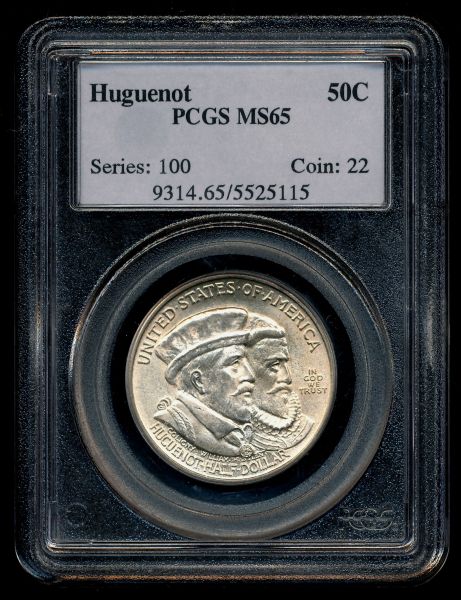
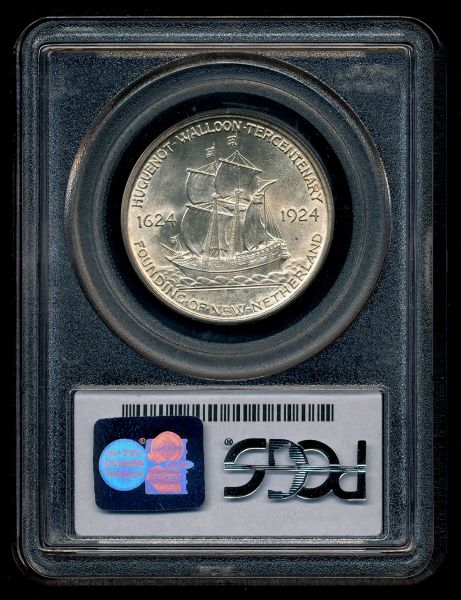
For other of my posts about commemorative coins and medals, including more Huguenot-Walloon stories, see:
Commems CollectionBonus Note: Decades after the French Huguenots helped settle New Amsterdam (present-day New York City) (1680s vs. 1620s), they had a significant migration to present-day Charleston, South Carolina. These 1680s Huguenot settlement efforts were successful, with French Huguenot influences continuing to the present. (The settlers arrived on the sailing ship Richmond.) 









 Posted 02/11/2026 7:30 pm


 Uncirculated American Silver Eagles


