A few tidbits from my notes on the Bennington-Vermont half dollar:
Tidbit #1In March 1926, Charles Keck, the designer/sculptor of the 1927 Battle of Bennington-Vermont Independence Sesquicentennial Half Dollar (and Vermont Independence Sesquicentennial medal), visited Bennington, Vermont ro preview plaster casts of his proposed designs for the coin prior to their presentation to the Commission of Fine Arts ("CFA"). Keck had revised the CFA-rejected designs of Sherry Fry. Keck met with members of the Bennington Battle Monument and Historical Association ("Association") to present his new models.
Keck's updated designs featured a bolder portrait of Ira Allen on the obverse, and Fay's Tavern on the reverse. The designs were approved by the Association and presented to the CFA. The CFA rejected the "Fay's Tavern" design, however, and thus Keck moved forward with alternate deisgns, eventually going with his Catamount design. For more on the Bennington-Vermont design journey, see:
-
1927 Battle Of Bennington, Vermont Indep. Sesquicentennial, Fry's Design-
1927 Battle Of Bennington, Vermont Indep. Sesquicentennial, Keck DesignsTidbit #2The authorizing legislation for the 1927 Battle of Bennington-Vermont Independence Sesquicentennial Half Dollar did not list a financial (or general) sponsor for the coin. The financial matters for the coin were managed, however, by the Federal Reserve Bank of Philadelphia - essentially the coin Commission's agent. It handled paying the United States ("US") Mint - after receiving adequate funds from the Vermont Sesquicentennial Commission- receiving the coins from the Mint, receiving coin orders from banks across the US and distributing the coins. Contemporary accounts also indicate that the Bank handled individual mail orders and walk-up customers.
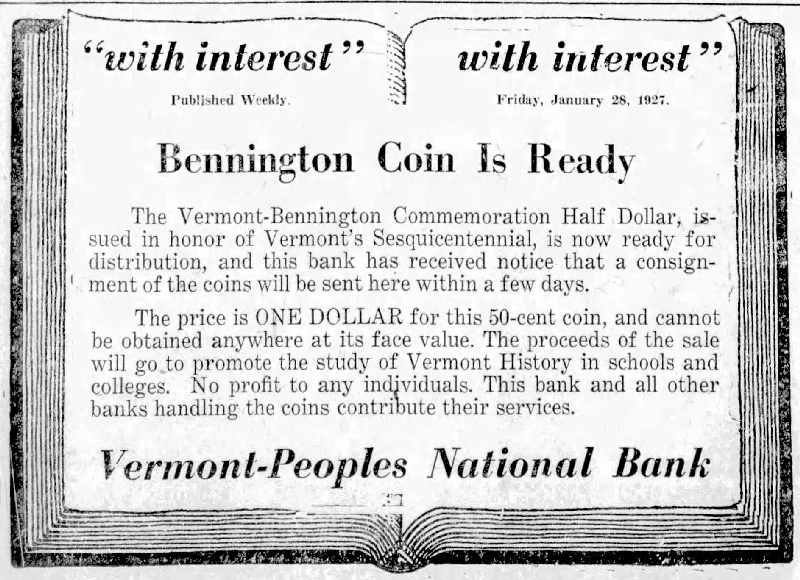
Here's an example of a Vermont bank advertisement for the half dollar (circa 1927):
 Tidbit #3
The first Bennington-Vermont half dollar off the Mint coin press was kept by John Spargo,a historian who was a key figure in Vermont's Sesquicentennial celebrations. He founded the Bennington Museum, served as President of the Bennington Battle Monument and the Vermont Historical Society and was the Chairman of the Vermont Sesquicentennial Commission. In addition to the coin, he secured a certificate attesting to its status as the first coin from the Superintendent.of the Mint.
Note: For the sake of completeness, it should be pointed out that John Spargo was a vocal. active Socialist.One of the first strikes of the coin were sent to US President Calvin Coolidge as a "Good Luck" pocket piece; Coolidge was born in Plymouth Notch, Vermont in 1872. Another piece was sent to US Attorney General Garibaldi Sargent (part of the Coolidge Administration); he was born in Ludlow, Vermont in 1860.
Tidbit #4In 1927,
The Royal Mint in London, England requested an example of the 1927 Battle of Bennington-Vermont Independence Sesquicentennial Half Dollar for its permanent collection. The request was granted - two coins were sent. It was reasoned that sending two coins would enable the simultaneous display of the obverse and reverse of the coin.
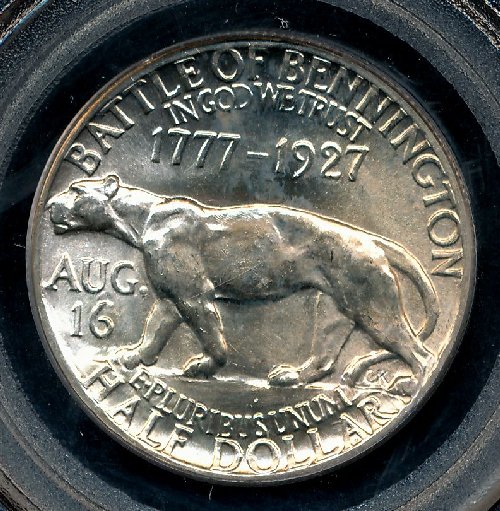
1927 Battle of Benningon-Vermont Independence Sesquicentennial Half Dollar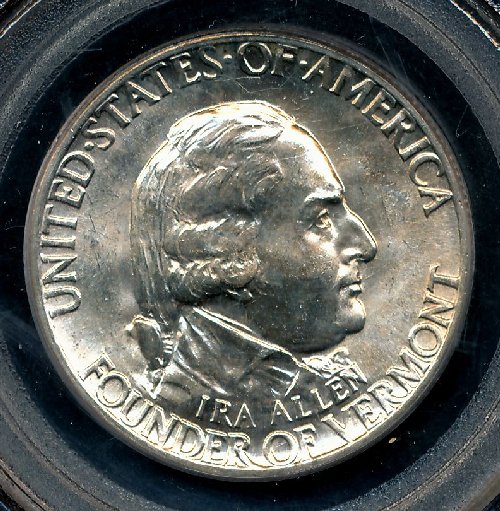
For other of my posts about commemorative coins and medals, including more "Historical Tidbits" stories, see:
Commems Collection





 Posted 02/18/2026 10:36 am





