| Author |
 Replies: 7 / Views: 111 Replies: 7 / Views: 111 |
|
|
Pillar of the Community
 United States
6760 Posts |
|
|
|
|
Pillar of the Community
United States
6166 Posts |
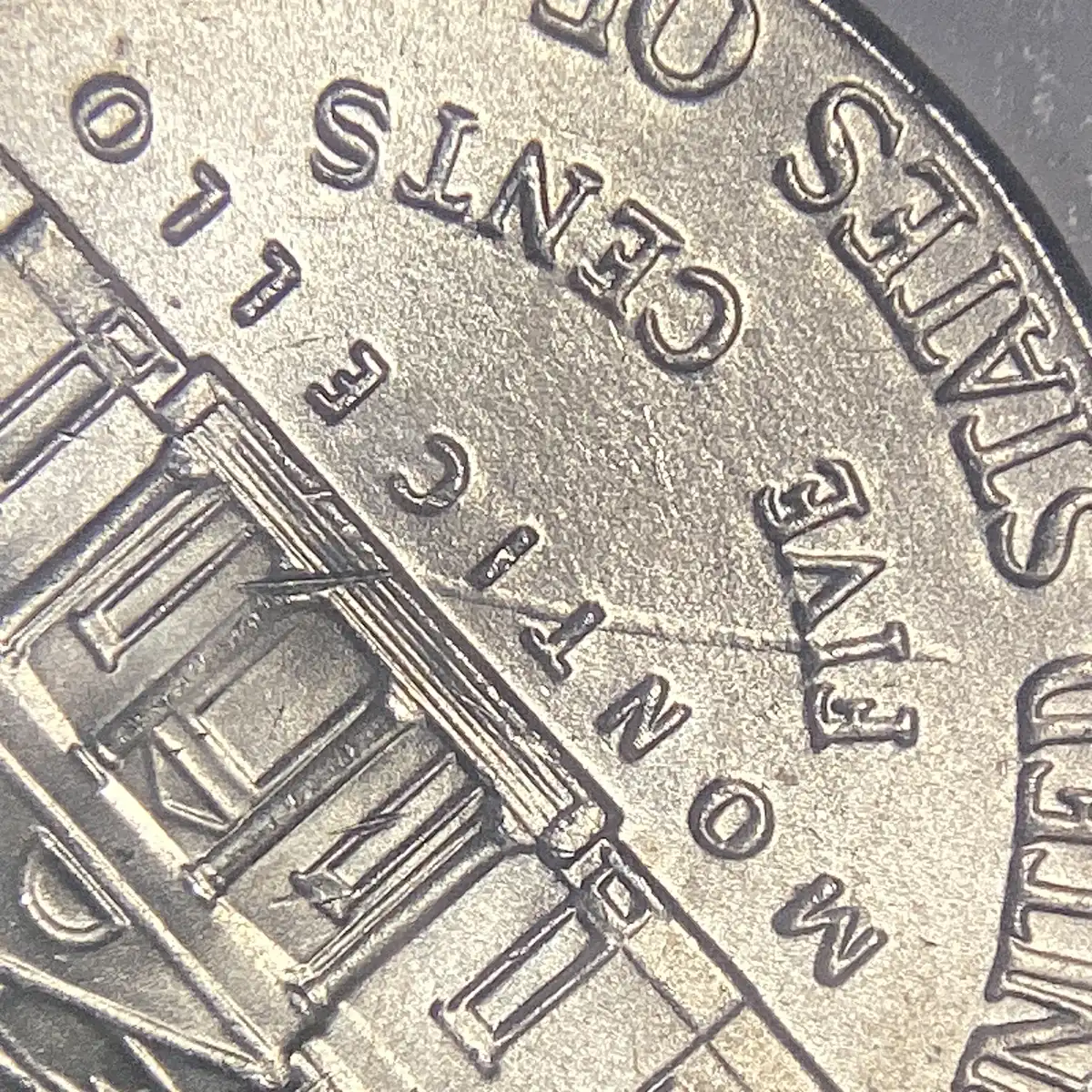
That's a nice one. Looks like a thin wire or similar was struck hard enough to dent the die. I was thinking maybe during a clashing event but seems that is opposite some high relief areas on the obverse and likely wouldn't look so continuous.
|
|
Bedrock of the Community
United States
77212 Posts |
|
|
Pillar of the Community
 United States
6760 Posts |
Definite possibilities! These strange long raised marks appear on a number of nickel dies from 2006 onwards. They seem to usually run vertically on the reverse, which suggests to me that it might be some kind of die installation collision. Otherwise, why would they be oriented in a similar direction and so preferentially on the reverse (typically anvil?) die.
I thought it could possibly be a misaligned clash, but I couldn't match it to anything except Jefferson's profile, and there is nothing matching on the obverse.
|
|
Moderator
 United States
103146 Posts |
very nice die dent Brand.
|
|
Pillar of the Community
United States
1697 Posts |
Quote:
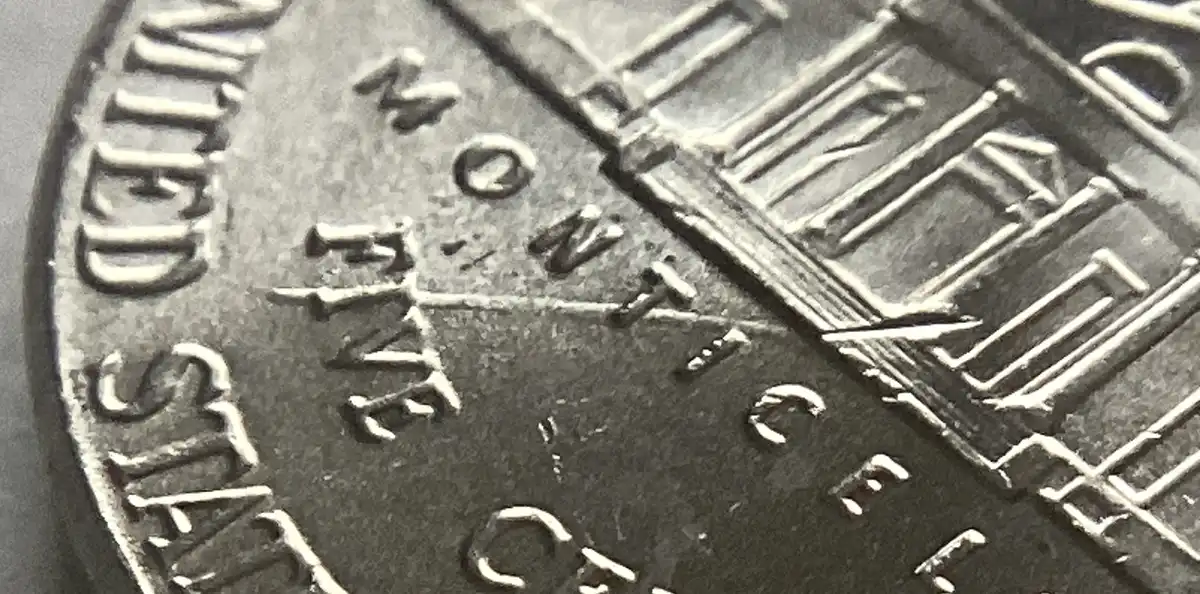
They seem to usually run vertically on the reverse Most all the die dents I have found are also vertical, on the reverse. I have been lucky to find a couple horizontal dents and a couple on the obverse, though. Quote:
Maybe Hubbed-In Debris? Hubbed-In Debris and Die Dents sound like they have the same basic description to me! About the only difference I see, is that die dents usually look like they were made by a ribbon width material.  https://www.error-ref.com/?s=die+dent https://www.error-ref.com/?s=die+dent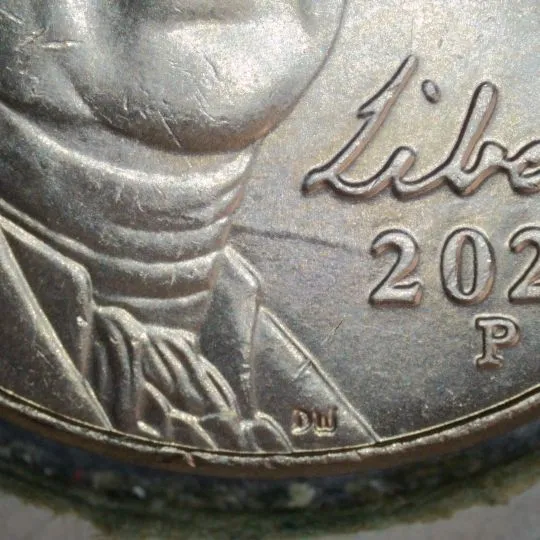  |
|
Pillar of the Community
United States
3407 Posts |
|
|
Pillar of the Community
United States
6760 Posts |
Thanks, guys. =)
Snailking, those are definitely the same type of thing. Similar length, thickness, and fuzziness. Your obverse and horizontal examples are some of the few I have seen.
|
| |
Replies: 7 / Views: 111 |
|












 Posted Today 3H 5M ago


