Time for a trip to the 1935-36 California-Pacific International Exposition ("San Diego Exposition")...Tidbit #1The catalyst for the San Diego Exposition was...a termite infestation.
In 1934, a woman in downtown San Diego was killed when a tree branch, weakened by termites, fell and struck her. The incident caused a city-wide investigation into the extent of the termite problem. Included in the investigation were the buildings and other structures in Balboa Park - the site of the 1915-16 Panama-California Exposition. The news wasn't good - many of Balboa Park's structures were impacted.
After about $20,000 was raised to save the buildings in Balboa Park, the idea of holding another Exposition was floated. Despite the ongoing Depression, Frank Drugan championed the idea and convinced local businessmen to contribute funds to begin work on a new Exposition. The target was $200,000 but nearly $800,000 was raised!
With such a start, and Drugan's enthusiasm, excitement in the endeavor gained momentum and more and more groups from across the US came on board (though some weren't easily convinced). Eventually, around $20 million was invested in the Fair.
The Federal Government agreed to participate, and Congress appropriated $350,000 for a US Government Building and accompanying exhibits. Congress also authorized a commemorative half dollar (the California-Pacific International Exposition, aka "San Diego", half dollar) to provide financial support.
The Exposition's 1935 season ran from May 29, 1935 to November 11, 1935; its 1936 season ran from February 12, 1936 to September 9, 1936. More than 20 foreign nations participated along with all US States (48 at the time).
Collectors have termites to thank for one of the coins in their collections!
Tidbit #2On August 12, 1935, Nellie Tayloe Ross, Director of the United States ("US") Mint, purchased the first California-Pacific International Exposition half dollar put on sale - she was visiting the Exposition. Ms. Ross purchased the coin from Frank G. Belcher, president of the California-Pacific International Exposition.
The half dollars had recently been received from the US Mint; the coins were struck earlier in August.
Tidbit #3In mid-May 1935, Marilyn Stone of California was photographed supporting a large "Welcome" plaque for the California-Pacific International Exposition - "America's Exposition". At the time, it was suggested that the plaque's design might be used on the Exposition's commemorative half dollar (if the coin was approved - per the photograph's caption). As the coin's production had already been approved on May 3, 1935, the caveat was unnecessary.
Ultimately, Robert Aitken, the coin's designer, went a different direction (though with some shared visual cues).
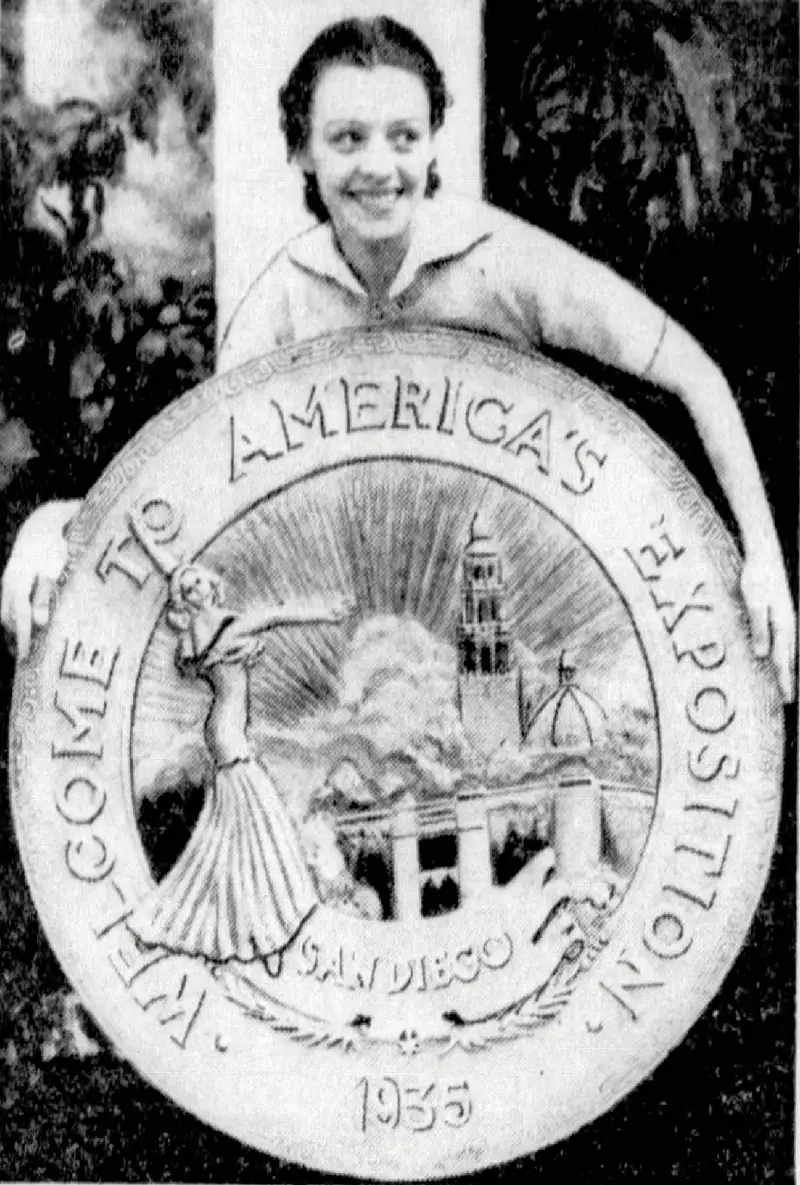 (Image Credit: Publicity Photo from Exposition company, published in Pittsburgh Sun-Telegraph. May 1935.)Tidbit #4
The California-Pacific International Exposition Company successfully lobbied Congress to have the US Mint re-coin up to 180,000 unsold/returned 1935-dated half dollars with a "1936" date; 150,000 of the "1936" coins were returned to the Mint to be melted - sales did not meet expectations.
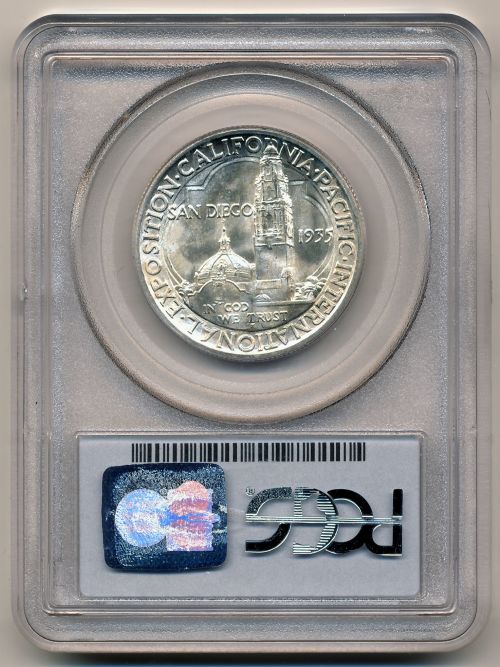
1935 California-Pacific International Exposition Half Dollar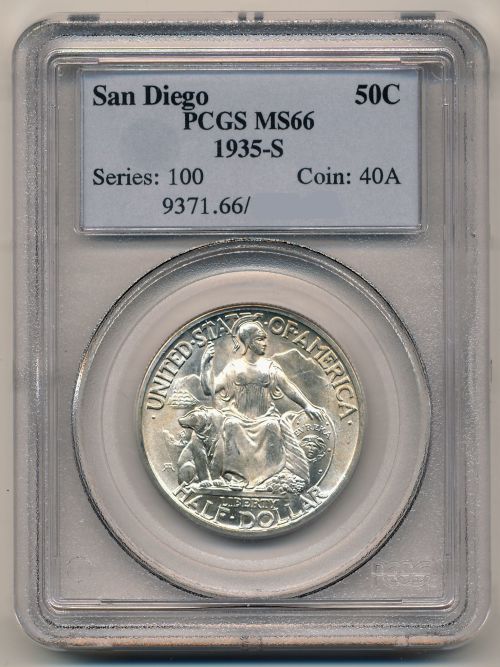
For other of my posts about commemorative coins and medals, including other "San Diego" stories, see: [b]
Commems Collection 






 Replies: 2 / Views: 59


 Posted Today 2H 6M ago


 Uncirculated American Silver Eagles


