| Author |
 Replies: 20 / Views: 341 Replies: 20 / Views: 341 |
|
Pillar of the Community
United States
1874 Posts |
Edited by snailking1
Yesterday 4:42 pm
|
|
|
|
Bedrock of the Community
United States
79919 Posts |
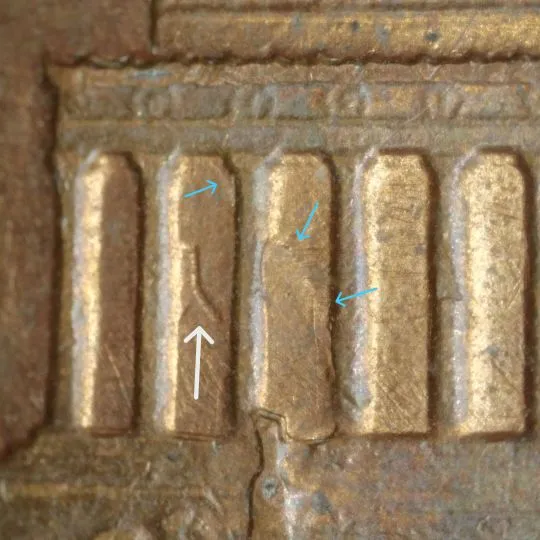
Are you sure that it's not just a Die Clash remnant? Either way, it's a great find!   Errers and Varietys.
|
|
Pillar of the Community
 United States
1874 Posts |
Quote:
Are you sure that it's not just a Die Clash remnant? Since the clash remnants are in relief, and this is incuse, I'd say yes, certain it's not part of the clash. |
|
Moderator
 United States
197013 Posts |
Good eye! |
|
Pillar of the Community
United States
3224 Posts |
I would have guessed a clash too. The Y looks raised in your pic.
|
|
Pillar of the Community
 United States
9038 Posts |
It is a clash but not listed or a different die stage. The clash is not going to be raised unless it is a counter clash, this is a typical clash that will be incuse. Maybe send to Mad Die Clashes if they ever start taking submissions again. Here is a listing (that does not match yours) that shows what I am talking about. Nice find though. LINK https://www.maddieclashes.com/tdc-1c-1983-04/-makecents-
|
|
Pillar of the Community
United States
9038 Posts |
To simplify what I am saying, when you have a heavy clash on the obverse, people think the raised areas of the "jailhouse" clash is from the columns, it is not, they are the bays. So when you have a typical die clash, what is raised on the coin with be incuse from a clash. Hope that helps. What you have is a very nice, strong letter transfer from a clash though, not from a dropped filling.
-makecents-
|
|
Moderator
United States
108750 Posts |
Very nice find, I agree with @makecents here.
The 'Y' looks incuse to me as well as the clash remnants - I determined this by looking at the lighting and shadows.
|
|
Pillar of the Community
United States
1874 Posts |
 You know, I have read the description on error-ref many times, and couldn't get my head around the clash being incuse. Guess I have been looking at clash marks all wrong. I have been interpreting what I see as clash marks, backwards. Had to take time to really visualize the process, but, I think it's FINALLY gotten through!  Thank You Everyone! You just helped me unlearn my incorrect understanding, and replace it with the correct one!  |
|
Moderator
United States
197013 Posts |
Quote:
To simplify what I am saying, when you have a heavy clash on the obverse,... Thank you. |
|
Pillar of the Community
United States
9038 Posts |
|
|
Pillar of the Community
United States
9038 Posts |
Quote:
I have been interpreting what I see as clash marks, backwards. In my earlier days of learning errors and varieties I saw it that way too.  -makecents-
|
|
Pillar of the Community
United States
6936 Posts |
Quote:
You know, I have read the description on error-ref many times, and couldn't get my head around the clash being incuse. Guess I have been looking at clash marks all wrong. I have been interpreting what I see as clash marks, backwards. Think of a die clash in two parts. The die clash itself strikes a raised, positive coin onto the opposing negative die. When that modified negative die strikes a coin, it makes a positive coin, but the additional positive features on the die strike negative features onto the coin. I think of a die clash as holding the coin up to a mirror. Then everything you see that is raised in the mirror sucks down on the front coin face, from the center outwards, and from the fields first. |
|
Pillar of the Community
United States
1874 Posts |
Quote:
Think of a die clash in two parts. |
|
Pillar of the Community
United States
9038 Posts |
Quote:
Think of a die clash in two parts. The die clash itself strikes a raised, positive coin onto the opposing negative die. When that modified negative die strikes a coin, it makes a positive coin, but the additional positive features on the die strike negative features onto the coin.
I think of a die clash as holding the coin up to a mirror. Then everything you see that is raised in the mirror sucks down on the front coin face, from the center outwards, and from the fields first. I am not sure what you are talking about. A die clash is exactly that, clashing of two dies, with no coin/planchet involved. The hammer die and anvil die hit each other with NO coin involved, that is how a clash is made, then the clashed dies, when they have a coin/planchet introduced, creates a coin with clashing on it. -makecents-
|
|
Pillar of the Community
United States
9038 Posts |
I will try to draw some rudimentary diagrams tomorrow to try and simplify the process of how a clash is created.
-makecents-
|
| |
Replies: 20 / Views: 341 |







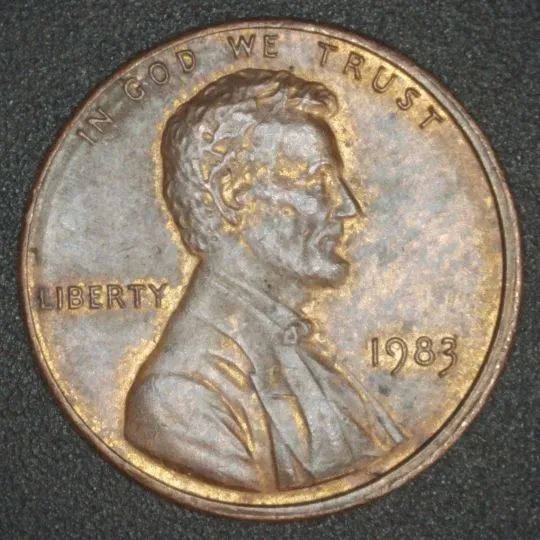
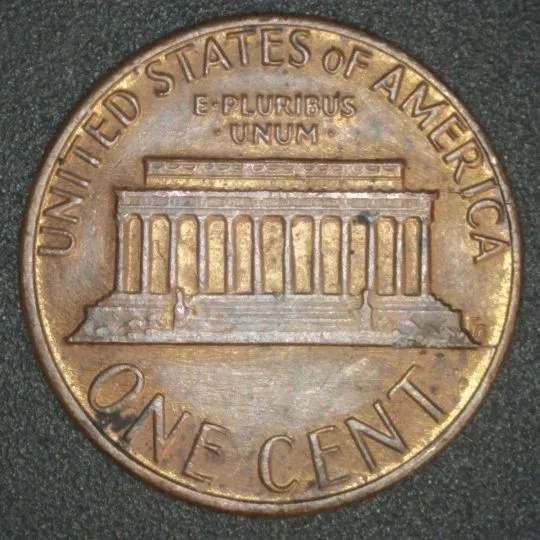


 Posted Yesterday 2:00 pm


