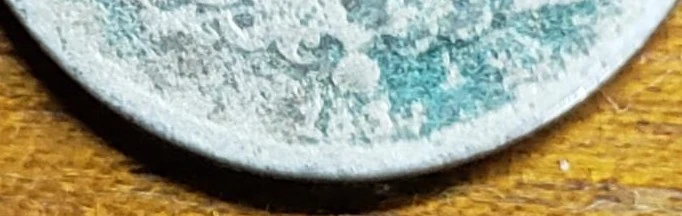
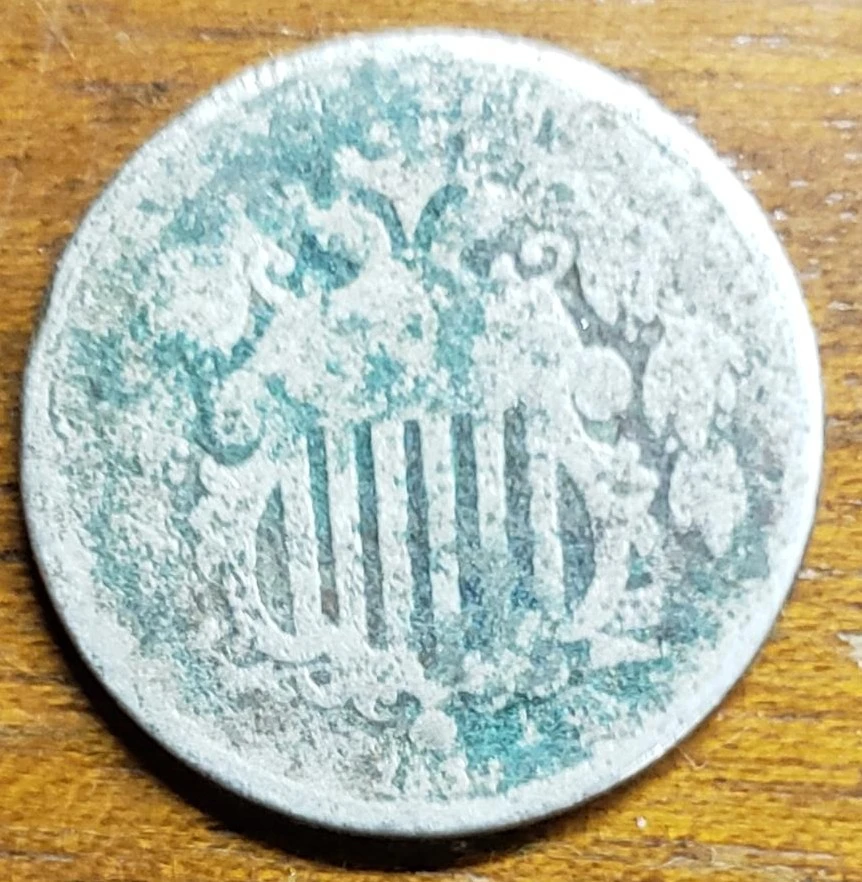
There are some fairly significantly repunched date varieties for 1866 and 1867. What you are seeing with the last digit
may be the remnant of one of the repunched date varieties. (Big emphasis on "may.") It's a real long shot, but you may be able to reverse-identify the date from the repunching or the other markers.
If you can use the variety markers to figure out the date and can persuade a
TPG of the research, you may have a shot at a lowball grade coin.
Sometimes putting a drop of water on the last digit and looking at it from different angles can help. (That's useful with virtually dateless Buffs, too.)










 Posted Yesterday 5:12 pm


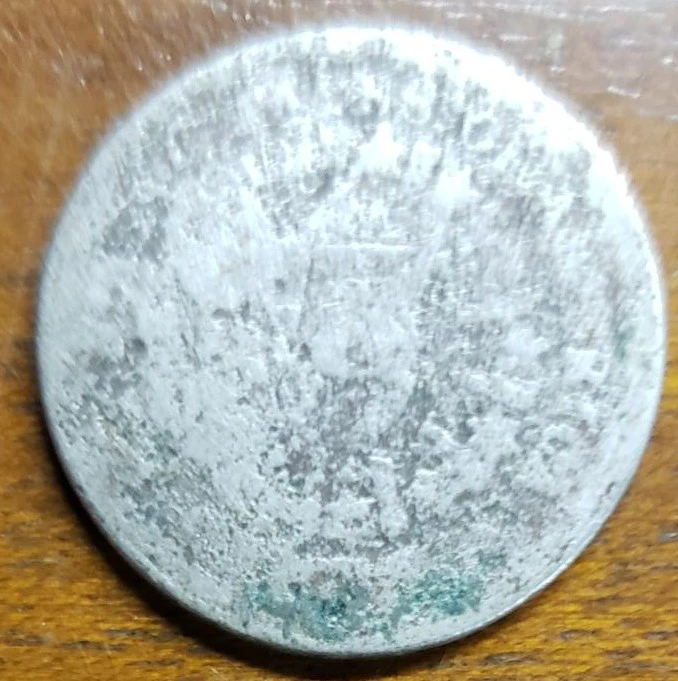
 it's got rays, so 1866 or 1867. I say that's probably a 7, but not very confident.


