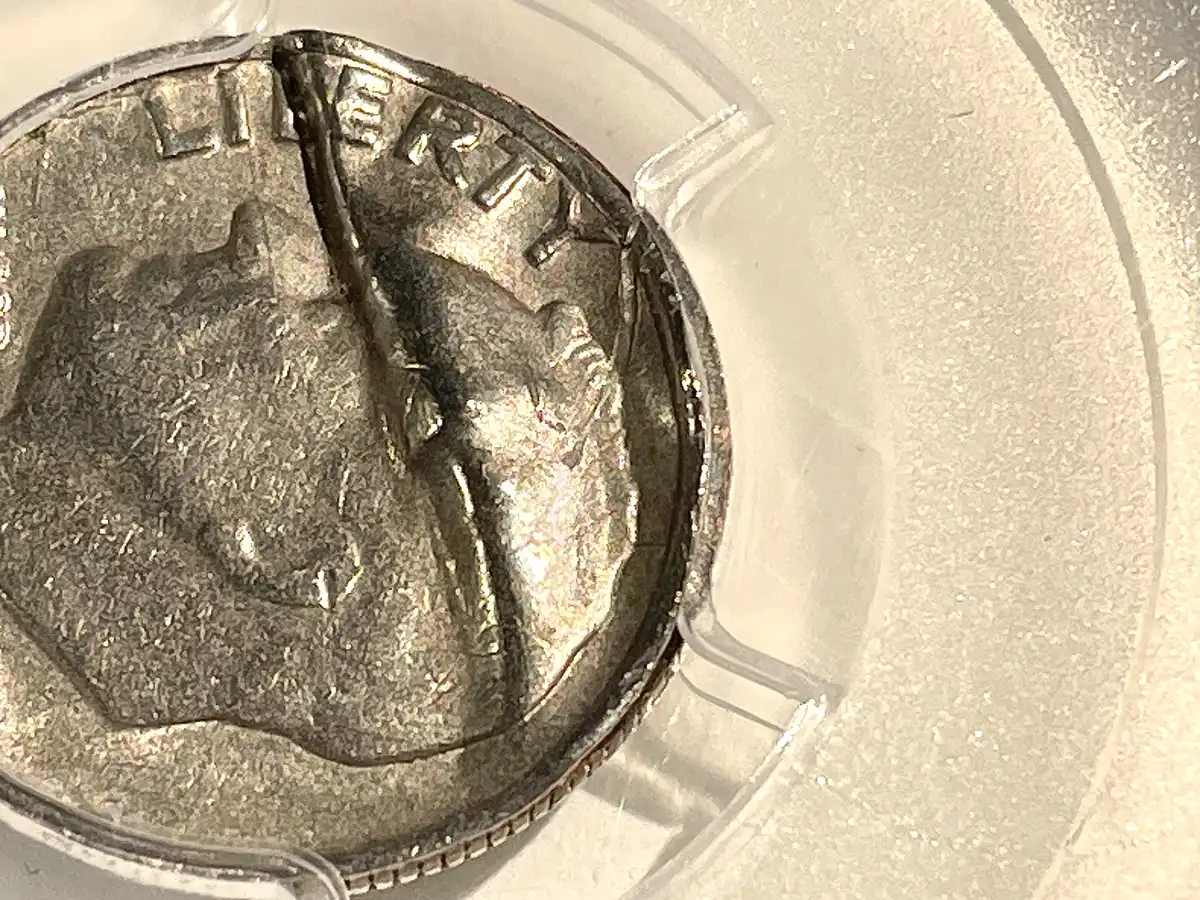
The narrow channel-like feature to the right of the "Y" in LIBERTY is a classic example of a die-imparted defect rather than damage to the struck coin itself. Stereomicroscopic examination confirms that the fine linear features within the channel are raised above the surrounding surface, which is the critical diagnostic characteristic. If the feature had been caused by a scrape, gouge, or abrasion after the coin was struck, the lines would be incuse and cut into the metal. Instead, the raised ridges prove that the defect originated as a depression in the die and was transferred to the coin during striking. The feature therefore represents a damaged-die artifact, not post-strike damage to the coin.
The most likely sequence begins with a hard fragment of metal, die steel chip, or other debris becoming trapped on the die face. Under the extreme pressure of repeated strikes, the trapped material was dragged across the die surface, plowing a shallow groove or channel into the die. As the debris moved, it created microscopic striations and scratches within the floor of the die gouge. Because the die is the negative image of the coin, every depression cut into the die became a raised feature on subsequently struck planchets. The result was an elongated channel on the coin containing fine parallel raised ridges that can easily be mistaken for a scratch when viewed at lower magnification.
The stereomicroscope evidence is decisive in this case. The presence of raised parallel lines within the channel confirms that the feature was formed during the striking process and not afterward. The defect represents a damaged die that continued to strike coins after the die surface had been scraped by dragged debris. On this clad layer split-apart error, the die-damage feature is an entirely separate mint-made event superimposed on the dramatic planchet failure. Although photographs cannot adequately capture the relief relationships at this scale, direct microscopic observation establishes that the channel and its fine striae are struck, die-generated features produced by debris-induced gouging of the die face rather than by damage to the finished coin.
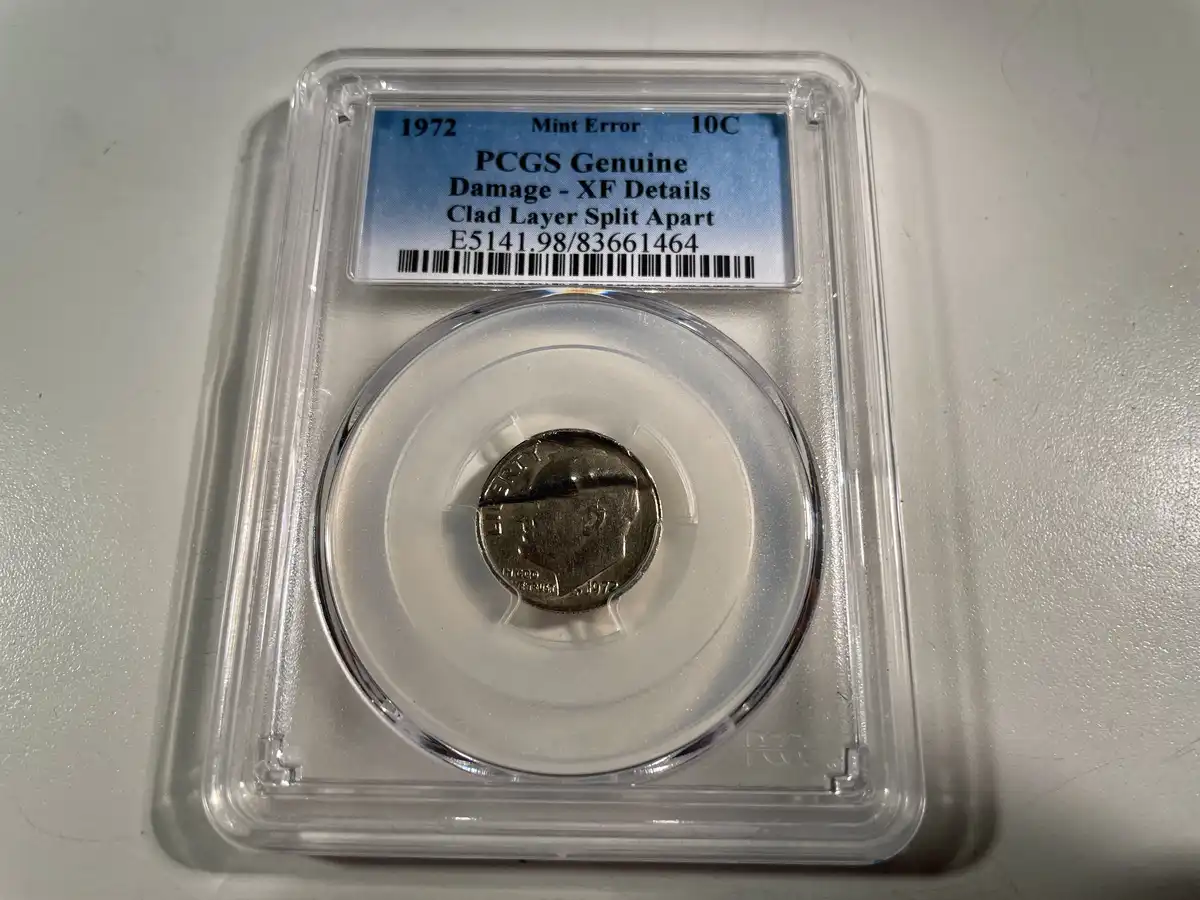
The dramatic appearance of this coin is primarily the result of a clad layer split apart, a planchet defect that originated before the coin was struck. United States clad coinage is manufactured by bonding outer copper-nickel layers to a pure copper core. If the metallurgical bond between one of the outer clad layers and the copper core is weakened during strip production, rolling, annealing, or blanking, the clad layer may partially separate from the planchet. During striking, the unsupported layer can buckle, tear, fold, or peel away, producing the large distorted flap-like feature seen on this specimen. Rather than being a die problem, the split itself reflects a failure within the bonded metal structure of the planchet.
As striking pressure was applied, the already-compromised clad layer was forced to move independently of the underlying core. Instead of flowing normally with the rest of the metal, the separated portion folded upward and inward, creating the dramatic split-apart appearance. The irregular edges, distorted contours, and lifted metal are consistent with a clad layer that lost its adhesion to the core and mechanically displaced during the strike. The resulting deformation dramatically altered the coin's shape and obscured portions of the design, but the underlying cause was the pre-existing failure of the clad-to-core bond rather than damage occurring after the coin left the Mint.
Importantly, the clad layer split and the damaged-die channel near LIBERTY represent two separate mint-caused events. The split-apart error originated in the planchet before striking, while the raised-line channel originated from damage to the die itself. During striking, the defective die impressed its raised channel feature onto the coin at the same time the defective planchet experienced catastrophic separation of its outer clad layer. The coin therefore records both a planchet defect and a die defect simultaneously, making it a particularly interesting error because two distinct manufacturing failures became preserved on the same struck piece.
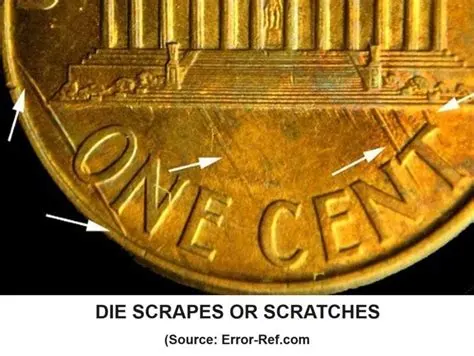
Same type of idea here but the RAISED LINES are in a channel type indent as if a particle smeared across the die then this created a depression with raised lines on the coin. Seen this before even on contemporary circulating counterfeits.





 Replies: 1 / Views: 21


 Posted Today 19M ago


