| Author |
 Replies: 10 / Views: 233  |
|
|
Pillar of the Community
United States
7088 Posts |
Cherrypicked a nice variety nickel. Under magnification, I noticed greenish stuff that might be verdigris. After an acetone soak, I scraped at it with a wooden toothpick. That left a shiny space on the coin surface. What I had initially thought was a light purplish patina is actually some kind of crud. If memory serves correctly, anything that you can move around with a toothpick tip is considered crud, not patina. What is this stuff, and how do I properly clean it off the coin? It appears to have been impervious to acetone. Maybe a cold or hot distilled water soak? 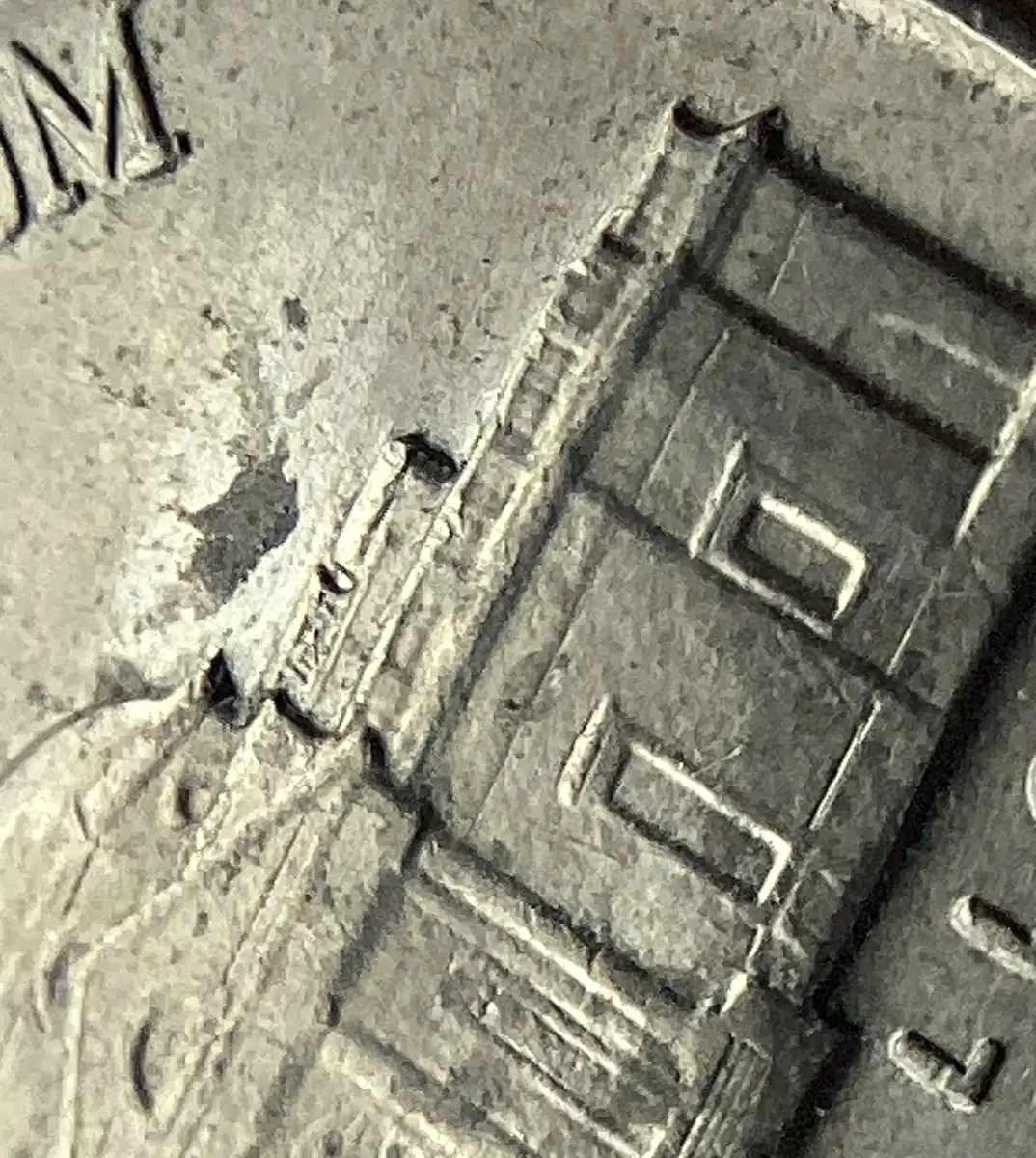 |
|
|
|
Bedrock of the Community
United States
20098 Posts |
ALWAYS start with distilled water, soak for 24 hours and see what happens.
|
|
Moderator
 United States
200693 Posts |
|
|
Pillar of the Community
 United States
7088 Posts |
Fair enough. I typically start with acetone since it's ready in the jar, and it works on a lot of stuff. Nickel is soaking in distilled water, and I will flip it tomorrow morning. Maybe that stuff will come off.
I do think it's worth asking—is there anything that can be wiped off with a wooden toothpick that isn't considered crud?
|
|
Moderator
Australia
17059 Posts |
Quote:
If memory serves correctly, anything that you can move around with a toothpick tip is considered crud, not patina.
I do think it's worth asking—is there anything that can be wiped off with a wooden toothpick that isn't considered crud?No - as a general rule, corrosion can't be removed with a toothpick, or with mild solvents. And what we call "patina" or "toning" is really just mild corrosion. If you scrub vigorously enough with the toothpick you'll start to wear away at patina, but I'm going to assume that "vigorous scrubbing" with anything isn't on your options list to start with, at least for a coin you're aiming to keep for your own collection. Quote:
What is this stuff, and how do I properly clean it off the coin? Unfortunately, we cannot definitively answer the second part of the question properly without knowing the answer to the first part, and the answer to the first part is going to remain a mystery since we do not have a full record of the coin's history and also assuming you aren't going to be sending the coin off to a chemical analysis lab for months for the thousands of dollars worth of lab tests you'd need to run to identify the gloop. Such tests are irrelevant because we don't really need to know exactly what it is - we just want to remove it. "Trial and error" is all we have to go by, which is why the polarity ladder of solvents is helpful - it gives a good order of solvents to attempt. All sorts of "stuff" can get stuck to coins. Sticky glue-like things, such as actual glue, stickytape residue and PVC goo, are among the most commonly encountered, which is why "Acetone as your first option" often works. But there's all kinds of things out there that can stick to and/or stain coins - spilled foodstuffs, greases of all kinds, tree resin, half-decomposed rubber bands, melted candle wax... anything out there that's moderately gluggy can in theory stick to a coin. Note that in terms of "crud vs patina", it's not necessarily an either/or situation. It could be both: the gloop could be high in sulfur, or otherwise contain substances that react chemically with the coin's surface, causing corrosion. Or the reverse can take place: a blob of goo lands on a coin and stays there while the coin continues to circulate and oxidize, with the goo protecting the patch of coin underneath the goo from corrosion, so removing the goo creates a "hole" in the patina later. Don't say "infinitely" when you mean "very"; otherwise, you'll have no word left when you want to talk about something really infinite. - C. S. Lewis
|
|
Pillar of the Community
United States
7088 Posts |
Well, after three hours, the substance is still on the surface. It doesn't take much to disturb it with a toothpick tip, just running it over the coin with almost no pressure.
So if you started scrubbing hard with a bit of soft material, that's a no-no, even on gunk? It seems like a poor idea to leave this substance on the coin.
Any strong feelings about cold water vs. near-boiling water?
I do seem to remember prior threads having some mixed feelings about isopropyl alcohol. It's not on the original distilled water -> pure acetone -> xylene polarity ladder.
Edited by Brandmeister
Yesterday 10:18 pm
|
|
Moderator
Australia
17059 Posts |
Alcohols like isopropanol, methanol or even plain old drinking alcohol (ethanol) fall between water and acetone on the polarity ladder. I don't think there's a major issue with using them on coins, but as a very very general rule, anything that dissolves in alcohol will probably also dissolve in either acetone or water, so it can be omitted from the ladder for simplicity (and for the minimization of storing flammable solvents around your home).
Hot water is universally better at dissolving stuff than cold water - which is why the spoonfuls of sugar dunked into hot coffee don't dissolve in cold coffee. A core issue, when it comes to water for coin cleaning, is that you don't want to use tap water or otherwise contaminated water, and heating distilled water without contaminating it can be tricky (the microwave can work, but be very very careful removing it from the microwave as it's really easy to superheat distilled water and you can easily get a mini-volcano in your face if you drop a coin into superheated water).
In terms of rubbing, what we're mainly afraid of is creating a little "worn patch" where the rub's been happening, which can readily condemn an otherwise nice coin as "cleaned" or "doctored".
Don't say "infinitely" when you mean "very"; otherwise, you'll have no word left when you want to talk about something really infinite. - C. S. Lewis
|
|
Pillar of the Community
United States
7088 Posts |
That's good information about the alcohol.
I know that coin collectors really live in fear of cleaned coins. Pragmatically, this coin appears to have some corrosion spots, which is what I was rubbing with the toothpick. I can't imagine that a mild cleaning would detract from a coin that already has verdigris or corrosion starting, but this hobby does have some absurd reflexes about that kind of stuff.
|
|
Pillar of the Community
United States
7088 Posts |
As far as an update on the coin, the overnight soak in water appears to have done nothing. I will try heating it in the microwave.
|
|
Bedrock of the Community
United States
20098 Posts |
Show us the whole coin, both side please. What the value of this coin?
For any coin that's worth like $5 or less, I take it to the sink with hot running water and sometimes a little dish soap between my fingers.
|
|
Pillar of the Community
United States
7088 Posts |
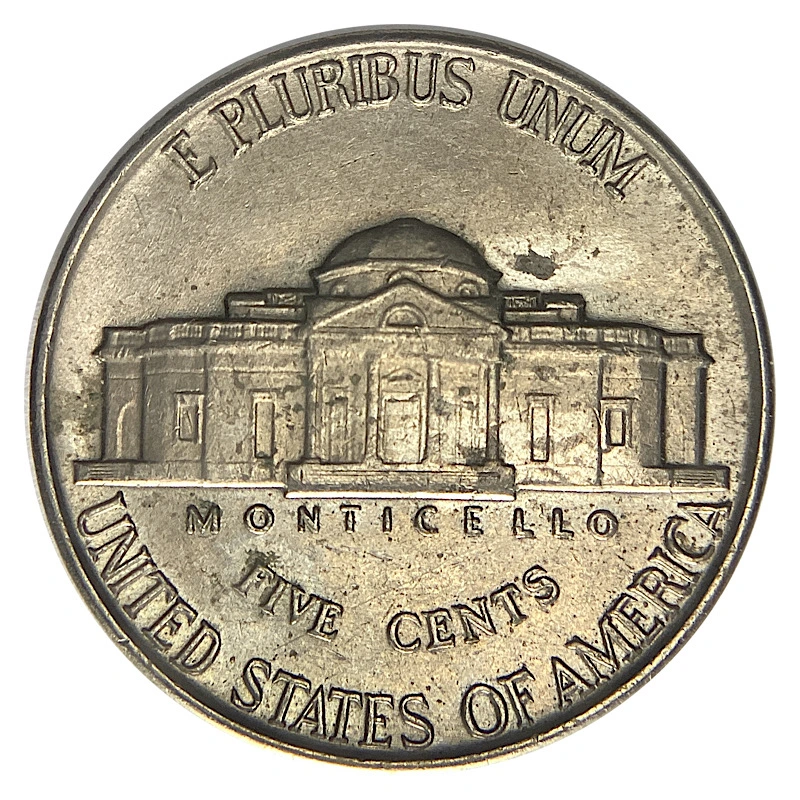 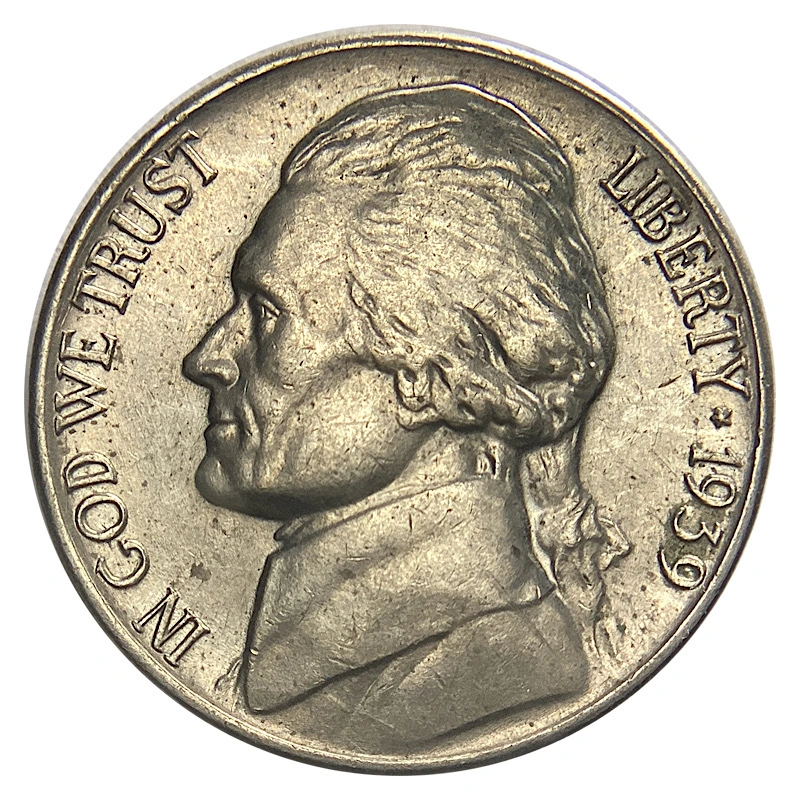 The nickel is a non-CPG doubled die reverse. Visually, it is probably low MS or AU. I paid $5 for it. Let's assume that in mint state it goes for $20, although I have no idea if that's a valid value. It's going into my collection regardless. It does look brighter after the hot distilled water soak. I am starting to wonder if the substance might be cigarette smoke deposits. |
| |
Replies: 10 / Views: 233 |
|




 Posted Yesterday 6:04 pm





