| Author |
 Replies: 2,567 / Views: 137,026 Replies: 2,567 / Views: 137,026 |
|
|
|
Valued Member
Canada
282 Posts |
|
|
Pillar of the Community
 United States
627 Posts |
|
|
Pillar of the Community
United States
7305 Posts |
|
|
Pillar of the Community
 United States
1908 Posts |
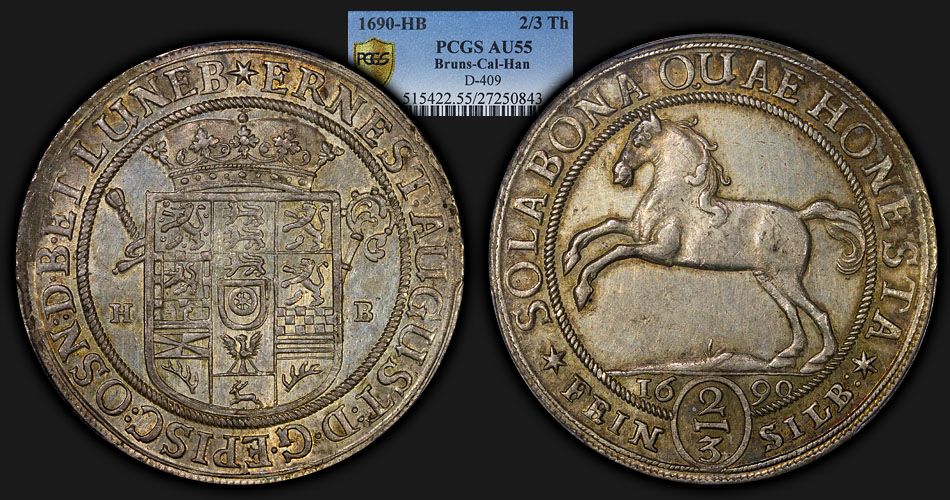
 LIKE ^ ^ ^ All of the above! This thread has some awesome content. Here is a relatively common specimen of a typical Brunswick-Luneburg 'prancing horse' thaler.  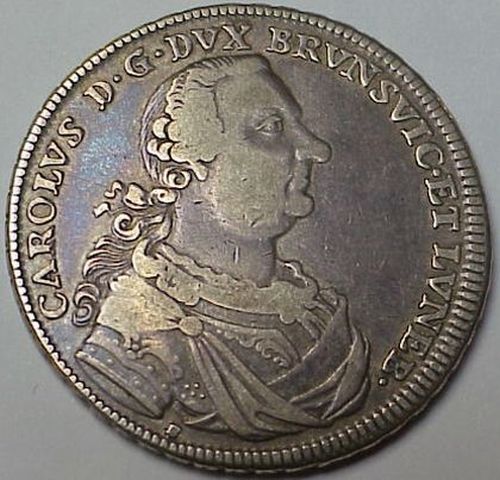 |
|
Pillar of the Community
Canada
2805 Posts |
|
|
Pillar of the Community
United States
627 Posts |
Edited by brg5658
12/03/2015 2:32 pm
|
|
Pillar of the Community
Canada
9801 Posts |
Only one I have Quote: Edited by mcshilling
12/03/2015 3:49 pm
|
|
Pillar of the Community
United States
6130 Posts |
Here's one of my favorites:  Macedonia, Philip II 359-336 BC Philip II (Father of Alexander the Great) was just kicking off his campaigns to conquer and unify Greece under Macedonian rule when his favorite race horse won the gold medal in the 356 BC Olympics. This was one of his favorite personal accomplishments, and became the motif used on almost every bronze coin issued under his authority until his assassination in 336 BC. Scholars debate whether the nude youth riding on this horse is the rider that won the gold at the Olympic games, or young Alexander himself, who was born the same year. |
|
Pillar of the Community
United States
2815 Posts |
I followed your suggestion, jbuck......  |
|
Moderator
 United States
195559 Posts |
Excellent! |
|
Pillar of the Community
United States
6130 Posts |
New purchase I think warrants a necro-bump here: Macedonian Empire Alexander III The Great 336-323 BC (Believed to be a lifetime issue) AE17 (Chalkous?) Probably Macedon mint? Head of Apollo right Bucephalus prancing right, ALEXANDROU above, A below Wildwinds notes similar to Price 338   While the identity of the horse is not firmly established, one must admit that the most probable and logical attribution would be none other than the young king's "bull-headed" war steed. According to the probably legendary story, Alexander's father Philip was offered a wild and untamable stallion with a bull's head brand for a remarkably high price of 13 talents. Philip declined, but Alexander wagered the price against his father that he could tame the horse. He did so easily by removing his cloak and turning the horse to the sun so he could no longer see his shadow; a metaphor to foreshadow the great things that lay ahead for Alexander. The horse himself was very much real, being the king's personal mount in every battle of his unprecedented campaign. Bucephalus died of battle wounds in June 326 BC, near Hydaspes in India. Alexander's armies were victorious, and he founded Alexandria Bucephalous in honor of his beloved horse. The city survived much of antiquity and today is the site of Jalalpur Sharif, Pakistan. |
|
Moderator
United States
195559 Posts |
Quote:
New purchase I think warrants a necro-bump here Yes. Well done. |
|
CCF Advertiser
United States
1533 Posts |
A New Jersey Colonial cent 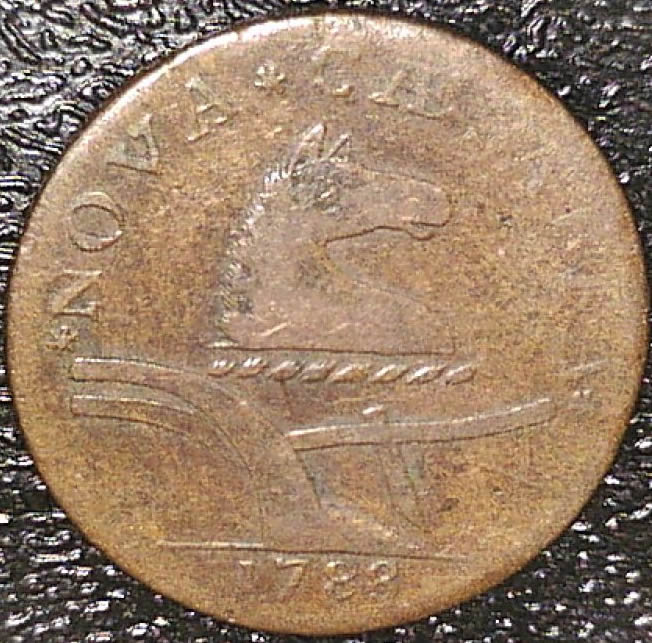 Edited by Andrew99
01/06/2017 12:07 pm
|
|
Moderator
United States
195559 Posts |
Very nice! |
|
Pillar of the Community
United States
7390 Posts |
I have all sizes of the 2014 lunar horse's except the 10oz. I'll post em when I get a second
|
| |
Replies: 2,567 / Views: 137,026 |







 First Page
 Previous Page




 Posted 12/02/2015 11:33 am