I have a tough time with, "What is my favorite coin?"
My favorites shift from time to time, as my understanding and collecting interests evolve the list changes.
I really wanted to take the opportunity to respond here and show off some of my favorites and I thought I would have to show at least 3.
You asked for the favorite "Ancient Coin" than I can essentially eliminate anything struck after AD 476. (Some of my favorite coins are technically medieval)
These are my favorite coins for 3 different reasons.
1)
My Favorite Ancient coin for its Historical Significance:
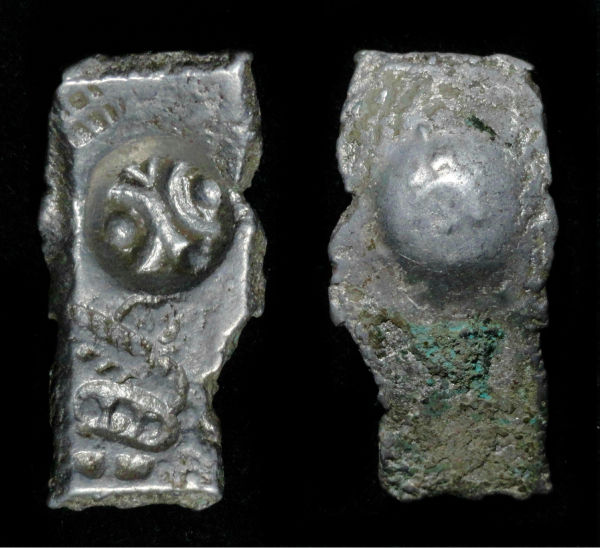
"Around 500 BCE, small kingdoms and confederations of clans arose in the southern regions of Nepal. From one of these, the Shakya polity, arose a prince named Siddharta Gautama (traditionally dated 563--483 BCE), who later renounced his status to lead an ascetic life and came to be known as the Buddha ("the enlightened one"). It is believed that the 7th Kirata king, Jitedasti, was on the throne in the Nepal valley at the time. By 250 BCE, the southern regions came under the influence of the Mauryan Empire of northern India, and Nepal later on became a nominal vassal state under the Gupta Empire in the fourth century CE. "
From wikipedia with thanks...
Nepal,
Janapada, Shakya Republic
Anonymous ( c. 600-500 BC)
Lifetime and Homeland of Gautama Buddha.
AR Archaic 5 Shana
30.4 mm x 14.6 mm x 6.79 g
Unifaced: Primary Punch- Two Crescents (one with a root)
Five secondary punch marks.
ref: Rajgor 534
Note: A coin in EF condition, that is religious, historically significant coin that is also PHAT.One of the first ever ancient coins.
Cupric Deposit on reverse.
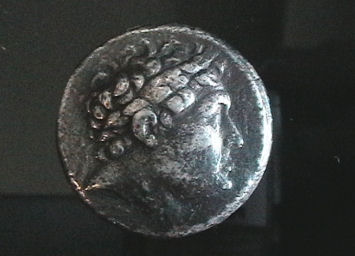
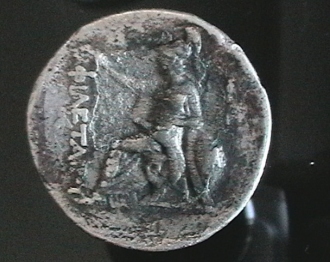
My Favorite Ancient coin for it aesthetics:

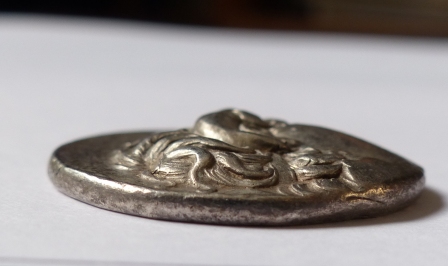
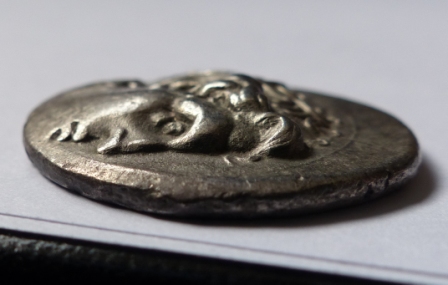
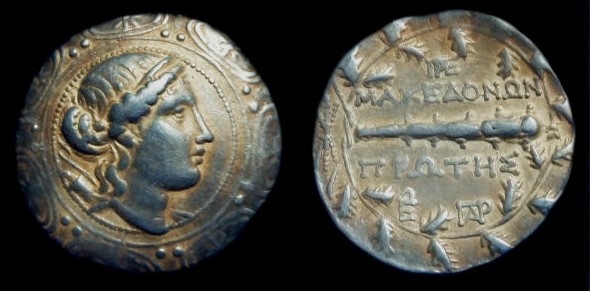
A marvelous of ancient craftsmanship, symmetry and beauty. Few coins in antiquity required such a great of amount of care to produce. Few examples of this type are off struck and great care was taken in their manufacture. These coins are relatively abundant and conditionally we are only limited by our budgets.
Roman Republic
Macedonia, First Meris, Amphipolis
167 - 149 BC.
AR Tetradrachm, 32 mm x 16.59 grams
Obv: Diademed and draped bust of Artemis right, bow and quiver over shoulder, in the center of a Macedonian shield,
Rev: MAKEDelta;ONOmega;N Pi;POmega;THSigma;, horizontal club, monograms above and below, all within oak wreath,
ref: SNG COP 1313
3) My favorite Ancient Coin for its Rarity and Cultural Intrigue.
In the 4th century AD the Roman empire was embattled with civil wars and unprecedented inflation. There coinage becoming far smaller and cruder by earlier standards.
But in the east -
Once tribal nomads who inherieted the Greco-Bactrian kingdom's, culture arts and sciences became a super power in central Asia in the first century AD stiking coins in Bronze and Gold. Subjugated in the third century AD by Sassanian Persia, they would endure under the Kushanshahs. Repeated nomdic invasions of Central Asia and seemingly endless pressures from every direction caused the Kushan to cease to exist.
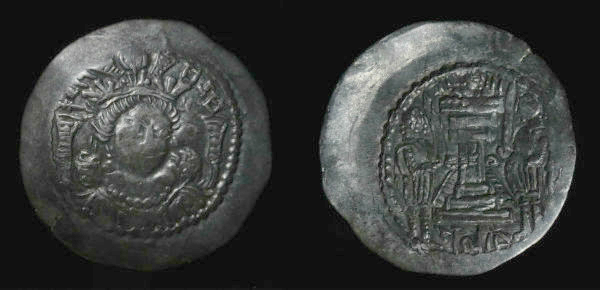
Oddly enough here appears a silver coin naming a King, Kidara, who in title lays claim to the name Kushan. The Kidarites who take name from Kidara, were most likely nomadic vassals of the Kushan who sought to gain dominance over the region. They built a tribal confederation and were also recognized by Persia as a sovereign state around the time of Shapur III.
Many centuries later, powerful Indian kings, far, far away would claim Kidara as an ancestor in title. A fascinating history that is only now coming into focus.
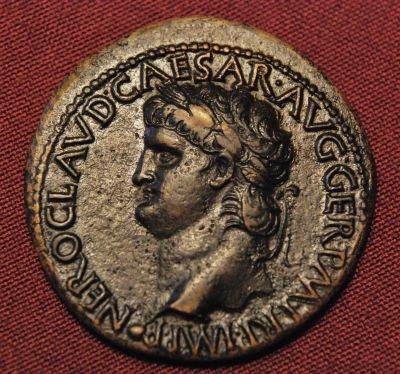
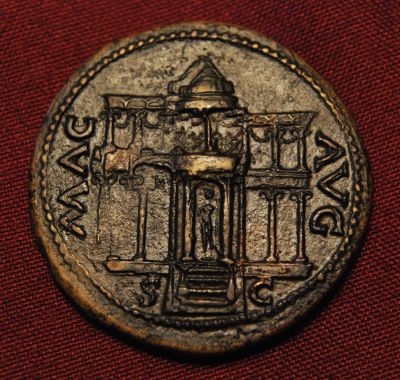
Kingdom of the Kidarites
Kabul, Afghanistan (c. AD 360)
AR Drachm 29 mm x 4.11 grams
Bust of Kidara facing slightly right, wearing crown with streamers, KIDARA KU-SANASA in Brahmi above / Fire altar flanked by attendants, SULAKHA in Brahmi below.
Ref: Gobl, Hunnen Em. 11
Note: Extremely Rare Coin, Naming Kidara as the Kushan. Beautiful old cabinet toning.












 Posted 05/31/2015 02:14 am


 Nice coin the toning is a nice addition to.