| Author |
 Replies: 54 / Views: 6,733 Replies: 54 / Views: 6,733 |
|
|
|
Pillar of the Community
 United States
1499 Posts |
Quote:
When you say 'adjustment marks' are you referring to what I would describe as the scraping across the obverse? I've seen other early dollars with this effect and they don't grade as a details coins. What causes this? The adjustment marks are the straight line "scratches" that appear on the obverse of the 1795 Flowing Hair dollar that I posted earlier. In the early days of the mint the weight of the planchets to not always fall within the legal limits after the silver strips had been rolled out and cut into blanks. If a planchet was too light, it usually had to be thrown back into the melting pot and remade. There are a few early dollars that have a silver plug that was driven into the center of the planchet to bring it up to weight. The smaller coins appear to have always been melted when they were less than the standard weight. If the planchet was too heavy, it was brought down to the legal standard by scraping off the excess metal. Ladies wearing leather aprons performed this boring task for 66 cents a day. They were the most poorly paid employees in the mint. The filings were gathered up and melted. This procedure was done for gold and silver pieces but not for copper coins. A few early dollars have both the silver plug and adjustment marks. The most famous piece that has both is the 1794 Specimen 66 coin for which a collector paid $10 million which is the current world record for a single coin. Getting the weight right on the gold and silver coins was important for two reasons. First, it preserved the integrity of the mint's products. If the coins were underweight, that would have undermined the value of the coins in the eyes of the people. If the coins were overweight, that would have cheated the depositors who consigned gold and silver to the mint for coinage. Heavy coins met that they would get back less money than they had deposited. In a related "scandal" the official composition of the silver that in the early U.S. coins was supposed to be .8924 silver and .1076 copper. Some mint employees took a shortcut and made the composition .9000 silver and .1000 copper. That result in an excess of silver in the coins. When the depositors found about it, it resulted in vociferous round of complains. |
|
Pillar of the Community
United States
705 Posts |
Bill - that is very interesting. Thank you for the lesson
|
|
Bedrock of the Community
United States
11966 Posts |
Quote:
If the planchet was too heavy, it was brought down to the legal standard by scraping off the excess metal. Ladies wearing leather aprons performed this boring task for 66 cents a day. They were the most poorly paid employees in the mint. The filings were gathered up and melted. This procedure was done for gold and silver pieces but not for copper coins.
Here is a picture of what Bill describes. 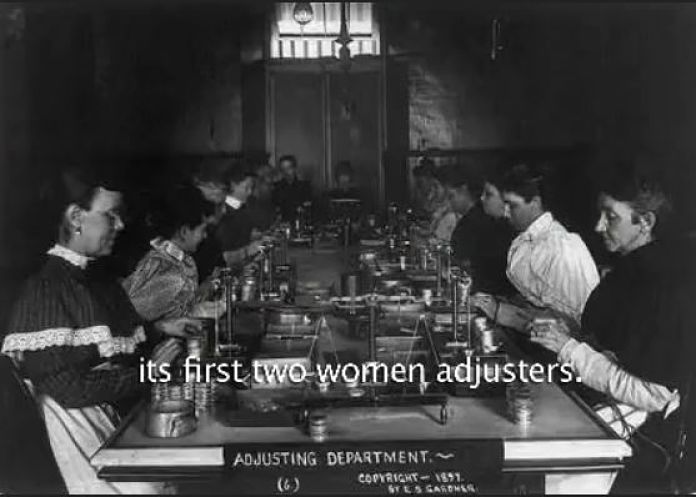 IN NECESSARIIS UNITAS - IN DUBIIS LIBERTAS - IN OMNIBUS CARITAS THE MAN IN THE ARENA, Theodore Roosevelt at the Sorbonne Paris on April 23, 1910: " It is not the critic who counts; not the man who points out how the strong man stumbles or where the doer of deeds could have done better. The credit belongs to the man who is actually in the arena, whose face is marred by dust and sweat and blood, who strives valiantly, who errs and comes up short again and again, because there is no effort without error or shortcoming, but who knows the great enthusiasms, the great devotions, who spends himself in a worthy cause; who, at the best, knows, in the end, the triumph of high achievement, and who, at the worst, if he fails, at least he fails while daring greatly, so that his place shall never be with those cold and timid souls who knew neither victory nor defeat." My coin website: https://fairfaxcoins.com |
|
Pillar of the Community
United States
3479 Posts |
Quote:
Bill - that is very interesting. Thank you for the lesson Ditto - It never ceases to amaze me at how members of this forum are always so open to sharing their knowledge.  |
|
CCF Advertiser
United States
1533 Posts |
|
|
Bedrock of the Community
United States
11966 Posts |
Imagine if you were a coin collector who could travel through time...
IN NECESSARIIS UNITAS - IN DUBIIS LIBERTAS - IN OMNIBUS CARITAS THE MAN IN THE ARENA, Theodore Roosevelt at the Sorbonne Paris on April 23, 1910: " It is not the critic who counts; not the man who points out how the strong man stumbles or where the doer of deeds could have done better. The credit belongs to the man who is actually in the arena, whose face is marred by dust and sweat and blood, who strives valiantly, who errs and comes up short again and again, because there is no effort without error or shortcoming, but who knows the great enthusiasms, the great devotions, who spends himself in a worthy cause; who, at the best, knows, in the end, the triumph of high achievement, and who, at the worst, if he fails, at least he fails while daring greatly, so that his place shall never be with those cold and timid souls who knew neither victory nor defeat." My coin website: https://fairfaxcoins.com |
|
Pillar of the Community
United States
1970 Posts |
Quote:
Imagine if you were a coin collector who could travel through time... Then rarities wouldn't be worth anything anymore! |
|
Pillar of the Community
United States
3361 Posts |
Remarkable coins billjones. When did weight adjustment end in the US? The latest I've seen on French coins is around 1820. Sometimes it's across the bust, but usually just the rim.  "Two minutes ago I would have sold my chances for a tired dime." Fred Astaire
|
|
CCF Advertiser
United States
1533 Posts |
I've heard around 1807. Does anyone have anything later with adjustment marks?
|
| |
Replies: 54 / Views: 6,733 |






 First Page
 Previous Page


 Posted 01/13/2017 10:40 am





