| Author |
 Replies: 750 / Views: 66,894 Replies: 750 / Views: 66,894 |
|
|
|
Pillar of the Community
Belgium
1194 Posts |
beautiful coins .I only look , mine are not dated exactly. albert
|
|
Pillar of the Community
 United States
8047 Posts |
I have not tried to have a "year collection," but in doing the research to contribute to this thread, I was surprised to find that some of my 14th century Brabant coins have been dated to a single year.
|
|
Pillar of the Community
Belgium
1185 Posts |
Quote:
medieval European coins often have a mix of symbols of civic and religious authority interesting point ! the sheep pictured with lots of wool on the "mouton d'or" is a good example * the sheep is pictured with a halo, so the religious connection is solid, also AGN DEI in the legend ** but it could also be a civic symbol: the wool industry (wool from England => Flanders and Brabant textiles) was the largest economic section in the country and brought wealth to the region Vilvoorde today is a small town, it was even smaller in the middle ages; quite surprising that it had its own mint |
|
Pillar of the Community
United States
8047 Posts |
1c5d, I agree with those comments on dual symbolism of the sheep/lamb, which also appears on gold coins of other nearby places (France). And we could indeed have a long discussion on places that minted in medieval times that are far less important today (Melle and Sierck in France quickly come to mind) For 1330s, this gros from Brabant was minted December 1339, mint not indicated. Legend around rampant lion is MONETA BRABAN. Legends on other side are BNDICTV SIT NOME DNI RNI IHV XPI and interior IO DUX LO BRAB. Attribution is W.359. I noticed Numisma has the wrong date for this coin 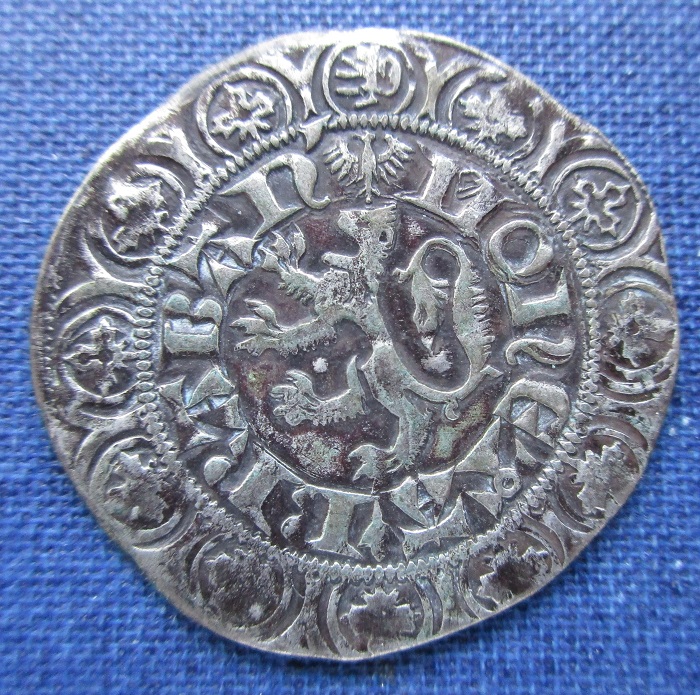 (sorry that this next image is rotated 90 degrees counterclockwise... having trouble fixing that) 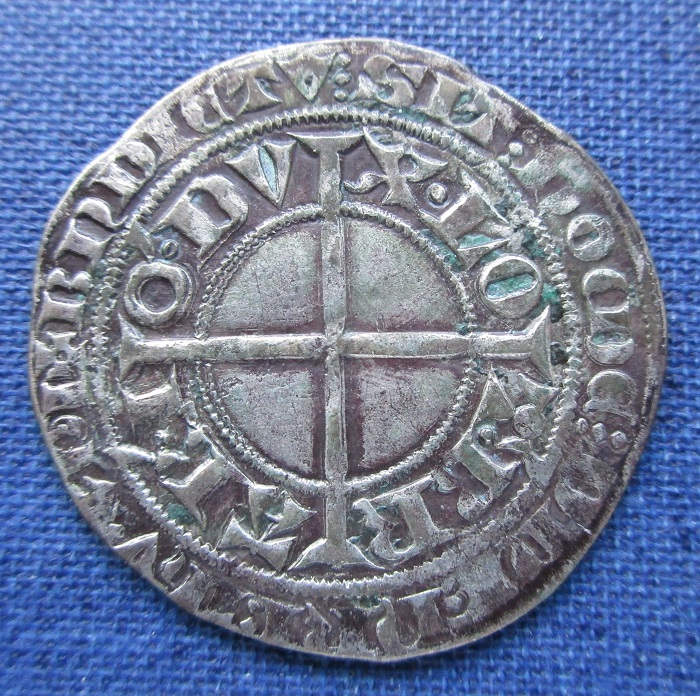 Edited by tdziemia
02/18/2018 06:19 am
|
|
Pillar of the Community
United States
8047 Posts |
I've forgotten if back-to-back posts breaks a rule, but have a couple more form 1330 decade. Will just post this Brabant "Chaise d'Or" or Ecu, struck in the name of the Holy Roman Emperor, Louis of Bavaria, in 1337 at Antwerp. Obv: LUDOVICUS DEI GRA ROMANORUM IMP, Rev: XPC VINCIT XPC REGNAT XPC IMPERAT. 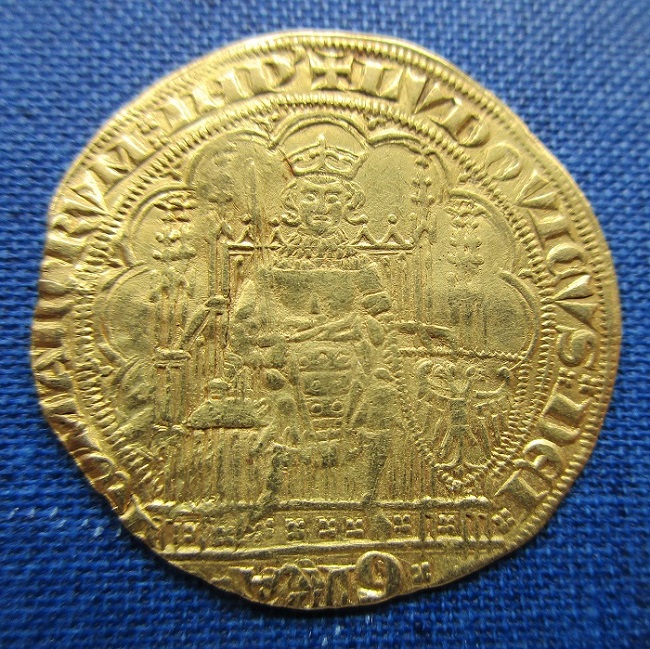 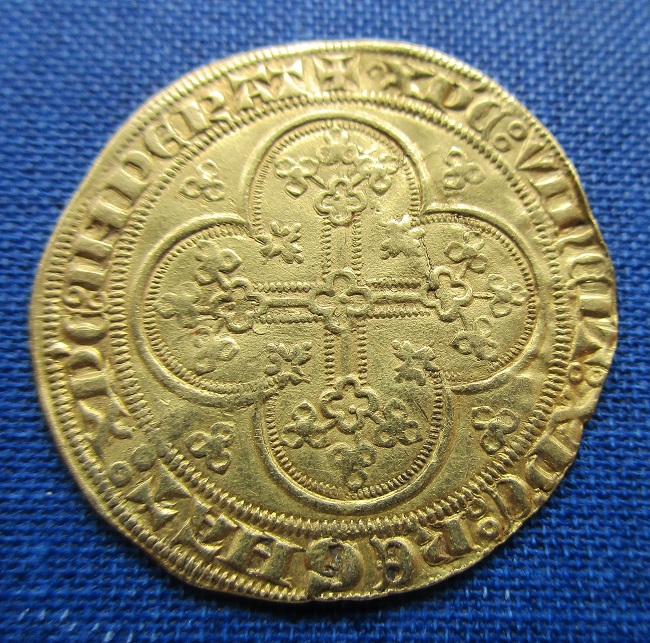 Edited by tdziemia
02/18/2018 6:25 pm
|
|
Moderator
  United States
34542 Posts |
@tzdiemia, back to back posts are fine if you are posting gold! Here is a Denar from Hungary that can be dated to 1333 AD. The rev legend is "+ KAROLVS REX HVNGARIE". It is attributed as Huszar 481 and Frynas H.24.32. Tomorrow, we will drop back to the decade of the 1320s. 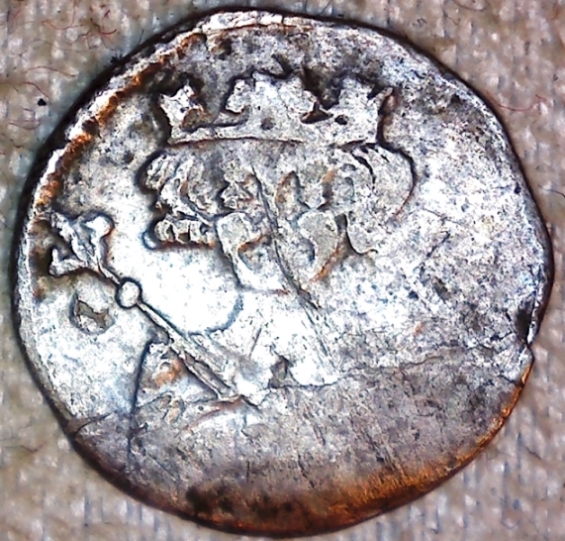 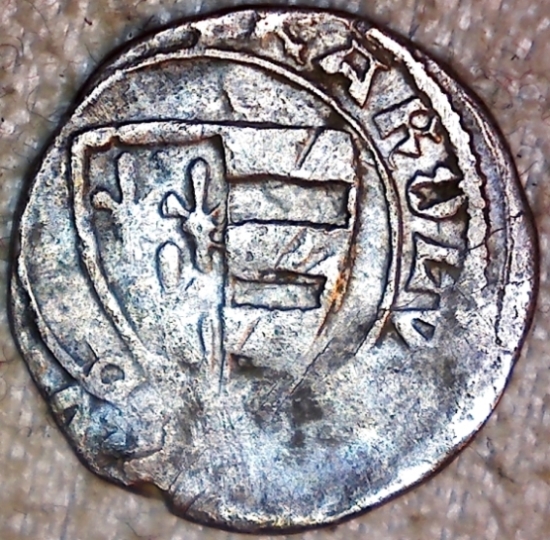 "If you climb a good tree, you get a push."
-----Ghanaian proverb
"The danger we all now face is distinguishing between what is authentic and what is performed."
-----King Adz
|
|
Pillar of the Community
United States
8047 Posts |
Since I am new to this game, and have not been so serious a student of medieval numismatics compared to other posters, please excuse me if I make observations that are obvious.
When it comes to dating, why do we see some nations much more than others?
I realize there can be multiple reasons (length of reign, quality of mint records., etc) but it seems odd we haven't seen anything from the kingdom of France, and just one from England for 19 decades.
Is this the way it usually goes?
Edited by tdziemia
02/18/2018 9:30 pm
|
|
Moderator
United States
34542 Posts |
Lots of choices, including France and England. For me personally, though, I have focused on posting coins to this thread which can be attributed to a single year. However, you do make a good point that there are certain periods of time where finding dated coins is easier.
"If you climb a good tree, you get a push."
-----Ghanaian proverb
"The danger we all now face is distinguishing between what is authentic and what is performed."
-----King Adz
|
|
Pillar of the Community
United States
8047 Posts |
Thanks. I collect fairly narrowly geogaphically, and due to this thread, have realized Brabant has good information on issuing date of undated coins in the 13-15th c. (I counted about 15 years in the 1300s for which undated coins can be assigned). It looks like the same is true of Flanders. The other two places I collect (Lorraine, Poland) have far fewer early coins that can be dated to a unique year, at least based on the references I have.
Always nice to be learning more!
|
|
Moderator
United States
34542 Posts |
Here is a Denar from Slavonia issued under the authority of King Banus Nikolaus. It dates to between 1322 and 1325 AD. The obv legend is "+MOHETAPEGIS + SALAVOINIA". It is attributed as Rengjeo 229. 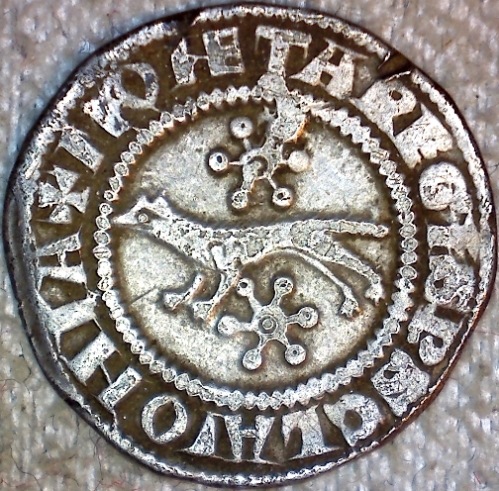 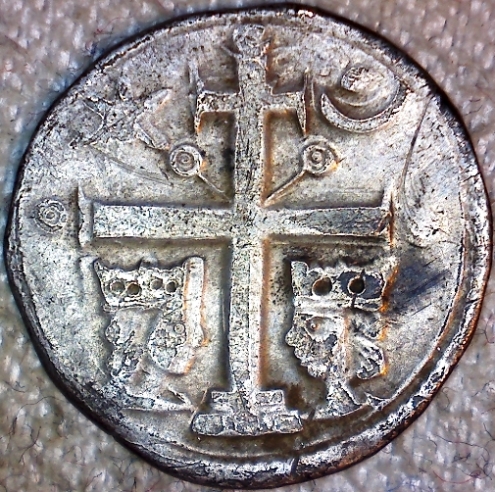 "If you climb a good tree, you get a push."
-----Ghanaian proverb
"The danger we all now face is distinguishing between what is authentic and what is performed."
-----King Adz
|
|
Pillar of the Community
United States
8047 Posts |
Nice coin! 1. I was unaware of the existence of a place called Slavonia. 2. Cute critter on the obverse, 3. Double barred cross on the reverse links to the heraldry of Jagiellos and Lorraine. My only contribution is this more broadly dated esterlin a l'ecu from Brabant, Leuven mint, dated 1329-37, W.349. Obv legend: DVX BRAB ANTIE. Rev: MONETA LOVANIES 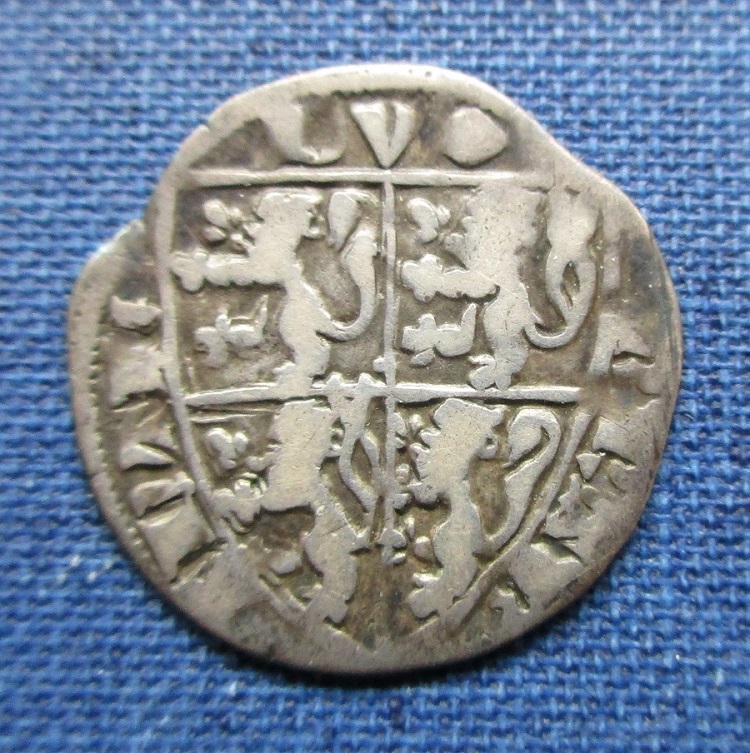 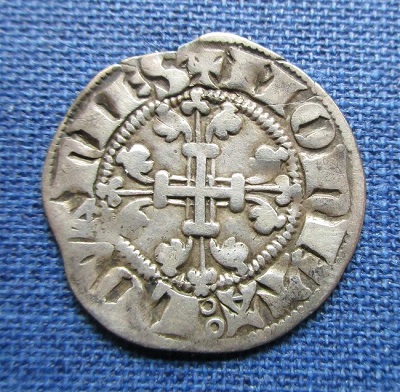 |
|
Pillar of the Community
Russian Federation
5186 Posts |
Before we have entered into the 1310s, I wanted to post my oldest numeric AH dated coin. (I probably have a few older coins with spelled-out AH dates, but I hadn't deciphered them yet.) 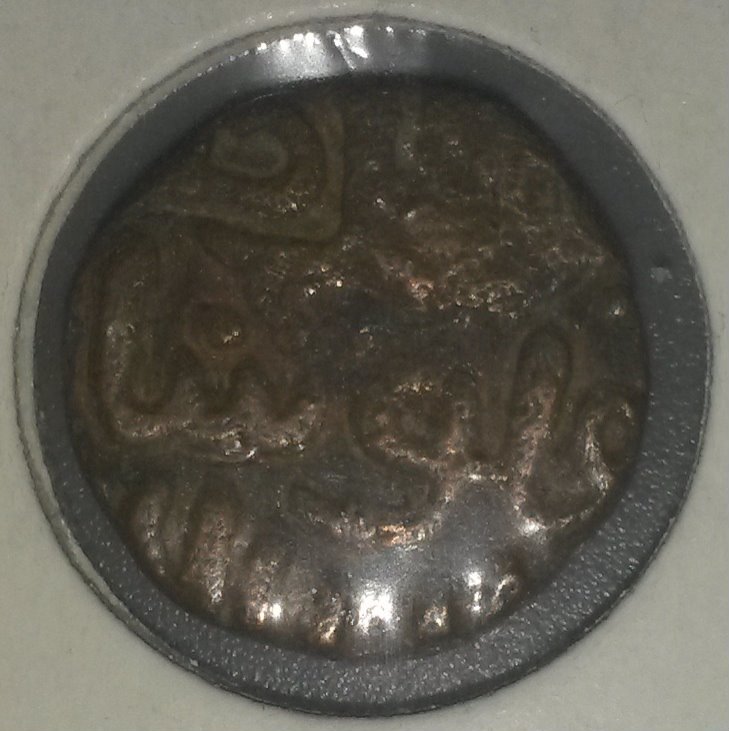 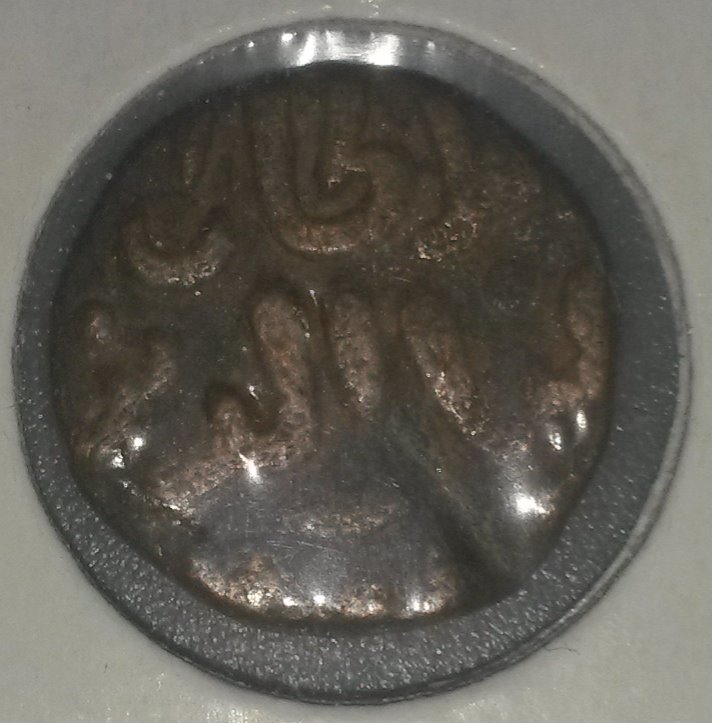 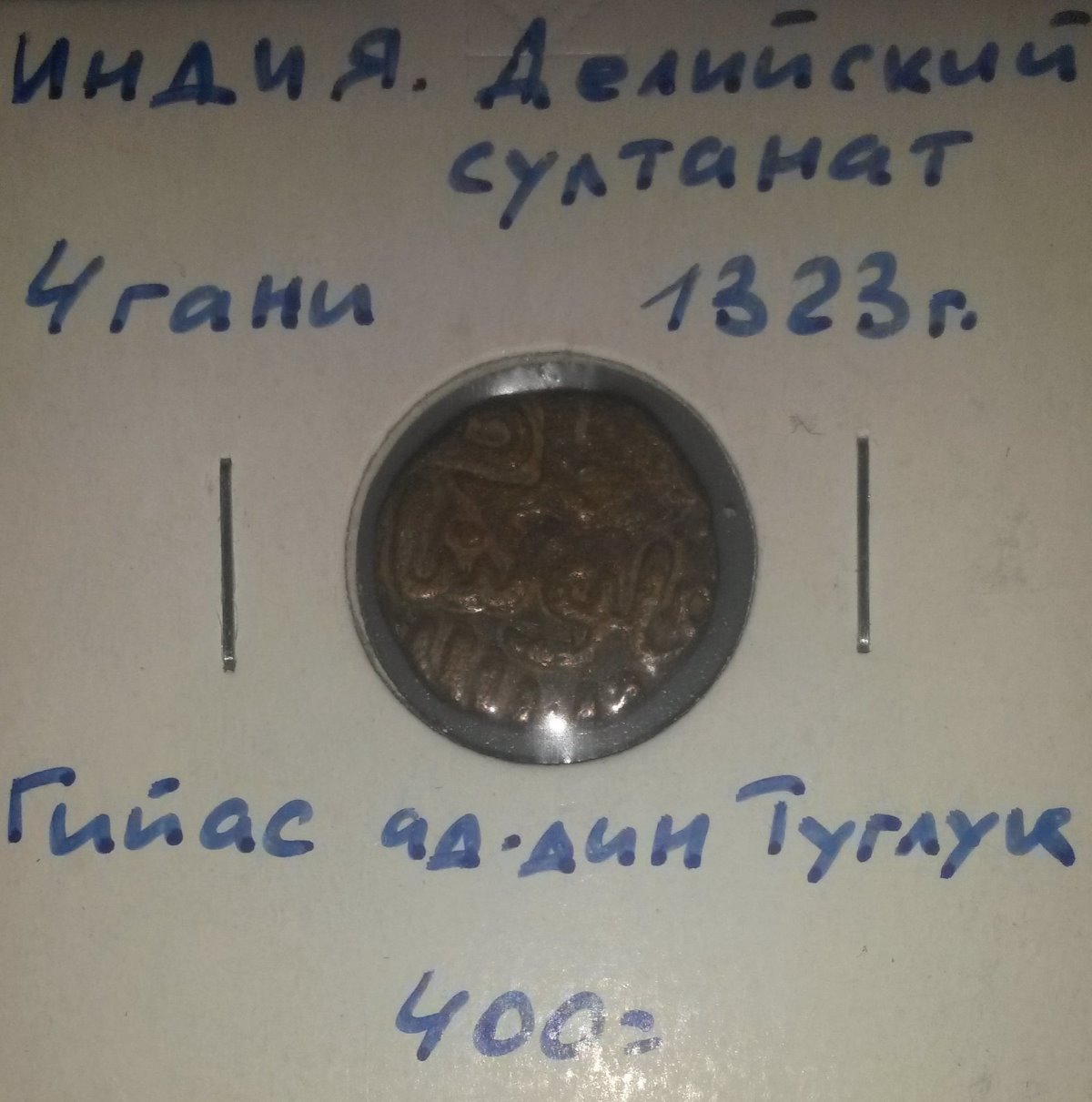 India, Sultanate of Delhi, Giyas ad-Din Tughluq, 4 gani, 723 AH (1323 AD). Ironically, the date is actually 90% off flan - but enough is left to identify the 3, and there's no other date it can be for this type. Looking forward for the 1310s! |
|
Moderator
United States
34542 Posts |
While the date range on this coin is too broad to move us back a decade, I thought that it might be nice to post anyways. Here is a Cornado of Castille and Leon in Spain. It was issued under the authority of Alfonso XI between 1312 and 1350 AD. The obv legend is "ALFONS REX" and the rev legend is "CASTELLE ET LEGIONIS". It is attributed as C&C 1191. I can post a coin to keep us moving later today. 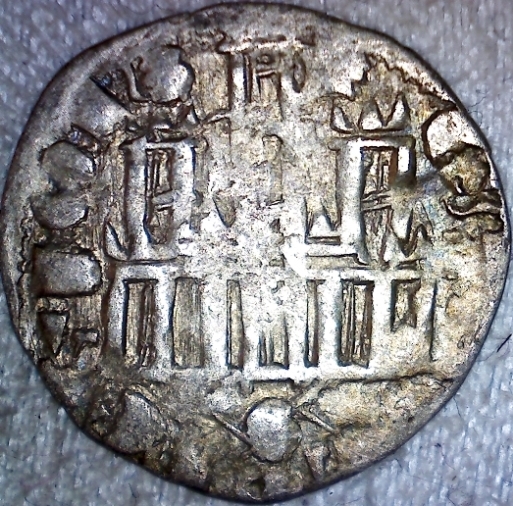 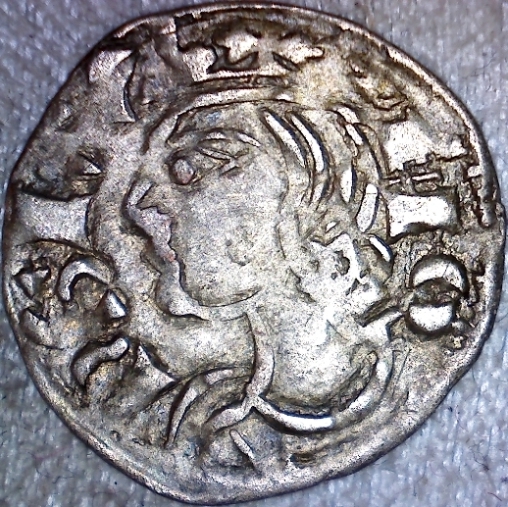 "If you climb a good tree, you get a push."
-----Ghanaian proverb
"The danger we all now face is distinguishing between what is authentic and what is performed."
-----King Adz
Edited by Spence
02/20/2018 06:53 am
|
|
Pillar of the Community
United States
8047 Posts |
january1, nice coin and good reminder that the world is much larger than Europe. I am curious if we ever see east Asian (for example Chinese) coins on these types of threads? I am totally ignorant about numismatics before 1800 in Asia ... This esterlin au chatel brabanconne from the Brussels mint (W.307) is probably borderline in adhering to the "1 decade rule." Ghyssens says minting started 1318. When listed in recent Elsen auctions we see "starting 1317/18." It's not clear to me what was the end date, but by 1329 the Brussels mint was striking a different type of esterlin (posted yesterday). Grateful for comments on the date range from any other sources. Obv: I DUX DE BRABANTIA Rev: MON ETA BRU XEL 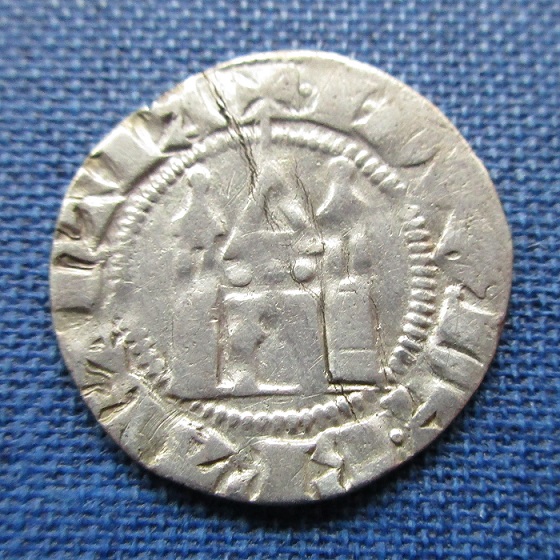 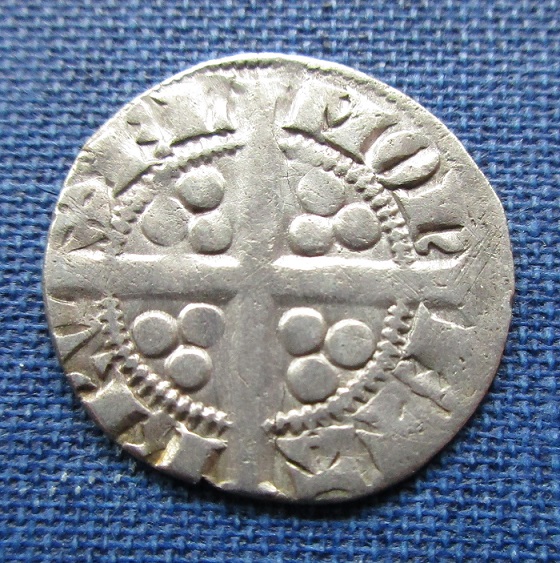 Edited by tdziemia
02/20/2018 08:29 am
|
|
Moderator
United States
34542 Posts |
This one should fit the bill for this decade nicely. Here is a Pfennig of the German Bishopric of Wuerzburg. It was issued under the authority of Gottfried III von Hohenlohe between 1317 and 1322 AD. It is attributed as Ehwald 4500. 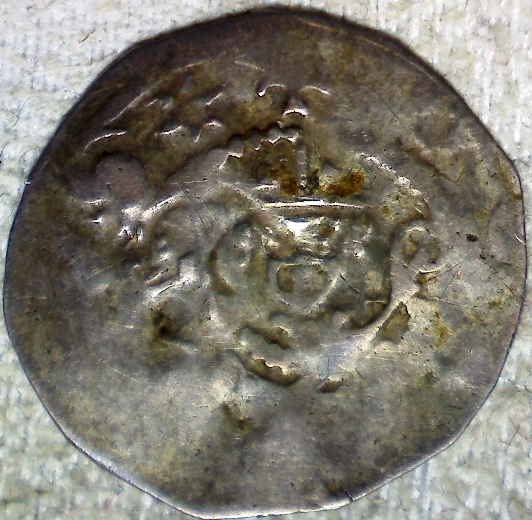 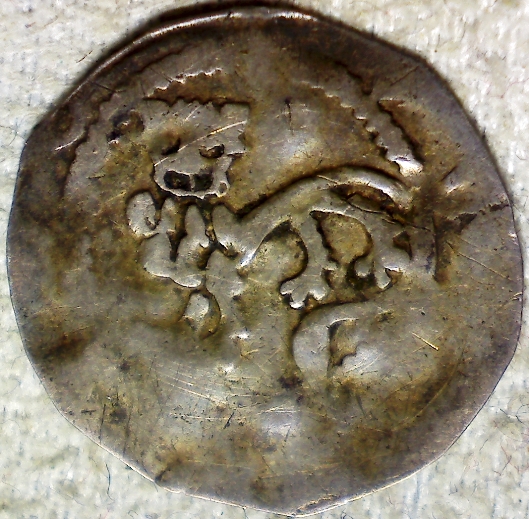 "If you climb a good tree, you get a push."
-----Ghanaian proverb
"The danger we all now face is distinguishing between what is authentic and what is performed."
-----King Adz
|
| |
Replies: 750 / Views: 66,894 |







 First Page
 Previous Page


 Posted 02/17/2018 12:23 pm





