| Author |
 Replies: 750 / Views: 66,862 Replies: 750 / Views: 66,862 |
|
|
|
Bedrock of the Community
Canada
11922 Posts |
Quote:
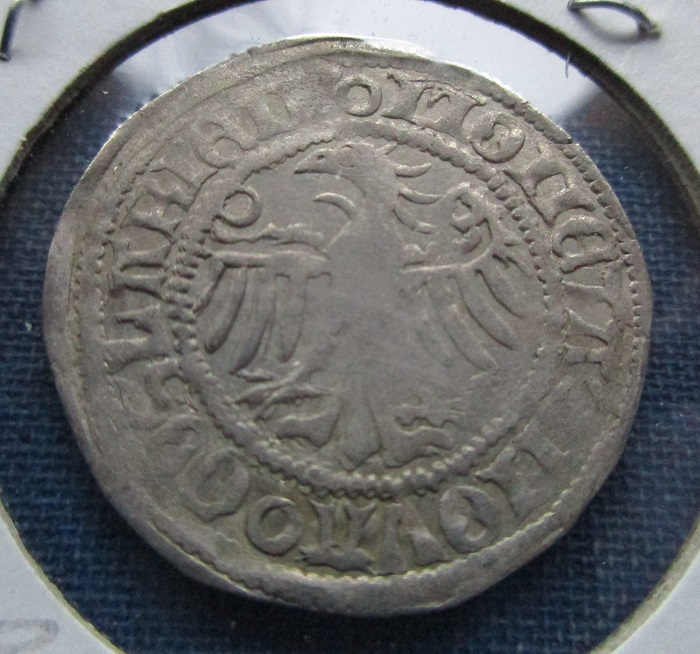
That coat of arms Joseph looks like a very unhappy pumpkin! I guess that pumpkin just had a pretty rough life!  ----- Here is a 1 tanka piece from the Indian state of Jaunpur. With the date of 896 written on it, it was made in around 1491 in the Gregorian calendar: 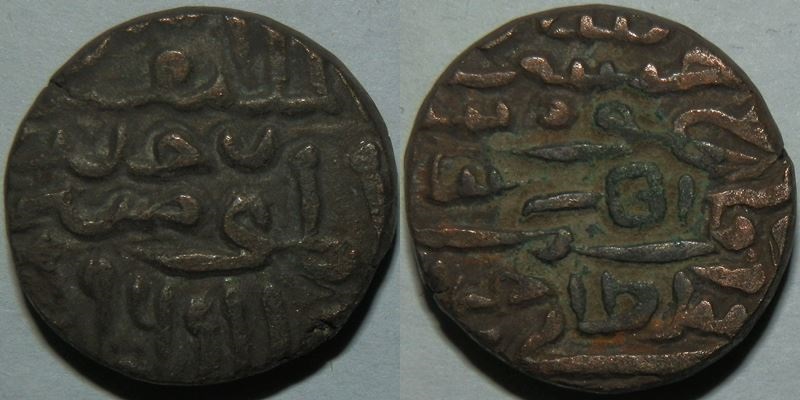 |
|
Pillar of the Community
 United States
8047 Posts |
OK ... gotta comment on the pumpkin joke. Those Polish 1/2 grosz coins have an EAGLE on one side and a CROWN on the other.
So, whaddya mean coda ahms? Don't see no coat or arms anywheah!
Joseph, I love those old coins with AH dates. Thanks for reminding us that medieval coins were happening outside of Europe, too.
|
|
Pillar of the Community
United States
8047 Posts |
As the hours draw nigh on the 1490s I'll post this undated coin recently won at auction that fits my saints collection. Bern (Switzerland)Dicken undated, minted around 1492. Obv St. Vincent, + SANCTUS VINCENCIUS Rev Bear and eagle, MONETA * NO * BERNENSIS Unusually massive coin for the era (9.6 g) before arrival of new world silver, sign of civic pride for the wealthy Swiss burghers. St. Vincent was a deacon of the diocese of Zaragoza Spain who was martyred around 304 AD in the persecutions of Diocletian. How he became a patron saint of Bern is anyone's guess 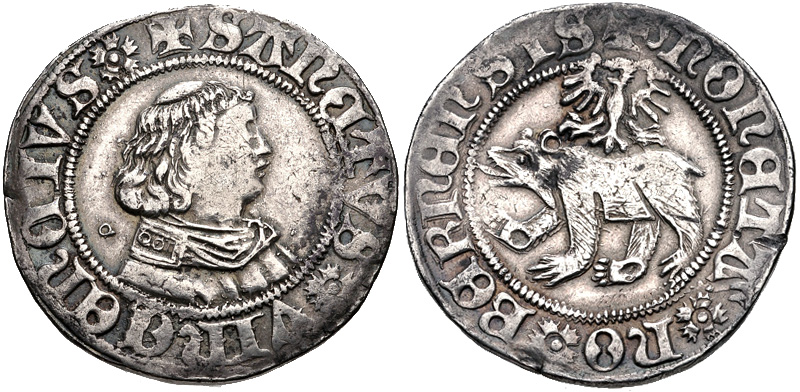 |
|
Moderator
  United States
34542 Posts |
Super example of Bern iconography @tdziemia! Here is my Double Briquet of the Netherlands Duchy of Brabant (Antwerp mint) dated 1481 AD. The obv inscription is "MARIA DEI D DVCISS B G BR Z LI" while the rev inscription is "SALVV FAC PPLM TVV DNE A 1&81". I have it attributed as Levinson II-54. 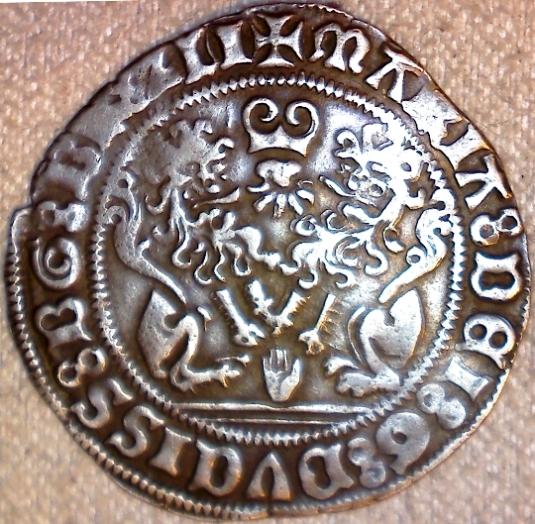 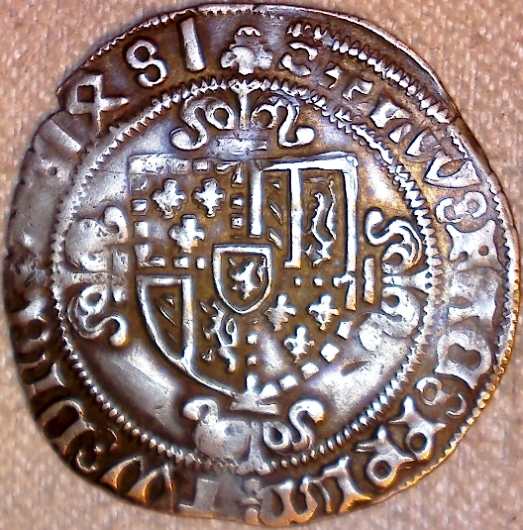 "If you climb a good tree, you get a push."
-----Ghanaian proverb
"The danger we all now face is distinguishing between what is authentic and what is performed."
-----King Adz
|
|
Pillar of the Community
Russian Federation
5186 Posts |
This coin wasn't dated narrowly enough to advance the How Far Back Can We Go thread, but it's sufficiently narrow for this one... 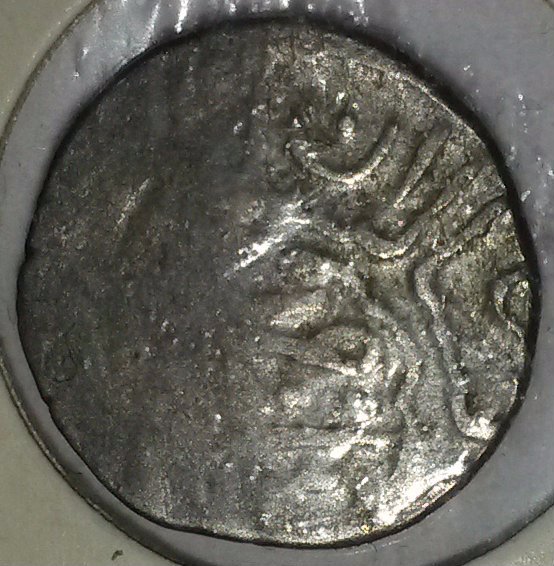 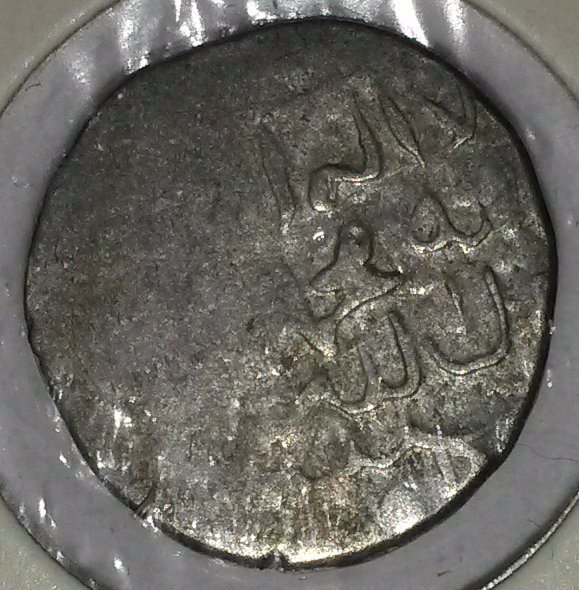 Shirvanshahs, Derbendi dynasty, Farrukhsiyar (Farrukhyasar). AR tanka, third standard (about 2.06 g). Shemakha mint. Album 2471.3, Zlobin type 043.0, minted 892-4 AH (1487-9 AD), dated 89x (mostly off flan). Sorry for all the glare in the photos; the coin is in a 2x2 holder. Edited by january1may
02/01/2018 06:17 am
|
|
Pillar of the Community
United States
8047 Posts |
Nice sharp double briquet, spence. Brabant is one of those happy hunting grounds for dated 1400s.
|
|
Moderator
United States
34542 Posts |
Quote:
Brabant is one of those happy hunting grounds for dated 1400s. I completely agree, but in the interest of mixing things up a little, I'll be posting a coin from elsewhere in the Netherlands tomorrow. "If you climb a good tree, you get a push."
-----Ghanaian proverb
"The danger we all now face is distinguishing between what is authentic and what is performed."
-----King Adz
|
|
Bedrock of the Community
Canada
11922 Posts |
Quote:
OK ... gotta comment on the pumpkin joke. Those Polish 1/2 grosz coins have an EAGLE on one side and a CROWN on the other.
So, whaddya mean coda ahms? Don't see no coat or arms anywheah! I mean, I was talking about the crown. I just assumed that Crazyb0 was talking about the same. Quote:
Joseph, I love those old coins with AH dates. Thanks for reminding us that medieval coins were happening outside of Europe, too. I love them too! But from here on in, I think I might only have one more AH-dated coin I will be able to post. I do have a few older ones from some Indian states, but those ones do not have dates on them, and their date-ranges are each over ten years. |
|
Pillar of the Community
United States
8047 Posts |
Jumping the gun a bit with a 1475 Brabant double briquet of the previous ruler, Charles le Temeraire (variously translated as "The Bold" or "The Reckless"), father of Marie of Burgundy (coin posted by Spence). Obv legend: KAROL DEI GR DUX BG BRA Z LI (Charles by the grace of god Duke of Burgundy, Brabant, Zeeland and Limburg) Rev legend looks same as the earlier Brabant coin: SALVV FAC PPLM TVV DNE A 1475 Historical context of Charles the Bold, and his daughter Marie. In the 1400s, the House of Burgundy controlled wealthy lands form southeast France to the North Sea (Burgundy, Luxembourg, Flanders, Brabant, Zeeland) legacy of the Carolingian "Lotharingia" and Charles aspired to consolidate this area into a kingdom (as opposed to a string of duchies, counties etc) between France and the Holy Roman Empire. But Lorraine, allied with the French throne, stood in the way. In a back-and-forth struggle to capture and keep Lorraine he was killed in battle at Nancy Jan. 5, 1477. This was effectively the end of the House of Burgundy, and a pivot point in European history. His only offspring, daughter Marie, married into the Hapsburgs, and served as duchess of Burgundy, Brabant, etc., until her tragic death in a horseriding accident in 1482. Her son Philip ("the fair") became the first Hapsburg king of Spain (as well as duke of Brabant) and began the line of Spanish kings that persists today. 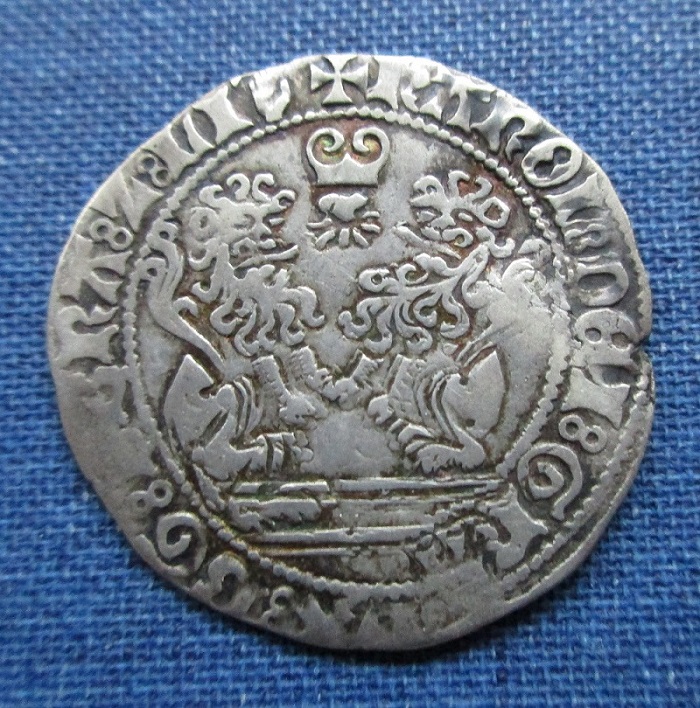 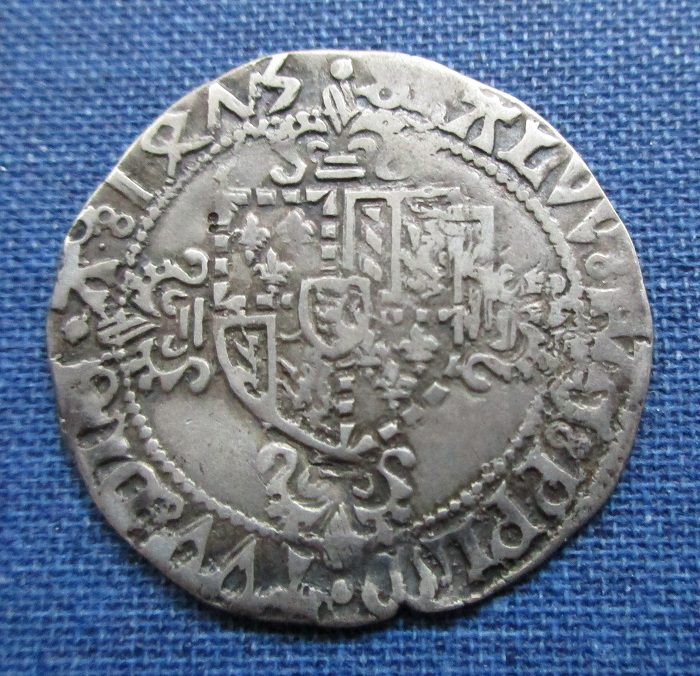 |
|
Moderator
United States
34542 Posts |
Very nice Double Briquet @tdziemia. Here is my Stuiver of Deventer (Netherlands) dated 1472 AD. The obv inscription is "MONETA NOVA DE DAVENTRIA" while the rev inscription is "ANNO DOMIN M CCC LXII". It is a Levinson III-58. Starting tomorrow at 12:01 am, we can move on to the 1460s. 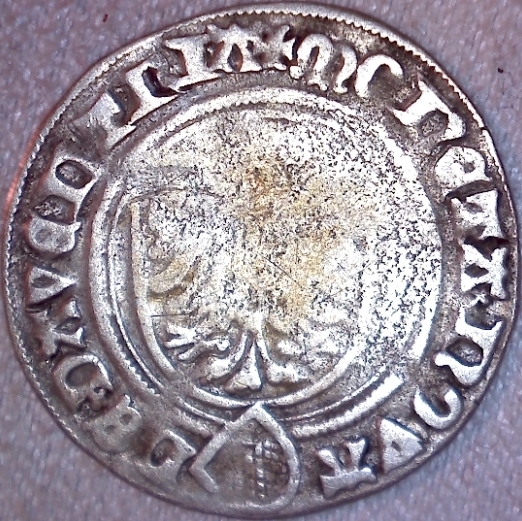 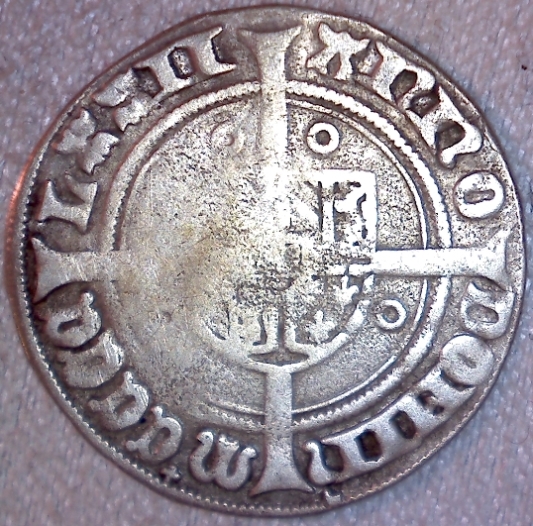 "If you climb a good tree, you get a push."
-----Ghanaian proverb
"The danger we all now face is distinguishing between what is authentic and what is performed."
-----King Adz
|
|
Pillar of the Community
United States
8047 Posts |
Is that our first date in Roman numerals? My only other coin that can be (semi-) definitively placed in the 1470s is this Groschen from Goslar, Germany. Attribution is Saurma 2145. I have seen this type variously referred to as `1470/71. and just "1470 and after." Glad for any insights on that. Obv: Standing Saint Matthias. SANCTUS MATHIAS Rev: Eagle. MONETA NOVA GOSLARIEN Goslar is in central Germany's Harz Mountains. It was far more important in early medieval times than now, when it was an imperial residence for the Salian and Hohenstaiufen emperors from around 1025 to 1250. The nearby Rammelsberg silver mines would have been an important source of coinage metals. St. Matthias was the apostle chosen after Jesus' death to replace Judas, and hence the only apostle not personally chosen by Jesus. In Christian iconography, he is seen holding a book (for his preaching) and an axe, the instrument of his martyrdom. The book is not so clear in this picture, but the axe (a tall medieval halberd) is held upright in his left hand. 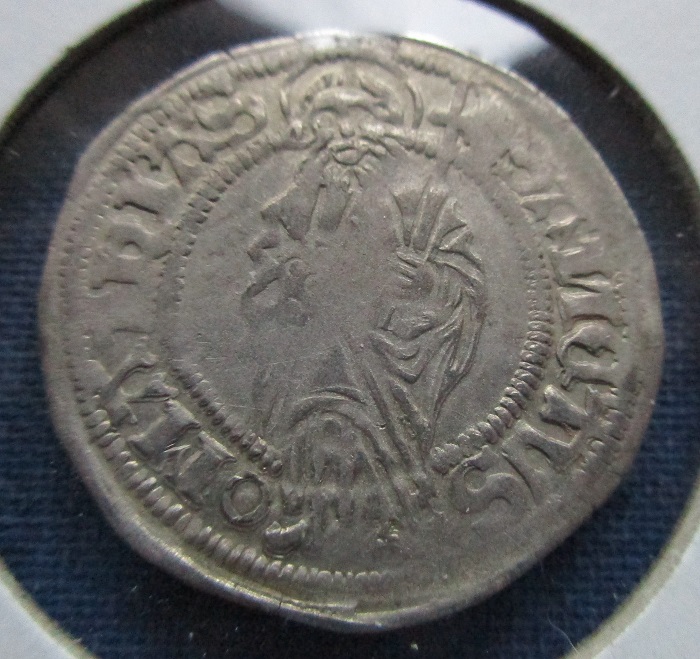 Edited by tdziemia
02/02/2018 09:01 am
|
|
Pillar of the Community
United States
8047 Posts |
Cannot get the reverse photo attached  |
|
Moderator
United States
195203 Posts |
Quote:
Cannot get the reverse photo attached What is the problem? |
|
Pillar of the Community
United States
8047 Posts |
After attaching the first image, I went down a space, then clicked Upload image, but could not get the window to open. After several tries, I just went ahead and completed the post without it.
I tried a new reply, and still could not get the Upload image window to open.
Probably if I try now, in this post, it will work. Let's see.
Nope.
|
|
Pillar of the Community
United States
8047 Posts |
|
| |
Replies: 750 / Views: 66,862 |








 First Page
 Previous Page


 Posted 01/31/2018 8:40 pm