| Author |
 Replies: 71 / Views: 22,325 Replies: 71 / Views: 22,325 |
|
|
|
Pillar of the Community
United States
1005 Posts |
Jingling and regularly touching harshly cleaned coins might be the only way to put them back on the road to looking normal again eventually
|
|
Pillar of the Community
United States
3552 Posts |
Quote:
A dipped coin means that the coin was dipped in a cleaning solution for too long If one proceeds down to paragraph 92 at the bottom of this PCGS-authored page, a relevant comment about 'dipping' and its subjectivity exits: Quote:"Dipping" (the removal of toning with a chemical bath) is not considered cleaning under this definition..." https://www.PCGS.com/news/no-grade-coins-pt4 |
|
Pillar of the Community
United States
3552 Posts |
Quote:
...purchasing a coin online as a new collector, it's best to buy coins certified by PCGS or NGC. It may seem like an obvious statement to seasoned collectors but many neophytes to the hobby could be unaware that the absolute best way to SEE IMAGES of a coin in its true and natural condition is by going to: https://www.PCGS.com/cert/83634396This is actually one of my own coins that graded as genuine, "cleaning" - F Details. Plus, for all of the newbies out there one of the best tips I ever received from a PCGS-trained coin shop owner was, "Grade the coin but always take the grade on any holder with a grain of salt". However, allow me to insert a small caveat onto this statement. "Grade the coin but always take the grade on any holder as well as its corresponding website with a grain of salt". PCGS got the 'cleaning' designation correctly notated on both the slab and website of my coin but messed up the grade synchronization by printing F - Details on the slab and XF - Details on the website. That variation could mean a difference of $ 100s to $ 1000s depending upon the coin in question. I was just going to use this coin as an example for accurate cleaning images but now I will be calling PCGS next week to determine whether the XF should only appear on the physical in-hand slab (used at lightning fast auctions etc.) or both the website and slab.  |
|
Pillar of the Community
United States
591 Posts |
Quote:
the absolute best way to SEE IMAGES of a coin in its true and natural condition is by going to: a little confused; how does "in its true and natural condition" equate to an image of a cleaned coin, which would be the opposite of a coin's "true and natural condition"...am I missing something? To me, "true and natural condition" would be circulated looking for a circulated coin, and full of luster for an uncirculated coin. This one ebay seller has these mercs for sale right now. To me they generally look AU, with the 21 being XF. They are all the same color, is it just the lighting, I can't see luster on the AU coins, they just look FLAT!! Also, is it true that PCGS/NGC will straight grade AU condition coins with zero luster (maybe from polishing or dipping)? I feel they look for other evidence of cleaning when they details (other than lackluster AUs). I imagine no MS grades are given out for coins with zero luster (again from polishing or dipping), right?   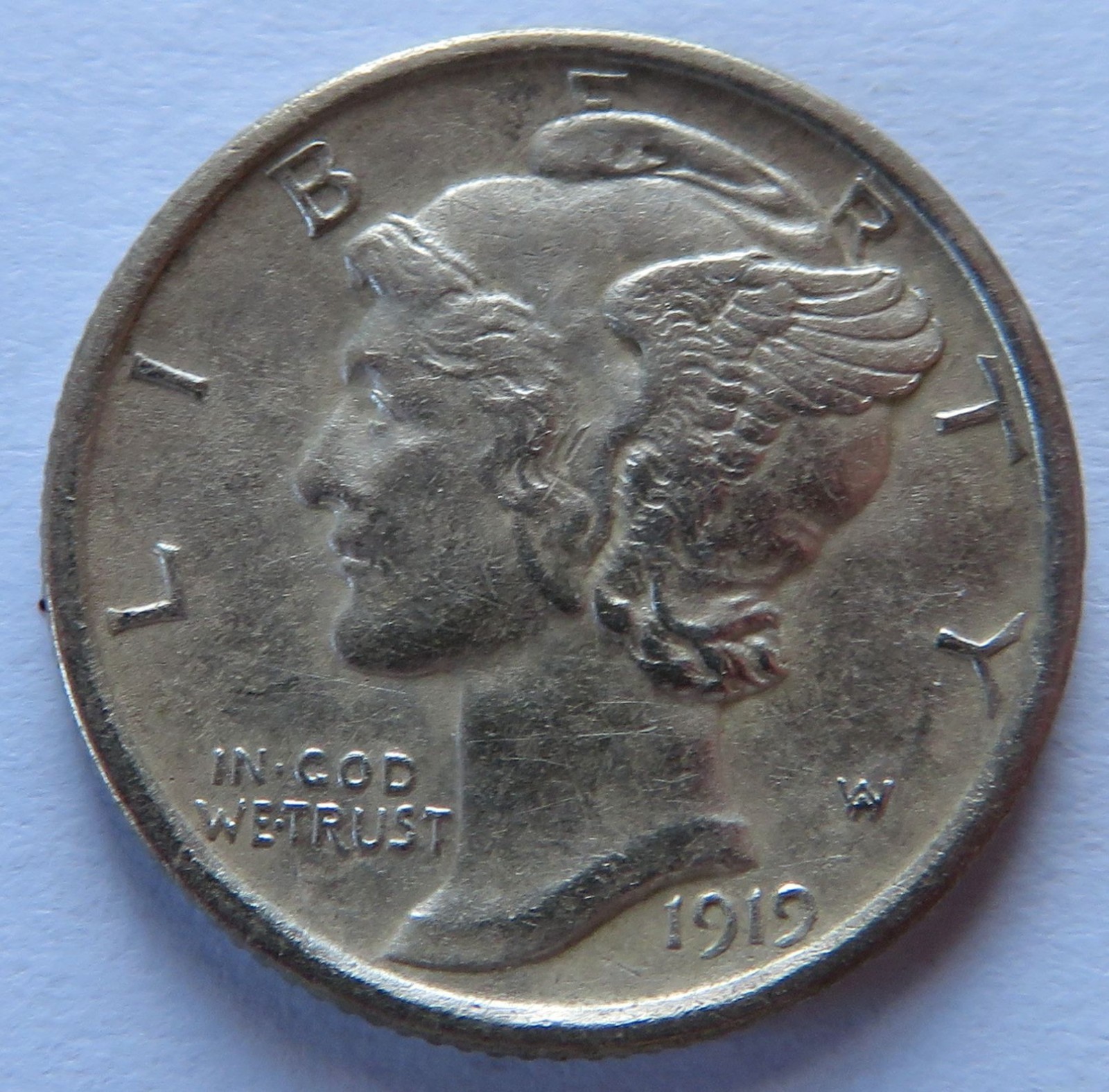      seller: gilsgreend 99.9% Positive feedback |
|
Pillar of the Community
United States
3552 Posts |
Quote:
how does "in its true and natural condition" equate to an image of a cleaned coin, which would be the opposite of a coin's "true and natural condition" This is sort of an oxymoron in that its interpretation perplexes: ie old news. I assumed that once a TPG slabs a coin its condition should not change for the most part. So the true and natural condition in my example refers to the state that the coin is in at the time it is graded. What else could it be? I would love to see any device or process that would allow one to visualize the status of a particular coin before a cleaning occurs. The best we have to go on are massive software databases such as PCGS' CoinFacts or NGC's VarietyPlus to visualize the fields and devices irrespective of the state of the patina. To further refine the above data one can also delve into PCGS' PhotoGrade or equivalent. But even with this plethora of information the sample used for each date still may or may not be the exact original 'true and natural condition' sought after for each selected coin requiring clarification of its original appearance immediately after it left the mint... |
|
Pillar of the Community
 United States
8715 Posts |
Quote:
If one proceeds down to paragraph 92 at the bottom of this PCGS-authored page, a relevant comment about 'dipping' and its subjectivity exits: Indeed, there is a typo in my post. It should read: "An overdipped coin... as dipping a coin properly is not considered cleaning. Edited by SilverDollar2017
01/27/2019 1:14 pm
|
|
Bedrock of the Community
13014 Posts |
Quote:
Also, is it true that PCGS/NGC will straight grade AU condition coins with zero luster (maybe from polishing or dipping)? I feel they look for other evidence of cleaning when they details (other than lackluster AUs). I imagine no MS grades are given out for coins with zero luster (again from polishing or dipping), right?
Dipping and polishing are extremely different and shouldn't be causally mentioned together like that. Dipping done right makes coins look as new. Polished coins are details coins for whatever their grade level is, dipped coins are straight graded the majority of the time unless someone messed it up or picked a bad candidate for it. As far as PCGS/NGC grading, luster is more important to PCGS. NGC has a history of grading coins more technically and giving higher grades to coins that may be ugly, where lack of luster will hold back the grade at PCGS as will being ugly |
|
New Member
United States
1 Posts |
Great write-up, thanks! As for me, yes I've bought cleaned coins, usually off ebay, to fill up an album. Occasionally, I'll splurge on a NGC graded coin, if the coin is a favorite of mine. I don't think cleaned coins are that bad. They seem to be selling quite well on ebay at attractive prices for novices such as myself. If they exhibit great details, why not. They're great for show and I've had many non-collectors impressed with their features. |
|
Pillar of the Community
United States
591 Posts |
Basebal21 - great info as usual, thanks. You're right that's an important distinction (dipped vs. polished). I believe if a coin is dipped properly, I won't even know it was dipped, but once luster is removed via dipping too long one time or being dipped several times over a coin's life, then it's in the "overdipped" category and it would seem an MS coin wear-wise should no longer be eligible for MS status via TPGs without that intact/remaining luster.
My thinking is both polished coins AND overdipped coins can likely regain some sense of market acceptability in the future after given a chance to re-tone. Wouldn't toning (aka tarnish) presumably hide past histories of polishing/overdipping? The surfaces regain some kind of patina, and while not the same as luster, these coins likely mimic a genuinely circulated coin's appearance, a coin that would have lost its luster from honest circulation. If hairlines resulted from the historic polishing, even those may "tone over" unless it was a severely abrasive cleaning.
Edited by one_fine_dime
01/27/2019 11:09 pm
|
|
Pillar of the Community
United States
591 Posts |
|
|
Pillar of the Community
United States
3552 Posts |
...any 'best' videos/narratives out there on time, technique, chemical composition & overall pitfalls commonly encountered for the dipping process to prevent it from acquiring a 'cleaned' classification?
I've never dipped: too afraid.
Edited by mdpmedia
01/28/2019 09:31 am
|
|
Moderator
 United States
196278 Posts |
 to the Community, BurnerRP! |
|
Pillar of the Community
United States
1005 Posts |
Dipping coins, in general, is a very shortsighted practice. It can only be done a limited number of times (maybe even just once or twice) before a coin is irretrievably ruined, and the fresh unpassivated surface it exposes re-tones so quickly a subsequent and destructive dip is needed before long (unless you airtite or lacquer the coin).
As for letting polished coins just re-tone naturally to allow them to regain market acceptability, this is simply not practical for most coins. Of the tell-tale signs of cleaning, namely surface texture and color, only the color will recover over time and even that might not be an attractive or natural-looking color. Surface texture will always betray the fact the coin was cleaned/polished, even after re-toning.
The only way to fully restore the coin would be to "circulate" it or make it a pocket piece to allow the surfaces to acquire a natural texture and color. This takes an impracticably long time, risks loss of the coin, and decreases the technical grade of the coin as well. But people have done it and posted the results to CCF in the past.
|
|
Pillar of the Community
United States
591 Posts |
Quote:
the fresh unpassivated surface it exposes re-tones so quickly I'm a little skeptical of this, there really is no passivated surface from the minting process itself (is there?) so you must be talking about the initial layer of toning, right, which " seals and protects the underlying layers from reacting" ( https://en.wikipedia.org/wiki/Tarnish).The reaction of silver with hydrogen sulfide to form tarnish is as follows: 2 Ag(s) + H2S(g) ---> Ag2S(s) + H2(g) What would be different about fresh exposed silver w/o ever having had a micro layer of Ag2S (i.e., toning) compared to fresh exposed silver that has just had its micro layer of Ag2S removed? In both cases, we just have Ag (silver). Quote:
Of the tell-tale signs of cleaning, namely surface texture and color, only the color will recover over time and even that might not be an attractive or natural-looking color. Surface texture will always betray the fact the coin was cleaned/polished, even after re-toning. I'm a little skeptical of this as well llewellin because it seems like polishing and dipping that can remove luster doesn't necessarily leave hairline scratches. Anyone back in the early 20th century or whenever could have taken their silver coins between a clean handkerchief and polished it up, if the fabric was smooth and free of any abrasives, then there would presumably be no hairlines, only a removal of luster. The same with dipping, no abrasives are used, right? Even hairline scratches will eventually tone over if they weren't extreme, and I think a coin could more or less become market acceptable, and these are often advertised as "old cleaning", etc. Also, does anyone know why dipping seems to be so popular but a presumably milder approach may not be widely employed? This is also in the Wikipedia entry for "Tarnish" and I've done this myself as an experiment on low value coins, it works: "Fine objects (such as silverware) may have the tarnish electrochemically reversed (non-destructively) by resting the objects on a piece of aluminium foil in a pot of boiling water with a small amount of salt or baking soda" My understanding is the sulfur in the Ag2S comes off the silver and goes onto the Al, as it is chemically more attracted to the Al than the Ag. So, as opposed to dipping, this method doesn't remove any Ag molecules, and actually restores the Ag in the Ag2S back to Ag. Edited by one_fine_dime
01/28/2019 4:09 pm
|
|
Pillar of the Community
United States
1005 Posts |
These are good points, first Quote:
What would be different about fresh exposed silver w/o ever having had a micro layer of Ag2S (i.e., toning) compared to fresh exposed silver that has just had its micro layer of Ag2S removed? The difference is that in a toned coin, silver has been converted to Ag2S and dipping removes all of the Ag2S, so silver is being removed from the coin surface. Re-toning of the fresh surface and subsequent dipping removes more of the surface silver. Depending on the dip solution and exposure time the amount of silver removed will vary, but it remains fact that every time you dip, you are removing surface metal that will eventually leave the coin with a lifeless appearance. Quote:
Even hairline scratches will eventually tone over if they weren't extreme, and I think a coin could more or less become market acceptable, and these are often advertised as "old cleaning", etc. This is true, but the coin is still recognized as having had an old cleaning. While it might be considered "market acceptable" by some, I wouldn't spend my money on a coin that looks to have had an old cleaning. If the coin has hairlines, toning will not make the hairlines go away. If it has a highly-polished almost mirror appearance by fine polishing, then that will be seen through any re-toning. The only way to restore a natural looking surface would be to treat the coin as a naturally circulating coin, and for a long time. Quote:
My understanding is the sulfur in the Ag2S comes off the silver and goes onto the Al, as it is chemically more attracted to the Al than the Ag. So, as opposed to dipping, this method doesn't remove any Ag molecules, and actually restores the Ag in the Ag2S back to Ag. I've never tried this but it does seem this redox reaction could be potentially less destructive. Bear in mind, though, that the Ag2S layer is not just a single molecule thick. Diffusion through the layer over time means it is many molecules thick so a bulk reduction of the Ag2S will not leave the silver looking like it did before the toning occurred. Many times after a reaction like this you end up with a metal "sponge", ie a very fine porous but pure metal that is highly reactive. I'd worry that this process would lighten the color of the silver coin but also make it a little less reflective and much more reactive (quickly re-toning) due to the potentially spongy surface condition that results. If you were to try dipping or electrochemical brightening of silver, it would be responsible to protect the coin completely from atmospheric sulfur thereafter, such as in an airtite holder. I think it is more responsible to practice coin preservation and not conservation, and leave the coin alone after ensuring it is free from corrosive residue. |
| |
Replies: 71 / Views: 22,325 |








 First Page
 Previous Page


 Posted 01/26/2019 12:13 pm


