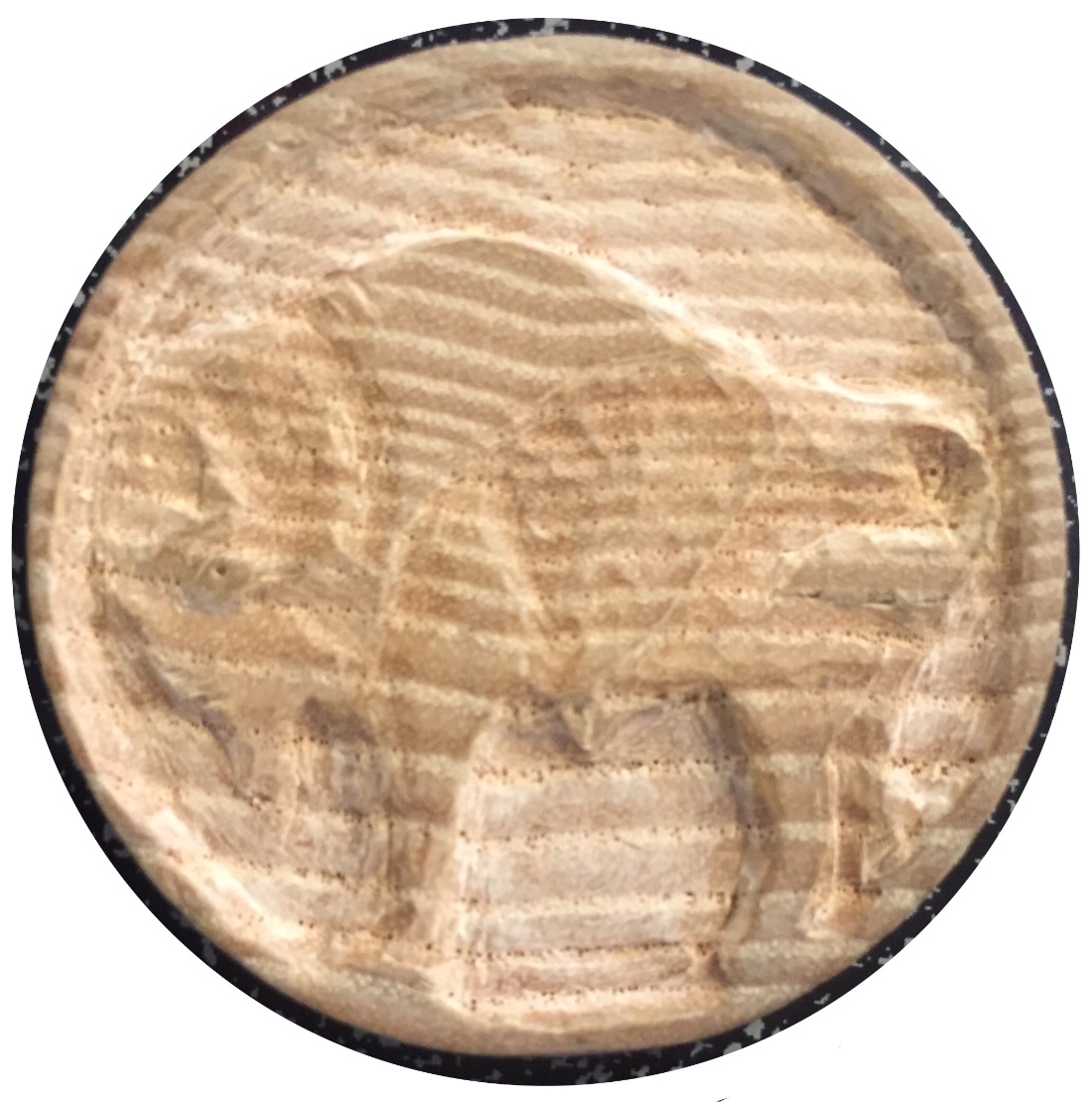
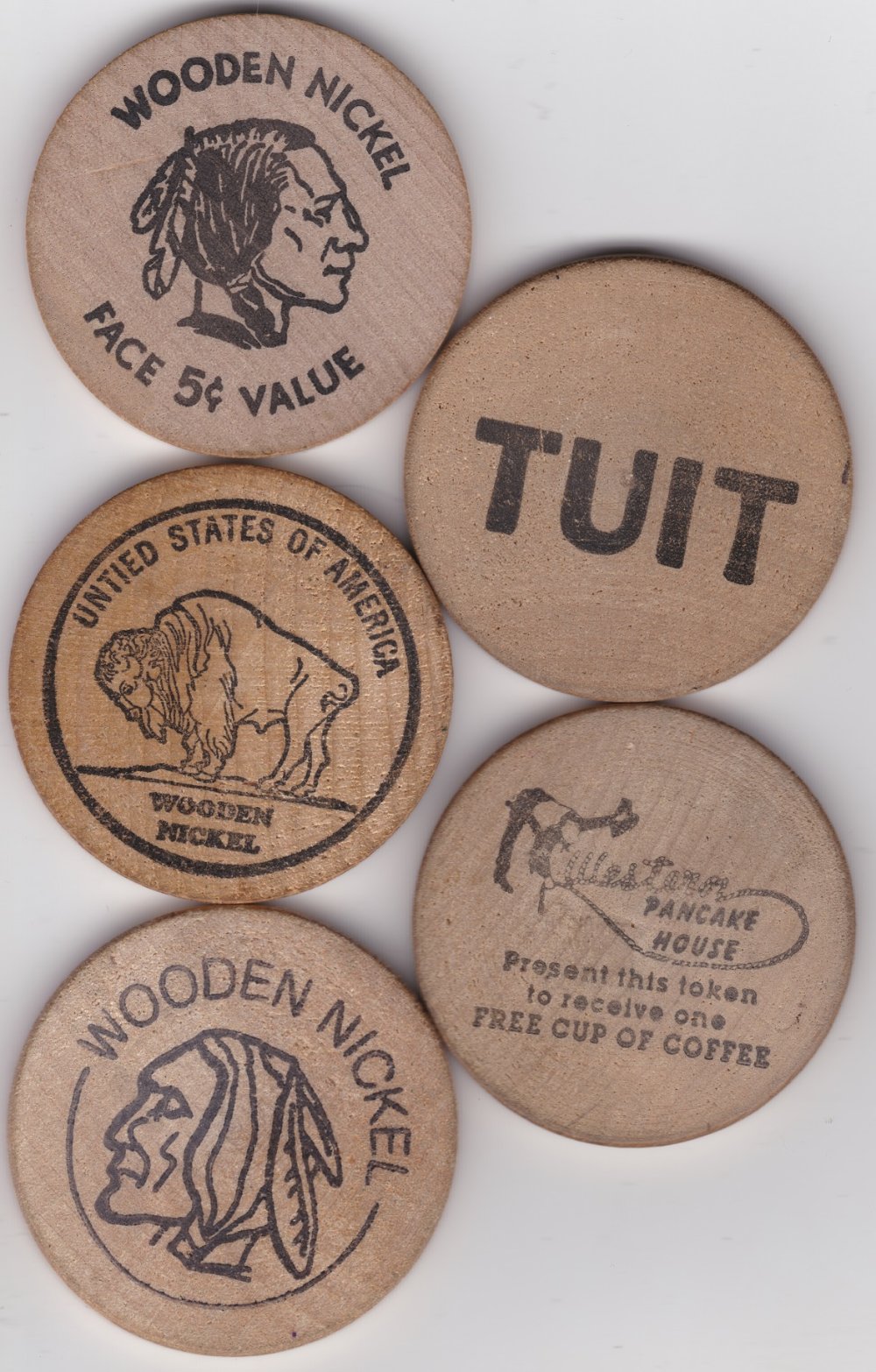
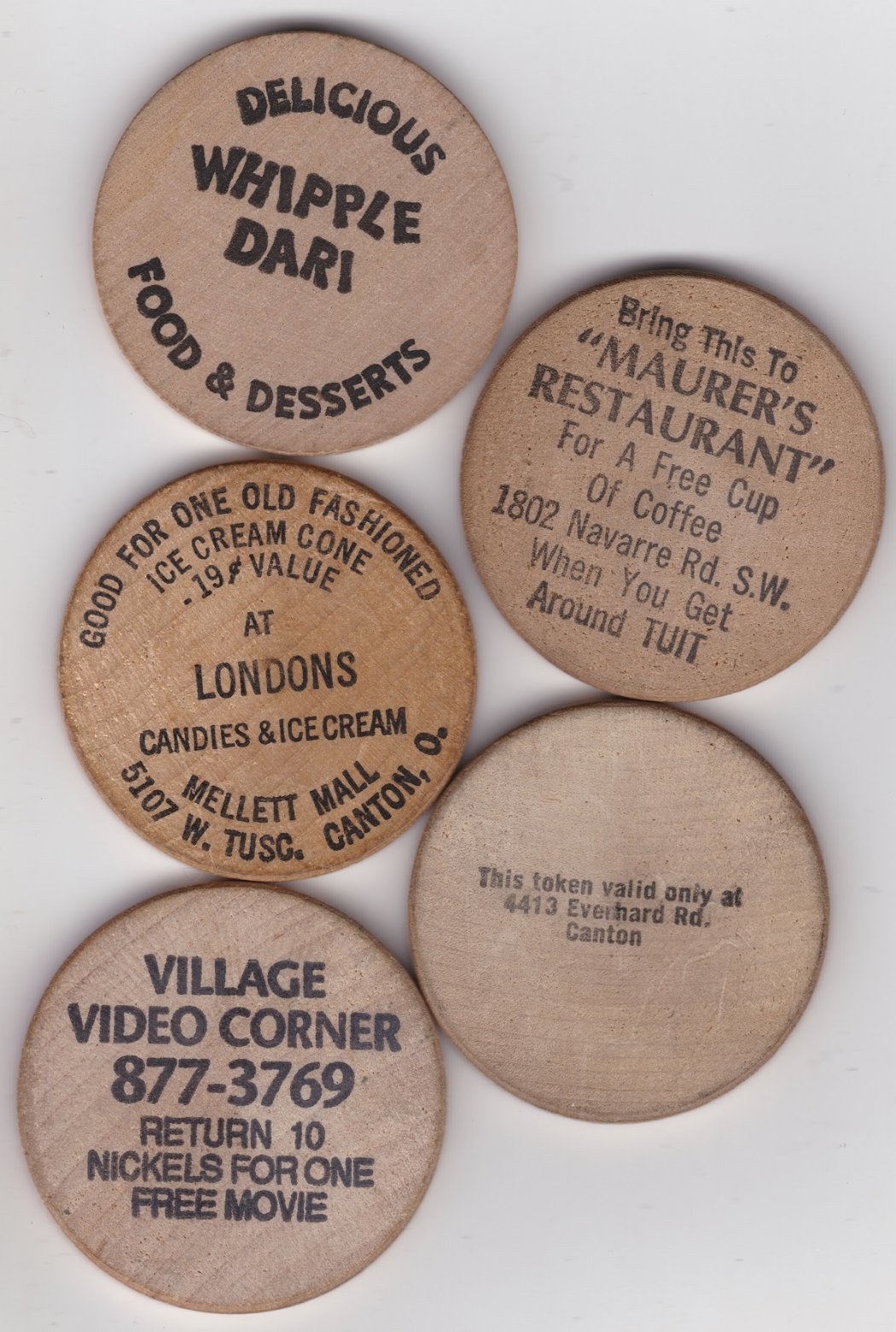
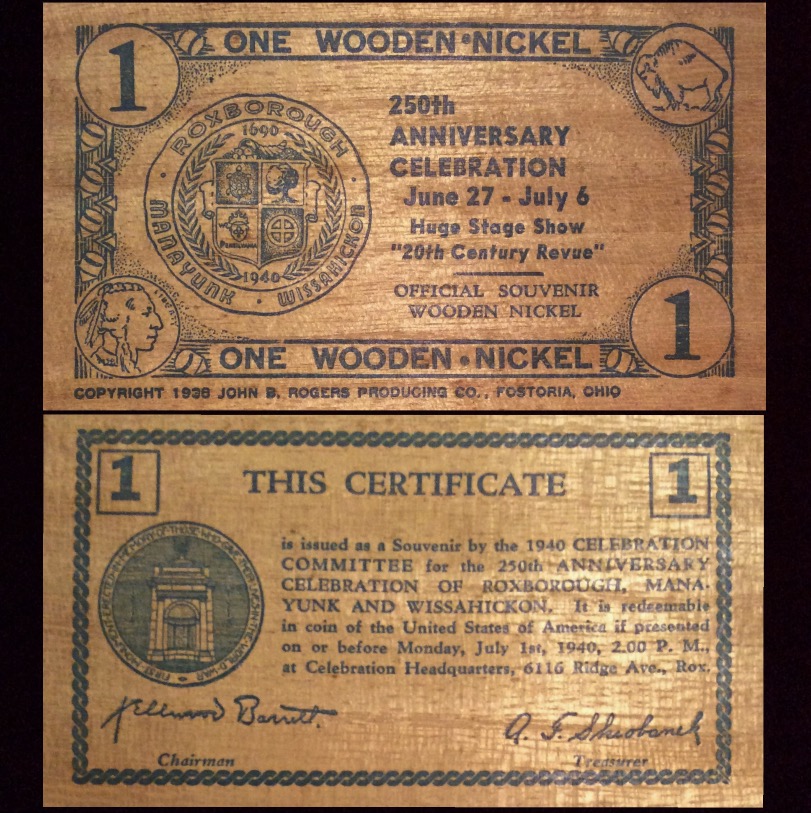
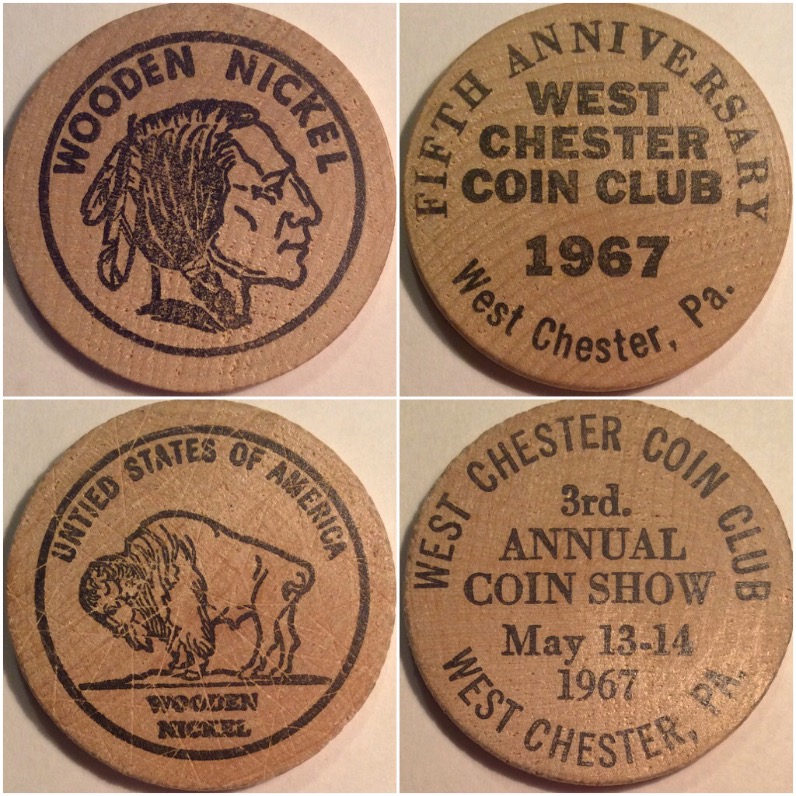
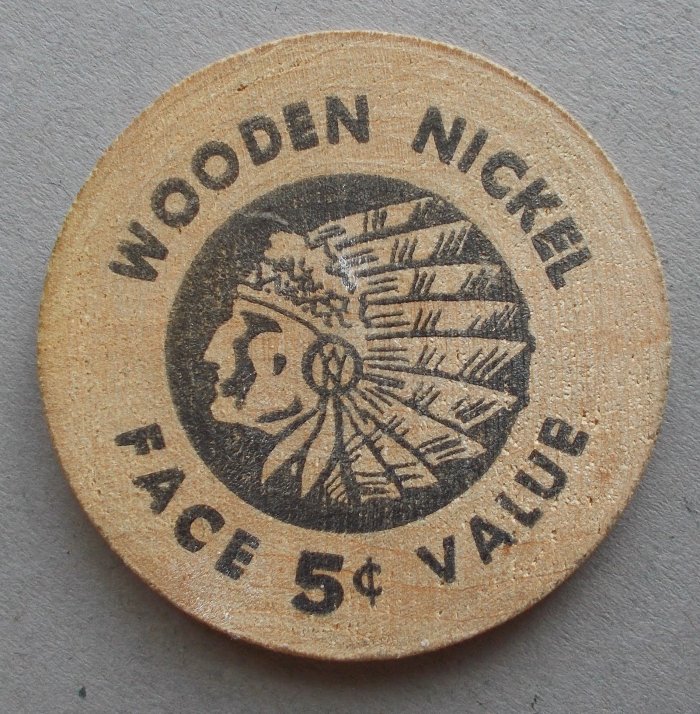
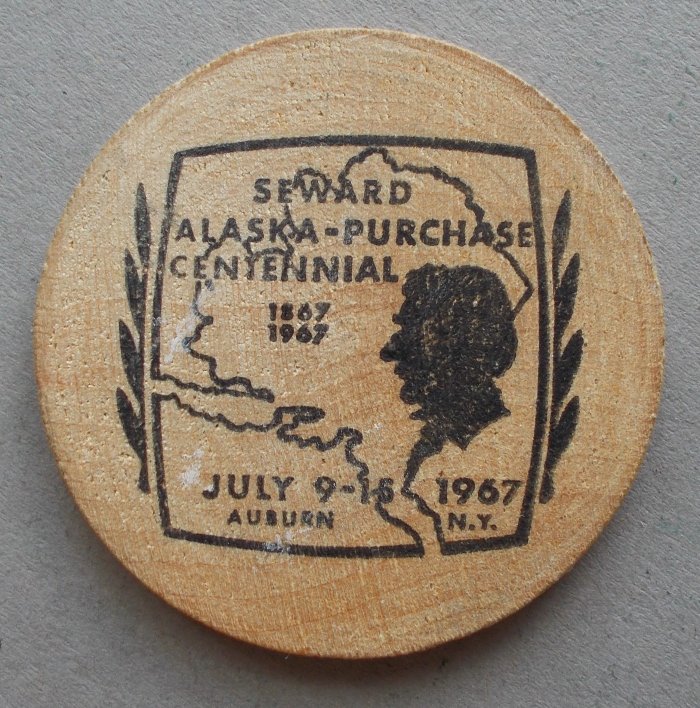
A brief history of wooden nickels, subject to correction by more well informed heads than mine.
Although it is believed that wooden scrip may have been used as early as 1880 the practice seems to have gotten its foothold in the Pacific Northwest in the early 1900's. The earliest reference I can find is that late in 1931 the Citizen Bank in Tenino, Washington failed forcing the merchants to travel about 30 miles in hazardous conditions to obtain change. To remedy this the Chamber of Commerce authorized the local newspaper to issue "flats" made out of local pine to use instead.
Two years later in Blaine Washington their bank also failed. They also issued "flats" but there had been complaints that "flats" were easily damaged and thereby rendered unredeemable. Their answer was to issue more durable wooden rounds as well. Several other town followed suit, again mostly in the Pacific Northwest.
I'm unaware of any official position taken by the U.S. Government on this practice.
The first place to issue wooden rounds as souvenirs was The 1933 "Century of Progress" World's Fair in Chicago. Like the official Nickel of the day it featured the image of a Native American on the obverse. This probably led to the common use of similar images on many of the later issues, especially those used to mark historical celebrations.
Wooden Nickels have evolved into to a wide variety of uses, souvenirs of community celebrations, admission tickets to "olde time" events, advertising, promotion of worthy causes, and even coupons for um...... a refreshing beverage. It is not uncommon to find issues used by coin clubs to mark their membership events.
The meaning of the phrase "Don't take any Wooden Nickels." is a generally taken as a warning to be careful of frauds and cheats. It is thought that its origin probably predates Wooden Nickels themselves. On the other hand some believe it came about because Wooden Nickels often had an expiration date. When given out as change at a business establishment the recipient would risk losing the monetary value if they waited too long. Further, unscrupulous merchants would give them in change after the expiration date had already passed.
In 1938 J. R. Rogers Co. Located in Fostoria Ohio received a copyright on their design for Wooden Nickels and were arguably the most abundantly circulated during those early years. Today, there are still several companies making Wooden Nickels commercially.
Circus, Thanks for starting this thread. I enjoy seeing the examples posted here. If it's ok with you I'll post a few of mine when I get ...


Edited by Pennywise142
07/12/2019 12:45 pm







 First Page


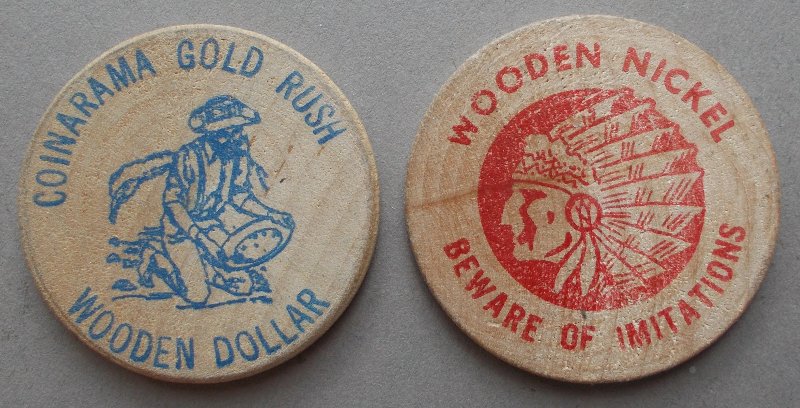
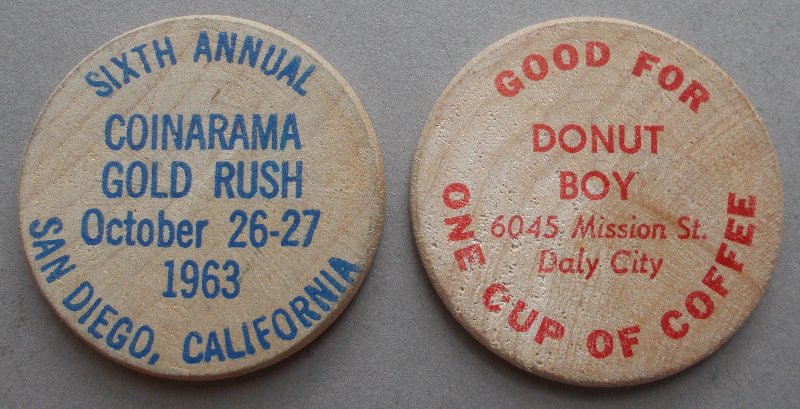


 Posted 07/03/2019 11:02 am