| Author |
 Replies: 638 / Views: 59,805 Replies: 638 / Views: 59,805 |
|
|
|
Pillar of the Community
United States
3361 Posts |
Seleucus I Elephant quadriga driven by Athena. Note the horns on the elephants. 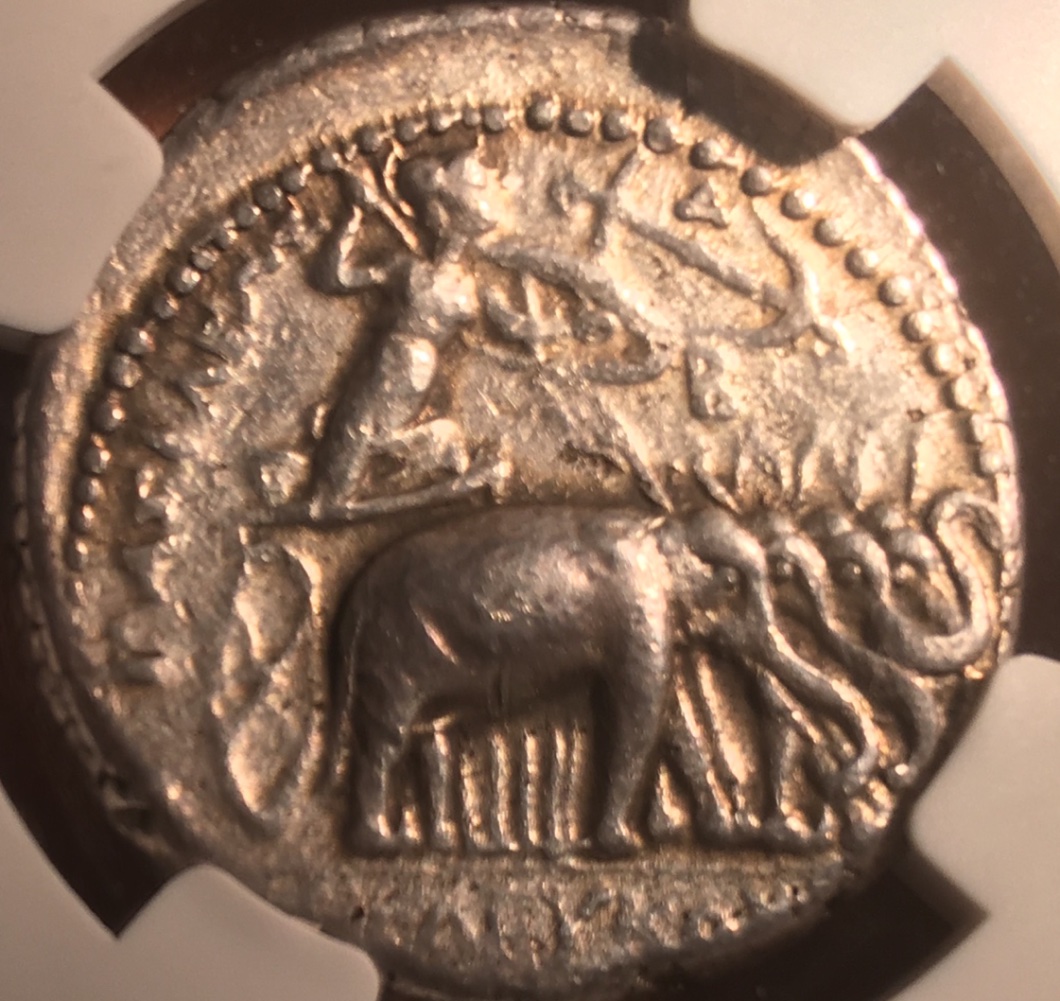 "Two minutes ago I would have sold my chances for a tired dime." Fred Astaire
|
|
Pillar of the Community
United States
7067 Posts |
Great coin, thq. Wonderful rendition of the elephants.
|
|
Pillar of the Community
 United Kingdom
1168 Posts |
My first lion reverse. While not the best quality, it is quite pleasing in the hand. 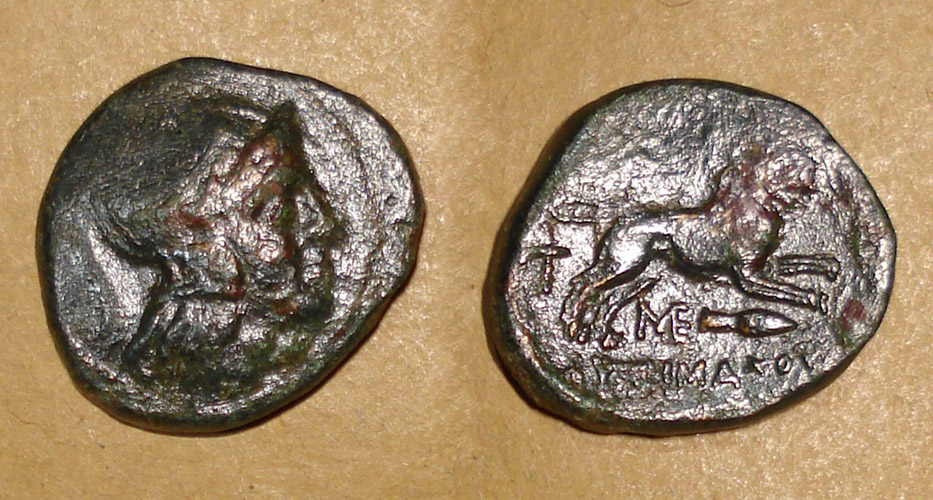 Lysimachos Kingdom of Thrace 306-281 BC. Obverse: Helmeted head of Athena right. Reverse: Lion charging right; spearhead below. Reverse Inscription: BAΣIΛEΩΣ ΛYΣIMAXOY. Diameter: 20 mm. Weight: 5.4 gr. |
|
Pillar of the Community
 Spain
2752 Posts |
@thq....Lovely looking coin..Is the obverse as nice? Nice looking coins Jim..You've been busy picking up some interesting acquisitions lately. I do have this one with an animal on both sides.. 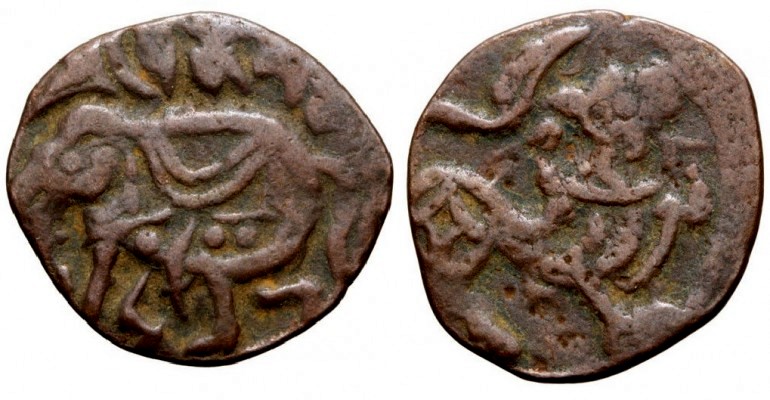 Shahis of Ohind AE Jital of Vakka Deva around 870 AD..Diameter 18mm and 1.9 grams. Obv. Elephant facing left with the name "Sri Vakka Deva" above in Nagari. Rev. Lion to the right with gaping mouth, tongue out and one front paw raised. Diamond symbol in the rump. |
|
Pillar of the Community
United Kingdom
1168 Posts |
It's a bit like waiting for a bus Paul. Nothing comes along for ages, then three or four arrive together. It takes skill to represent an animal with just a few lines, and the die maker has caught the size of the elephant and the ferocity of the lion really well on your coin. I admire the simplistic approach to some coins, and the Macedonian coin below is unfussy apart from the inscription. I'd love to have one in the "as minted" state. 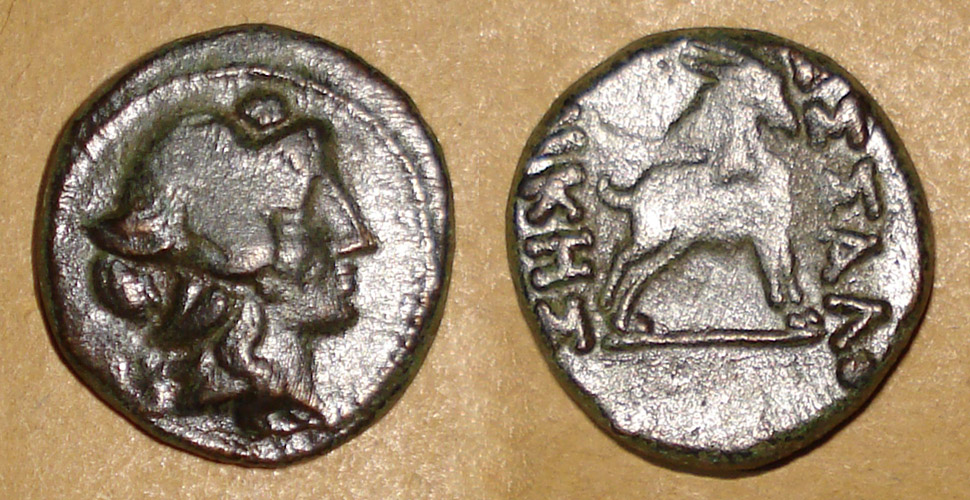 Thessalonica - Macedonia 187-31 BC. Obverse: Head of young Dionysos right, wreathed in ivy. Reverse: Goat standing right. Reverse Inscription: ΘEΣΣA-ΛO NI-KH-Σ. Diameter: 19 mm. Weight: 5.4 gr. |
|
Pillar of the Community
United States
3361 Posts |
Lydian 1/2 stater 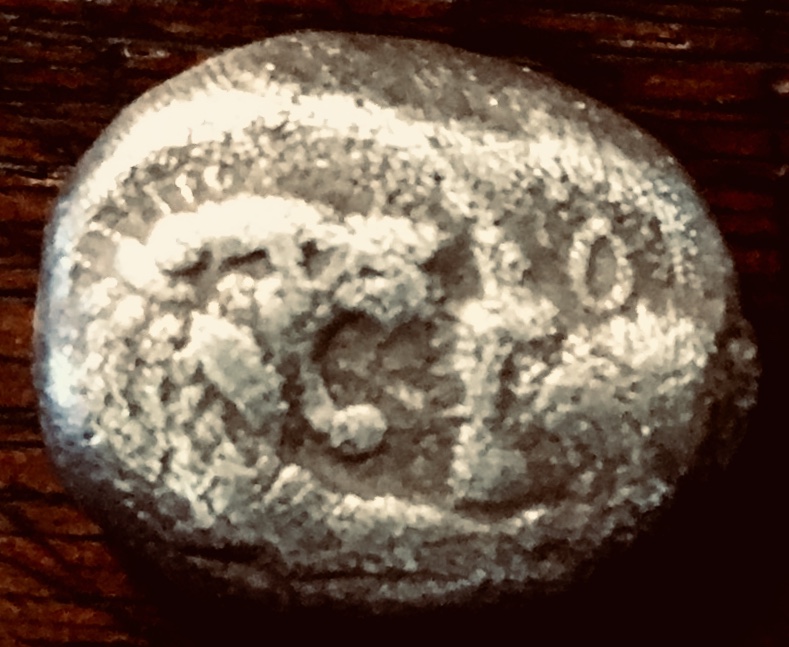 "Two minutes ago I would have sold my chances for a tired dime." Fred Astaire
|
|
Pillar of the Community
United Kingdom
1168 Posts |
Goats appear to be popular around this era, and the reverse of this coin shows two goats fighting. 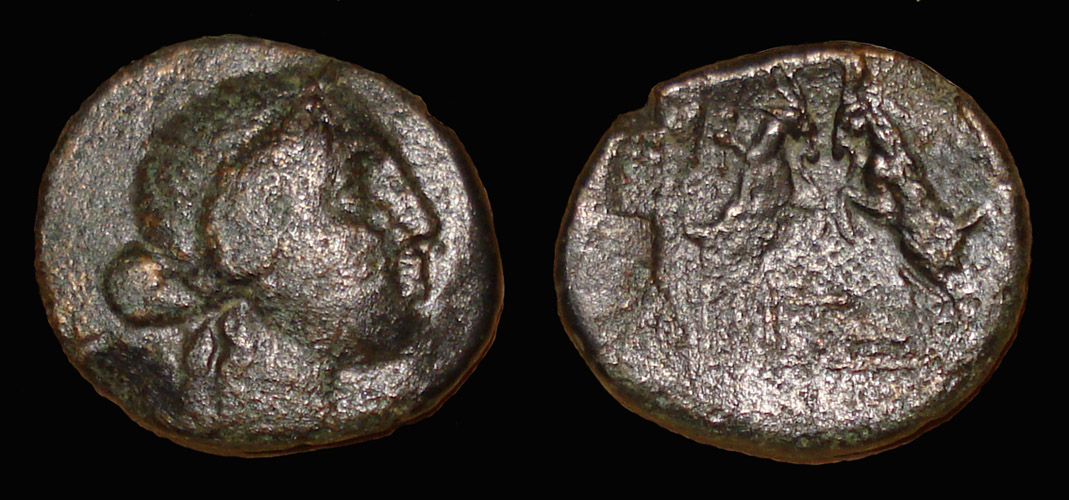 Amphipolis - Macedonia. 168-149 BC. Obverse: Diademed head of Artemis Tauropoulos. Reverse: Two goats standing on their hind legs, fighting. Reverse Inscription: AMΦIΠOΛITΩN. Bronze, Diameter: 21 mm, Weight: 6.2 gr. |
|
Pillar of the Community
United States
7067 Posts |
Nice one, Jim. Good addition to the thread.
|
|
Pillar of the Community
United Kingdom
1168 Posts |
Thank you Bob. The menagerie is increasing, and now contains an eagle, though a rather unphotogenic one. 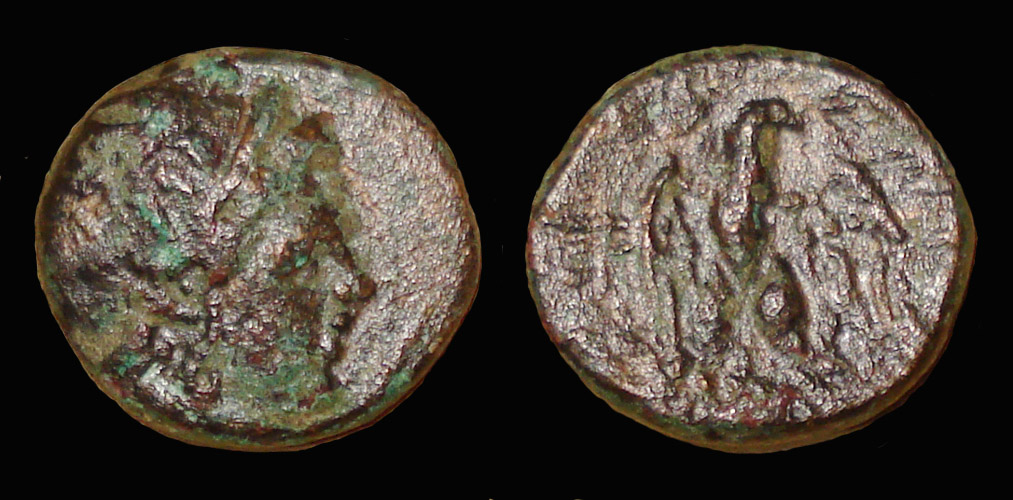 Perseus Kingdom of Macedonia 178-168 BC. Obverse: Head of Perseus right in winged helmet, harpa before. Reverse: Eagle standing on thunderbolt, head right, wings spread. EP monogram in left field, HΣ below. Reverse Inscription: B-A. Bronze. Diameter: 17 mm. Weight: 4.7 gr. |
|
Pillar of the Community
Spain
2752 Posts |
Nice little zoo you've been collecting Jim  I must admit that I own 'zero' greek coins as I've tried to stay focused on Roman and ancient Indian coinage. But you've certainly wet my appetite with this thread..... So its all your fault!!...That I'm now considering collecting the 12 Olympians in bronze as another side line set.....  Paul |
|
Pillar of the Community
Russian Federation
5186 Posts |
Quote:
So its all your fault!!...That I'm now considering collecting the 12 Olympians in bronze as another side line set..... ...Wow, that sounds like a neat idea! I wonder how many I already have... Might be a bit tricky though. Can't think of many coins with Hephaestus, Hermes, or Hestia on them (bronze or otherwise), and IIRC Demeter and Dionysus aren't that well represented either. |
|
Pillar of the Community
United Kingdom
1168 Posts |
Yes, the zoo is coming along nicely Paul. Unfortunately there are so many others, and they don't come cheap. I tried to stick to the Roman coins, but the collection is becoming pretty diversified now. It is too easy to get hooked on these lovely old Greek coins, and I am well and truly hooked. What a cool idea to collect the twelve Olympians. It would be great to see that group.  As @january1may says though, it could be tricky. Jim |
|
Pillar of the Community
Spain
2752 Posts |
Quote:
As @january1may says though, it could be tricky. I would be happy to use the Roman counterpart if needed and think the only one that will hurt a bit as J1 said is Hestia.... Hephaestus (Vulcan) is quite cheap from Spain Malaca... |
|
Pillar of the Community
Russian Federation
5186 Posts |
After a bit of looking things up, the best option for Hestia might well be the Caligula bronzes with Vesta. Which is saying a lot, because imperial Caligula coins are (popular, and consequently) pricey.
(There's several provincials that might or might not show Hestia, and a bunch of 2nd century coins with Vesta, though most of them are silver.)
Hephaestus/Vulcan might be rarer yet. Your idea of "quite cheap is probably in high double or low triple digits... I find $20 to be a lot to spend on one coin, and don't typically use online auctions, so my field of search is far narrower.
|
|
Pillar of the Community
United Kingdom
1168 Posts |
Another bull reverse. This time on a coin of Seleukos I Nikator (The Victor), Founder and King of the Seleukid Empire of Syria, 312-281 BC. 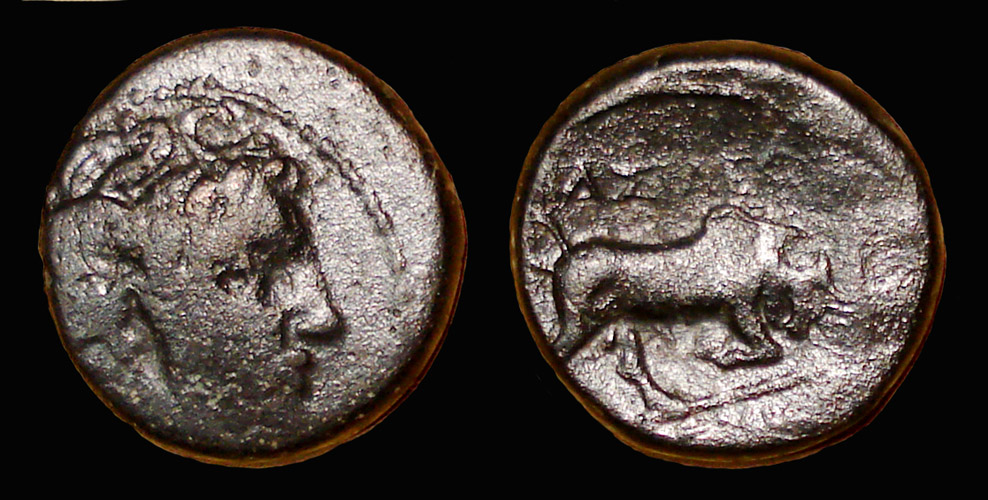 Seleukos I Nikator, 312-280 BC. Sardis mint, AE half-unit, diameter 14mm. Winged head of Medusa right with serpents in hair / BAΣIΛEΩΣ ΣEΛEYKOY above and beneath, bull butting right, ΣI between hind legs. Seleucus I Nicator was one of the Diadochi. Having previously served as an infantry general under Alexander the Great, he eventually assumed the title of Basileus, and established the Seleucid Empire over the bulk of the territory which Alexander had conquered in Asia. He was assassinated in September 281 BC, Thrace. |
| |
Replies: 638 / Views: 59,805 |






 First Page
 Previous Page


 Posted 02/01/2020 3:37 pm





