| Author |
 Replies: 523 / Views: 23,645 Replies: 523 / Views: 23,645 |
|
|
|
CCF Master Historian of Commemorative Coins
  United States
12628 Posts |
jbuck has already posted his terrific example of this coin, but I can't resist digging a bit deeper into the coin's obverse design. (See it here: http://goccf.com/t/405579#3471797.)The 1923 Monroe Doctrine Centennial half dollar features conjoined, left-facing portraits of President James Monroe, the fifth US President (he served March 4, 1817 - March 4, 1825), and his Secretary of State John Quincy Adams (September 22, 1817 - March 3, 1825); JQA, was the son of John Adams, the second US President, and succeeded Monroe to become the sixth US President. Monroe is the portrait in the rear of the pair. Why is the President taking a "back seat" to the Secretary of State on the coin? See below for the answer! President James Monroe Portrait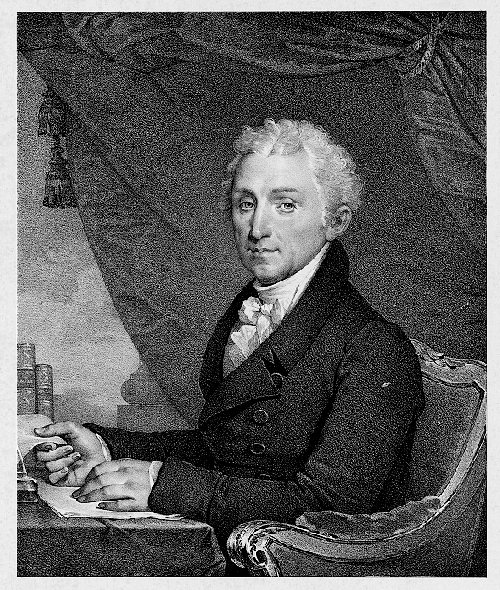 (Image Credit: Library of Congress, Prints and Photographs Division. Public Domain.)Secretary of State John Quincy Adams Portrait (Image Credit: Library of Congress, Prints and Photographs Division. Public Domain.)Secretary of State John Quincy Adams Portrait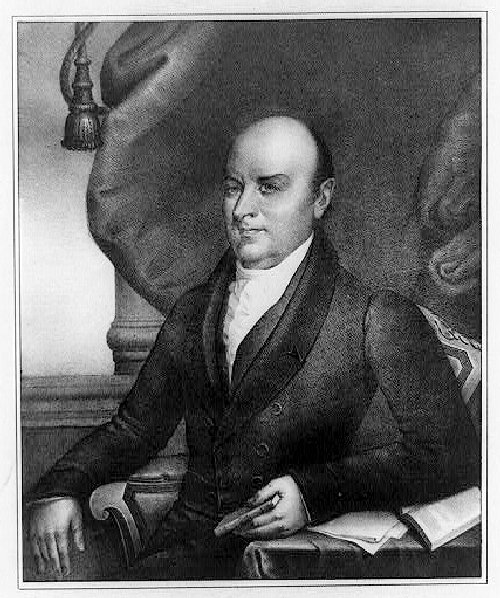 (Image Credit: Library of Congress, Prints and Photographs Division. Public Domain.) (Image Credit: Library of Congress, Prints and Photographs Division. Public Domain.)Many think the Monroe Doctrine was a standalone document - like the Declaration of Independence or the Gettysburg Address. In fact, the principles that, as a group, came to be known as the Monroe Doctrine were statements made by Monroe during his annual address to Congress in December 1823. In the address, Monroe stated that intervention in the Western Hemisphere by a European power would be considered a potentially hostile act against the United States and that the countries of South America were "not to be considered as subjects for future colonization" and that any such initiatives would be considered "dangerous to [US] peace and safety." In essence, Monroe was telling European countries to stay away and quell any colonial expansion aspirations. (To read a full transcript of what is referred to as the "Monroe Doctrine," visit: OurDocuments.Gov - Monroe Doctrine.) One other "Did You Know?" note about the Doctrine, the principles expressed by Monroe in his address did not collectively become known as the "Monroe Doctrine" until the 1850s. At first glance, it seems odd that the portrait of James Monroe, the US President and leader of the country, not to mention the man whose name is permanently linked to the Doctrine, is positioned behind that of John Quincy Adams, the Secretary of State. But there is a reasonable explanation:The US was becoming concerned about the possibility of Spain attempting to regain its South American colonies and JQA was the man who convinced Monroe to have the United States enunciate the principles that warned against such activities independently vs. making a joint announcement with Great Britain. He also outlined the principles Monroe announced and largely wrote the pertinent section of Monroe's address to Congress. In some respects, JQA is the reason there exists a "Monroe Doctrine." For that reason, JQA's prominent, forward position on the coin makes plenty of sense! Monroe Doctrine Editorial Cartoon - Uncle Sam Protecting Nicaragua and Venezuela from European Powers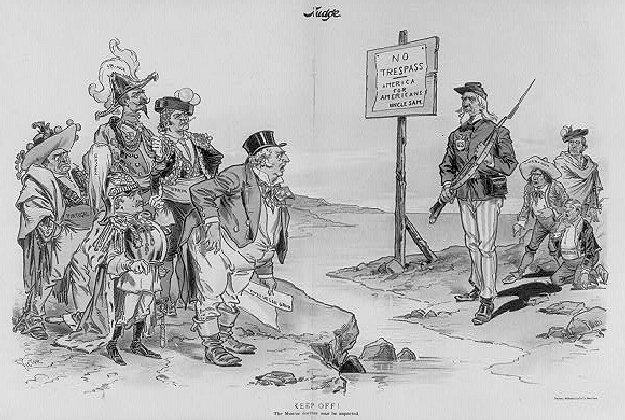 (Image Credit: Library of Congress, Prints and Photographs Division. Public Domain.)1923 Monroe Doctrine Centennial Half Dollar (Image Credit: Library of Congress, Prints and Photographs Division. Public Domain.)1923 Monroe Doctrine Centennial Half Dollar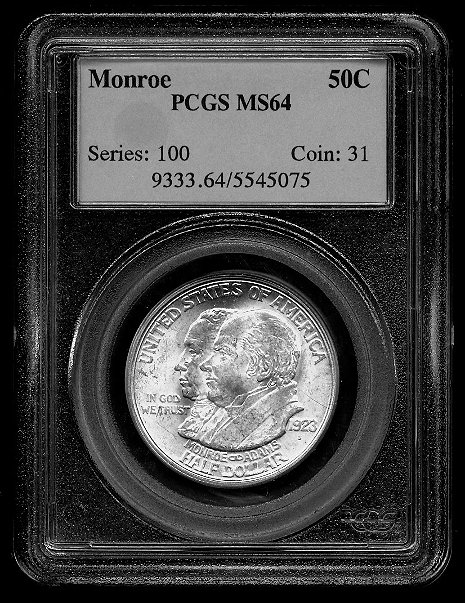 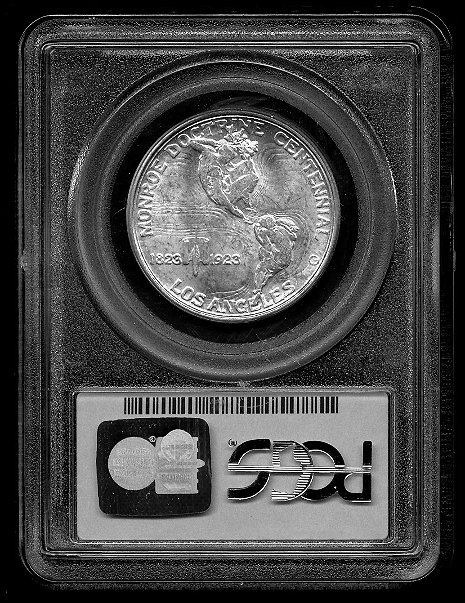 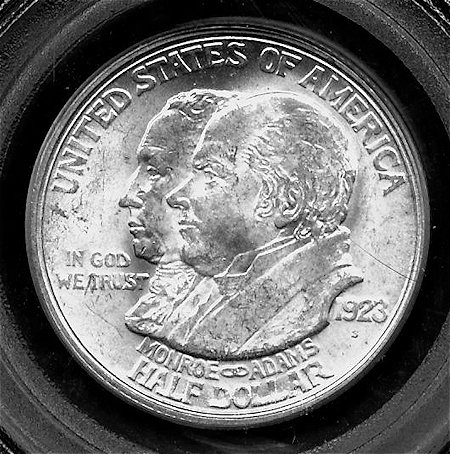 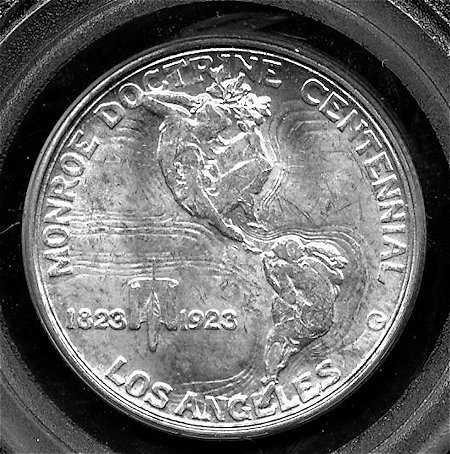 For more on the history of the Monroe Doctrine half dollar and discussions of its interesting design, check out: - 1923 Monroe Doctrine Centennial- 1923 Monroe Doctrine Centennial - Coins with Hands Thread- 1923 Monroe Doctrine Centennial - Coins with Flora Thread1 Collecting history one coin or medal at a time! (c) commems. All rights reserved.
Edited by commems
08/14/2021 07:36 am
|
|
Pillar of the Community
United States
3857 Posts |
Mexico 200 pesos (1985), the 175th anniversary of Mexican independence. Conjoined portraits of Ignacio Allende, Miguel Hidalgo y Costilla, Jose Maria Morelos, and Vicente Guerrero. 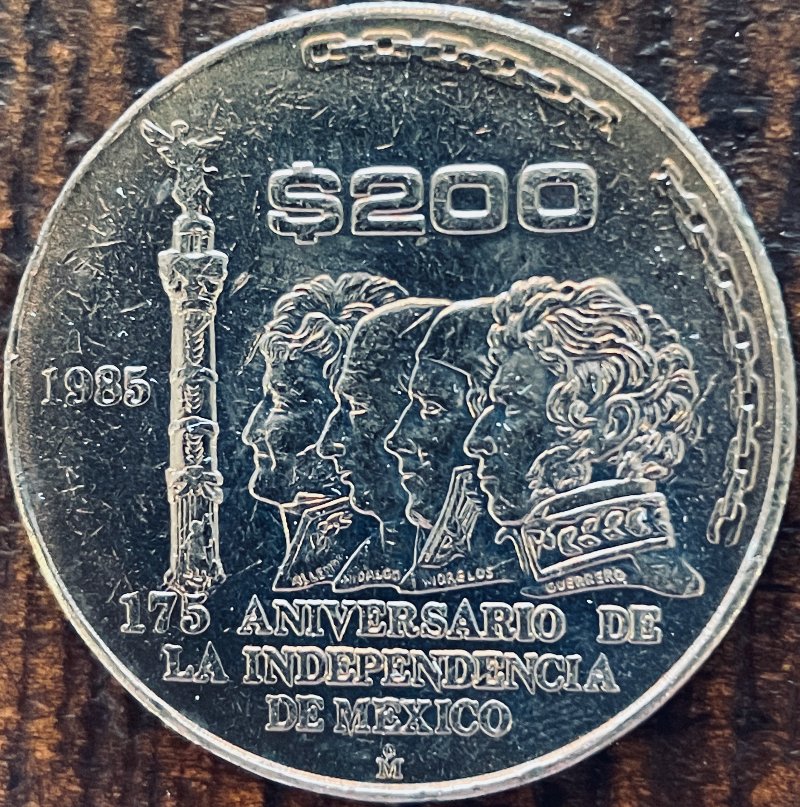 Member of SPMC, FCCB, ANA and ANS. My U.S. Classic Commemorative Complete Set: https://www.NGCcoin.com/registry/co...sets/278741/ |
|
CCF Master Historian of Commemorative Coins
United States
12628 Posts |
Quote:
Mexico 200 pesos (1985), Cool! A quadruple portrait coin! Double the fun of a typical conjoined portrait coin!  Thanks for sharing! Collecting history one coin or medal at a time! (c) commems. All rights reserved.
|
|
Pillar of the Community
United States
3857 Posts |
Quote:
Cool! A quadruple portrait coin! Double the fun of a typical conjoined portrait coin! Thanks, I thought you'd like this one, commems! Member of SPMC, FCCB, ANA and ANS. My U.S. Classic Commemorative Complete Set: https://www.NGCcoin.com/registry/co...sets/278741/ |
|
Pillar of the Community
Australia
9888 Posts |
1990 200 pesetas from Spain. 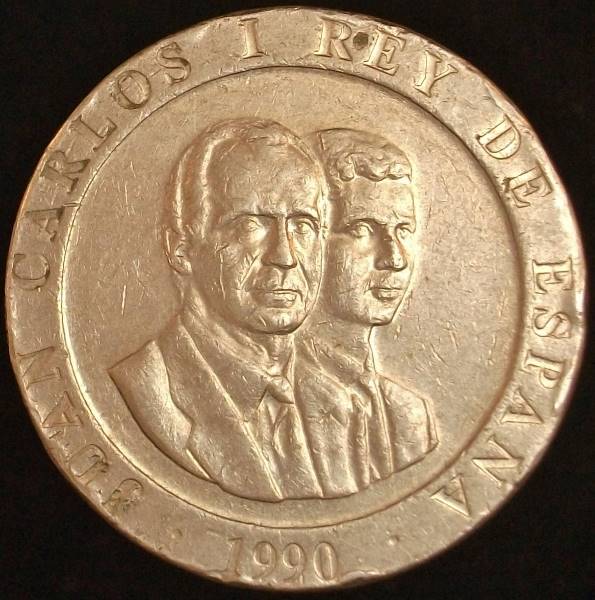 Also from Spain. 1989 500 Pesetas. 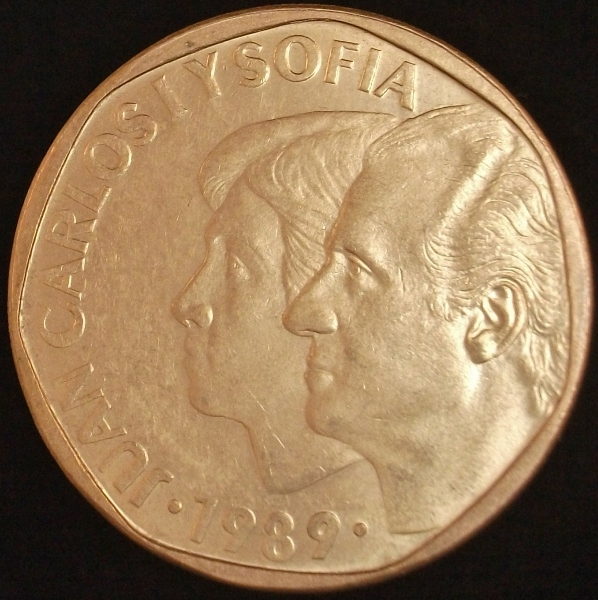 And another from Spain. 2014 2 Euros 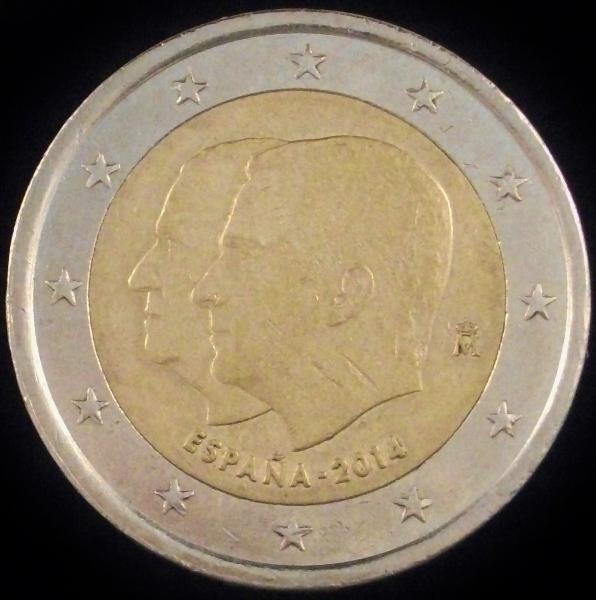 Steve :) Edited by triggersmob
08/14/2021 9:49 pm
|
|
Pillar of the Community
Australia
9888 Posts |
2011 2 Euros from Luxembourg. A triple header. 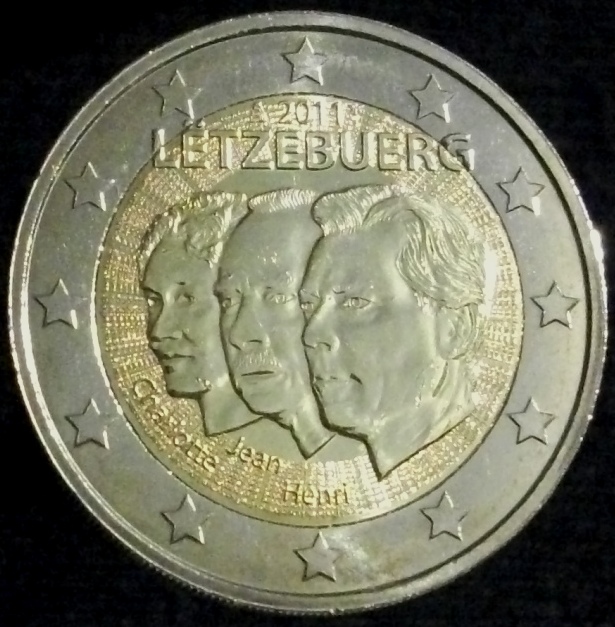 Steve :) |
|
Pillar of the Community
Australia
9888 Posts |
1901 2 mark from the Kingdom of Prussia. 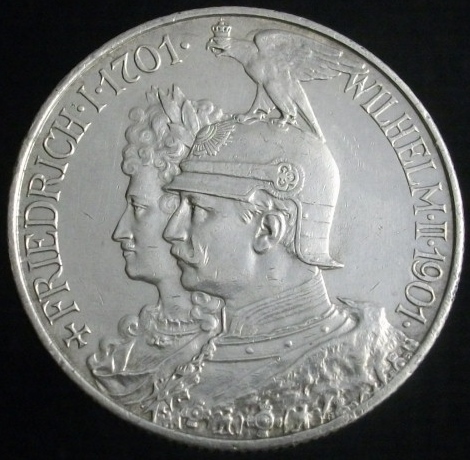 Steve :) |
|
Pillar of the Community
Australia
9888 Posts |
2005 25 cents from Canada. 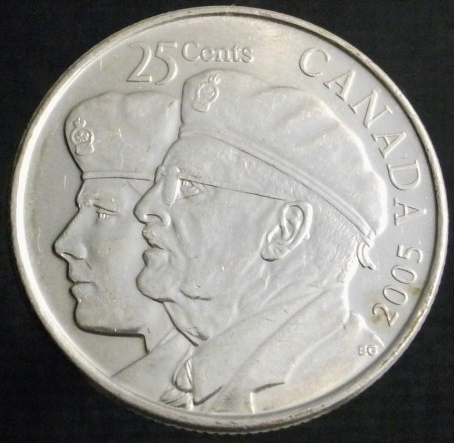 Steve :) |
|
Moderator
United States
197800 Posts |
So many fantastic designs that I have never seen.  I have the 2015 March of Dimes silver dollar that muddler posted, but I do not have it photographed. It is also good to see commems post his better example of the Monroe Doctrine commemorative along with the additional information. |
|
Pillar of the Community
United States
2869 Posts |
|
|
Pillar of the Community
Australia
9888 Posts |
Quote:
So many fantastic designs that I have never seen. Jbuck you need to get out more.  Steve :) |
|
CCF Master Historian of Commemorative Coins
United States
12628 Posts |
I had a feeling that his could develop into a rich and varied thread! It certainly has!
@triggersmob: Thanks for the great additions! Nice selection!
Collecting history one coin or medal at a time! (c) commems. All rights reserved.
|
|
CCF Master Historian of Commemorative Coins
United States
12628 Posts |
Canada also issued a silver "collector coin" version of the 2005 Year of the Veteran commemorative - a $10 coin: 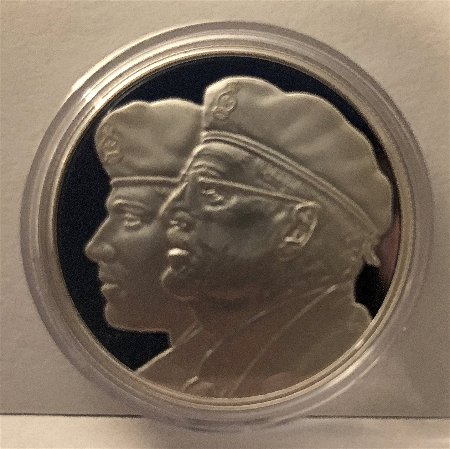 To learn more about it, check out: - 2005 $10 Year of the VeteranCollecting history one coin or medal at a time! (c) commems. All rights reserved.
|
|
CCF Master Historian of Commemorative Coins
United States
12628 Posts |
The 1924 Huguenot-Walloon Tercentenary half dollar includes conjoined portraits on its obverse side: Admiral Gaspard de Coligny of France and William the Silent (aka William the Orange) of Netherlands. The coin was issued to commemorate "the three hundredth anniversary of the settling of New Netherland, the Middle States, in 1624, by Walloons, French and Belgian Huguenots, under the Dutch West India Company." Public Law 77-440, the authorizing legislation for the coin.)Admiral Gaspard de Coligny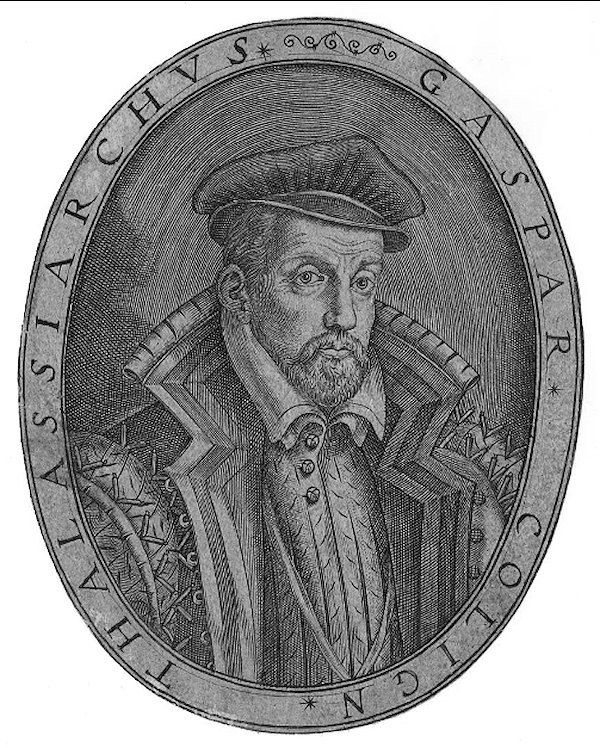 (Original engraving dates to 1579; Public Domain)William the Silent (Original engraving dates to 1579; Public Domain)William the Silent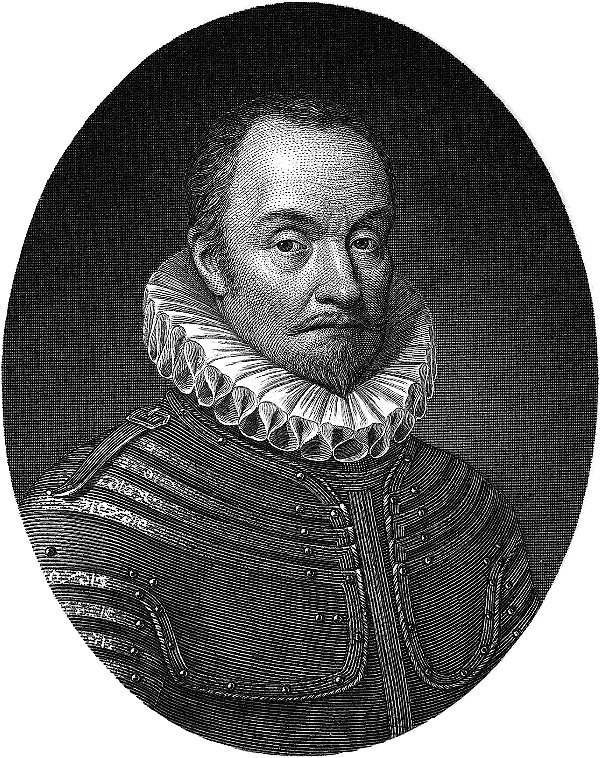 (Original engraving dates to 1897; Public Domain) (Original engraving dates to 1897; Public Domain)The forward portrait on the coin is that of Admiral Gaspard de Coligny; the portrait in the rear is that of William the Silent. Neither man ever traveled to the New World, but the Huguenot-Walloon New Netherland Commission believed each to have served as an inspirational catalyst for the later Huguenot involvement in the New Netherland colonization and, therefore, worthy of being remembered via the half dollar. The reverse of the coin depicts the ship Nieu Nederland ( New Netherland), the Dutch ship that brought the settlers to the New World. 1924 Huguenot-Walloon Tercentenary Half Dollar  For more on the Huguenot-Walloon Tercentenary half dollar coin, check out: - 1924 Huguenot-Walloon Tercentenary - 1924 Huguenot-Walloon Tercentenary - Revisited- 1924 Huguenot-Walloon Tercentenary - Coins with Beards ThreadOther of my posts on commemorative coins and medals can be found here: Read More: Commems Collection2 Collecting history one coin or medal at a time! (c) commems. All rights reserved.
Edited by commems
08/15/2021 2:21 pm
|
|
Pillar of the Community
4628 Posts |
In Response to Steve's 2 Euro the Netherlands, the changeover of rulers there was nothing new. I suspect there may be a coin from 1948 as well when Queen Wilhelmina started this custom of passing the throne on to her child, when she felt she was getting on in years, 50 years on the throne was enough (58 if you include the 8 year regency of her mother Queen Emma, the last wife of Willem the 3rd 1850 - 1890). 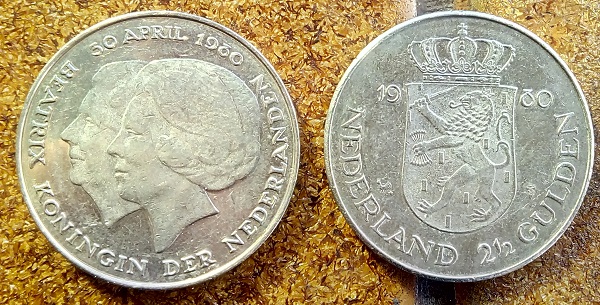 1980 2½ Guilder coins of Netherlands, Queen Juliana officially passed over rule of the Netherlands to her daughter Beatrix. I have 2 coins so I can show both sides in the same shot. It is a custom in many European monarchies, when a ruler reaches a certain age, they hand over to their heir. Examples such as Juan Carlos handing over to his son in 2016 and the King of Belgium handing over to his son a few years ago. Maybe the British (HM aged 95) and Denmark (HM aged 81) could take the hint too! Ironically in 1980, usual circulation coins of Queen Juliana were issued and no coins with solely Beatrix came out until 1982, although they were completely redesigned. Edited by Princetane
08/16/2021 07:03 am
|
| |
Replies: 523 / Views: 23,645 |





 First Page


 Posted 08/14/2021 2:32 pm


