| Author |
 Replies: 518 / Views: 22,907 Replies: 518 / Views: 22,907 |
|
|
|
CCF Master Historian of Commemorative Coins
  United States
12515 Posts |
And yet another anonymous conjoined portraits coin...The obverse of the 1936 Battle of Gettysburg 75th Anniversary commemorative half dollar features unnamed portraits meant to be representative of the Union (forward portrait) and Confederate soldiers who fought at the battle. The coin's reverse presents the Union (left) and Confederate (right) shields along with a commemorative inscription. The coin is the work of Frank Vittor. Note: Though 1938 is the actual anniversary year, the coin's enabling legislation stipulated that it be dated for the year it was authorized - 1936 - regardless of when it was coined. It was struck and released in 1937, a year ahead of the true anniversary. 1936 Battle of Gettysburg 75th Anniversary Half Dollar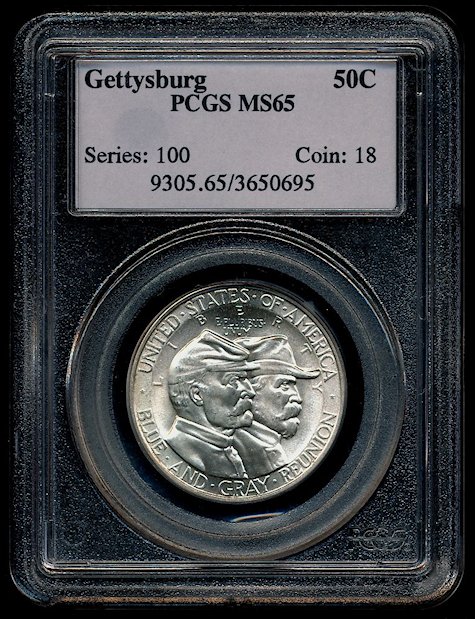 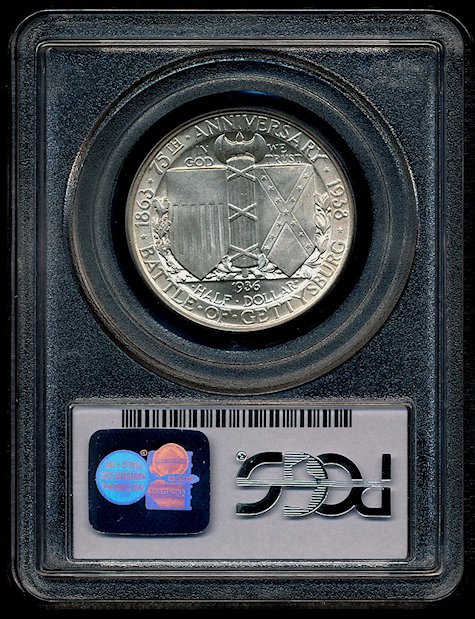 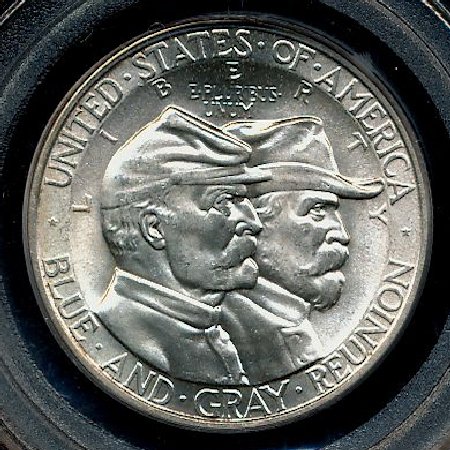 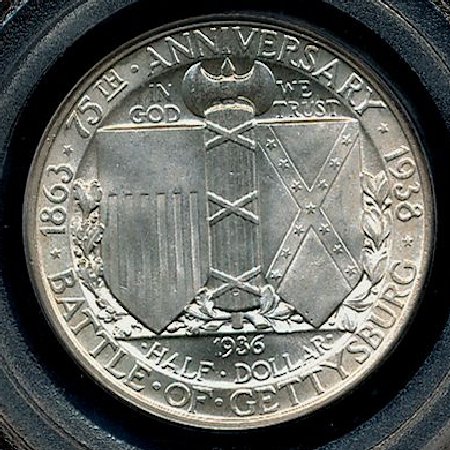 The Battle of Gettysburg took place July 1-3, 1863 and was one in which over 50,000 soldiers (combined) were either killed, wounded, captured or went missing - it was the bloodiest battle of the American Civil War. The battle was a Union victory and prevented the Confederate Army from advancing further into the North; it is often referred to as the "turning point" of the war, in favor of the Union. A final joint reunion of Union and Confederate veterans- the "Blue and Gray Reunion" - was held June 29 through July 6, 1938 at Gettysburg to mark the 75th Anniversary of the battle. A total of 1,845 Civil War veterans attended the reunion - 1,354 Union veterans and 491 Confederate veterans. Of these, it is estimated that 25 actually took part in the Battle of Gettysburg, with the balance being veterans of other Civil War battles, etc. Civil War Veterans At Monument to Battery A, 4th US Artillery Look Out at Scene of Pickett's Charge During the Bettle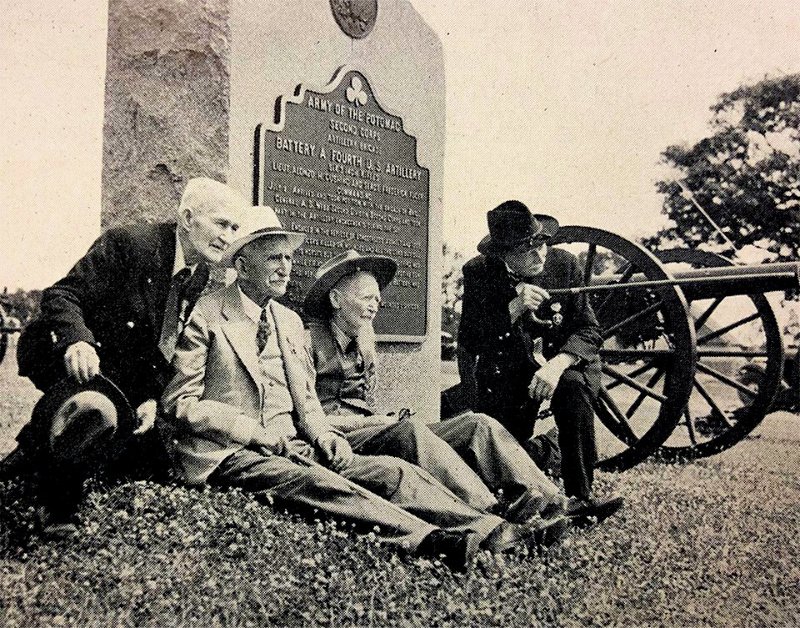 (Image Credit: Image courtesy of National Park Service, http://www.nps.gov. Public Domain.)Union and Confederate Veterans Shaking Hands Across Stone Wall (Image Credit: Image courtesy of National Park Service, http://www.nps.gov. Public Domain.)Union and Confederate Veterans Shaking Hands Across Stone Wall 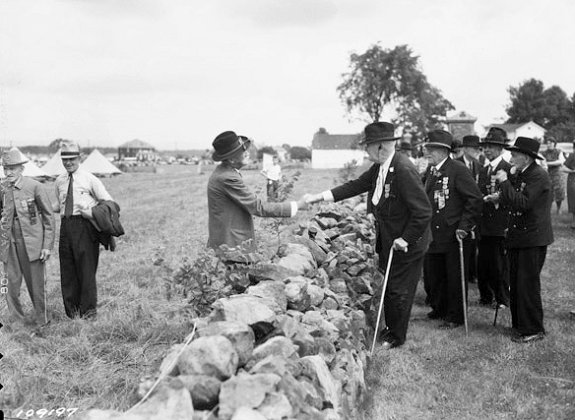 (Image Credit: National Archives and Records Administration, https://catalog.archives.gov/id/4529731. Public Domain.) (Image Credit: National Archives and Records Administration, https://catalog.archives.gov/id/4529731. Public Domain.)If you'd like to learn more, I have previously posted about the Gettysburg coin: - 1936 Battle of Gettysburg 75th Anniversary- 1936 Battle of Gettysburg 75th Anniversary - Ephemera- 1936 Battle of Gettysburg 75th Anniversary - Ephemera II- 1936 Battle of Gettysburg 75th Anniversary - House vs. SenateOther of my commemorative coin posts can be quickly accessed here: Read More: Commems Collection2
Collecting history one coin or medal at a time! (c) commems. All rights reserved.
Edited by commems
08/19/2021 07:25 am
|
|
Moderator
United States
195008 Posts |
Very interesting!  Thank you for sharing the additional photos and details, too.  |
|
Bedrock of the Community
United Kingdom
18647 Posts |
Fascinating glimpse of Civil War history! 1693 English sixpence - William and Mary: 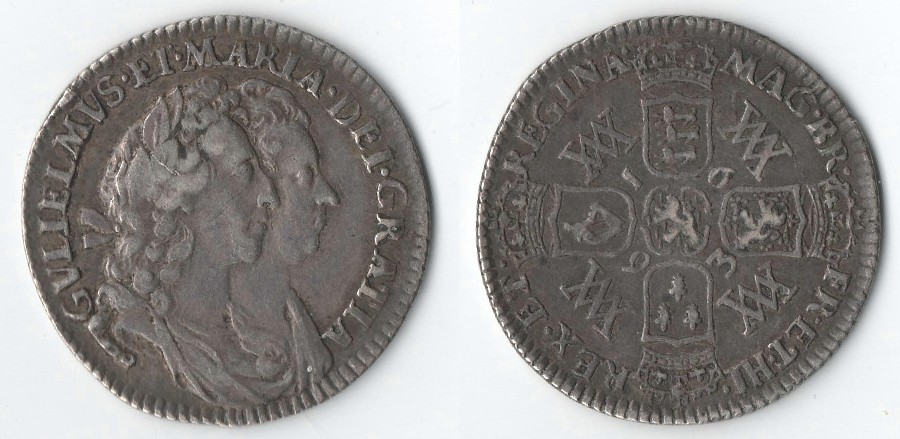 Edited by NumisRob
08/19/2021 3:14 pm
|
|
Moderator
United States
195008 Posts |
Quote:
1693 English sixpence - William and Mary: Very nice! |
|
CCF Master Historian of Commemorative Coins
United States
12515 Posts |
The Battle of Antietam half dollar was struck and released in 1937. On its obverse, the coin features the left-facing, conjoined portraits of Union General George McClellan (rear) and Confederate General Robert E. Lee. McClellan commanded the Union's Army of the Potomac in the battle; Lee headed the opposing Confederate Army of Northern Virginia. The reverse of the coin depicts a serene scene of the stone bridge over Antietam Creek (at the time of the anniversary of the battle). Union General George McClellan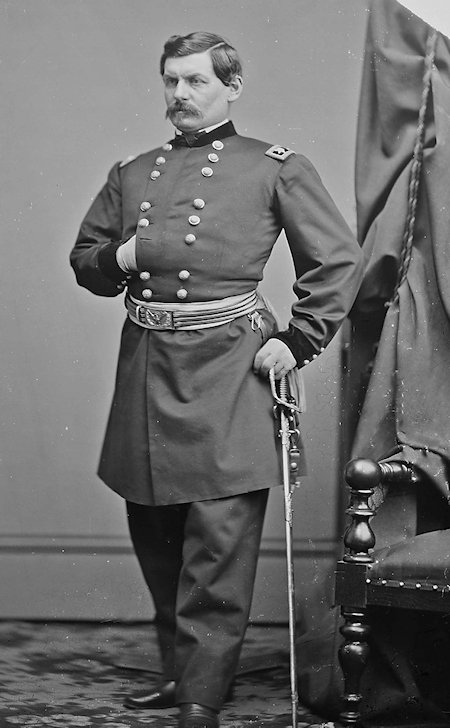 Confederate General Robert E. Lee Confederate General Robert E. Lee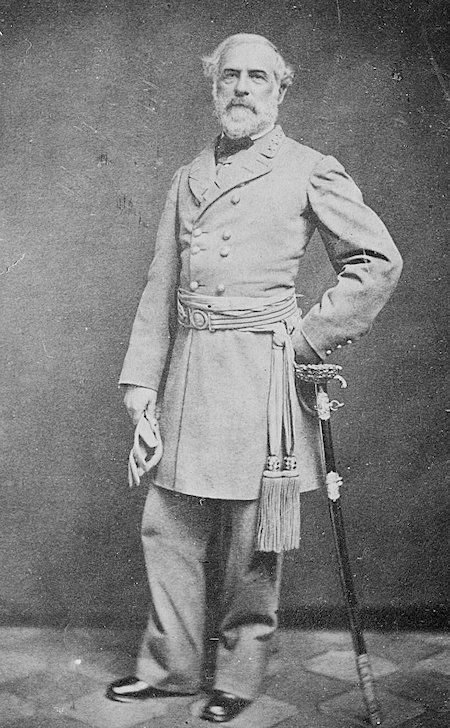 The coin marks the 75th anniversary of the bloodiest single day of the Civil War -- 17 September 1862. During the battle, the first major battle on Union soil, it is estimated that over 23,000 soldiers were either killed (~3,600) or wounded (~20,000). The battle took place in Washington County, MD, in the vicinity of Sharpsburg, MD and Antietam Creek. Confederate Artillery Men, Killed in Action While Manning Their Battery During Battle of Antietam. (Dunker Church is Seen in Background.)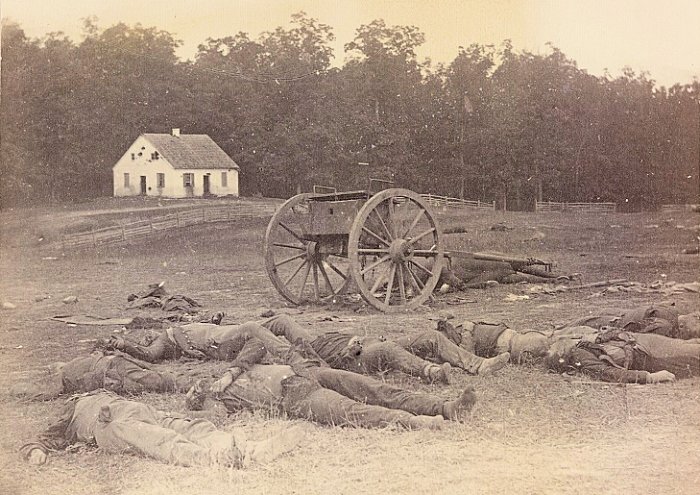 (All images: Library of Congress, Prints and Photographs Division, http://www.loc.gov/pictures/ Public Domain.) (All images: Library of Congress, Prints and Photographs Division, http://www.loc.gov/pictures/ Public Domain.)The Battle of Antietam is acknowledged as a key moment in the US Civil War, one with far-reaching ramifications. For a great summary, I suggest checking out: American Battlefield Trust: Antietam. 1937 Battle of Antietam 75th Anniversary Half Dollar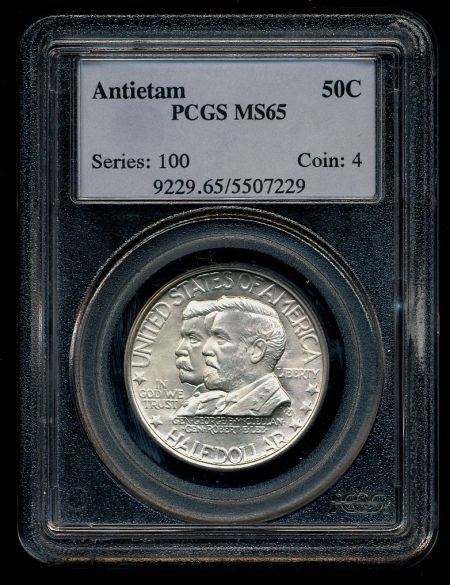 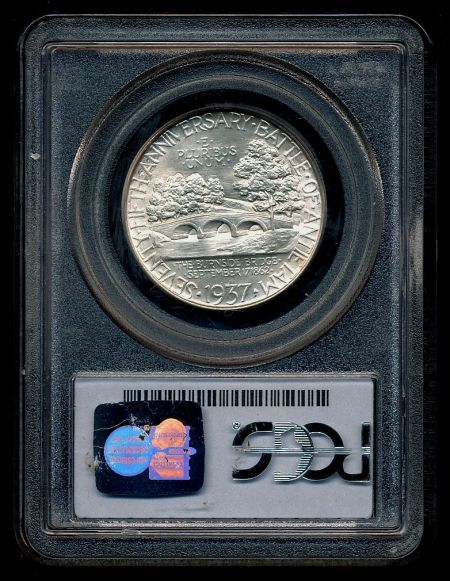 You can read more about the coin here: - 1937 Battle of Antietam Half Dollar- 1937 Battle of Antietam Half Dollar - Revisited- 1937 Battle of Antietam Half Dollar - A Look At Its Stars- 1937 Battle of Antietam Half Dollar - Coins with Beards Thread- 1937 Battle of Antietam Half Dollar - Coins Depicting Places Thread- 1937 Battle of Antietam Half Dollar - Coins with a Military Theme ThreadFor other of my posts about commemorative coins and medals, see: Read More: Commems Collection. Collecting history one coin or medal at a time! (c) commems. All rights reserved.
|
|
CCF Master Historian of Commemorative Coins
United States
12515 Posts |
The 1951 Carver-Washington commemorative half dollar is the last conjoined portrait coin of the classic-era US commemorative coins. The obverse of the half dollar presents right-facing portraits of George W. Carver (front) and Booker T. Washington. George Washington Carver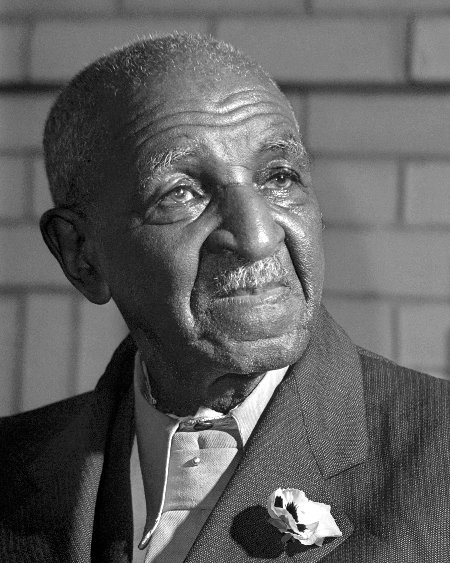 Booker T. Washington Booker T. Washington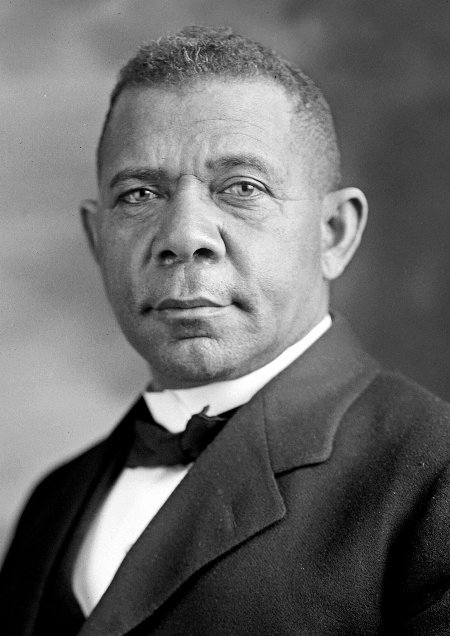 The coin was an amendment to / extension of the Booker T. Washington Birthplace Memorial coin series (1946-51) and was issued "to commemorate the lives and perpetuate the ideals and teachings of Booker T. Washington and George Washington Carver, two great Americans." (Public Law 82-151) Booker T. Washington was a teacher, speaker, author, promoter, school administrator and tireless advocate for equality for African-Americans. He was not overtly aggressive with his approach - something that angered some other civil rights activists of the day - preferring, instead, to work toward equality through better education, workplace advancement and increased economic opportunities for African-Americans plus personal financial contributions in support of civil rights made quietly behind the scenes. George Washington Carver was also a teacher and advocate for racial harmony. In addition, he was a dedicated scientist, inventor, leader and man of service to his fellow man. Carver created over 100 products made from peanuts, and also created dozens that made use of sweet potatoes. He introduced and promoted the concept of crop rotation to help farmers maintain nutrient-rich soil (after seeing the negative impact of repeated plantings of cotton). I think the strength of his character is well-presented in the prepared statement of Senator James John Davis (R-PA), read during the Hearing for the proposed George Washington Carver National Monument, "Patient scholar, creative scientist, humble servant of man and God, George Washington Carver was one whose humbleness toward knowledge, whose tolerance toward men, and whose reverence toward God, molded him into one of the world's beloved figures. His ceaseless quest for learning led him always into the paths of service." While the coin certainly honors two important American figures, I believe their memory was done a disservice by the coin's design. While the obverse with its conjoined portraits is certainly acceptable, the coin's reverse design, IMO, is likely the most unprofessional of all designs depicted on a US commemorative coin. The map of the continental US does not include all of the states and shows some that are badly misshapen. The coin's reverse design was certainly sub-par (at best). The coin was designed by Isaac Scott Hathaway, an African-American artist whose significant talent was well beyond the misshapen map - to this day, I wonder how "the map" could have happened considering the detailed, realistic and life-like sculptures Hathaway created for figures such as Paul Laurence Dunbar, Frederick Douglass, Booker T. Washington and George Washington Carver, among others. 1951-54 George Washington Carver - Booker T. Washington Half Dollar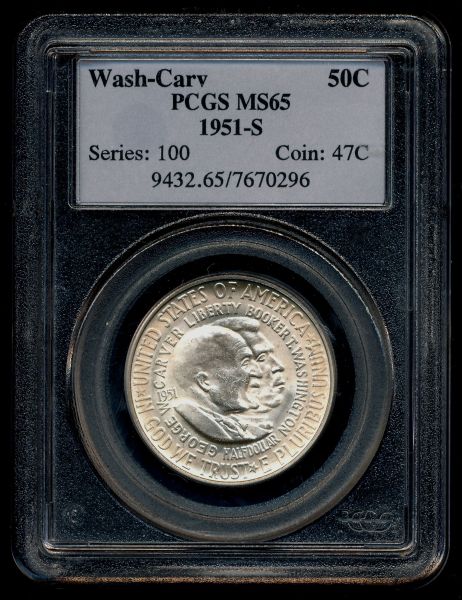 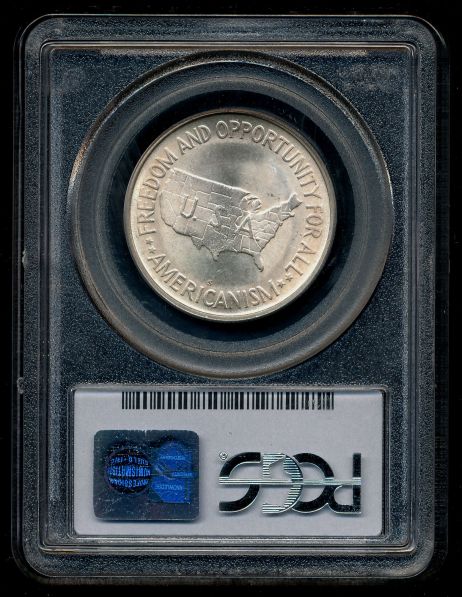 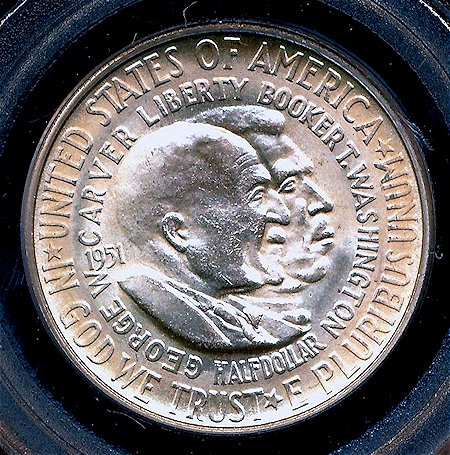 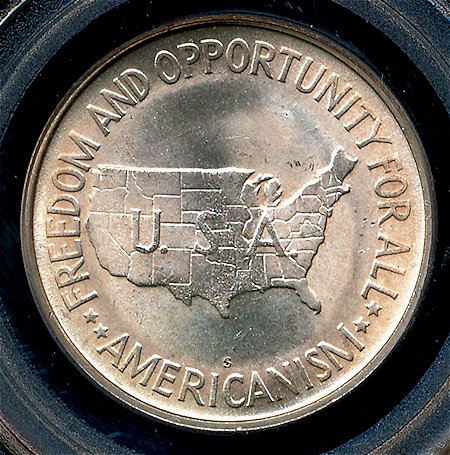 You can learn more about the Carver-Washington coin here: - 1951-54 Carver-Washington Half Dollar- Carver vs. Carver-Washington- 1951-54 Carver-Washington - Coins with Stars ThreadView other of my posts about the original Booker T. Washington half dollar and other commemorative coins and medals here: Read More: Commems Collection. Collecting history one coin or medal at a time! (c) commems. All rights reserved.
|
|
Pillar of the Community
United States
1690 Posts |
Do these count? 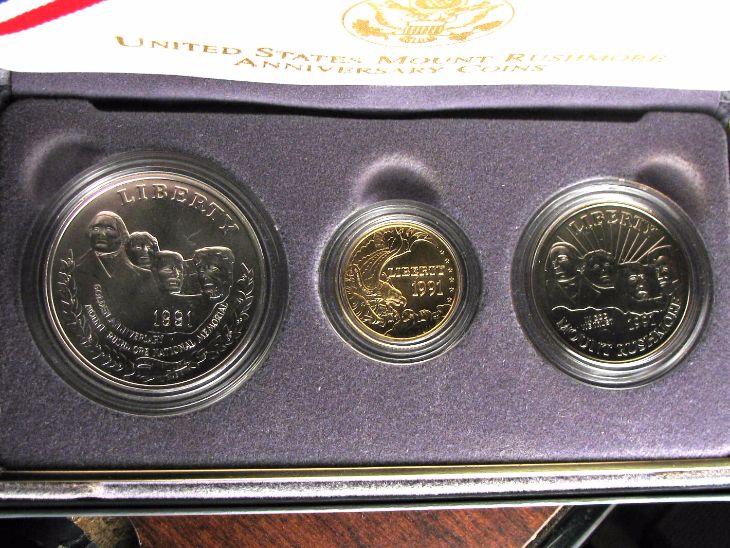 |
|
CCF Master Historian of Commemorative Coins
United States
12515 Posts |
@AcesKings: Thanks for posting! You have an attractive set! Quote:
Do these count? Some might say "Yes" but the figures on the Mount Rushmore coins are not true conjoined portraits. Numismatically speaking, conjoined portraits are when two or more portraits are presented one behind the other. On Mount Rushmore, and its coins, the "head shots" of the presidents are side-by-side, not one behind the other. Collecting history one coin or medal at a time! (c) commems. All rights reserved.
Edited by commems
08/20/2021 6:16 pm
|
|
Bedrock of the Community
United Kingdom
18647 Posts |
One from Spain: 1989 500 Pesetas: 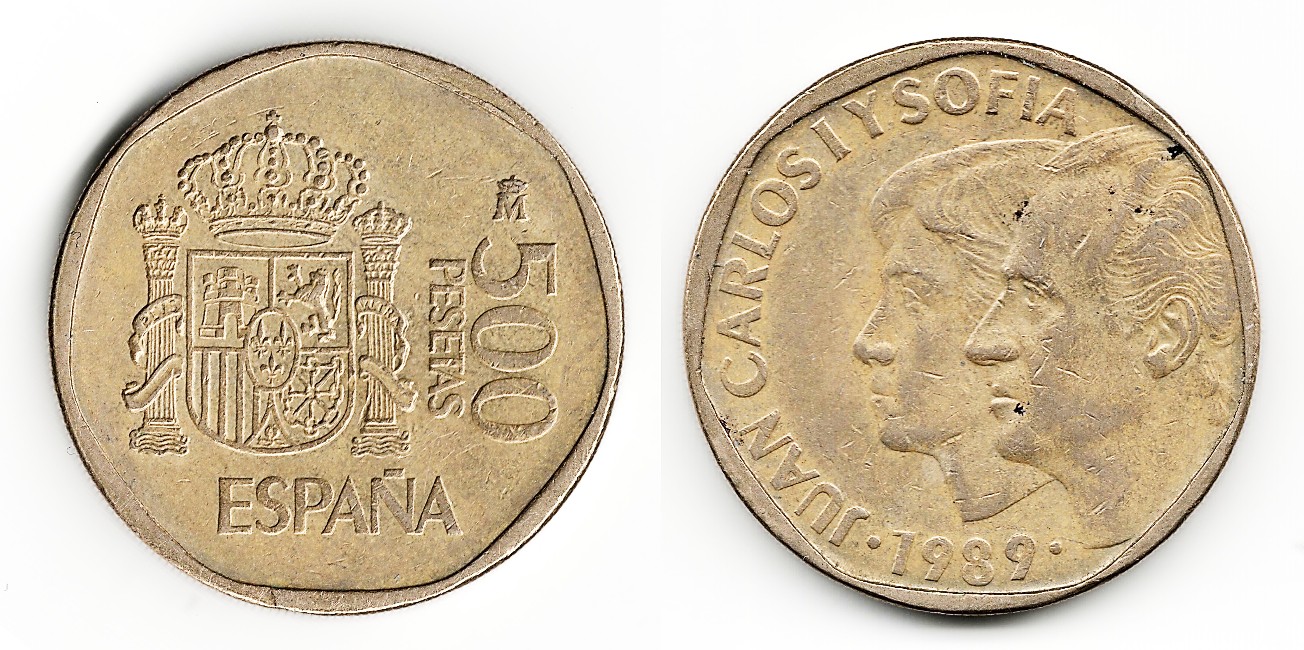 And not sure if this one counts - 1990 200 Pesetas: 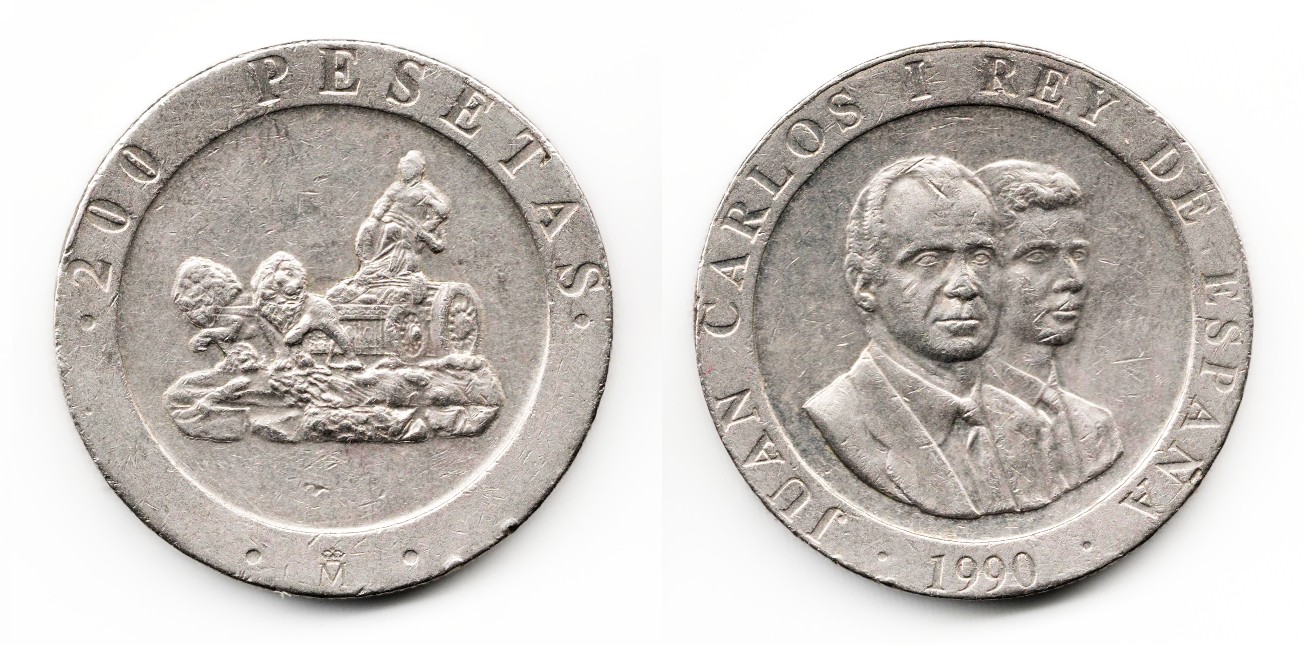 |
|
CCF Master Historian of Commemorative Coins
United States
12515 Posts |
I'm wrapping up my US commemorative coin-based look at conjoined portrait coins with a pair of One Peso commemorative coins struck for the US Commonwealth of the Philippines in 1936, The coins were issued to mark the Philippines' transition from US Territory to US Commonwealth on November 15, 1935 as an interim step on its way to full independence in 1946. The first Peso features portraits of Manuel Quezon (forward portrait), the first president of the Commonwealth, and Frank Murphy, the last US Governor-General of the Philippines. 1936 Frank Murphy-Manuel Quezon Commemorative One Peso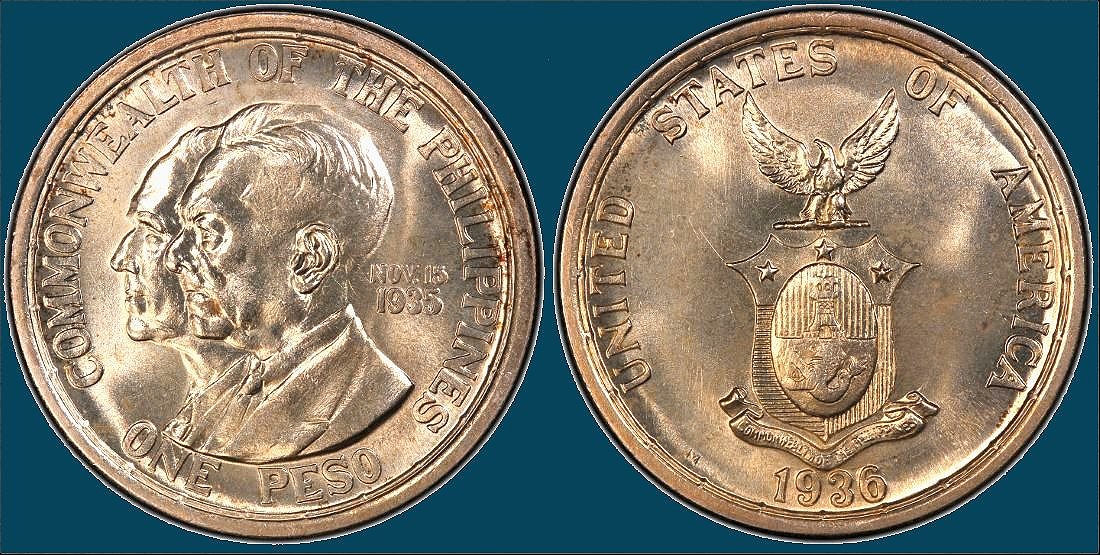 Manuel Quezon - While Serving as Philippines Commonwealth President Manuel Quezon - While Serving as Philippines Commonwealth President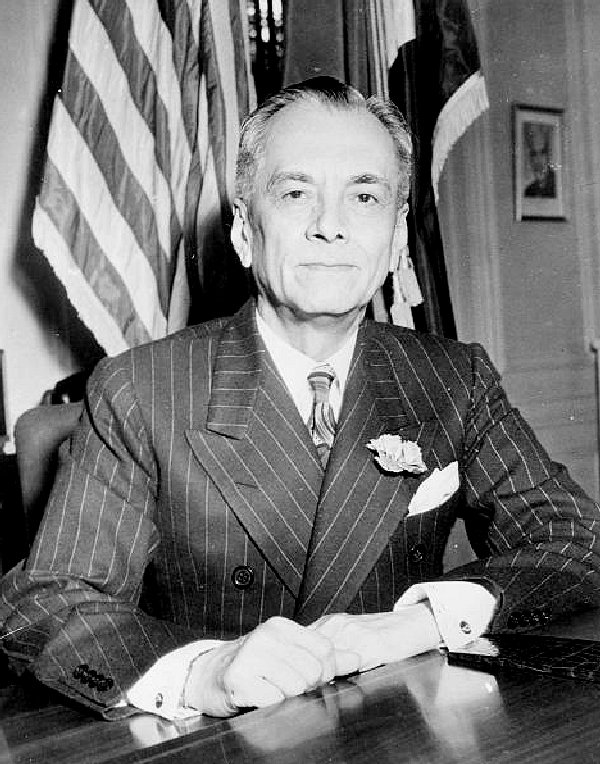 (Image Credit: Library of Congress, Prints and Photographs Division, http://www.loc.gov/pictures. Public Domain.) (Image Credit: Library of Congress, Prints and Photographs Division, http://www.loc.gov/pictures. Public Domain.)Quezon (1878-1944) had a long history in Philippine politics. He won election to the Philippines National Assembly in 1907 where he served one term and then was selected to serve as one of two Philippine Resident Commissioners in the US Congress; he served in the position during four consecutive Congresses (61st - 64th) from December 6, 1909 to October 15, 1916. He then returned to the Philippines where he was elected to the Philippines Senate, serving as its President; he served from 1916 to 1935, leaving the position after being elected as the Commonwealth's first President (his term began on November 15, 1935). Quezon and his family fled the Philippines after Japan invaded the islands in 1942, and moved to upstate New York, where he lived and administered the Philippines government-in-exile. Quezon did not live to see the end of World War II or the Philippines become an independent nation, he died on August 1, 1944 from TB complications (an infliction he had suffered from since 1901). Frank Murphy - While Serving as US Attorney General (Post Philippines)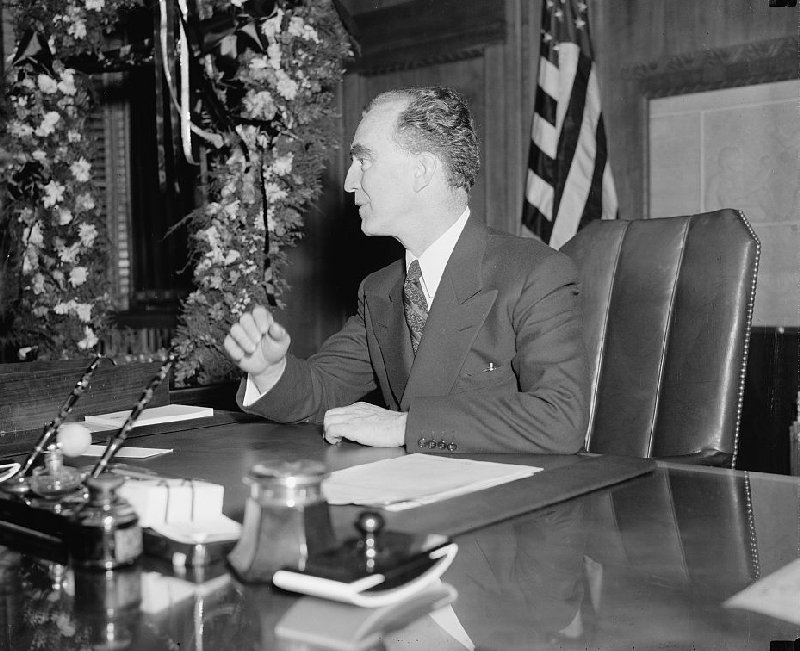 (Image Credit: Library of Congress, Prints and Photographs Division, http://www.loc.gov/pictures. Public Domain.) (Image Credit: Library of Congress, Prints and Photographs Division, http://www.loc.gov/pictures. Public Domain.)During his career, Frank Murphy (1890-1949) was a successful lawyer, the mayor of Detroit, the Governor of Michigan, the US Attorney General and a US Supreme Court Associate Justice. In between his time as Detroit's Mayor and Michigan's Governor, Murphy served as the last Governor-General of the Philippines under Franklin Delano Roosevelt; he served in the position from 1933 to 1935; he served as the High Commissioner to the Philippines from 1935 to 1936 (after the Philippines became a Commonwealth). The second Peso depicts Quezon and US President Franklin Delano Roosevelt (FDR); Roosevelt is shown behind Quezon's portrait but his portrait is moved out from behind Quezon's to show more of FDR's profile. 1936 Franklin Delano Roosevelt-Manuel Quezon Commemorative One Peso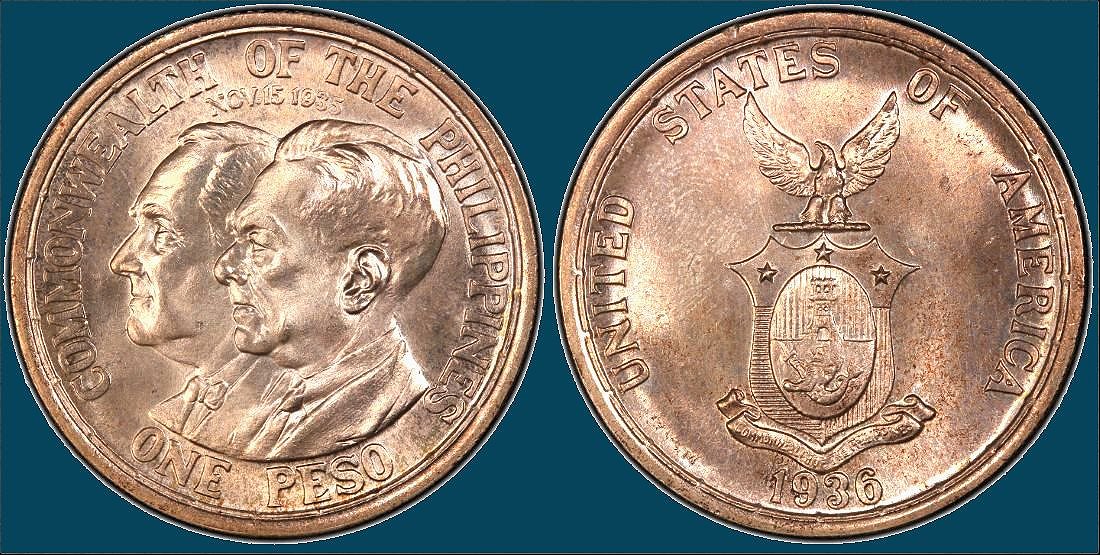 Franklin Delano Roosevelt - Portrait Painting Franklin Delano Roosevelt - Portrait Painting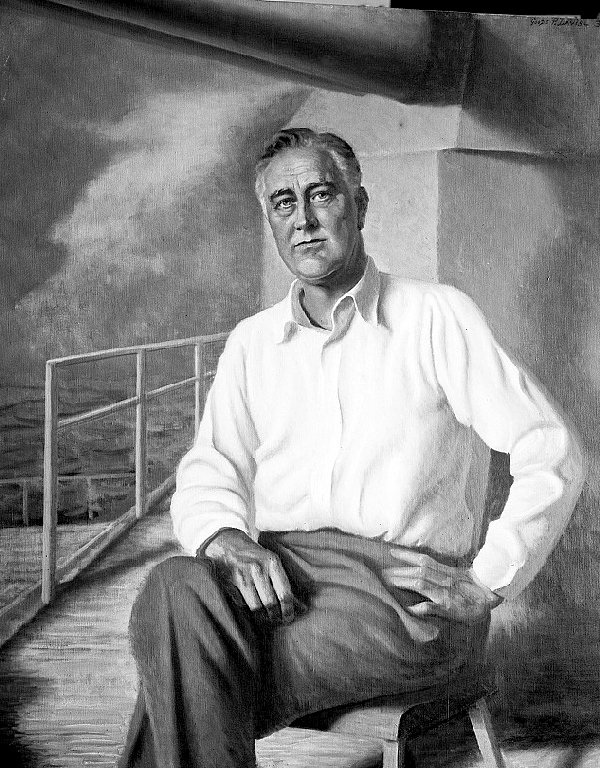 (Image Credit: Library of Congress, Prints and Photographs Division, http://www.loc.gov/pictures. Public Domain.) (Image Credit: Library of Congress, Prints and Photographs Division, http://www.loc.gov/pictures. Public Domain.)Very briefly, the first elected office for Franklin Delano Roosevelt (1882-1945) was as a member of the New York State Senate in 1910; he was re-elected in 1912. President Woodrow Wilson appointed him as Secretary of the Navy in 1913 (as a reward for his support); he served in the post until 1920. He later was elected as Governor of New York in 1928 and re-elected in 1930. He was elected as the 32nd US President in 1932, defeating Herbert Hoover, and served from January 1933 until his death on April 12, 1945 - he is the only US president to be elected four times. He was the sitting president at the time of the Philippines transitioning from Territory to Commonwealth. For far more detailed and informative biographies on each man featured on these coins, have a look at the following: - Frank Murphy (Detroit Historical Society)- Manuel Quezon (US House of Representatives: History, Art & Archives)- Franklin Delano Roosevelt (FDR Library and Museum)For more on the 1936 Commemorative coins for the US-Philippines, check out: - 1935 US-PI Commonwealth Commemorative Coins2 Collecting history one coin or medal at a time! (c) commems. All rights reserved.
Edited by commems
08/21/2021 07:56 am
|
|
CCF Master Historian of Commemorative Coins
United States
12515 Posts |
Quote:
And not sure if this one counts - 1990 200 Pesetas: IMO, it does, but by the smallest of margins! Collecting history one coin or medal at a time! (c) commems. All rights reserved.
|
|
Moderator
United States
195008 Posts |
Fantastic examples! I agree, Mt. Rushmore is a bit of a stretch.  |
|
CCF Master Historian of Commemorative Coins
United States
12515 Posts |
In 1975, Bolivia issued a set of three coins to commemorate the 150th anniversary of Bolivia's independence from Spain. The commemorative pieces feature a shared/common reverse design: conjoined portraits of Simon Bolivar (the Liberator) and the then-current Bolivian President/Dictator Hugo Banzer Suárez. They also had a shared/common obverse design: the Coat of Arms of Bolivia flanked by the commemorative dates of "1825" and "1975" with "SESQUICENTENARIO" (aka "SESQUICENTENNIAL") below. 1975 Bolivia Independence Sesquicentennial Commemorative Coins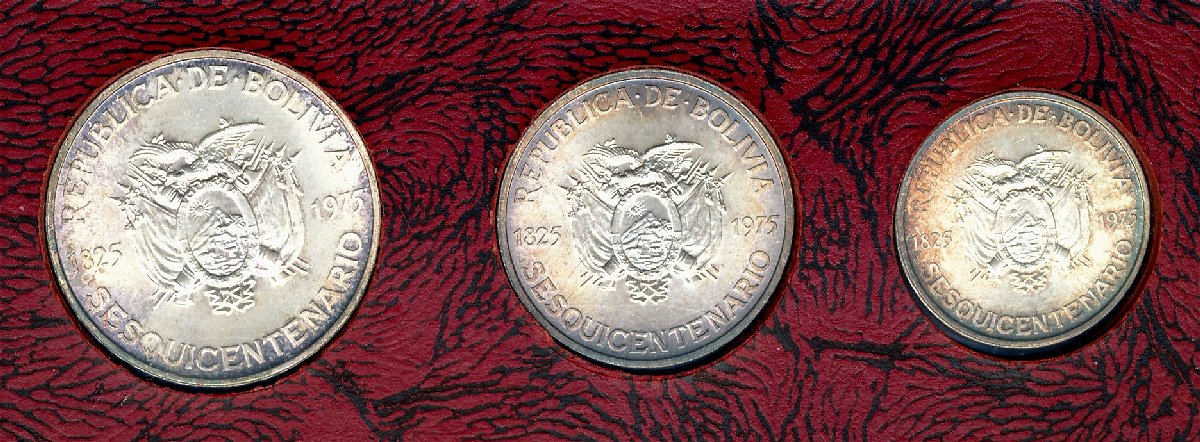 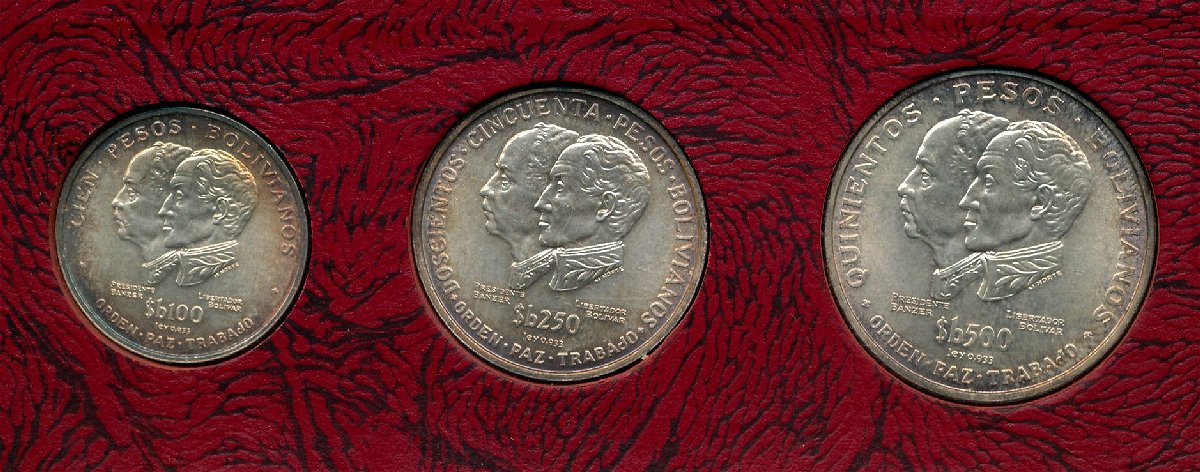 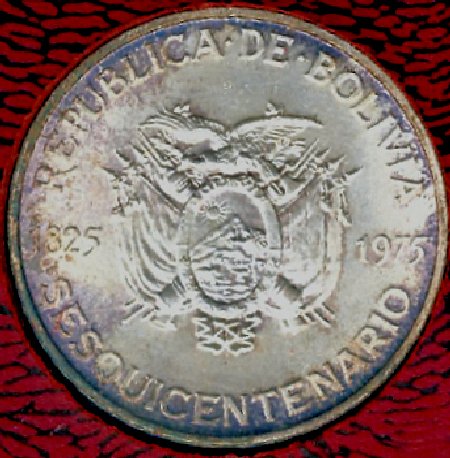 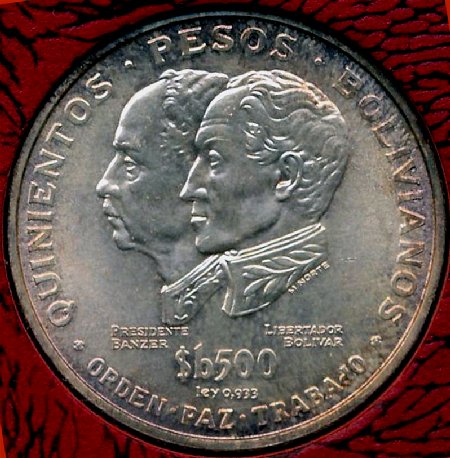 Simon Bolivar Simon Bolivar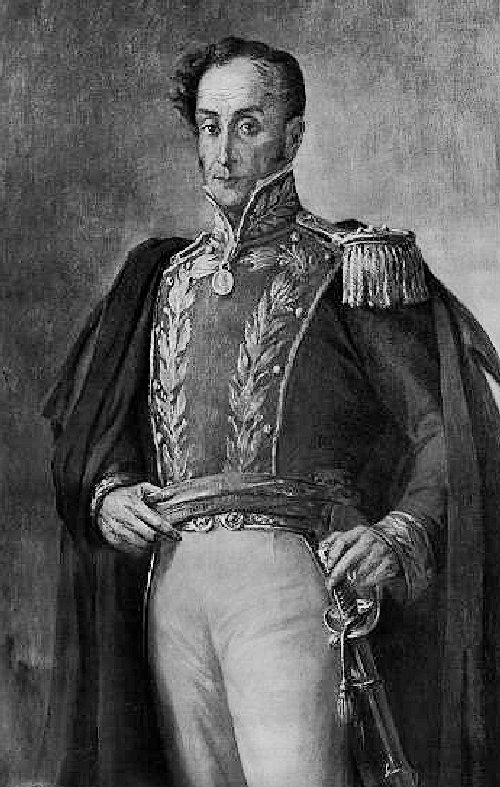 (Image Credit: Library of Congress, Prints and Photographs Division, http://www.loc.gov/pictures. Public Domain.)Hugo Banzer Suárez, Bolivian President, circa 1971 (Image Credit: Library of Congress, Prints and Photographs Division, http://www.loc.gov/pictures. Public Domain.)Hugo Banzer Suárez, Bolivian President, circa 1971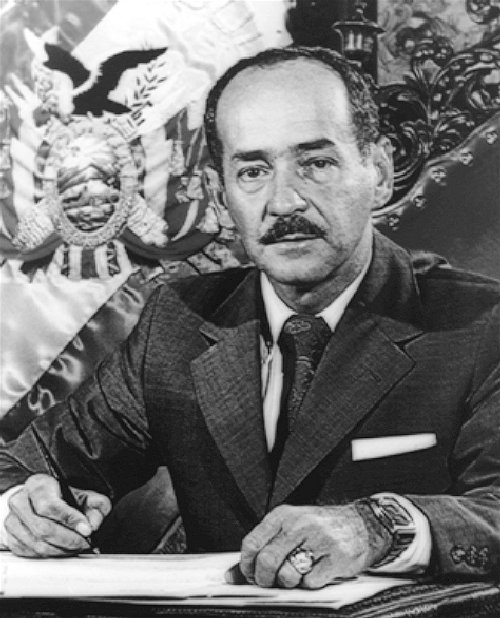 (Image Credit: Wikimedia Commons, commons.wikimedia.org/ Public Domain.) (Image Credit: Wikimedia Commons, commons.wikimedia.org/ Public Domain.)Bolivar, a central political and driving military figure of the independence movement that swept through South America in the early 19th century, was also Bolivia's first president (just like George Washington who is depicted on the 1926 US American Independence Sesquicentennial commemorative half dollar) and Banzer was the country's president at the time the coins were released (just like Calvin Coolidge was on the US coin). Also, as with the US Sesquicentennial coin, the figure from the past (Bolivar) is depicted as the forward portrait with the then-present-day figure (Banzer) presented in the rear position. Undeniable design parallels! A primary distinction between Banzer and Coolidge, however, is the fact that Banzer operated as a dictator during his time in office during the 1970s, while Coolidge operated within the bounds of the US Constitution and was the leader of a democratically-elected Government and the leader of a nation that was free. Banzer became Bolivia's president after his third coup attempt and is known to have dismantled the country's political parties, detained opposition leaders, abolished civil rights in the country and ruled by decree. He was able to survive much longer than most of Bolivia's presidents due to the fact that Bolivia's economy was particularly strong during Banzer's time in office (1971-79) as oil prices escalated, Bolivia's natural gas exports increased dramatically and exports of sugar and cotton grew. The coins were non-circulating commemorative pieces struck for Bolivia by Imprensa Nacional - Casa da Moeda, Portugal (INCM) - the Portuguese Mint. As noted above, the three coins feature a common design, all have serrated/reeded edges and all were struck on planchets of 0.933 fine silver (with the balance being copper). The three denominations of the coins are: 100, 250 and 500 Bolivian Pesos. Bolivia's Coat-of-Arms has changed slightly over time, but the one presented on the obverse of the 1975 commemorative coins was established via the Bolivian Presidential Decree of July 14, 1888 and current in 1975. In addition to the portraits, the coins' reverse design features the "ORDEN - PAZ - TRABAJO" inscription at the bottom rim which translates as "ORDER - PEACE - WORK". To learn more about these Bolivian coins: - 1975 Bolivian Independence Sesquicentennial CoinsFor more of my posts about commemorative coins and medals, have a look at: Read More: Commems Collection. Collecting history one coin or medal at a time! (c) commems. All rights reserved.
Edited by commems
08/22/2021 11:06 am
|
|
Bedrock of the Community
Canada
24885 Posts |
1865 Bolivia. ½ Melgarejo. 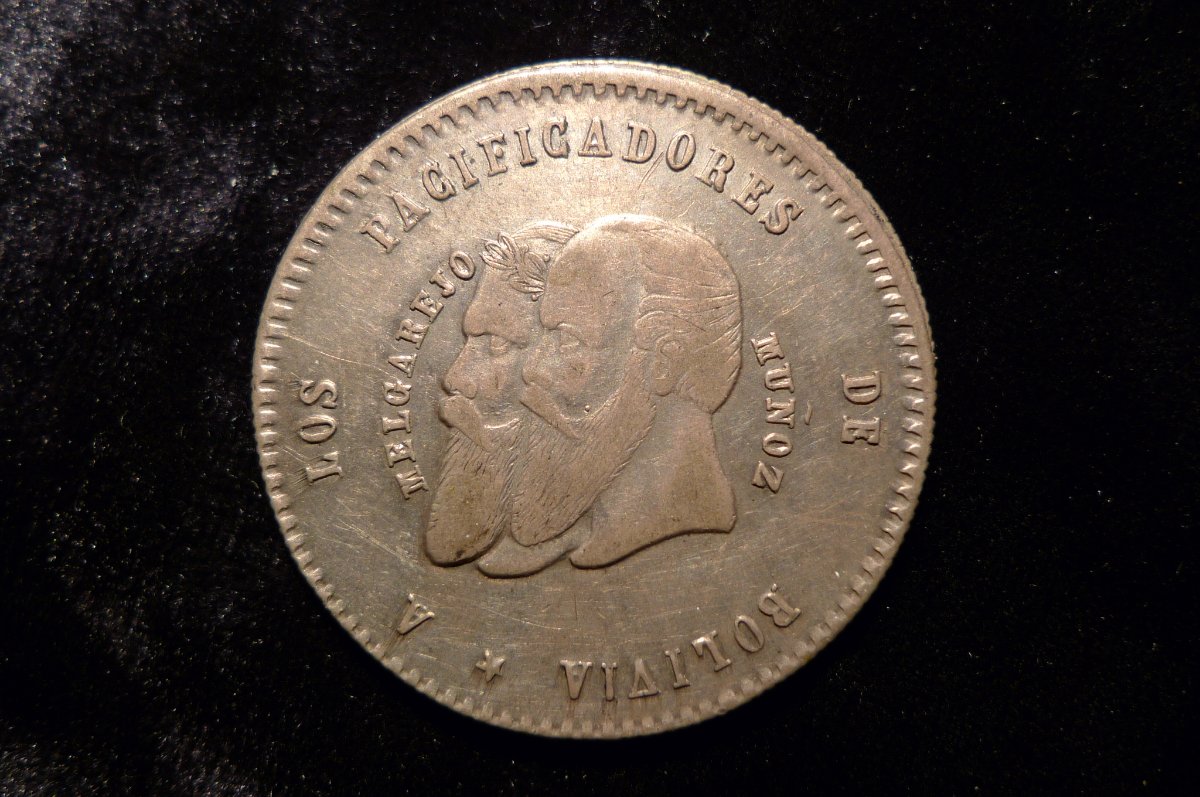 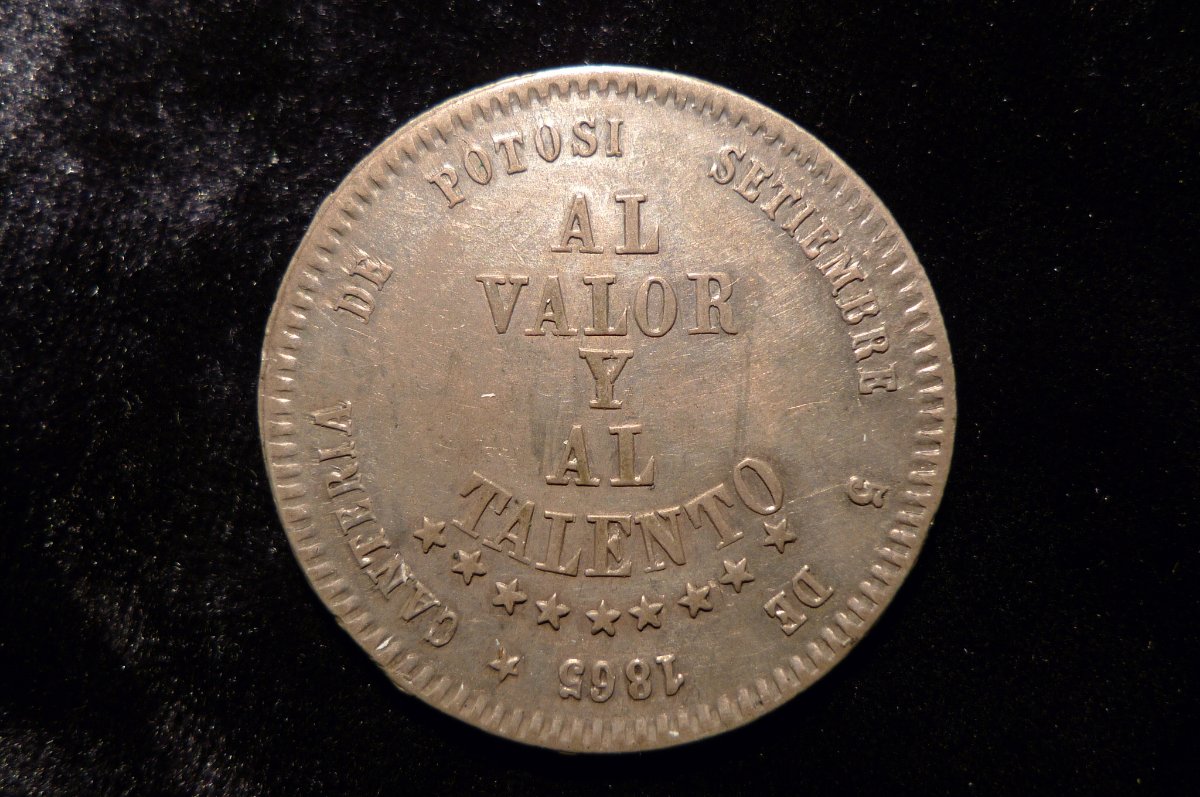 Edited by Dorado
08/22/2021 07:59 am
|
|
Pillar of the Community
United States
1217 Posts |
Although a beautiful example of this 1924 Huguenot-Walloon Tercentenary Half Dollar has already been shown, I would like to share the one I have. 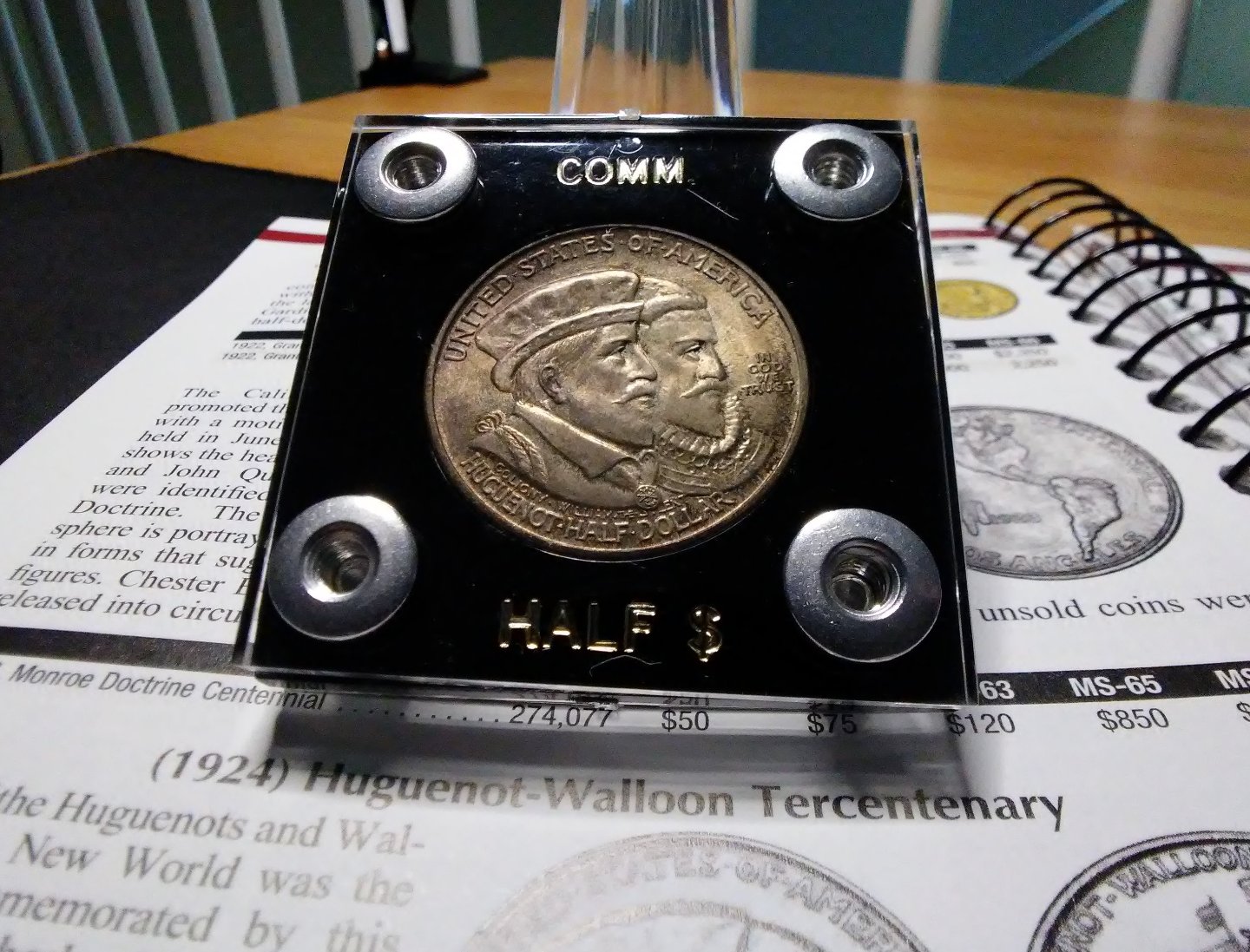 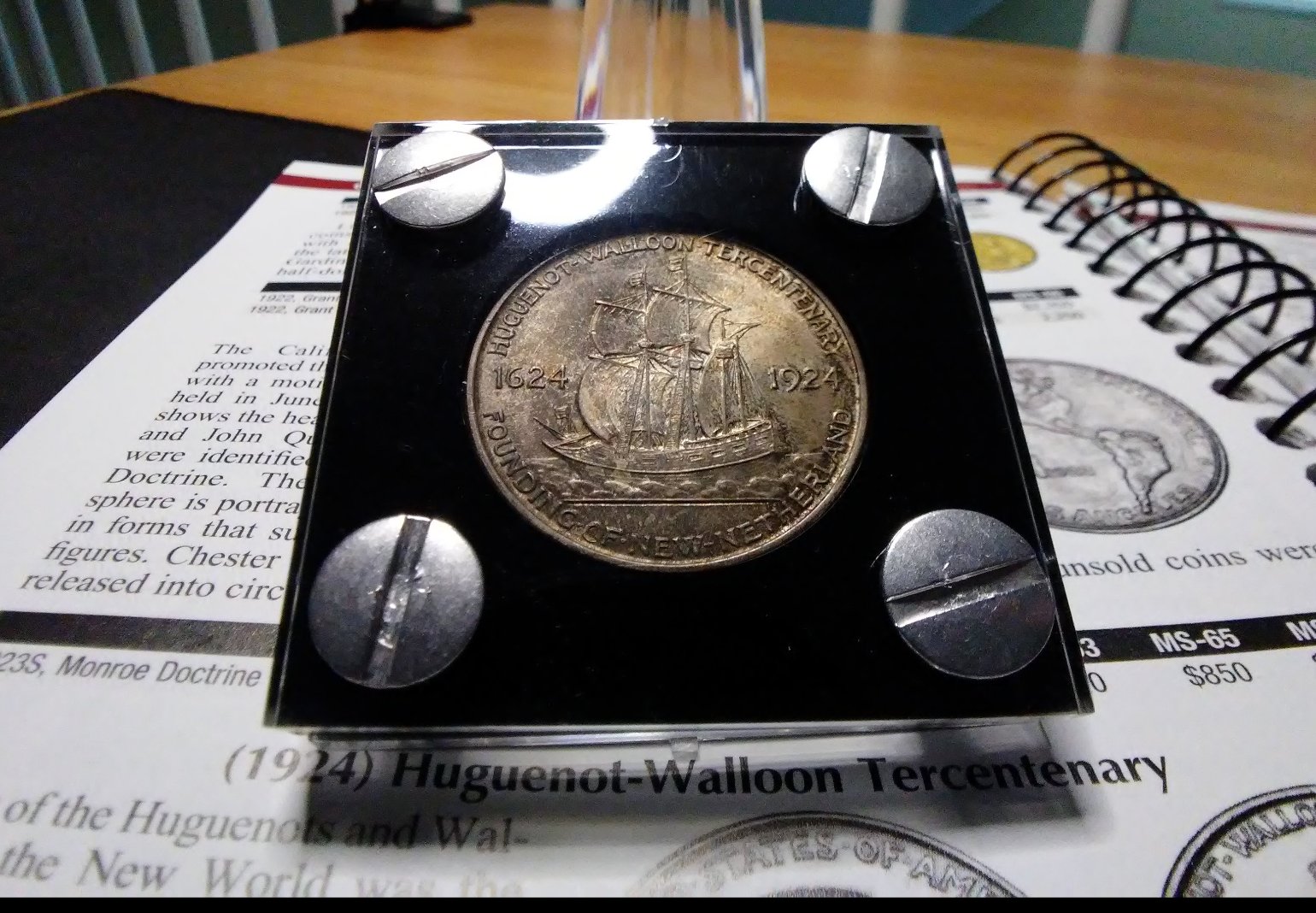 |
| |
Replies: 518 / Views: 22,907 |
To participate in the forum you must log in or register.
Disclaimer: While a tremendous amount of effort goes into ensuring the accuracy of the information contained in this site, Coin Community assumes no liability for errors. Copyright 2005 - 2026 Coin Community Family- all rights reserved worldwide. Use of any images or content on this website without prior written permission of Coin Community or the original lender is strictly prohibited.
Contact Us | Advertise Here | Privacy Policy / Terms of Use
|
| Coin Community Forum |
© 2005 - 2026 Coin Community Forums |
| It took 0.83 seconds to rattle this change. |
 |
|







 First Page
 Previous Page


 Posted 08/19/2021 12:51 pm





