| Author |
 Replies: 2,098 / Views: 71,219 Replies: 2,098 / Views: 71,219 |
|
|
|
Pillar of the Community
Australia
9735 Posts |
1937 Bolivia 10 centavos 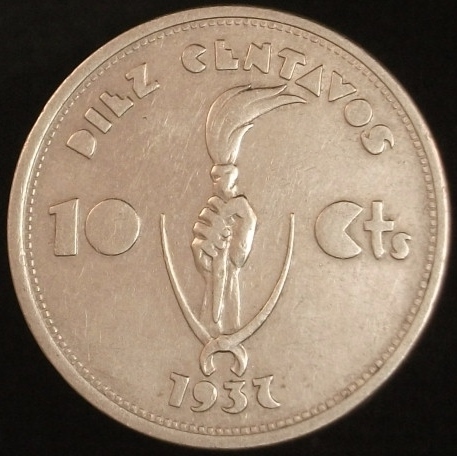 |
|
Pillar of the Community
Australia
9735 Posts |
|
|
Pillar of the Community
Australia
9735 Posts |
1970 Burundi 1 franc. 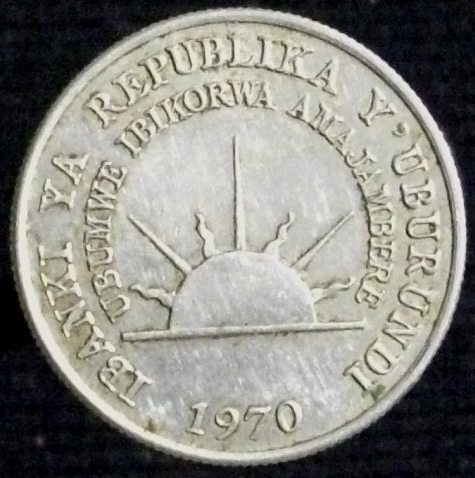 |
|
Bedrock of the Community
 United Kingdom
18558 Posts |
Great selection from triggersmob! Here's possibly the most stupid attempt ever to redesign a circulating coin in modern times - from France! Back in 1974 France issued a 26mm, 10 gram circulating 10-franc coin made of cupro-nickel-aluminium, to replace the 10-franc note. The coin had a face value of about $2 US and was one of the highest value coins in circulation anywhere in the world. Naturally the existence of a base metal coin with such a high face value soon attracted the attention of forgers. By the mid-1980s a fair proportion of the 10-franc coins in circulation were fake. Another problem was that various foreign coins with roughly the same weight and diameter (but a much lower face value) were being passed off as 10-franc coins or used in vending machines. Even British 2p coins (worth $0.03) could operate some slot machines designed to take 10F coins. So a nationwide competition was launched in 1985 to design a new 10F coin. The winning design was by an engraver called Joaquim Jimenez. 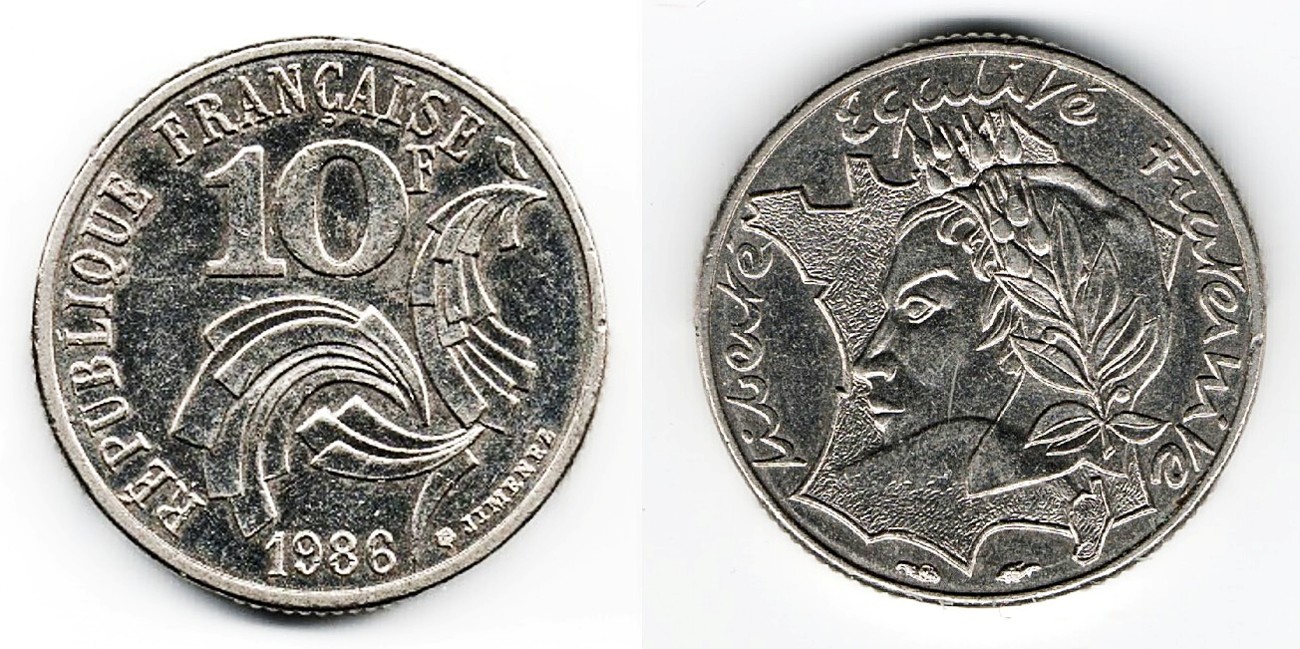 The problem was not so much the obverse and reverse designs (although these did come in for criticism), but the fact that the coin was made of nickel and only 21mm in diameter, just 1.5mm larger than the nickel half-franc. Although it was thicker and heavier (6.5g instead of 4.5g) and had an edge of alternating plain and milled sections, it could still easily be mistaken for the half-franc in general circulation. A suggestion that the half-franc coin (widely used in slot machines) should be withdrawn was greeted with derision! The coin was instantly hated by the public and many people would simply give it back to a shopkeeper if given one in change, and ask for a 'proper' 10-franc coin, After about five months, the Jimenez 10F was withdrawn from circulation. The Monnaie de Paris resurrected the 1974-85 cupro-nickel-aluminium design for their 1987 issue, and put on their thinking caps. Finally in 1988 they introduced a 23mm bi-metallic 10F coin, with an aluminium-bronze ring and a nickel core: supposedly the metal for the cores came from melting down unissued 1986 10F coins! The bimetallic 10F was an instant success and survived until the introduction of the Euro in 2002. 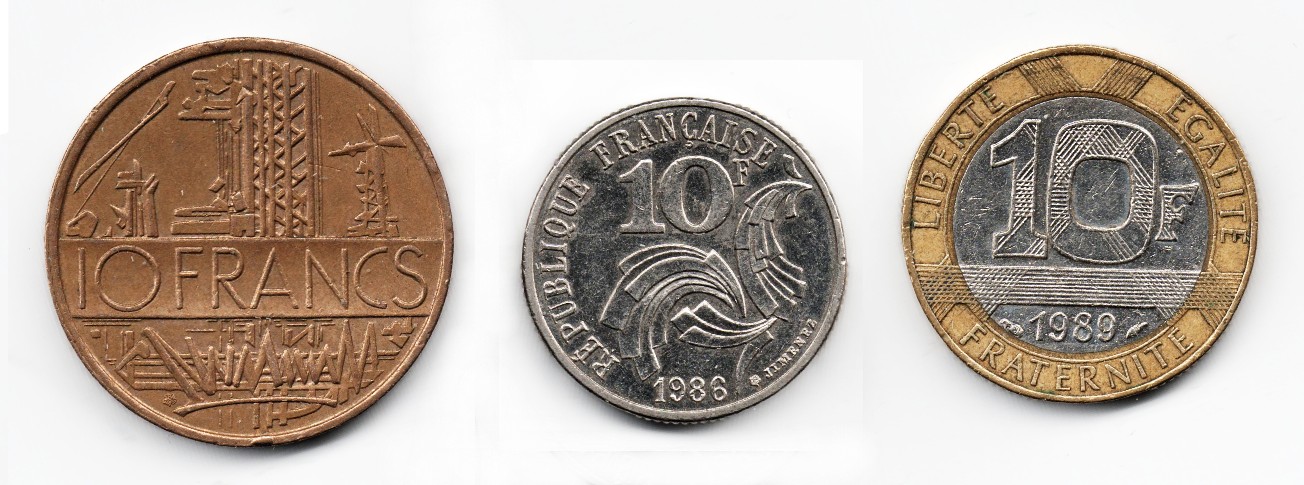 Left to right: 10-Franc coins of 1974-85, 1986 and 1988-2001 Note that between 1982 and 1989 the Monnaie de Paris habitually issued a circulating commemorative 10F coin alongside the 'definitive' issue, and in 1986 their annual commemorative portrayed Robert Schuman. former French Prime Minister and one of the founders of the European Economic Community. The Schuman 10F was the same size as the Jimenez coin and was also demonetized after five months, but as it was intended as a 'one year only' type it does not belong here! |
|
Pillar of the Community
 Sweden
2124 Posts |
That is a nice sequence of 10 francs coins, NumisRob. I remember the 1st and 3rd from my travels, the single year middle one I missed. France had its affairs in other parts of the world, too. 1/600 piastre, Tonkin, 1905. Zinc, 2.7 g, 25 mm. 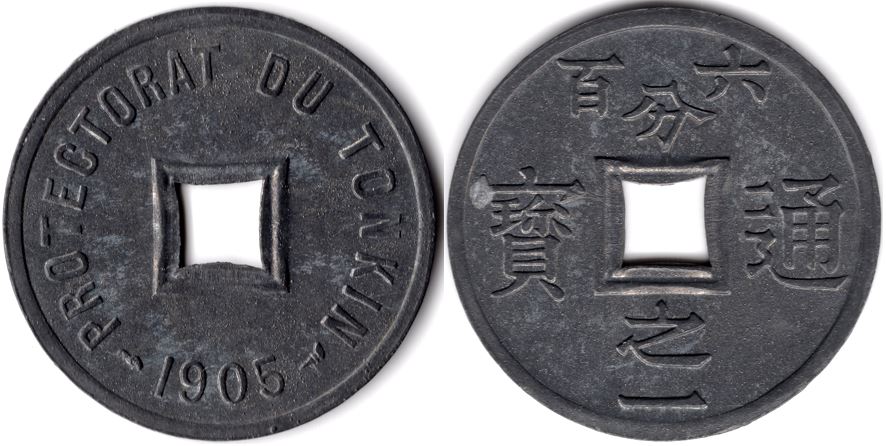 In 1905, Tonkin was a French protectorate and part of the colony of French Indochina. France had introduced the piastre as the monetary unit, divided into 100 cents. A piastre had the value of a US dollar or a UK crown, a considerable amount. Even the single cent was too large for many everyday transactions. There was a certain local production of traditional cast cash coins - valued at around 1/5 cent - but it was not sufficient (the French had also issued their own minted version of cash coins until 1902). Tonkin, located in the north and close to China, had become the economic hotspot of French Indochina and the lack of small change was troublesome. The French authorities were hesitant to pick up minting of smaller denominations - the French version of cash coins had never been popular - but in the end changed their mind and minted 60 million coins in a single batch. They were made of zinc, since Tonkin had rich zinc deposits (and traditionally, Vietnamese cash coins had been made of zinc). Despite the express need for precisely this sort of coin, it was met with aversion by the locals. The French had failed to understand two things: Firstly, the locals knew that cash coins had a variable exchange rate towards the piastre - defined by supply and demand - so a fixed rate of 1/600 was seen as a risk of losing out on a bad transaction. Secondly, the text "Protectorate of Tonkin" may have seemed neutral, it was a local coin for Tonkin after all. But to many Vietnamese it was a provocation, since it underlined the direct French hegemony over Tonkin and its separation from the rest of Vietnam, which had a form of local government. Only about 6 million of the coins were put into circulation and no more were minted of course. |
|
Pillar of the Community
United States
807 Posts |
triggersmob, that Bolivian 10 centavos is a nifty coin. Makes me think of the 1969 Uruguay 1000 pesos (FAO issue).
NumisRob, the 1974-85 10 francs is a type with a lot of eye (and hand) appeal. It would have been a difficult act to follw in any case. But the Jimenez design… I'm at a loss to know who thought that would be a good choice.
|
|
Pillar of the Community
Australia
9735 Posts |
Quote:
triggersmob, that Bolivian 10 centavos is a nifty coin. Thanks Publius. Cambodia 1953 20 centimes 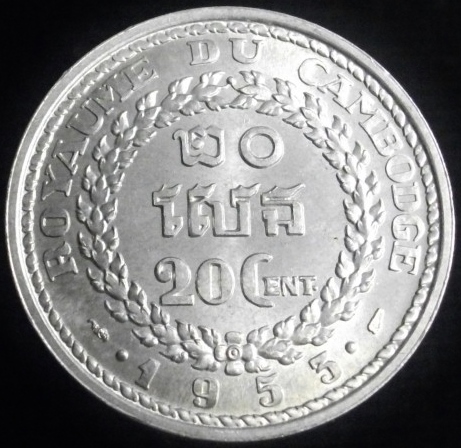 |
|
Moderator
 United States
194660 Posts |
Great examples!  |
|
Bedrock of the Community
United Kingdom
18558 Posts |
All the British coins issued for circulation in 1953 were one-year types. 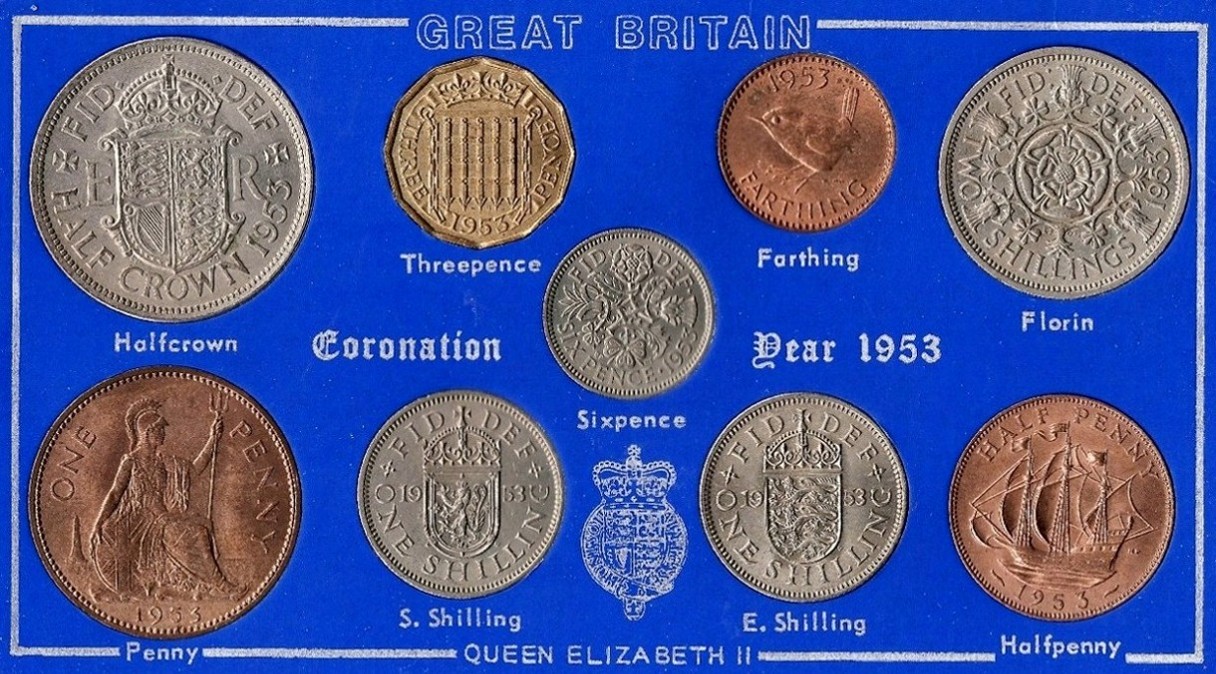 Apart from the farthing, last struck in 1956, the reverse designs were used until 1967 and again for the 1970 Proof Set. However, the obverse was unique to 1953 as it included BRITT:OMN among the Queen's titles, implying that she was Queen of all the Britons: 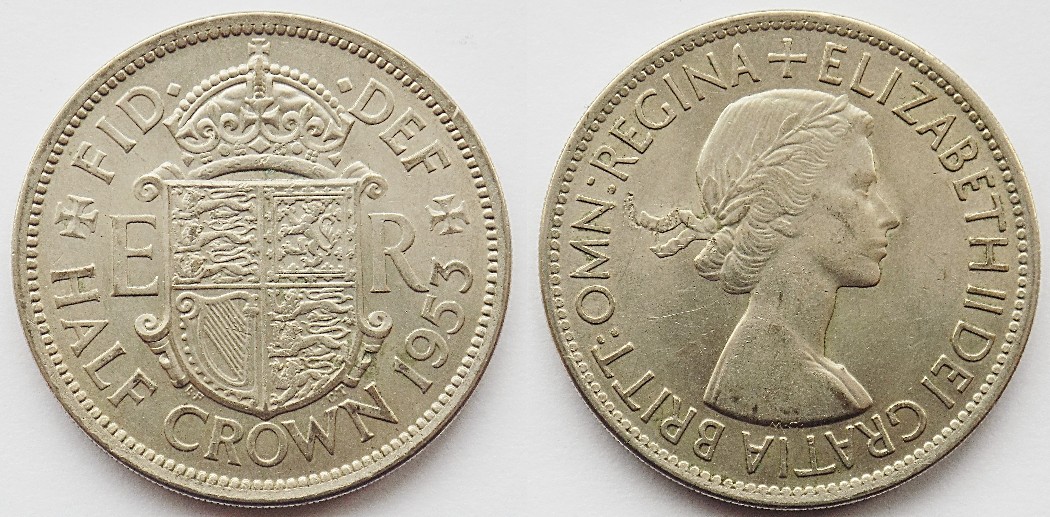 With many Commonwealth territories declaring independence and becoming republics, the wording was considered overtly nationalistic and somewhat anachronistic, and was dropped from all coins the following year. |
|
Moderator
United States
194660 Posts |
Very interesting! |
|
Pillar of the Community
Australia
9735 Posts |
Egypt 1917 1/2 millieme 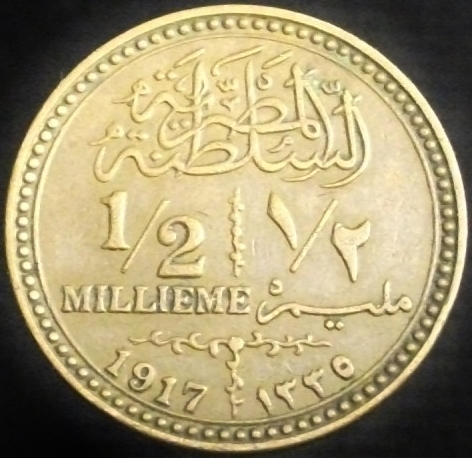 |
|
Moderator
United States
194660 Posts |
Very nice! |
|
Pillar of the Community
Sweden
2124 Posts |
1 piastre, French Indochina, 1931. Silver 0.900, 20 g, 35 mm. 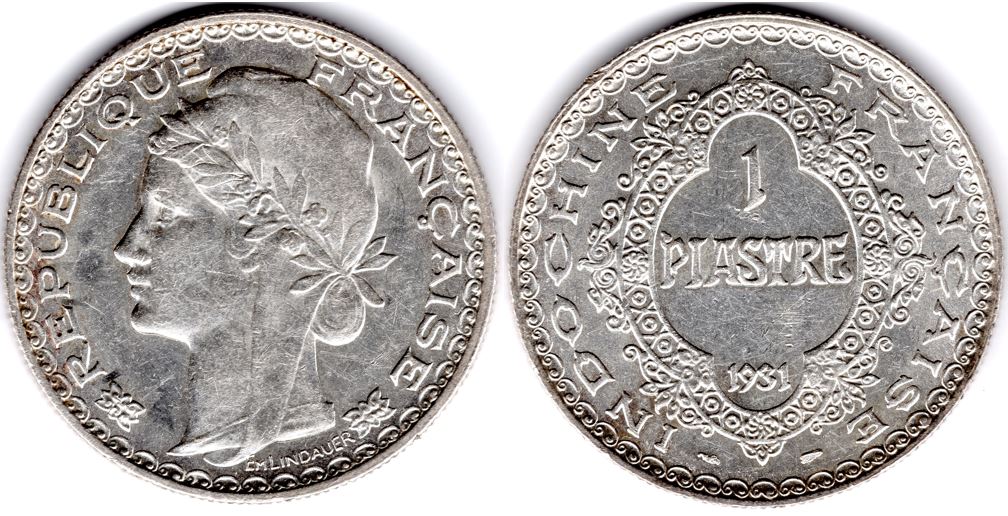 French Indochina had the piastre as monetary unit. Until 1928 the piastre coin was a silver crown (24.3 g silver content), used as a trade coin for the silver based Far East trade. It had a floating exchange rate to the French franc, and during the 1920s it had fluctuated wildly between 6.75 and 27.50 francs. France decided to end that by tying the piastre to a gold standard, just like the franc, resulting in a fixed exchange rate of 10 francs. At the same time, the piastre was shrunk and its silver content reduced by 26 %. Minting of 16 million coins began in 1931 and actually continued into 1932 for a smaller portion of the mintage, but all coins are marked 1931. Pegging the value of a silver trade coin to the price of gold was not such a brilliant idea. Chinese and other merchants were not impressed with the new, smaller piastre. When silver prices plummeted in 1931-1932, the silver value of the piastre fell to a third of its nominal value of 10 francs. Clearly the discrepancy between sellers' and buyers' expectations of the piastre's purchasing power made business difficult. In any event, it is a nice coin in my view. A French Marianne with a touch of art nouveau, combined with Oriental patterns on the reverse. |
|
Pillar of the Community
United States
807 Posts |
erafjel, I honestly love the design of the 1931 piastre.
|
|
Moderator
United States
194660 Posts |
Quote:
1 piastre, French Indochina, 1931. Silver 0.900, 20 g, 35 mm. Very interesting! |
| |
Replies: 2,098 / Views: 71,219 |







 First Page


 Posted 08/20/2023 02:20 am