Coin Community Family of Web Sites Join Thousands of Coin, Bullion, & Money Collectors
Coin, Banknote and Medal Collectors's Online Mall 300,000 items to help build your collection! Royal Canadian Mint products, Canadian, Polish, American, and world coins and banknotes. Specializing in Modern Numismatics Shop for APMEX Bullion on eBay!Vancouvers #1 Coin and Paper Money Dealer Join Thousands of Coin, Bullion, & Money Collectors


Username:
Password:
Save Password
Forgot your Password?


This page may contain links that result in small commissions to keep this free site up and running.

Welcome Guest! Registering and/or logging in will remove the anchor (bottom) ads. It's Free!

Just Read Something Interesting About Larger Roman Coinage.

To participate in the forum you must log in or register.
Author Previous TopicReplies: 23 / Views: 886Next Topic
Page: of 2
Pillar of the Community
United States
3433 Posts
 Posted 03/18/2026  10:01 am  Show Profile   Bookmark this reply Add FVRIVS RVFVS to your friends list Get a Link to this Reply
Lemme get this straight .
It is reasonable to assume that Roman engineers constructed machines capable of hurling cannon ball sized 'ballista' upwards of a quarter mile and impacting targets at over 100 mph
Yet we are to assume they relied on "Moe Larry & Curly" when issuing one and two ounce bronze coins and medallions

Sorry .
No sale !


Just-Read-Something-Interesting-About-Larger-Roman-Coinage.
https://romanobritain.org/8-militar...rtillery.php
Pillar of the Community
Learn More...
Victor's Avatar
United States
903 Posts
 Posted 03/18/2026  10:29 am  Show Profile   Check Victor's eBay Listings Bookmark this reply Add Victor to your friends list Get a Link to this Reply

Quote:
Lemme get this straight .
It is reasonable to assume that Roman engineers constructed machines capable of hurling cannon ball sized 'ballista' upwards of a quarter mile and impacting targets at over 100 mph
Yet we are to assume they relied on "Moe Larry & Curly" when issuing one and two ounce bronze coins and medallions


That's a pretty decent false equivalency

Pillar of the Community
United States
3433 Posts
 Posted 03/18/2026  12:23 pm  Show Profile   Bookmark this reply Add FVRIVS RVFVS to your friends list Get a Link to this Reply
Yet whenever I have seen ancient coin minting "technique" demonstrated it has always been drachm sized planchets utilizing high purity (usually silver) metal
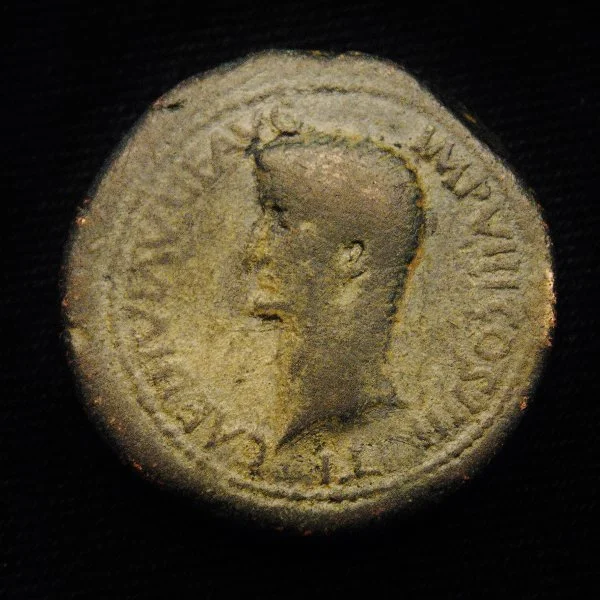
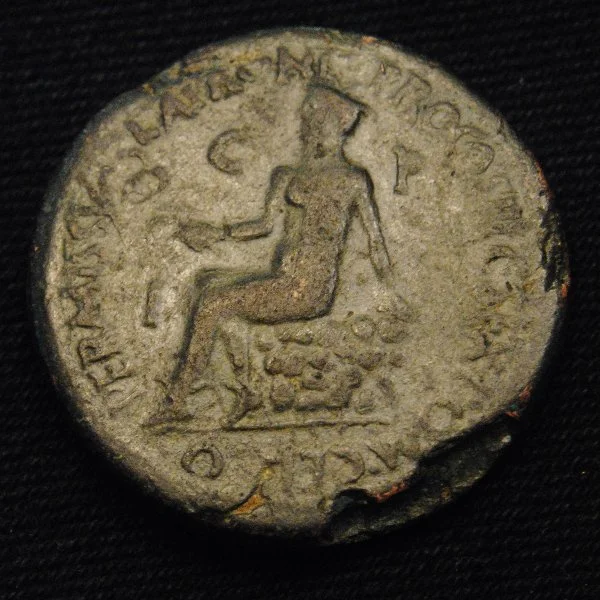
But I would really like to see this 'sestertius' of mine replicated

37mm 45.90 grams

Just-Read-Something-Interesting-About-Larger-Roman-Coinage.

But I won't hold my breath either .
Pillar of the Community
United States
3433 Posts
 Posted 03/18/2026  6:33 pm  Show Profile   Bookmark this reply Add FVRIVS RVFVS to your friends list Get a Link to this Reply
Well let's try one last time shall we ?
Thirty five years ago I managed/coached a Little League Baseball team
For what it's worth we won our division !
But I digress !
One thing really really puzzled me about these kids
I grew casually accustomed to seeing young males 10-11 years old weighing approximately 100 lb hitting home runs over a fence 200 ft away .
Good enough
But then I had the honor of bringing a young lad to Fenway Park
Yankees vs Red Sox !
It struck me then
How could it be that adult males literally bursting their uniforms weighing 200 lb and looking like an Adonis have such difficulty hitting the ball 400 ft ?
Twice as strong should equal twice as far no ?
Well a few years later I stumbled on an "Idiots guide to physics"
The answer is never as simple as it might at first seem

If we reason that the force to launch a baseball 100 ft is 10x10 (x²)
Then in order to launch 200 ft is not double !
The answer is x³ or 10x10x10

I suspect the physics involved with the minting of coins is not at all dissimilar
Moderator
Learn More...
Sap's Avatar
Australia
16808 Posts
 Posted 03/18/2026  7:18 pm  Show Profile   Bookmark this reply Add Sap to your friends list Get a Link to this Reply
The British TV documentary series Time Team did an episode with some experimental archaeology regarding the making of large bronze coins in ancient times. Now "experimental archaeology" in this context is really just "taking modern replicas of the tools we know the ancients had and trying to use them", without actually using a time machine to watch how ancient peoples actually used them, so given that caveat, the show came to the following conclusions:
- Cutting blank planchets off of a tube of copper, "cob-style", simply wouldn't have worked - copper is too tough to make a clean cut with ancient technology, and the amount of labour needed to round off and flatten the blank properly simply couldn't have been time-effective. As such, individual casting of blanks seems more probable.
- Cold-striking a copper or bronze coin using the big-guy-with-a-hammer method simply didn't work - virtually no detail came through onto the finished coin, even after multiple strikings.
- Heating the blanks before striking worked a treat and created very authentic-looking coins.

"We tried striking coins cold and it just didn't work" seems to be the consistent result from experimental archaeology; assuming the archaeologists haven't missed some obvious flaw in their reasoning, the resultant conclusion is that they must have been struck hot, despite the extra care and labour this would have had to entail compared to cold striking. Even hot-striking requires a 2 or 3 blows of the hammer to fully strike up the details on a large bronze coin, which perfectly accounts for the doubling often seen on large Ptolemaic bronzes.

Quote:
Lemme get this straight .
It is reasonable to assume that Roman engineers constructed machines capable of hurling cannon ball sized 'ballista' upwards of a quarter mile and impacting targets at over 100 mph
Yet we are to assume they relied on "Moe Larry & Curly" when issuing one and two ounce bronze coins and medallions

We have plenty of physical and graphical evidence of Roman military hardware. We don't have any such evidence for the use of drop-hammers or similar mechanisms to aid in coinage production, despite having a few surviving depictions of mint activity.

Could the ancient Romans have built a coin press? Sure. We know they had powerful water-powered drop hammer technology because we've found physical archaeological evidence for them at mine sites in Spain and Wales, used for crushing ore. Did they use them for striking coins? There's no evidence, so until and unless some kind of actual evidence that they did so comes to light, we have to assume they didn't - that's just how archaeology works. Archaeology is a science, so it's all about what the surviving evidence states; discussing how things "might have been" without such evidence is really just writing historical fan-fiction. Maybe at some point in Roman history, somebody with access to water-powered drop hammers tried to experimentally adapt those drop-hammers to strike coins; maybe it didn't work well, or maybe they concluded it was simply easier to buy a couple of hefty slaves and go back to making coins the old-fashioned way. If this happened, no physical evidence survives and no written records either. All we can conclude from the archaeology is "It doesn't appear to have been used".

It's not entirely unlike the question of the ancient discovery of the Americas. "Could the Romans have sailed to America?" Yes, technically, we know from archaeology and written records that their ships had that capability. "Did the Romans sail to America?" Well, there's no physical evidence one way or the other for this either in America or in the Mediterranean, nor in surviving written sources, apart from the old "absence of evidence" argument (for example, if the Romans had visited the Americas, why were there never any pumas or jaguars in the Colosseum?). So we have to presume the answer is either "No, they didn't", or "If they did, they somehow did it in such a way that it left no permanent mark on Roman society".
Don't say "infinitely" when you mean "very"; otherwise, you'll have no word left when you want to talk about something really infinite. - C. S. Lewis

Pillar of the Community
United States
3433 Posts
 Posted 03/18/2026  8:53 pm  Show Profile   Bookmark this reply Add FVRIVS RVFVS to your friends list Get a Link to this Reply
Coining presses tend not to be extraordinarily 'violent' machines
In fact the process is rather slow and methodical
My analogy intended to emphasis the force required
Not the speed with which it is applied
For impressing an image .
Rolling a large stone over a die set would achieve the same
Pillar of the Community
United States
3433 Posts
 Posted 03/19/2026  02:19 am  Show Profile   Bookmark this reply Add FVRIVS RVFVS to your friends list Get a Link to this Reply
Around ten years ago I posted here a Britannia reverse type As of Antoninus Pius
While I cherished the piece ( great price !) I acknowledged the inferior workmanship in 'style'
In fact it is commonly speculated by "numismatists" that the issue type may have come from a traveling mint operating within the province itself
Having concentrated my personal collection on AE's I wondered aloud why these "inferior" types seemed limited to the copper As denomination while the glorious sestertius (and Dupondius) issued seemingly from Rome alone ?
Brittania as we know for certain was the Roman source for tin
(Cyprus was famous for copper !)
But why would the local being sourced for the tin to make bronze (80% copper about 20% tin with trace amounts of lead and
nickel)
not issue in bronze or the beautiful Roman 'orichalcum' ?
Having experimented with copper and bronze the answer to me seemed simple
Copper is rather malleable
Bronze and/or brassy orichalcum most definitely is not !
Possibly would have not issued due to the difficulties involved ?
They were reasonably close to the source of the tin used to produce a very strategic alloy
So why not use it ? Instead they imported copper ?
Pillar of the Community
MetDet71's Avatar
United Kingdom
1563 Posts
 Posted 03/19/2026  06:51 am  Show Profile   Check MetDet71's eBay Listings Bookmark this reply Add MetDet71 to your friends list Get a Link to this Reply

Quote:
"Moe Larry & Curly"


Some very interesting input on this. I have been doing a lot of searching on the web but not managed to find anything regarding a drop hammer or such. On the heating of coins side though, there is quite a lot of information available from Universities and science reports. Here is a snippet from a science report that supports coins being heated.

[Historic coins are an artifact used for analysis in different research areas. This study contributes to the topic of historic coin minting. Consulting ideas from the field of experimental numismatics, an approach is proposed to evaluate minting of certain coins supported by real test samples. Therefore, a test setup is implemented for the manufacturing of coins under controlled process conditions. In this work, the main focus lies on the coin blank temperature used for striking and thus, to contribute to the controversial problem, if minting is done "cold", "warm" or "hot". In order to prevent confusion, a suitable definition of the terms "cold", "warm" or "hot" with respect to the materials recrystallization temperature is given. Various test samples of copper-based material are manufactured for different process conditions and initial coin blank temperatures, ranging from ambient temperature to 900 °C. Roman coins values, Dupondii and late Roman AE coins, are conducted for a comparative analysis. All coins are evaluated and compared based on metallographic micro-sections. On the basis of the conducted test, strong indications are found for a "hot" striking process.]
  Previous TopicReplies: 23 / Views: 886Next Topic
Page: of 2

To participate in the forum you must log in or register.


Disclaimer: While a tremendous amount of effort goes into ensuring the accuracy of the information contained in this site, Coin Community assumes no liability for errors. Copyright 2005 - 2026 Coin Community Family- all rights reserved worldwide. Use of any images or content on this website without prior written permission of Coin Community or the original lender is strictly prohibited.
Contact Us  |  Advertise Here  |  Privacy Policy / Terms of Use

Coin Community Forum © 2005 - 2026 Coin Community Forums
It took 0.31 seconds to rattle this change. Forums