| Author |
 Replies: 5,897 / Views: 446,542 Replies: 5,897 / Views: 446,542 |
|
|
|
Pillar of the Community
Canada
999 Posts |
Daltonista, the future Kings Edward VIII and Charles III were the only two PoW's to have investitures. Charles had actually been Prince of Wales for almost 11 years before his. From what I'm reading, it sounds like William may not have one. This was the official Royal Mint issue. It came in a red case similar to the ones used for early 20th century coronation medals. |
|
Pillar of the Community
 United States
2009 Posts |
From today's mail: 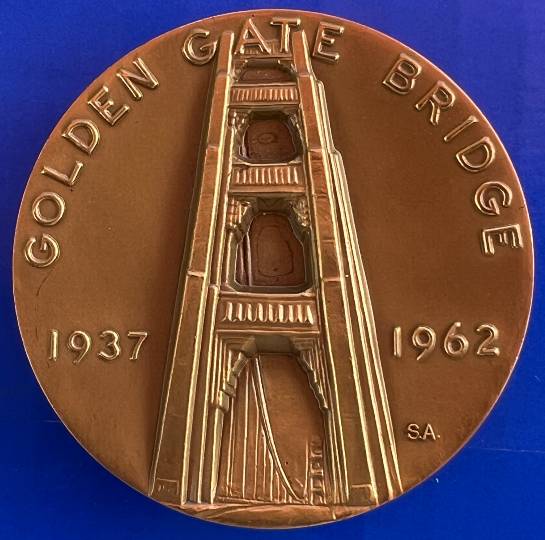 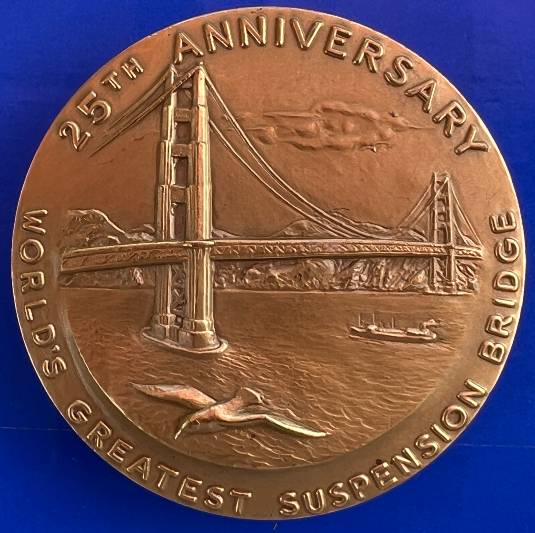 |
|
Bedrock of the Community
United States
76551 Posts |
Very nice ctpbilly! I really like that one.  Errers and Varietys.
|
|
Moderator
 United States
192227 Posts |
Quote:
From today's mail: Fantastic! |
|
Pillar of the Community
United Kingdom
856 Posts |
Another Royalist badge from me. Unfortunately, not a great deal appears to be known about this series of what are commonly termed 'badges'. They were produced in, as far as I know, unknown numbers. Generally by casting (which meant that an existing example could be copied without need for much engraving or die making) and then the finished product was chased to tidy it up, a simpler process than having to strike them. No doubt made in Royalist strongholds such as Oxford and Nottingham once King Charles and his followers had ceded London to the Parliamentarians. Worn or carried by supporters of the crown to show their loyalty (we know such badges came out of hiding and were shown openly following the restoration of the monarchy and for some years afterwards), so probably of more sentimental than monetary value to their owners. They were also made in numerous different styles, although for simplicity often the obverse showing the bust of the king remains the same, with only the reverse design changing. Which brings me to this. Medallic Illustrations 362/236. The 'usual' bust of Charles, ' lovelock on left shoulder, in falling lace collar, armour, and scarf across the breast'. But with a different reverse where the Royal Arms is in relief rather than the commoner 'engraved' style and the crowned shield is not within the Garter. 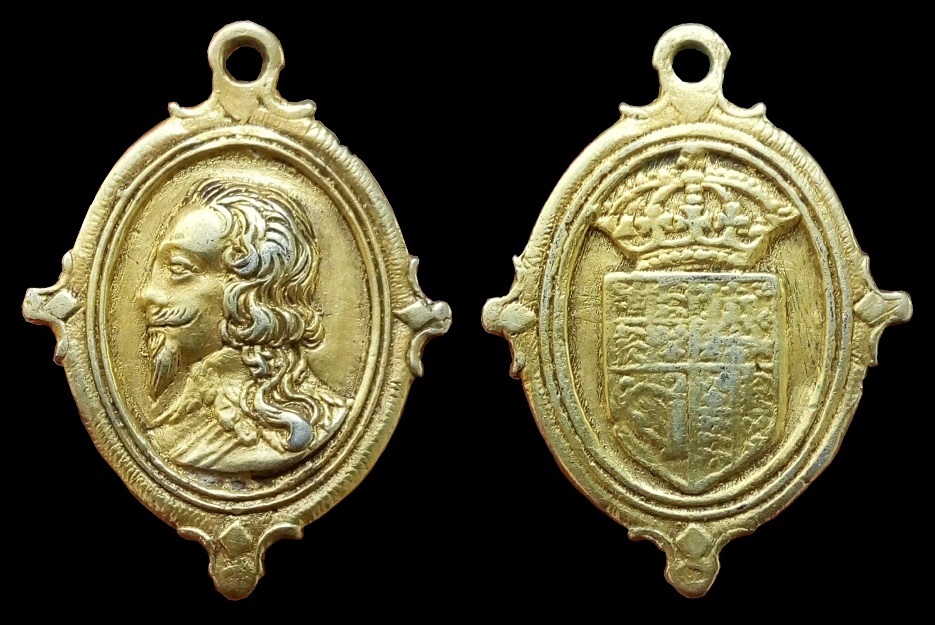 Gilded silver, 27mm x 20mm. 2.93g. Some light wear to the gilding on the high points. The reverse shield appears poorly rendered (a feature it shares with the British Museum's example) rather than worn. So far I've only found the one other example (British Museum #7282). None in the online collection records of the Fitzwilliam or Hunterian collections and none in the Farquhar (1955), Heckett (1977), 'English Collector' (1989), Foley (2014) or Platt (2022) sales, so has to be assumed to be quite rare. It'd be nice to know a bit more (either about the provenance of this particular piece or other examples) but that seems to be the nature of this collection area, all a bit unknown! Such is life. Edited by Tom Goodheart
08/27/2023 07:51 am
|
|
Moderator
United States
192227 Posts |
Quote:
Another Royalist badge from me. Very nice! |
|
Pillar of the Community
United States
987 Posts |
The 37mm clay gambling tokens below won a second place exhibition ribbon at the ANA's Worlds Fair of Money earlier this month in Pittsburgh. The exhibit was titled, "Gaming Chips of Pittsburgh's Max Klein." I'm curious whether any CoinCommunity members attending the convention saw the exhibit (the exhibit also contained many other Max Klein artifacts, such as bottles, whiskey glasses, playing cards, advertising trade cards, etc.).Major Max Klein was the leading wholesale liquor dealer in Allegheny, Pennsylvania (now known as Pittsburgh's North Side) during the late 19th Century. He was born in Rhenish Bavaria in 1843 and emigrated to the U.S. in 1859. In 1861, Klein enlisted as a Private in Company F of the First Iowa Calvary. He was honorably discharged five years later as a Major, serving under General Custer. In 1870, he established residence in Pittsburgh and started a wholesale liquor business at 52 Federal Street. He shipped his products, including Silver Age Rye, extensively to the East, West and South, according to the 1892 book "All Sorts of Pittsburgers," by Arthur G. Burgoyne. There were also a lot of illegal gambling halls in Pittsburgh at the turn of the century and Klein did not hesitate to exploit this additional vice. In addition to personalized playing cards, Klein issued gaming tokens in four colors (red, white, blue, and tan). 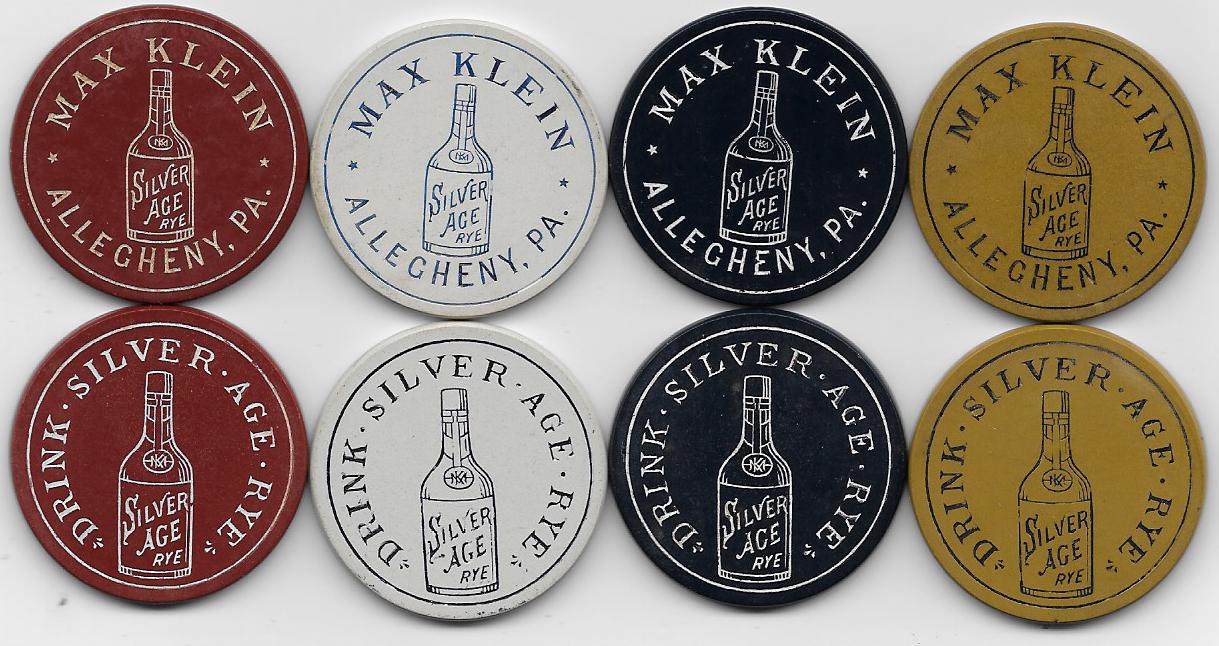 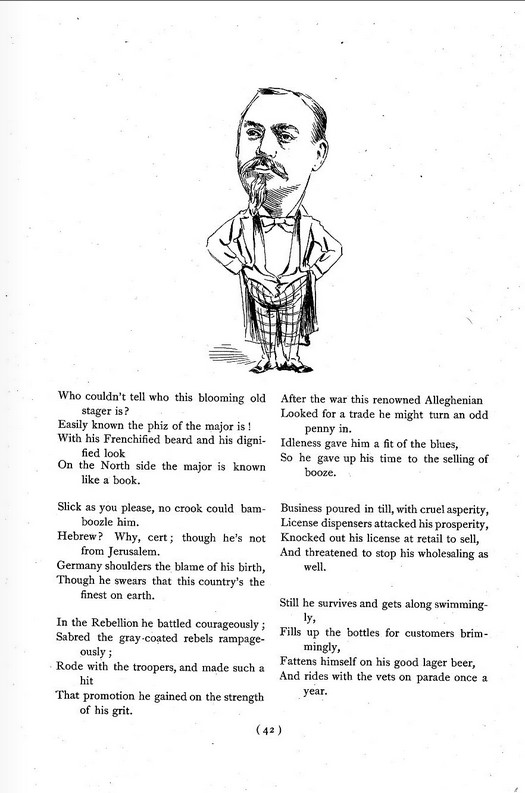 |
|
Moderator
United States
192227 Posts |
Nice set! |
|
Bedrock of the Community
United States
26519 Posts |
Very interesting, captainrich!
Inordinately fascinated by bits of metal with strange markings and figures
|
|
Pillar of the Community
Sweden
2124 Posts |
Quote:
Another Royalist badge from me. That was really interesting, thanks for sharing. Have never seen anything like this, from England or from any other country. The first political buttons? |
|
Pillar of the Community
United States
1326 Posts |
Edited by otto
08/29/2023 2:01 pm
|
|
Bedrock of the Community
United States
26519 Posts |
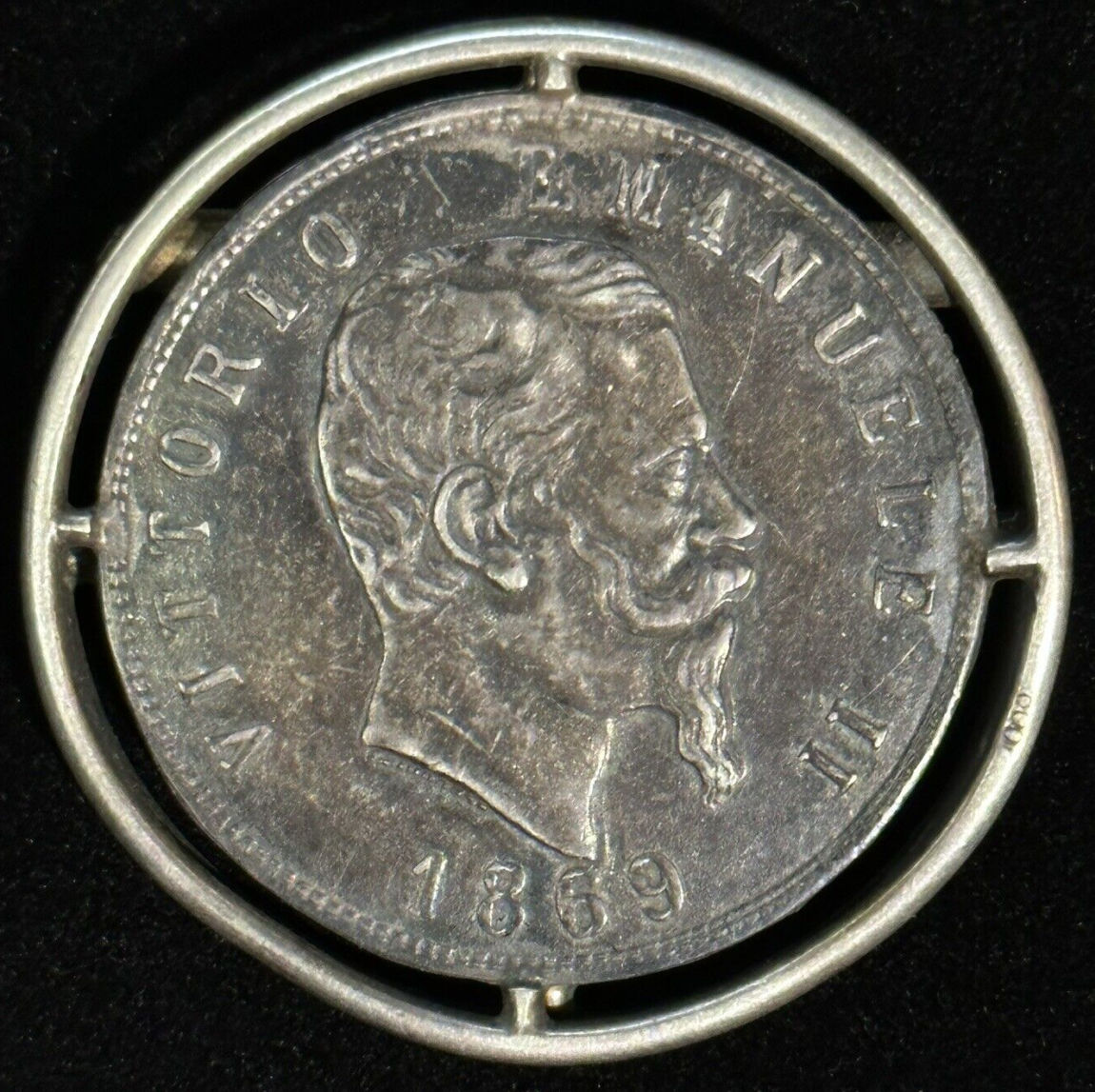
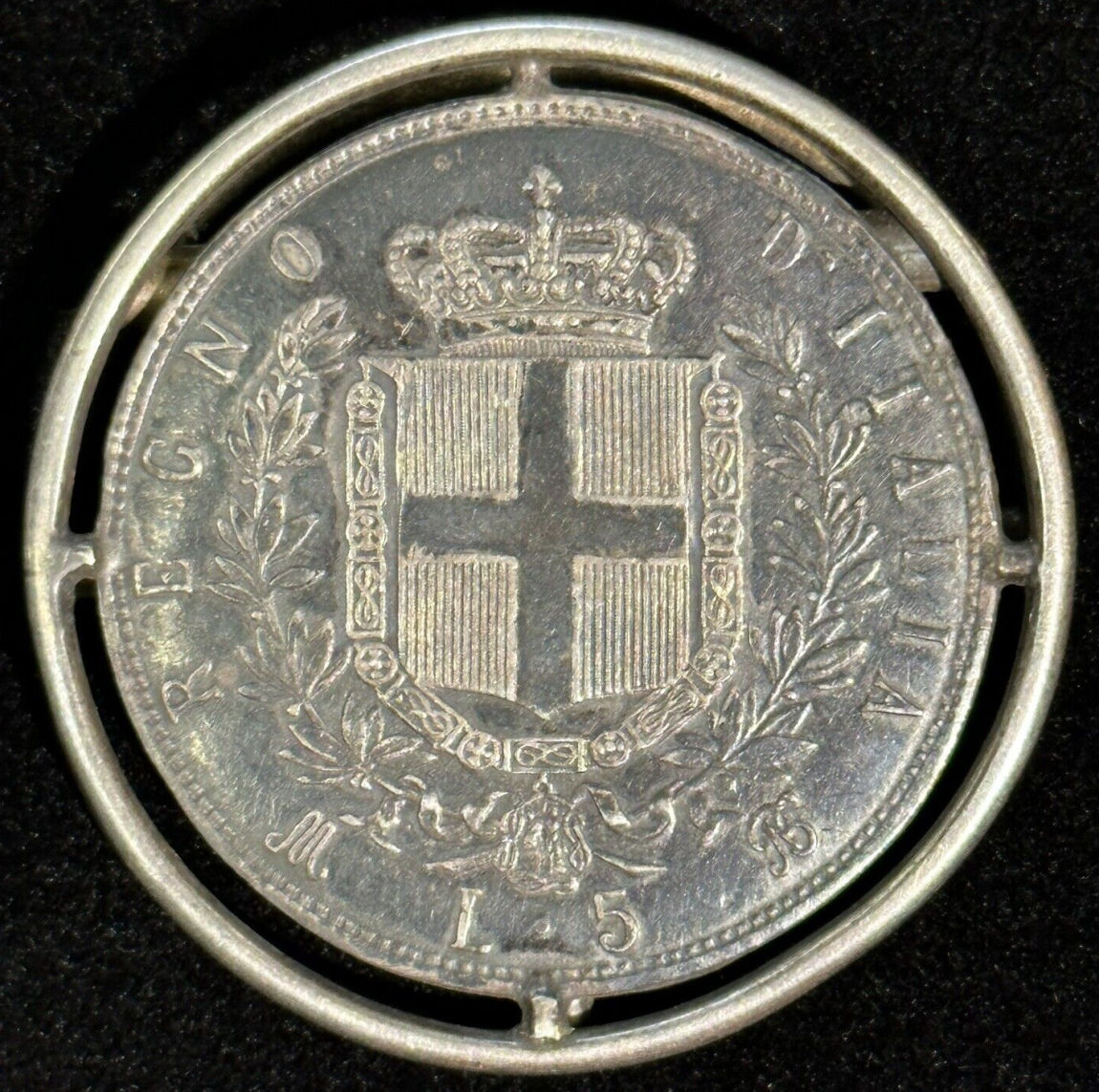
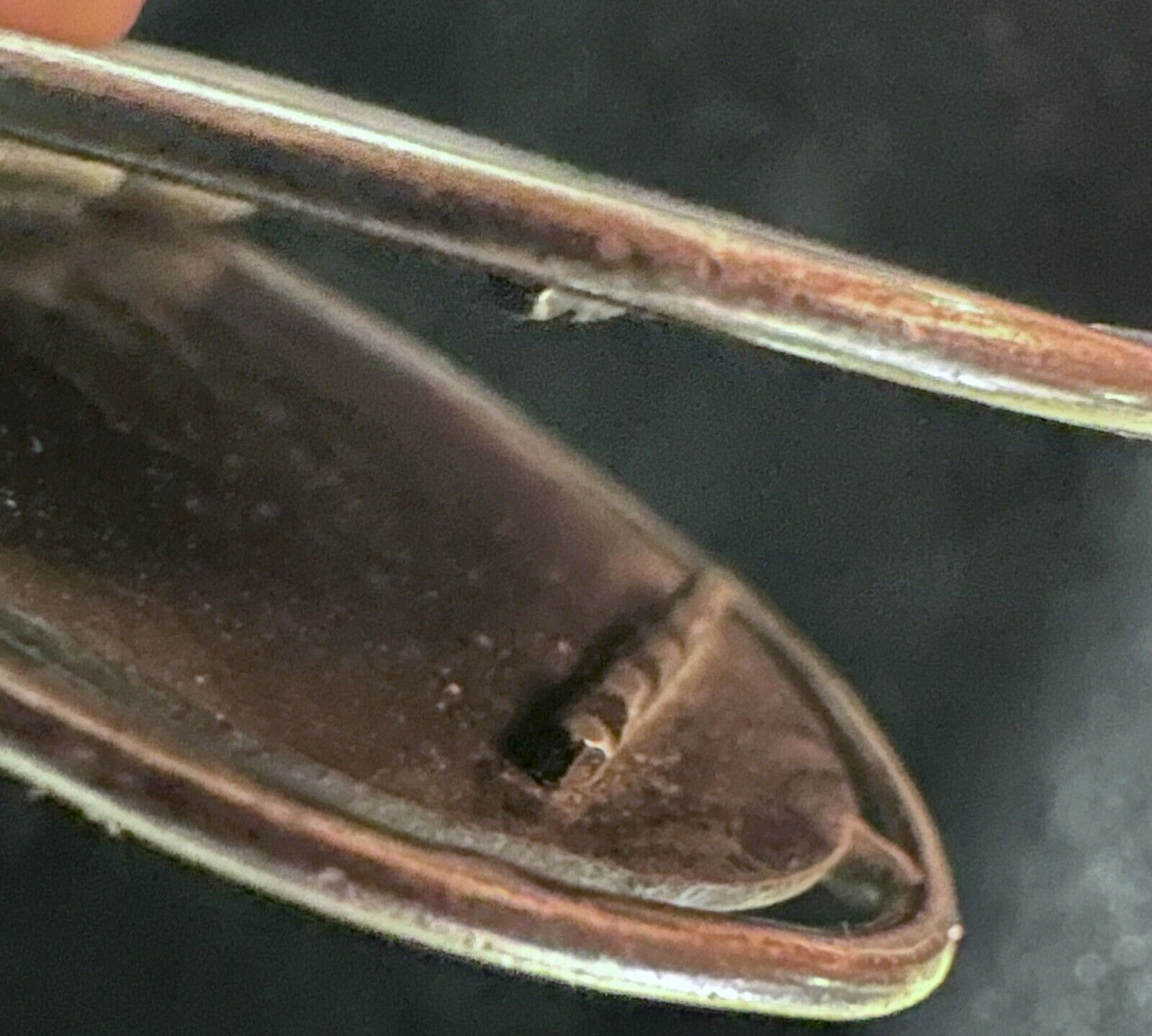
Very interesting, Otto - A lot of work went into making that money clip!
Inordinately fascinated by bits of metal with strange markings and figures
|
|
Moderator
United States
192227 Posts |
Quote:
This is a funky money clip I picked up - Split Italian 5 Lire Fascinating! |
|
Pillar of the Community
United States
987 Posts |
jbuck and Hondo, thank you for the kind words on the exhibit. If you're curious, attached are images of the 38mm bronze medals presented to the exhibitors. 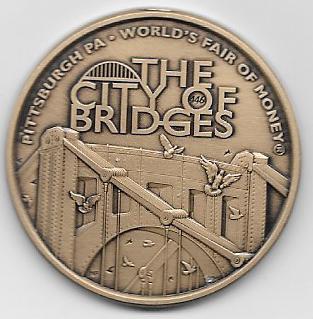 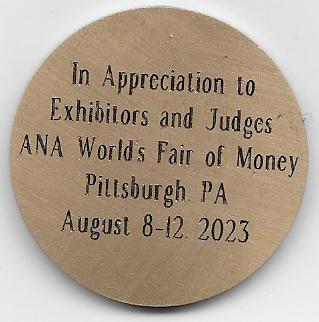 |
|
Moderator
United States
192227 Posts |
Quote:
If you're curious, attached are images of the 38mm bronze medals presented to the exhibitors And excellent bonus! |
| |
Replies: 5,897 / Views: 446,542 |






 First Page
 Previous Page


 Posted 08/26/2023 01:28 am