Continuing my recap of the Los Angeles Olympic Coins Design Hearing...(See Part I for the start of the Hearing.)J. Carter Brown, Chairman of the US Commission of Fine Arts ("CFA") followed Angela Buchanan. Brown expressed dismay over the unfortunate lack of proactive consultation of the Mint and Olympic committees with the CFA:
"We have been proceduraly in a difficult time bind here, and hindsight is 20/20, of course, but it would have been a great deal easier and more productive perhaps if we, too, had been consulted on preliminary sketch ideas earlier than it turned out that we were."He was not totally pessimistic regarding what could be accomplished, however:
"The picture is not as bleak as one might think in that we have approved four of the six sides of the three coins that we are dealing with, and, as you pointed out, Mr. Chairman, the first coin has received our approval. We have some reservations perhaps about it, but I think that that is really not at issue."He carried his optimism through to his final comments:
"...we have time here. I think it can be worked out."Next up was Elvira Clain-Stefanelli, Curator, Numismatic Division of the Smithsonian Institution. She began her testimony by providing highlights of her professional career in medals. The experience included work with the Smithsonian, the Capitol Historical Society and the Federation Internationale de la Medal. She commented:
"Metal is a work of art, and we talk of coins here, but it is not a coin in the regular form. It is not a coin that we are going to spend every day to go to the grocery and buy bread or butter. This is coin metal, and we have to keep that in mind . Because of that , we expect more from these coins aesthetically than we might expect from, say, the practicality of the piece is such it should stack well, it should be inexpensive, and so on .
"Unfortunately, I did not have much time to study this subject . Mr. Swab [counsel to House Subcommittee on Consumer Affairs] came and showed me the coins 3 days ago, excuse me, and showed me the designs and asked my comments, and I gave him some comments. I don't think I would change today much from the comments I passed on to him at that time."Clain-Stefanelli went on to offer
1983 Silver DollarWe are dealing here with Olympic coins representing the Olympic games. I would have expected to see that some of the most outstanding, more popular sports would be represented in the coins. Probably the discus thrower - I don't know, maybe it is the most famous figure from antiquity and we are probably looking more from the point of view of traditionalism. We have discus throwers too, but considering there may have been other sports represented we think the large masses might easier be familiar, and it would mean more to the large masses.
1983 Los Angeles Olympic Games Silver Dollar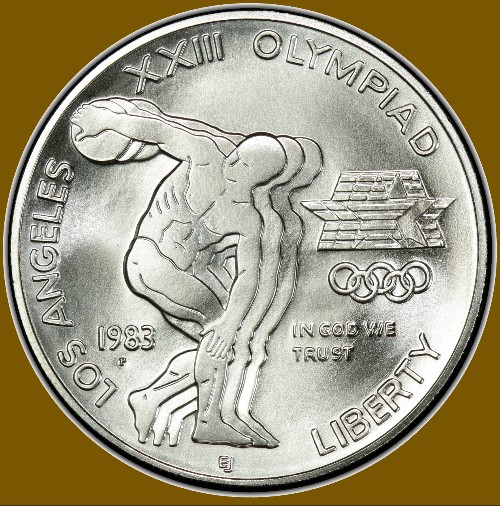
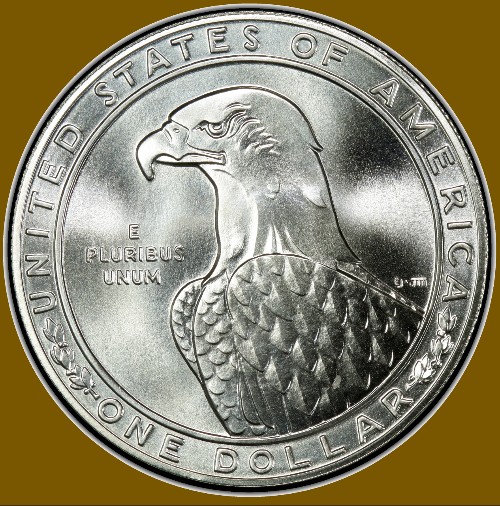 1984 Silver Dollar
As to the second piece, I would raise almost the fifth amendment, that is, I would practically have no opinion at all.
1984 Los Angeles Olympic Games Silver Dollar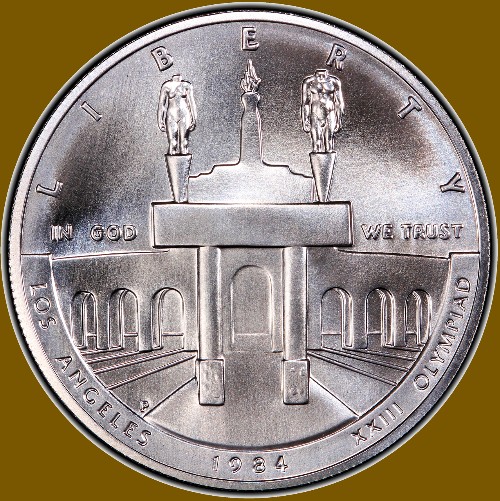
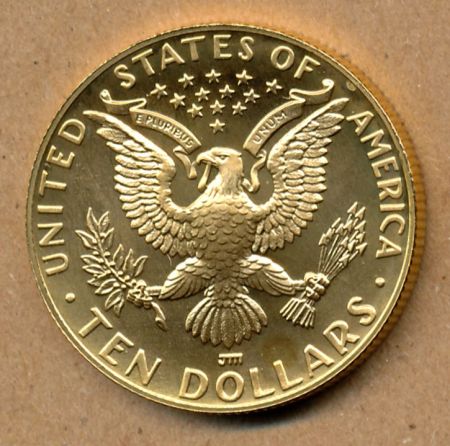
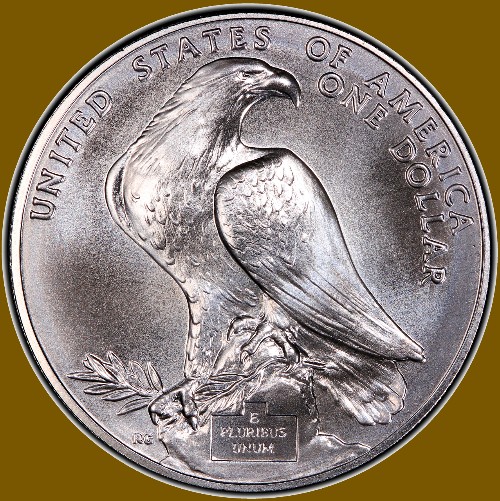 1984 Gold Eagle
"It doesn't say much. It is anatomically wrong, anatomically, from that point of view, wrong, and I would like to accentuate that."
Note: Comments refer to draft designs for Gold Eagle.1984 Los Angeles Olympic Games Gold Eagle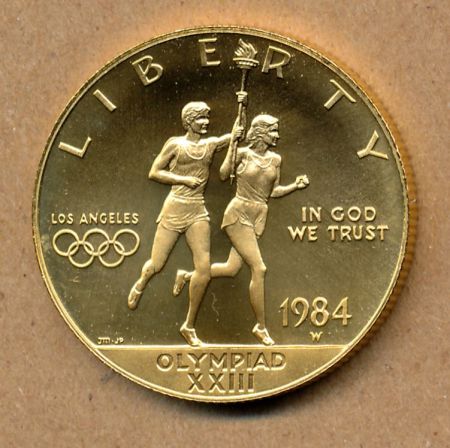
 On a personal note: My local coin club once traveled to the Smithsonian Institution, where we were treated (by prior arrangement) with a "backstage" tour led by Dr. Richard Doty that included the numismatic holdings vault. Each of those in attendance was asked what he would like to see - I opted for the 1915 Panama-Pacific International Exposition $50 Gold coins. I was soon holding - one in each hand - the pair of large gold commemorative coins - neither was in a holder, they were "raw"! It was quite an experience!
Clain-Stefanelli was followed by Robert A. Weinman (son of Adolf Weinman - designer of the Liberty Head/"Mercury" Dime and Walking Liberty Hslf Dollar who was a noted artist-medallic sculptor in his own right. He was aligned with the views of Clain-Stefanelli.
He expressed an optimistic view for the final coin designs, and called for a better cooperation between the Mint and the CFA. He stated:
"I think the program can be rescued by collaboration between the mint and the Fine Arts Commission . I would rather have seen either an open competition of any citizen of the United States which gives one always that chance that there will be something really world beating coming in from left field or an invited competition among noted medalists, but it is a little late in the day for that."Next up was Karen Worth, a sculptor and medalist. She came at the design issue from one seeking the use of the most qualified medallic sculptors.
"Just as we do not send in untried and unproven athletes, our coinage in this national celebration should not be entrusted to arbitrary or casual choices of sculptors. It is not known by what method all the artists were chosen to design and sculpt these coins. The American people have a right to be represented by our best. It is a form of cultural Olympics to show-case our creative abilities. Now that's an idea, along with Olympic events an exhibit of sports in art, sculpture and painting, would enhance the glory of the games and attract more visitors."Note: Fine Arts were included in the Olympics from 1912 to 1948; medals were awarded in the categories of Architecture, Literature, Music, Painting and Sculpture. The Arts were dropped from subsequent Olympiads due to the fact most participants were professionals vs. amateurs which was counter to the Olympics' amateur standing rules (in 1948).The Design Hearing story continues here:
- 1983-84 Los Angeles Olympics - Design Hearing / Part III
For other of my posts about commemorative coins and medals, including more modern commemorative stories, see: Commems Collection









 Posted 06/17/2026 8:37 pm


 Uncirculated American Silver Eagles


