| Author |
 Replies: 12 / Views: 490 Replies: 12 / Views: 490 |
|
|
Pillar of the Community
United States
764 Posts |
Hello Forum, To my knowledge, high end dimes from 1796-1807 seem pretty rare--and ones that are nice for their grades and original seem even more rare. While I understand 1804 to be the key date of the series, and 1802 to wear the silver medal on that podium, it seems the 1803 is equally scarce in grades above VF. How would you grade this coin? And if you would call it details, can you be specific about what disqualifies it from a straight grade? Thanks! 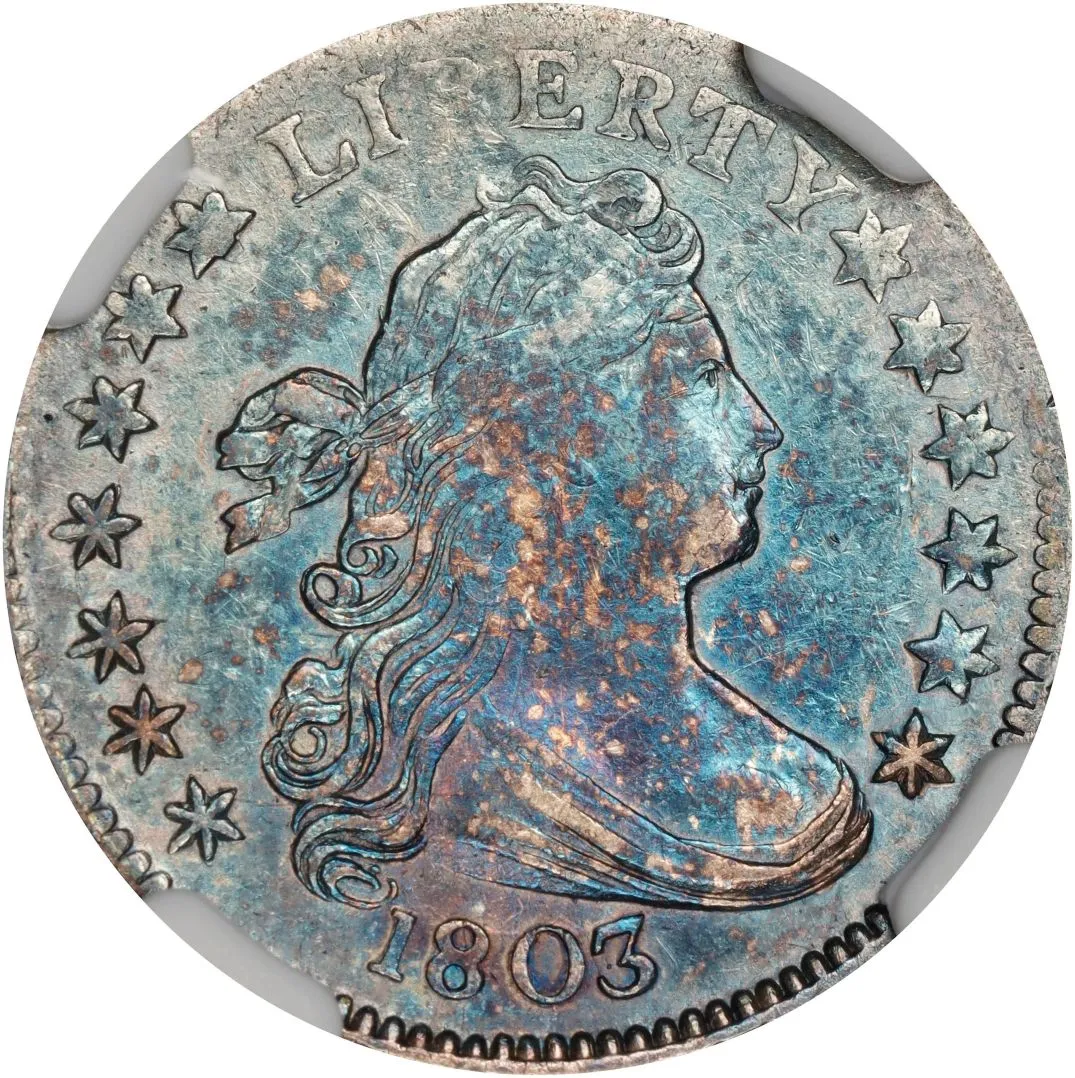 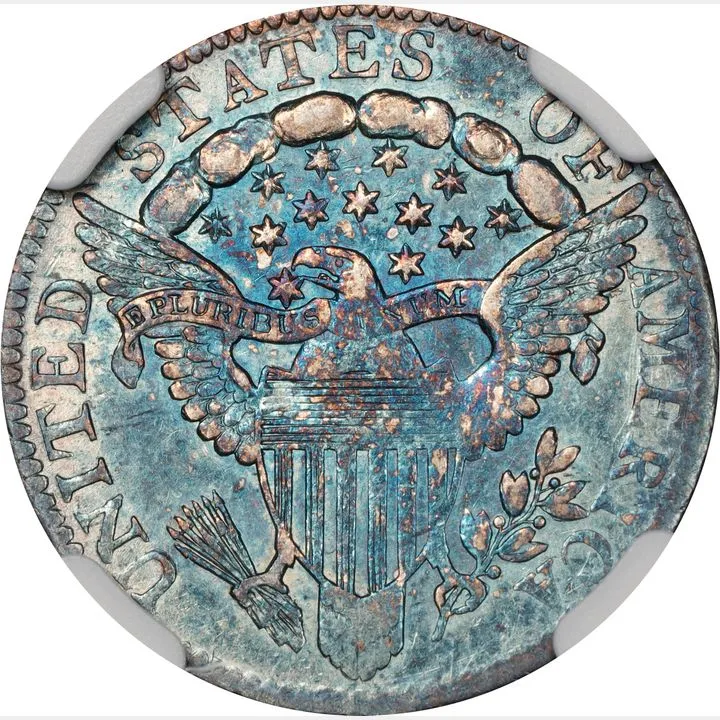 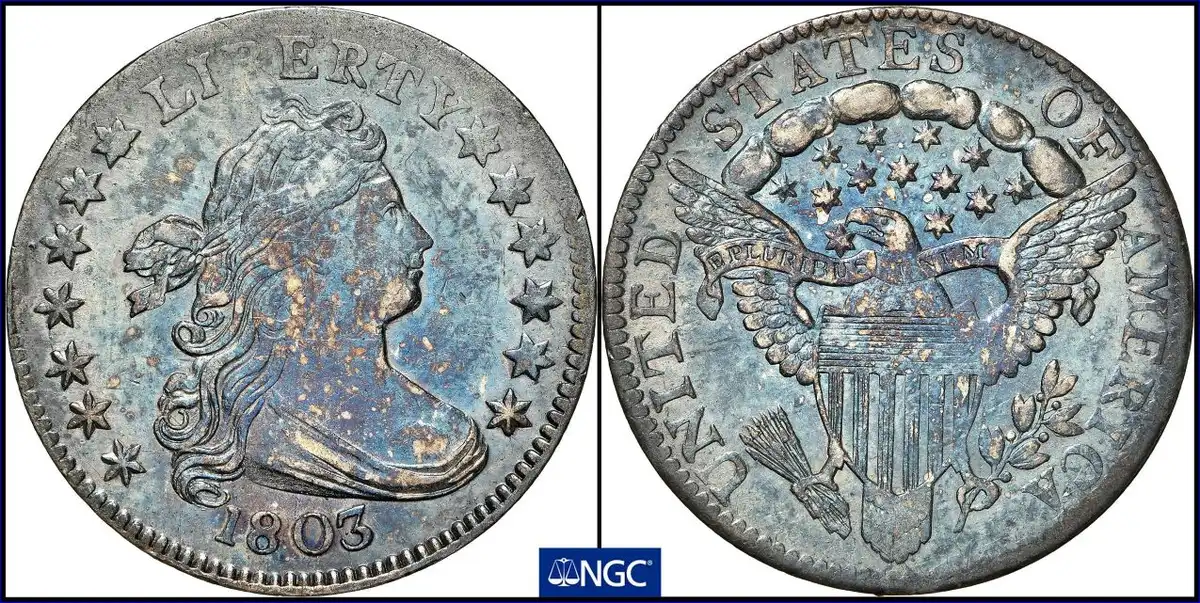 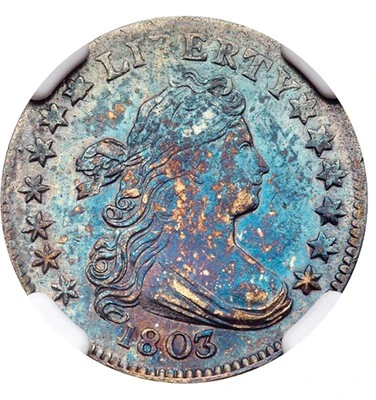 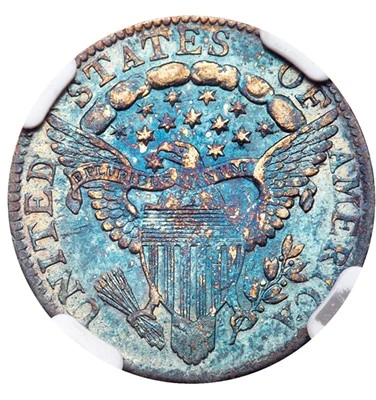 Edited by Adam590
07/24/2026 01:27 am
|
|
|
|
Bedrock of the Community
 United States
18778 Posts |
i dont see anything that would result in a details grade on this one. the only early dime I have is an 05 in FR01. I think you are correct in your statement regarding higher end bust dimes. pretty rare birds and values commensurate. i'd take a stab at this one and go MS62. finding strong strikes is even more a rare bird
|
|
Moderator
 United States
191372 Posts |
I do like the toning.  |
|
Pillar of the Community
United States
1674 Posts |
The difference between EF and AU here is several thousand dollars. She does show circulation wear, and that star at 11 o'clock is odd. I think a TPG would grade this AU. She's a beauty! |
|
Pillar of the Community
United States
601 Posts |
I think MS61, great toning, not the best strike.
|
|
Pillar of the Community
United States
4477 Posts |
I am not sold on the toning How did the coin get the blue toning on both sides without hardly any rim toning? Coins often tone in the protected areas around the rim first. Below is a common blue toning on the bust dime starting at the rim and progressing darker. I am at AU details AT. 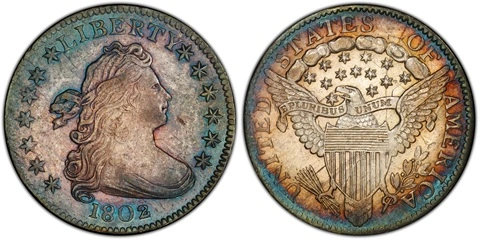 |
|
Pillar of the Community
United States
1098 Posts |
I would say AU50 beautiful toning. Amazing
|
|
Pillar of the Community
 United States
764 Posts |
We had straight grades ranging from AU(50) to MS(62). @Slider23, I actually agree with you about the artifical toning, which I think is why this is an NGC holder instead of a PCGS one. I also see that 1802 dime you showed as an example of "natural" toning as the golden standard for collecting this series, and a specimen so fine I doubt I would ever be able to find such a 1798 or an 1800 (I actually have an 1800 one, and shared it on this forum--and that one looks "wipey" to me), 1801, 1802, 1803, or 1804 dime that looks as nice (with the same amazing strike and concentric toning). NGC called this one MS(61), making it one of the highest graded survivors of this date. Yes, there's a much better looking MS(64)+ specimen in a PCGS holder, but that's a 6 figure coin, and almost certainly the finest known in existance. Thanks, everyone, for your time and opinions on this one. 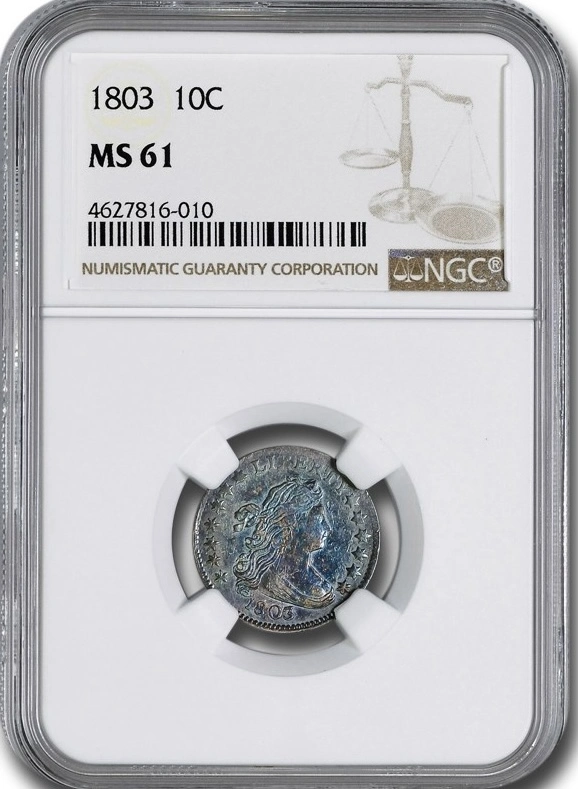 Edited by Adam590
Yesterday 12:02 pm
|
|
Bedrock of the Community
United States
11937 Posts |
Found some pictures that show the surfaces of the coin a little better. Personally, I would pass on this coin for all the reasons listed above. Not very natural looking, but it is a very scarce coin in higher grades. 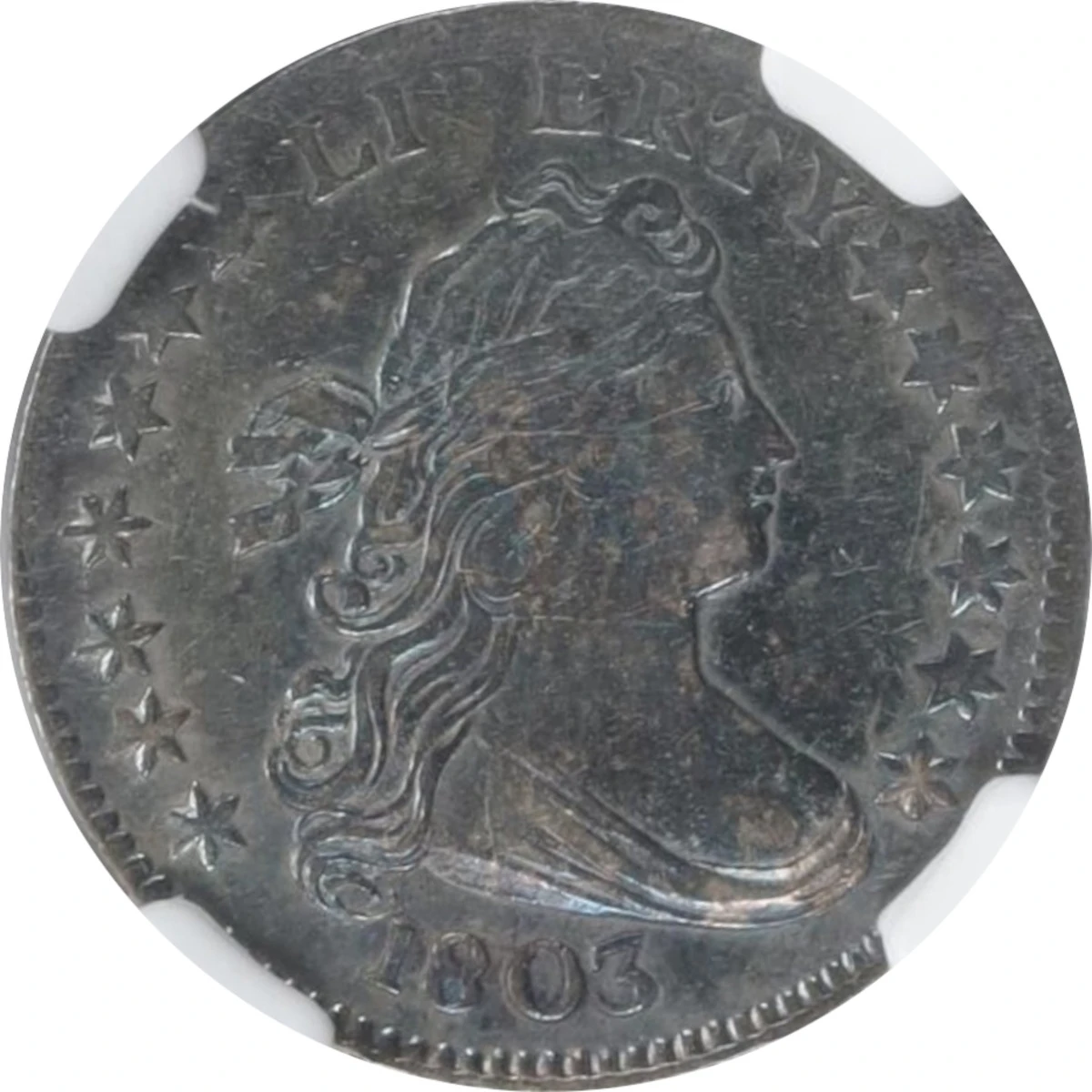 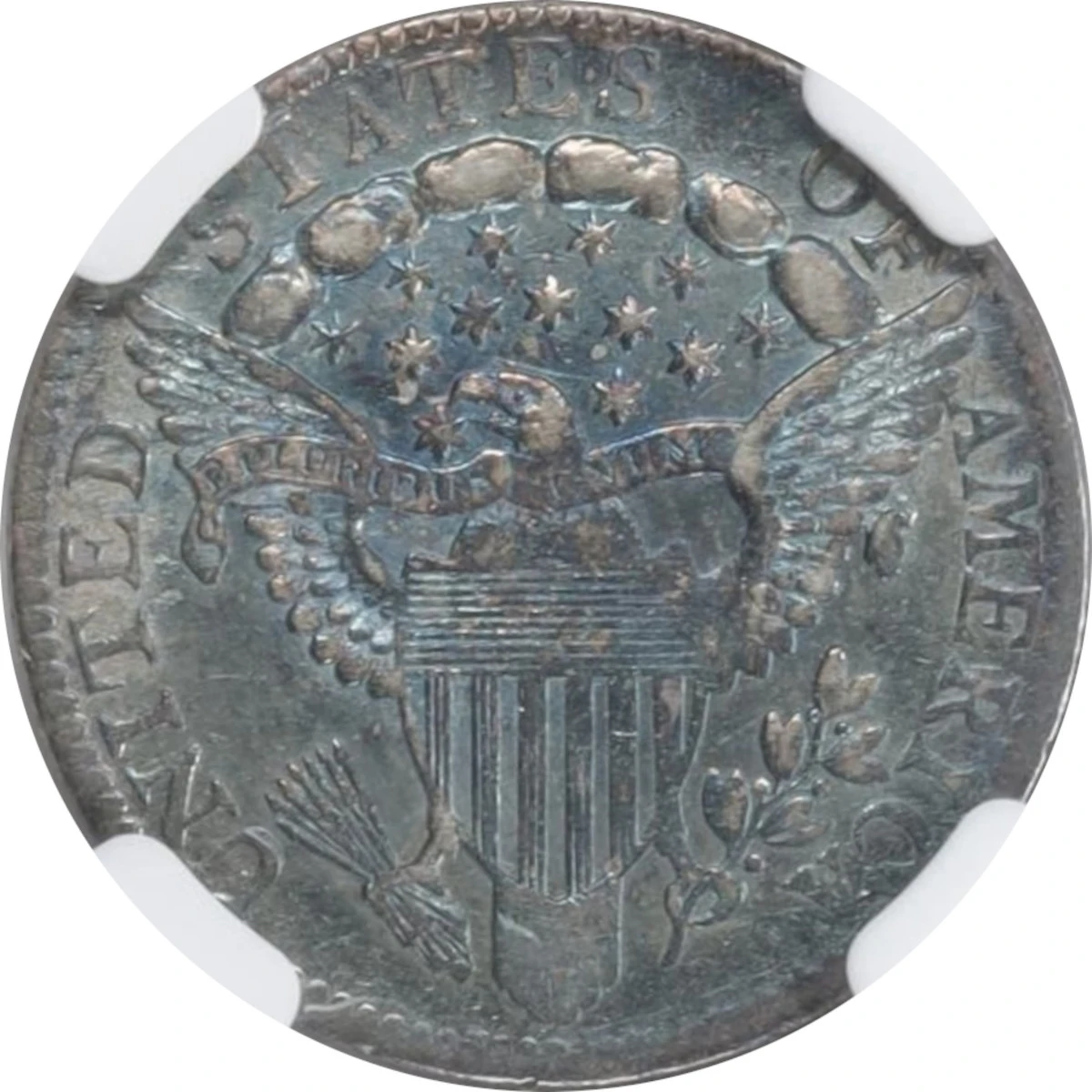 IN NECESSARIIS UNITAS - IN DUBIIS LIBERTAS - IN OMNIBUS CARITAS THE MAN IN THE ARENA, Theodore Roosevelt at the Sorbonne Paris on April 23, 1910: " It is not the critic who counts; not the man who points out how the strong man stumbles or where the doer of deeds could have done better. The credit belongs to the man who is actually in the arena, whose face is marred by dust and sweat and blood, who strives valiantly, who errs and comes up short again and again, because there is no effort without error or shortcoming, but who knows the great enthusiasms, the great devotions, who spends himself in a worthy cause; who, at the best, knows, in the end, the triumph of high achievement, and who, at the worst, if he fails, at least he fails while daring greatly, so that his place shall never be with those cold and timid souls who knew neither victory nor defeat." My coin website: https://fairfaxcoins.com |
|
Pillar of the Community
United States
4477 Posts |
The 1803 Draped Bust Dime. JR-3. Rarity-4. MS-61 (NGC) sold at Stack's auction in 2024 for $22,800.00. NGC price guide list the single example at $65K and PCGS list a MS61 AT $130K. My guess is that the buyers bidding had a concern that the example may be AT or cleaned as the selling price is that of a detail coin.
The following is what Stack's had to say about the example in their auction comments: Remarkable NGC-certified Mint State preservation for this scarce and underrated Draped Bust dime. Satiny in texture with plenty of original luster intact, both sides are enhanced by rich toning in dominant charcoal-olive. At direct angles the surfaces light up with cobalt blue, champagne-gold and mottled pinkish-rose iridescence. This is a well produced coin by early U.S. Mint standards, the strike nicely centered and the detail bold to sharp apart from a touch of softness along the upper obverse and lower reverse borders. A stunning coin that is sure to attract strong bids from advanced early dime enthusiasts.
Thanks for posting the draped bust dime.
Edited by Slider23
Yesterday 1:58 pm
|
|
Bedrock of the Community
United States
18778 Posts |
someone stole this one. neither both NGC and Stacks stated anything wrong or suspicious with the toning.
|
|
Pillar of the Community
United States
4477 Posts |
If the owner of the MS61 1803 Draped Bust Dime could get the example to cross to PCGS at grade, it would be an easy triple up.
|
|
Pillar of the Community
United States
764 Posts |
The 1796 dime that I posted in 2025, that is now my avatar (which I like very much) is straight graded by NGC as MS(61). I see Slider23's logic in that if it could cross to PCGS at the same grade it would be worth a bit more. I tried it myself, and PCGS called it AT (It is still in the NGC holder). I have to think that is why mine was cheaper than other specimens of the same grade. It failed at a Stacks auction before I bought it. I am guessing that is why. Stacks wrote a similarly glowing description of it that didn't once mention cleaning, artificial toning, or altered surfaces. I think that is their job--to sell the coin. While some auctioneers, like Scotsman Coins (based in St. Louis) give more honest, sometimes glib descriptions of coins, I am guessing Stacks ignores things that are technically "debatable," like the originality of the surfaces, unless there is a really obvious problem. This is a big part of why I posted this 1803 dime here--to see what experienced enthusiasts and collectors see when they see this coin. I am sure it is beautiful in hand, but I also think the toning does not like the album toning I have seen on a lot of Seated Liberty and Barber coinage. The truth is I have also seen several PCGS straight graded draped bust dimes that were probably cleaned at some point and retoned in odd ways. It makes me wonder where they draw the line, and why some cleaned coins get a pass by PCGS and others don't. I am sure that draped bust dimes that look more original earn a premium at auctions--but as far as 1803 dimes go, this one seems to be one of only 4 graded in the MS range by PCGS or NGC, so even if it is by far the "worst" of these 4, it's probably one of the top survivors of its date. I am guessing that NGC straight graded this coin, as well as my 1796 dime, because they see it as "market acceptable," and there are just so few of these out there. I wish I could see this one in person--to see the luster that Stacks describes in their caption. I think the biggest question with coins like this one is--when collecting a set where there are very few nice examples out there, how permissable are we willing to be? For me, I wouldn't mind this coin at the right price, even if I have no delusions about it being totally original. |
| |
Replies: 12 / Views: 490 |
|







 Posted 07/23/2026 4:48 pm





