Quote:
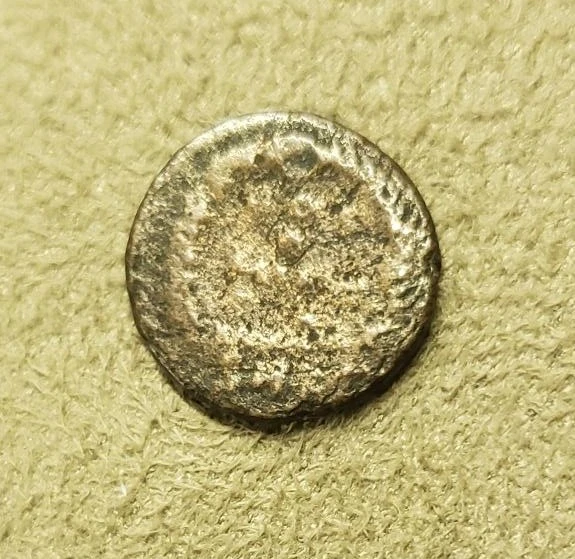
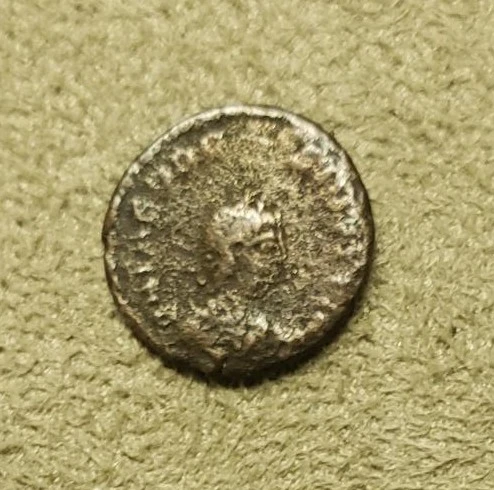
In comparing with examples at Numista, I noticed that the proportions on my example didn't seem to match: smaller bust, more field between it and the legend... Is that significant for positive identification purposes or just a fluke?
Roman coin dies were hand-carved; there's lots of variation in design between different mints, and even within the same mint.
Quote:
Also, I did not mention in the original post that this coin has a medal alignment orientation. Does that narrow a more positive identification down some?
Again, because Roman coins were hand-made, the die alignment is for the most part random.
Quote:
And, finally (for now), how do you know this has been "overcleaned"? In the future, what are the clues that I should be on the lookout for?
The coin is both pitted and shows bright, bare metal. A 1600 year old Roman bronze coin is going to need at least some cleaning and will have a thick layer of patina on it, and most of the surviving detail of the original coin is going to be preserved in the patina, not the metal. Thus a coin that has had its patina completely stripped away is "overcleaned", by typical collector standards. Now, as I said earlier, perhaps it was severely corroded or damaged when it was found and cleaning his severely was necessary. Or perhaps is was overcleaned by a zealous but inexperienced cleaner.
Don't say "infinitely" when you mean "very"; otherwise, you'll have no word left when you want to talk about something really infinite. - C. S. Lewis










 Posted Today 8H 54M ago


