the
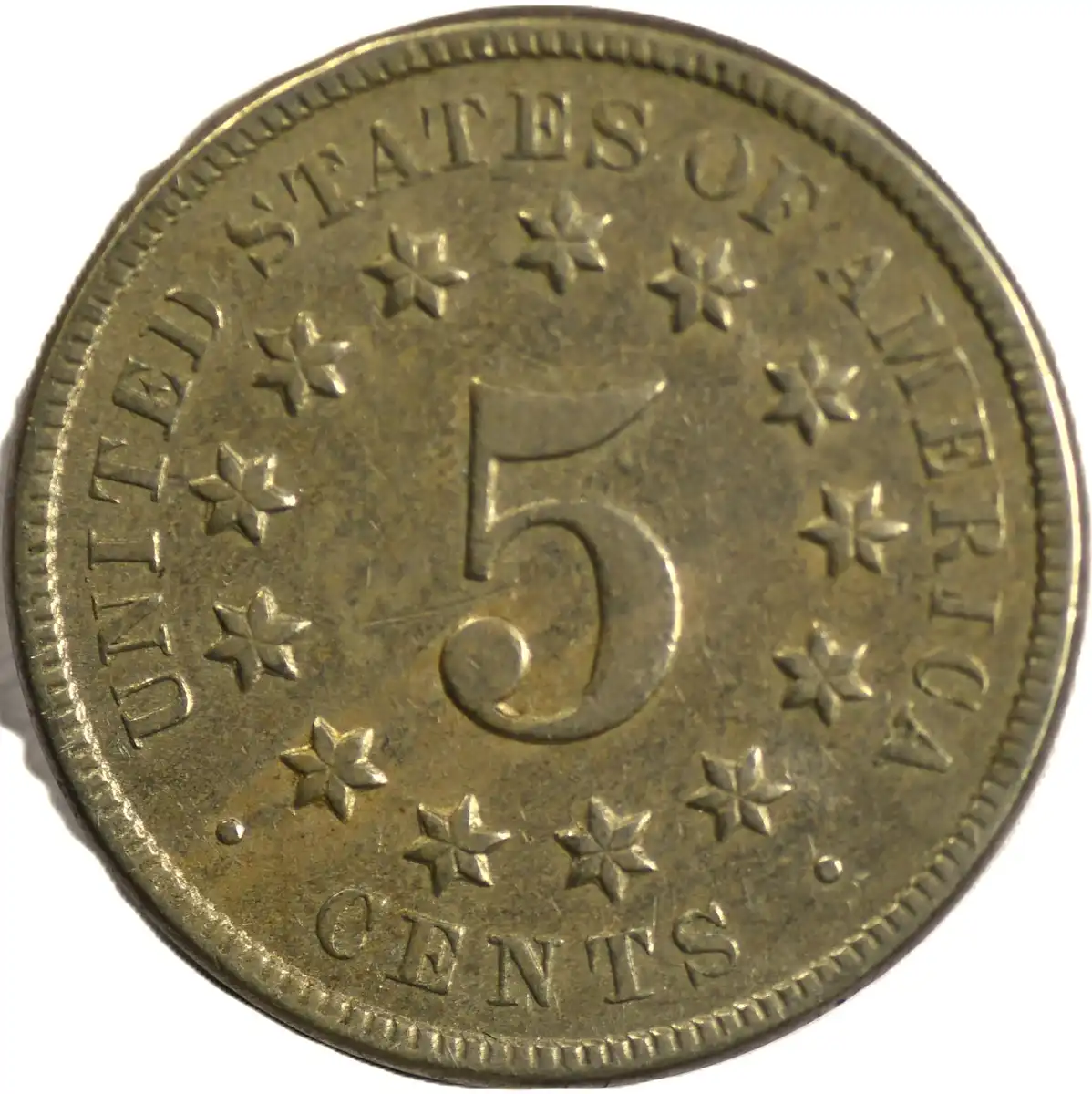
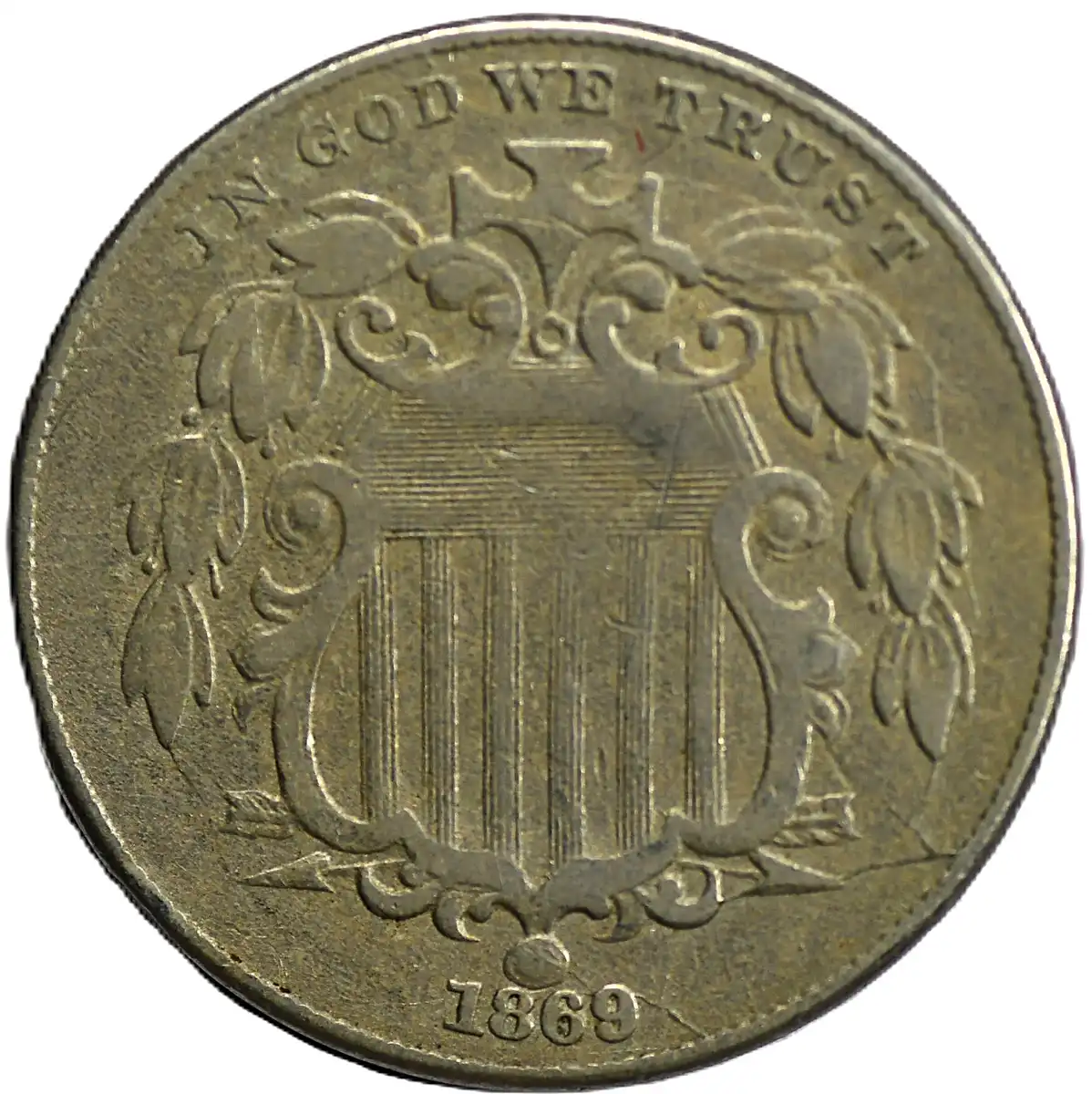
Shield nickel (1866-1883) was the first U.S. five&-cent piece made from 25% nickel and 75% copper. This hard, brittle alloy was difficult to press into the die recesses, especially in the early years. The first 1866-1867 coins included "rays" between the stars on the reverse, which increased the pressure needed and caused die failures and weak strikes. the strike issues persisted into 1869 and its very common to see weak or incomplete details on both obverse and reverse and die cracks from the high pressure required. Heavy die polishing also occurred at that time.
when I look to assess these I typically look for a strong shield where the shield lines are fully struck and the star centers
your coin has a nicely struck up obv as attested to by the sharpness of the stars with full centers. there is a scratch through the 5. the reverse is very typical of a weak strike and the die cracks are indicative of the amount of pressure being exerted on the planchet. there is also a scratch on the NE corner of the shield and on the cross.
the obv is showing as an AU55 coin. the challenge comes in, as with any weakly struck coin, how to how much is strike and how much is wear. since the obv is showing as a nice mid AU coin I would expect that most of what we are seeing on the reverse is related to strike. its not normal to see extensive wear on one side of a coin and not the other.
I'm not sure if the scratches are bad enough to details the coin. this is a tough one to grade. the scratches appear to be old and toned over
there are a couple grades that can happen here
AU50 adjusted for strike
AU details (scratched)
XF45 straight (adjusted for strike) if this was mine i'd use this grade





 Replies: 1 / Views: 23


 Posted Today 1H 17M ago