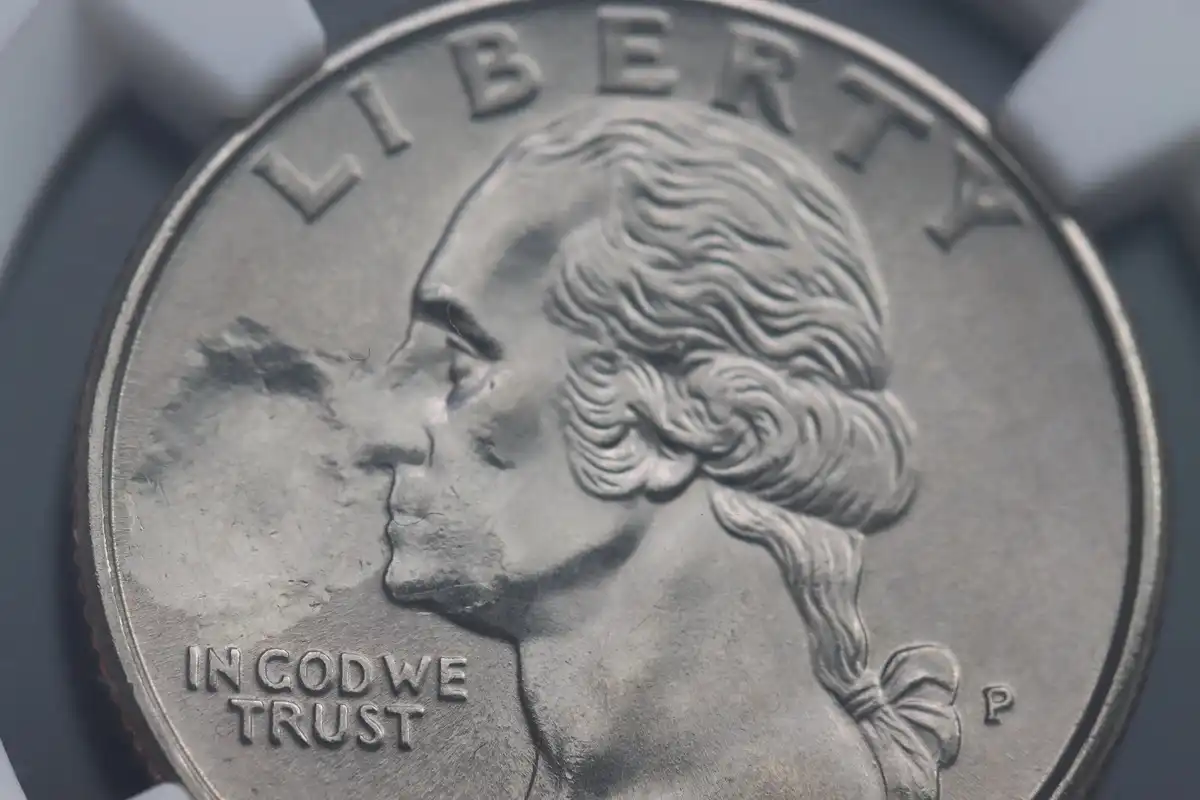
The image on this 1996-P quarter demonstrates a classic example of facial
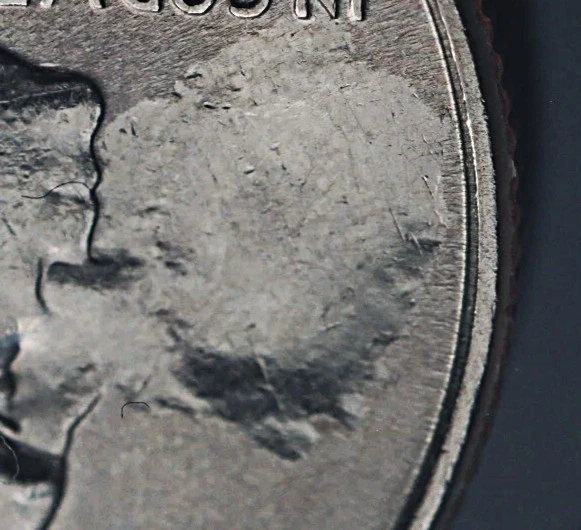
Pareidolia, the psychological phenomenon in which the human brain perceives a recognizable face in an otherwise random pattern. In this case, the irregular struck-through area to the left of Washington's portrait creates the illusion of a second profile, complete with apparent forehead, nose, lips, and chin. Although no actual face is present within the strike-through material, the brain naturally organizes the random shapes into a familiar facial form.
Facial
Pareidolia occurs because humans are exceptionally adept at identifying faces, even when only a few visual cues are available. The contrast between the smooth struck-through area and the surrounding coin surface, combined with the placement next to Washington's profile, strengthens the illusion. Once the eye recognizes a face-like arrangement, it becomes difficult to view the affected area merely as an irregular strike-through impression.
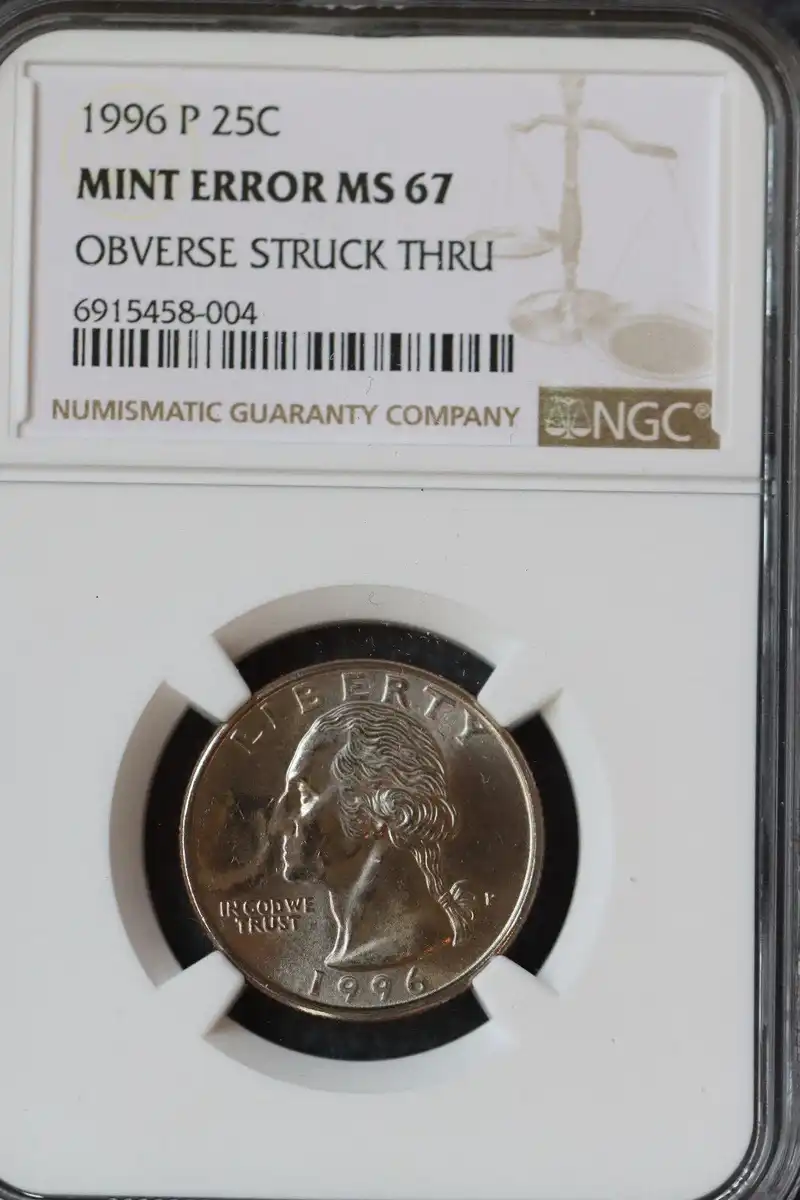
From a numismatic perspective, the face-like image has no bearing on the error attribution itself, which remains an obverse struck-through error as identified by NGC. The perceived secondary portrait is instead an unintended optical effect created by the shape, texture, and shading of the struck-through area. Such examples can be particularly interesting to collectors because they combine a legitimate mint error with a striking case of facial
Pareidolia.
The face is seen when the slab is turned upside down (180*) and 270*. Its invisible straight up (0*) and 90* (top of slab to left). Was looking for retain fragments or any impressions of the object. Then my friend popped up!







 Posted Today 1H 7M ago


