Coin Community Family of Web Sites
Coin, Banknote and Medal Collectors's Online Mall Vancouvers #1 Coin and Paper Money Dealer 300,000 items to help build your collection! Royal Canadian Mint products, Canadian, Polish, American, and world coins and banknotes. Shop CCF Members on eBay! Royal Estate Auctions - $1 Coin AuctionsSpecializing in Modern Numismatics


Username:
Password:
Save Password
Forgot your Password?


This page may contain links that result in small commissions to keep this free site up and running.

Welcome Guest! Registering and/or logging in will remove the anchor (bottom) ads and the security checks. It's Free!

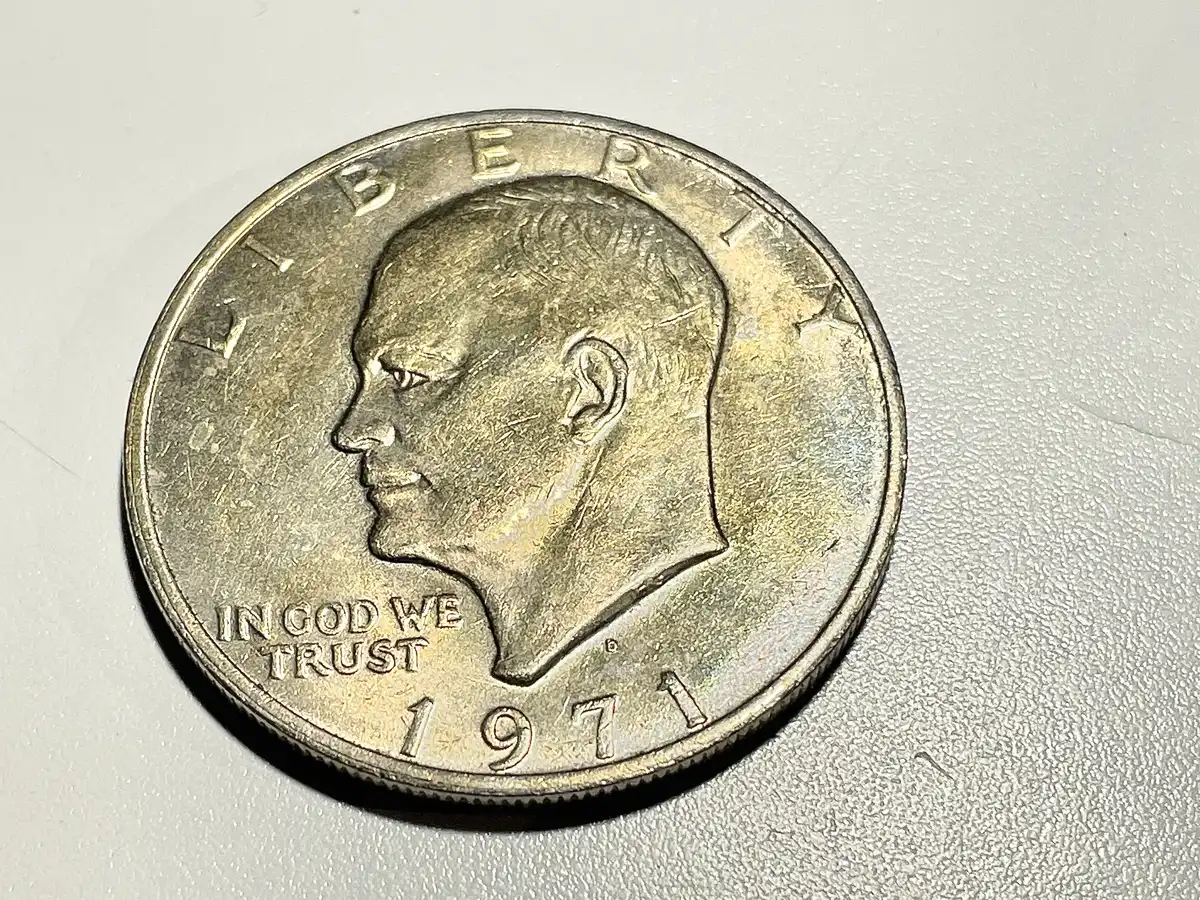
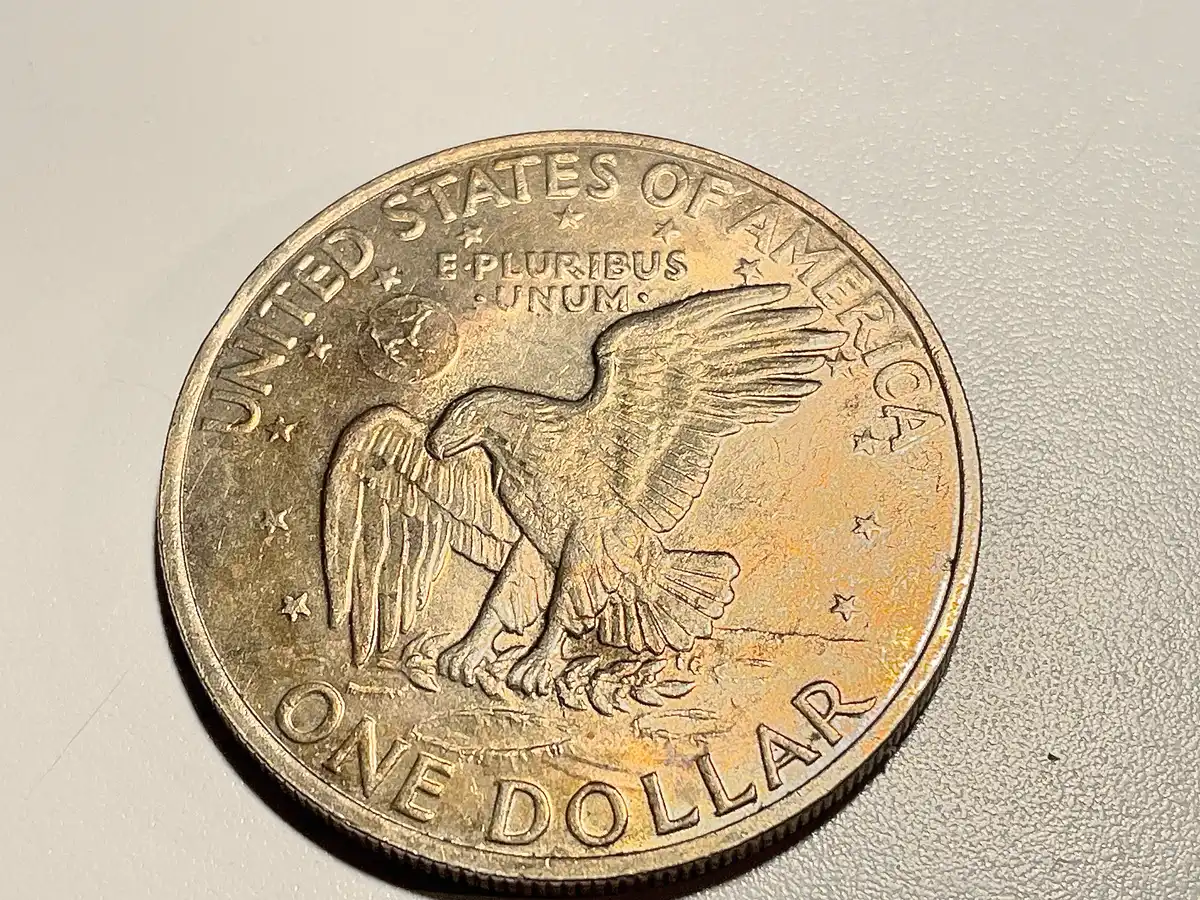
A 1971-D Ike And The Dilemma: Is It An Early IA Error/Environmental/Artificial Toning?

To participate in the forum you must log in or register.
Author Previous TopicReplies: 6 / Views: 182Next Topic  
Pillar of the Community
colonialjohn's Avatar
United States
1823 Posts
 Posted Yesterday   8:24 pm Show Profile   Bookmark this topic Add colonialjohn to your friends list Get a Link to this Message Number of Subscribers
A-1971-D-Ike-And-The-Dilemma:-Is-It-An-Early-IA-Error/Environmental/Artificial-Toning?

Based on the photos and my attribution framework, I would argue the case this way that this is an IA error and not environmental toning. This is the toughest attribution IMO between original surfaces and the first oxidation state proposed in my upcoming paper I call OX I (One). Golden hue tone. The reverse has a left side darker tone but this is just shadowing and the entire is of a golden due with some original surfaces remaining on the obverse.

See below:

1. Color Distribution

If this were ordinary environmental toning, I would expect the color to follow the storage environment. That often produces crescent patterns, peripheral bands, target toning, album-edge toning, or localized patches where sulfur-bearing materials had greater access to the surface.

On this Ike, the gold coloration appears broadly distributed across both sides of the coin. The obverse and reverse exhibit a similar overall gold-amber appearance rather than a distinct exposure pattern. That is more consistent with a planchet-wide phenomenon that existed before striking, which is what would be expected from improper annealing.

2. Color Sequence

Environmental rainbow toning typically progresses through a sequence of interference colors as film thickness increases:

Gold &→ Orange &→ Red &→ Rose/Magenta &→ Violet &→ Blue &→ Green to eventually charcoal black.

The Ike does not appear to show the classic rose, violet, blue, or green stages. Instead, the visible color is primarily within the:

Gray &→ Gold &→ Amber range.

That does not prove improper annealing, but it is more consistent with an early oxidation state (OX-I) than with a fully developed sulfur-driven rainbow toning progression.

3. Edge Evidence

This is probably the strongest argument. I call this Fred Weinberg Principle.

Environmental toning can produce beautiful colors on a coin's faces, but it does not readily explain a well-defined red copper-core edge stripe. The edge is often where the strongest evidence of a clad-planchet annealing event survives.

If the coin exhibits:

Broad gold coloration on both sides, and
A distinct red copper-core edge stripe, then both observations point toward the same explanation: oxidation associated with the clad strip and core before striking.

In this framework, the edge is not a secondary feature. The edge is one of the primary diagnostic areas because annealing affects the entire planchet, including the exposed copper core.

Putting It Together

The argument is not:

"The coin is gold, therefore it is improperly annealed."

The stronger argument is:

"The coin exhibits planchet-wide gold coloration on both sides, lacks the later magenta-violet-blue-green stages commonly associated with rainbow toning, and retains a characteristic red copper-core edge stripe. Taken together, these observations are more consistent with an early-stage improperly annealed (OX-I) clad planchet than with ordinary environmental toning."

The gold color alone is weak evidence. The gold color plus the red edge stripe plus planchet-wide consistency becomes a much stronger IA case.

See this example from Heritage:

https://coins.ha.com/itm/errors/197...sults-012417

This is much easier as the reddish-dark brown (mostly brown) OX II + OX III (combined) covers both obverse and reverse in the IA Color Oxidation Pathway of IA errors. PCGS & NGC seem to have the later colors down pact.

Once we get into the laboratory we will confirm low S & Cl levels as compared to "CONTROL" Rainbow toned examples where these levels are elevated. Furthermore the Cu/O ratios will be LOWER going from gold to black. Thicker oxide levels (black) will register higher oxygen levels (i.e., more oxidation) therefore the Cu/O (larger denominator) its values will be lower. Its for this reason I have heard PCGS and NGC has had issues with grades below MS60 to confirm if a coin is an IA error or environmentally toned or artificially toned. You can see how it may get complex WHEN these two pathways crossed paths. In my paper I will try to troubleshoot these issues. FYI.

Edited by colonialjohn
Yesterday 8:42 pm
Pillar of the Community
colonialjohn's Avatar
United States
1823 Posts
 Posted Yesterday   8:45 pm  Show Profile   Bookmark this reply Add colonialjohn to your friends list Get a Link to this Reply
Here is the Fred Weinberg Principle on IA Errors excerpted from my draft paper he made in a PCGS chat room ~10 years ago. Its been restructured/updated to fit the current study but his principle of the IA edge is noteworthy/critical ot correctly making IA attributions:

Fred Weinberg "RED STRIPE" OUTER CLAD LAYER EDGE and "PLAIN EDGE" Principle: One of the key principles emphasized by error specialist Fred Weinberg is that a properly attributed improperly annealed clad coin will usually retain evidence of its original copper core along the edge. On clad coins with reeded edges, such as dimes, quarters, half dollars, and Susan B. Anthony dollars, this typically appears as the familiar reddish copper stripe. During the early and intermediate stages of oxidation, the outer 75% copper/25% nickel clad layers may develop gold, amber, red, brown, or dark coloration, while the copper-core stripe often remains visible. Because post-mint damage and artificial coloration frequently impair or obscure this feature, the presence of a normal red copper-core stripe is an important diagnostic indicator supporting a genuine improperly annealed clad planchet that has not been tampered with by coin doctoring.
As oxidation advances, however, the red edge stripe may become partially obscured by continued oxide growth. Under this model, the same copper-rich regions that originally displayed a red appearance can progress into dark brown, dark gray, or even black oxidation states, causing portions of the edge to darken along with the obverse and reverse surfaces. The 1979-P Susan B. Anthony dollar examined in this study may represent such a late-stage example. Although sections of the edge appeared dark, stereomicroscopic examination consistently revealed remnants of the underlying red copper stripe. To determine whether the dark coloration and associated black nodules resulted from improper annealing rather than post-mint heating or environmental damage, the black nodules within the reeded-edge grooves were selected for SEM/EDS analysis as Specimen #6.
It is important to note that this "red-stripe" principle applies specifically to clad coins with reeded edges. It does not apply to smooth-edge coins such as seen in Jefferson nickels. In improperly annealed Jefferson nickels, including Black Beauty specimens, the edge is expected to exhibit the same color progression as the coin's faces. Consequently, a dark edge on a Black Beauty nickel is not unusual and is the norm and simply reflects the same oxidation state present across the entire coin.
Edited by colonialjohn
Yesterday 8:47 pm
Pillar of the Community
CoinHI's Avatar
United States
2873 Posts
 Posted Today  11H 7M ago  Show Profile   Bookmark this reply Add CoinHI to your friends list Get a Link to this Reply
Could be but tough to say from these photos showing too much glare.
"Pride is yoked with callous behavior, as humility is with compassion." St. Gregory Palamas

Top Finds - 1969-S 1c FS-101 http://goccf.com/t/477681 1976 D WQ FS-101 http://goccf.com/t/382777 - 1968 D 1c FS-801 http://goccf.com/t/422254
Cool clashed dies - 1972 D 1c http://goccf.com/t/429855&SearchTerms=CCL
Struck-In Rim Burr - 1969 S 1c http://goccf.com/t/425587&SearchTerms=burr
Floating (Type II) Counterclash - 1978 D 1c http://goccf.com/t/434991&SearchTerms=1978


Pillar of the Community
colonialjohn's Avatar
United States
1823 Posts
 Posted Today  4H 19M ago  Show Profile   Bookmark this reply Add colonialjohn to your friends list Get a Link to this Reply
Agree - "Without SEM/EDS, it is impossible to prove improper annealing from color alone. The strongest argument comes from the totality of the evidence: planchet-wide color distribution, matching obverse and reverse appearance, preservation of original luster, a characteristic red copper-core edge stripe (Weinberg Principle), and a color progression consistent with an oxidation pathway rather than a classic rainbow-toning sequence." When assembling my collection off of ebay the last 3-4 months for raw specimens (i.e., Slabs are easy like bullseye Jefferson's with centralized OX IV Terminal State BLACK hues) even with my understanding of the oxidation color pathway ... specimens came to my residence (not many) just with nickel original surfaces in the BEGINNING. It was just shadows, optics, poor lighting by the seller and me going after mild gold hue early OX I specimens. But after the first 2-3 pieces at $5.99 - $9.99 my error rate for lack of a better term was near zero. Also making this difficult is XRF which as mentioned to you before is basically worthless here for these IA errors. Two or three preliminary XRF analysis sent to me have shown me that Cu surface enrichment is in play here which means in plain language ... Cu values will be higher than Red Book which will also lower the Ni value of this 75/25 wt.% relationship in Jeffs and outer clad layers which have this same alloy percentage. Again why? Improper annealing can alter apparent Cu/Ni ratios measured by XRF because annealing-induced copper diffusion, surface enrichment, and oxidation change the composition of the outermost layers sampled by the instrument, even though the bulk alloy may remain essentially unchanged. I guess this is why there is no such thing as an AU NGC/PCGS slabbed IA Error? Have not seen one yet ... ANYBODY? Top error collectors and PCGS/NGC/ANACS simply DO NOT have full understanding of this process -IMO. High end / high luster MS pieces with advanced oxidation states like these $250 bullseyes - no problem --- its when we get to an environmental toning mix and head to AU is where the problems start. See what happens in 2027. BTW this oxidation color pathway is already documented in other non-numismatic research Cu/Ni papers - there is a guy named Roger Burdette who also verified the same paper trail I already did - maybe you heard of him when we discussed this lately in a NGC Chat Room. <BG>
Pillar of the Community
colonialjohn's Avatar
United States
1823 Posts
 Posted Today  3H 58M ago  Show Profile   Bookmark this reply Add colonialjohn to your friends list Get a Link to this Reply
4yb4DS5A8aY


His quote: The results were all mixed ... submitter confusion? / TPG confusion? Lack of metallurgical information? Quoting him again: How in the world can this happen? LOL = Actually I should not laugh but cry?

Edited by colonialjohn
Today 3H 42M ago
Pillar of the Community
Chase007's Avatar
United States
7640 Posts
 Posted Today  48M ago  Show Profile   Bookmark this reply Add Chase007 to your friends list Get a Link to this Reply
It is a simple tonning and not an error or improperly annealed coin.
Moderator
Learn More...
jbuck's Avatar
United States
200909 Posts
  Previous TopicReplies: 6 / Views: 182Next Topic  

To participate in the forum you must log in or register.


Disclaimer: While a tremendous amount of effort goes into ensuring the accuracy of the information contained in this site, Coin Community assumes no liability for errors. Copyright 2005 - 2026 Coin Community Family- all rights reserved worldwide. Use of any images or content on this website without prior written permission of Coin Community or the original lender is strictly prohibited.
Contact Us  |  Advertise Here  |  Privacy Policy / Terms of Use

Coin Community Forum © 2005 - 2026 Coin Community Forums
It took 0.38 seconds to rattle this change. Forums

