| Author |
 Replies: 78 / Views: 5,682 Replies: 78 / Views: 5,682 |
|
|
|
Moderator
 United States
194932 Posts |
Quote:
Henri III/II, Bearn/Navarre 1580, 1 franc, Pau. Fantastic!  |
|
Pillar of the Community
 United States
2703 Posts |
Beautiful franc! Love the small cow mint mark. Also shows unligated DB in the legend! Don't think this one is in Numista yet.
|
|
Pillar of the Community
 Sweden
2124 Posts |
Staying in Bearn/Navarre, here is one by Henri III/II's grandfather: Henri d'Albret, Bearn/Navarre, 1541-55, liard.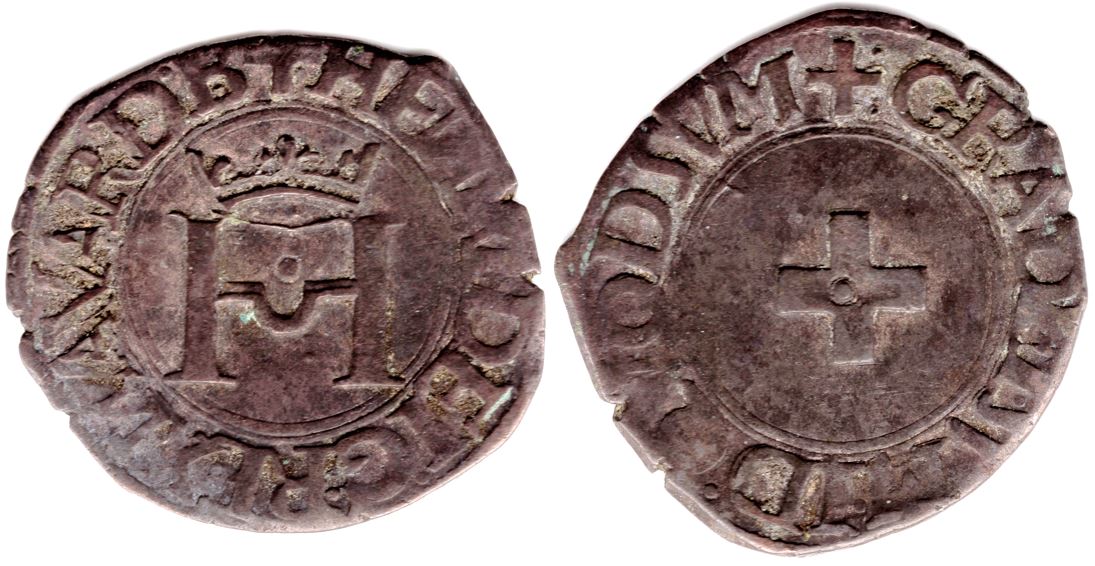 No portrait of Henri, but a nice big H (making this liard look remarkably alike those of his contemporary Henri II of France). |
|
Moderator
United States
194932 Posts |
Quote:
Henri d'Albret, Bearn/Navarre, 1541-55, liard... No portrait of Henri, but a nice big H Very interesting! |
|
Pillar of the Community
United States
2703 Posts |
1575 Teston Henri II/III, Kingdom of Navarre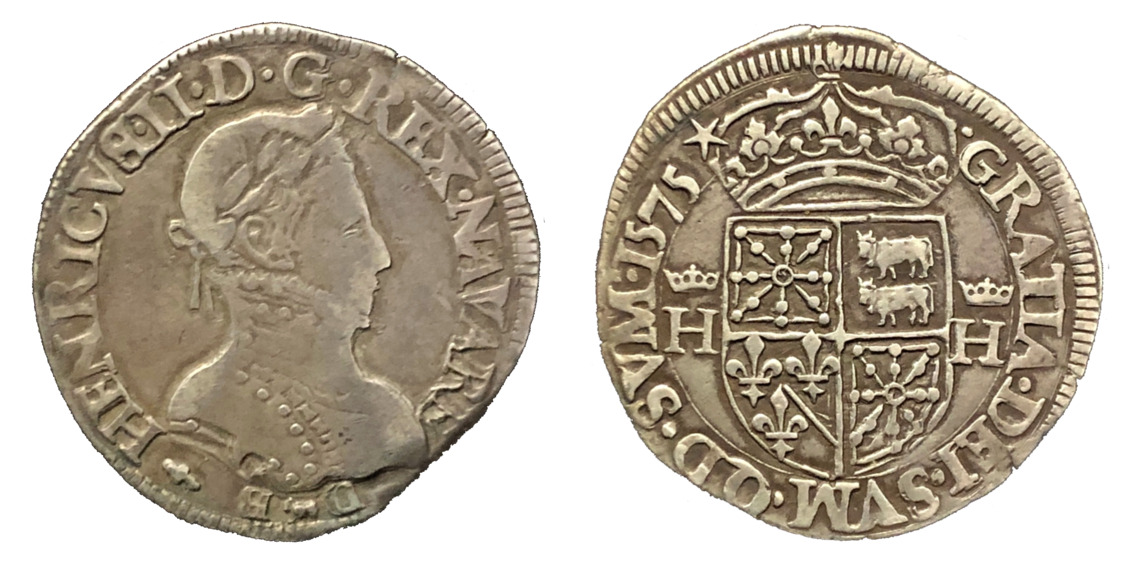
|
|
Moderator
United States
194932 Posts |
Quote:
1575 Teston Henri II/III, Kingdom of Navarre Very nice! |
|
Pillar of the Community
Sweden
2124 Posts |
Back to France proper! I have shown Henri III, but here is another one I like, and larger. Henri III, France 1584, 1 franc, Toulouse (M).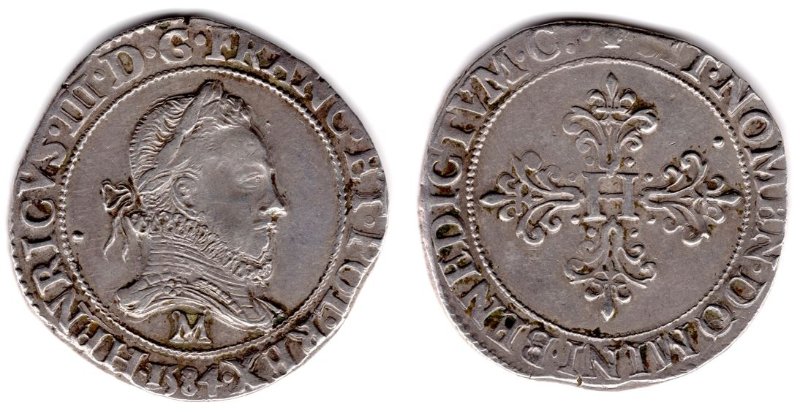 |
|
Pillar of the Community
United Kingdom
1273 Posts |
Thought I'd post my Henri V of France (Henri the Pretender) 1 Franc 1831. These interesting coins were struck by Henri himself, not by France. Henri came close to being king, and he had credentials, but never quite made it. He was a pretender. Henri of Artois (1820 - 1883) was disputedly King of France from 2 to 9 August 1830 as Henry V, although he was never officially proclaimed as such. He was also pretender to throne from 1844 to 1883. He was the son of Charles Ferdinand, a son of Charles X of France. 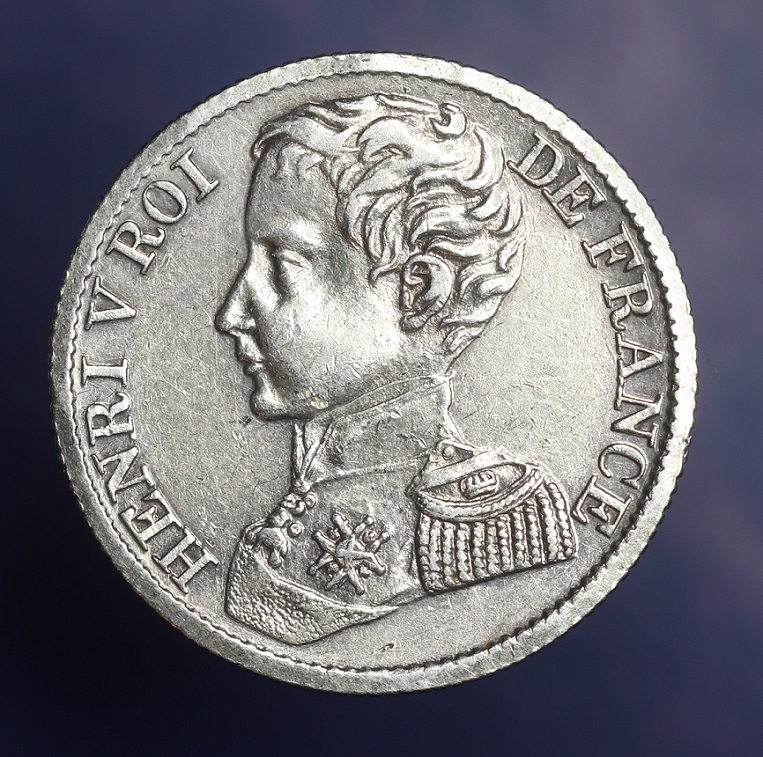 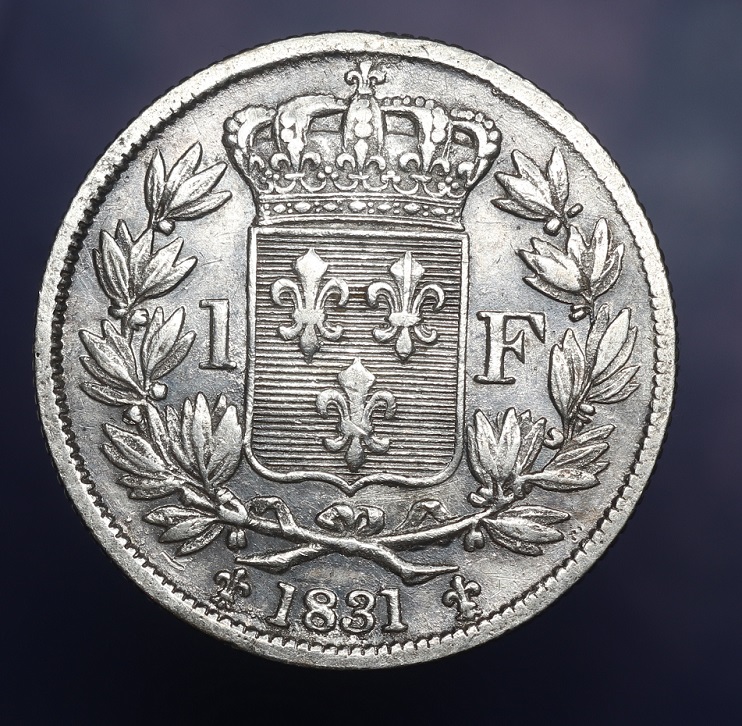 |
|
Pillar of the Community
Sweden
2124 Posts |
Those are indeed very nice pretender coins, @TobyJ! Now to what is today part of France, but until the early 18th century it was the Principality of Orange, not far from the French Riviera. Frederic-Henri de Nassau, Orange 1642, 2 deniers.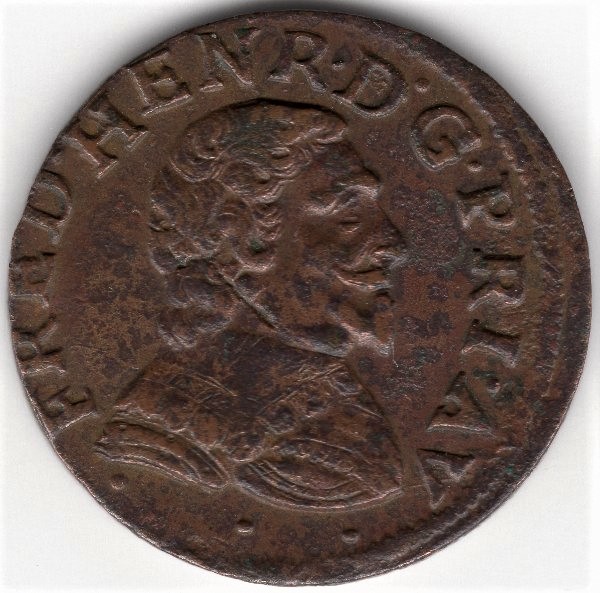 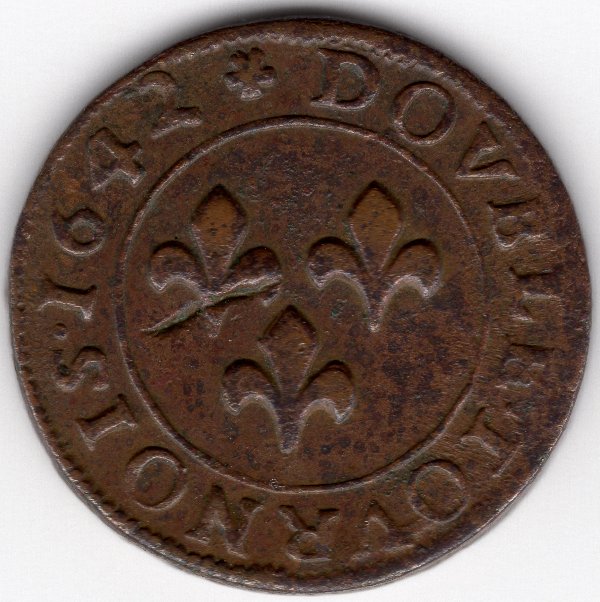 The small principality had - like many other feudalities - a habit of minting its coins to look more or less similar to those of its greater neighbor, France. Although the portrait of Frederic-Henri is rather different from that of Louis XIII of France on his double deniers, the reverse is very similar. Noteworthy is that the coat of arms of Orange was a horn - quite far from the three fleur de lys-like objects here. So also a sort of pretender coins!  |
|
Pillar of the Community
United States
2703 Posts |
Beautiful sharply struck portraits on those last three pieces! Next up is an English long cross silver penny dating from the mid 13th century. The die cutter made liberal use of pellets to represent the king's likeness. I believe it is Class 3b. 1249 Penny of Henry III 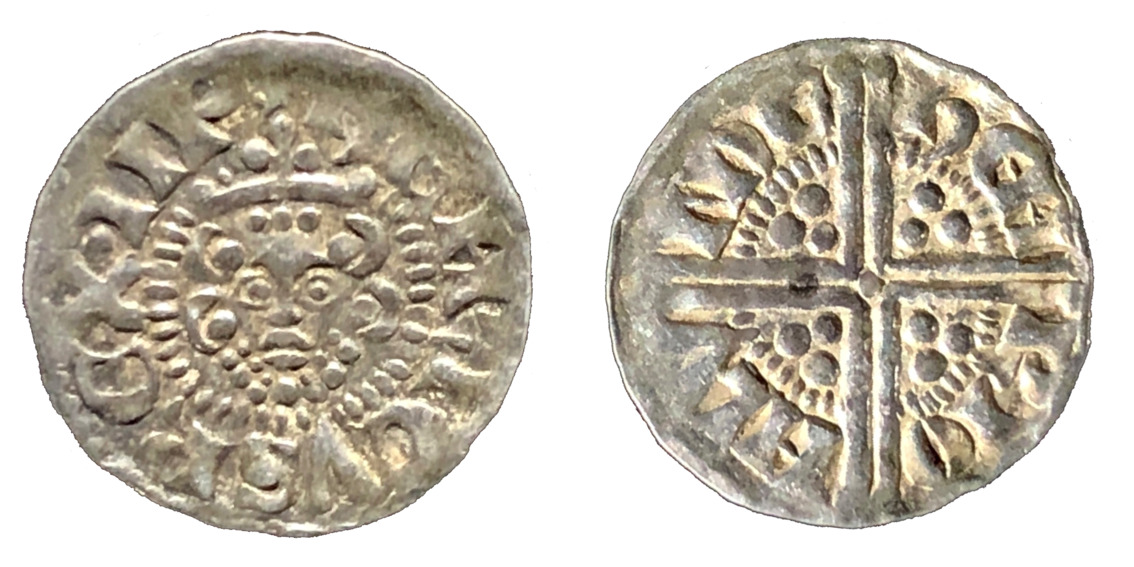 Obv: Obv: hENRICVS REX.III Rev: hEN|RI O|N LV|NDE, moneyer Henry Frowik of London
|
|
Valued Member
Netherlands
177 Posts |
When talking about Henry's or (Germany) Heinrich I always think about the principality of Reuss. Krause gives the following information: The Reuss family, whose lands were located in Thuringia, was founded c. 1035. By the end of the 12th century, the custom of naming all males in the ruling house Heinrich had been established. The Elder Line modified this strange practice in the late 17th century to numbering all males from 1 to 100, then beginning over again. The Younger Line, meanwhile, decided to start the numbering of Heinrichs with the first male born in each century.This means that Heinrichs with a high "serial number" issued coins. Like the example shown of Heinrich number LXVII (= 67). Illustration is from the internet, unfortunately not my coin. 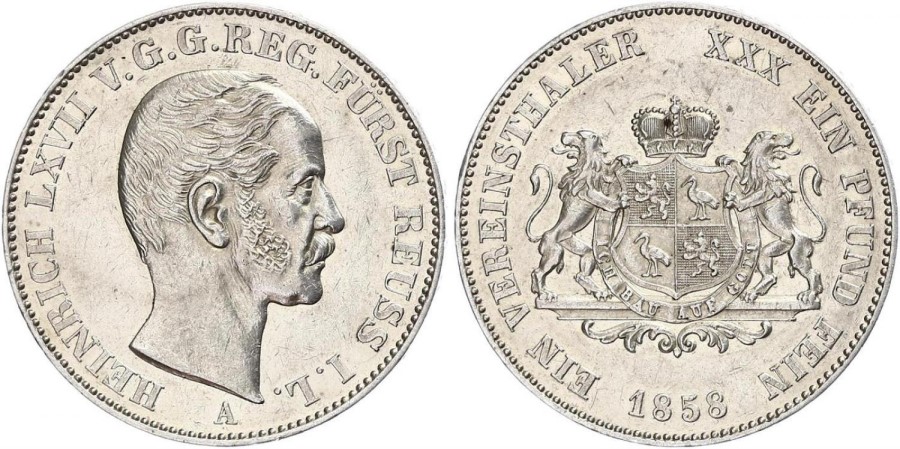 |
|
Pillar of the Community
United States
2703 Posts |
A very efficient system, which wastes no time squabbling about what to name a new child. "Heinrich 67" does seem more appropriate for an android though.
|
|
Pillar of the Community
United States
2703 Posts |
This franc is a little odd, which is why I like it. 1576-B (Rouen) Henry III of France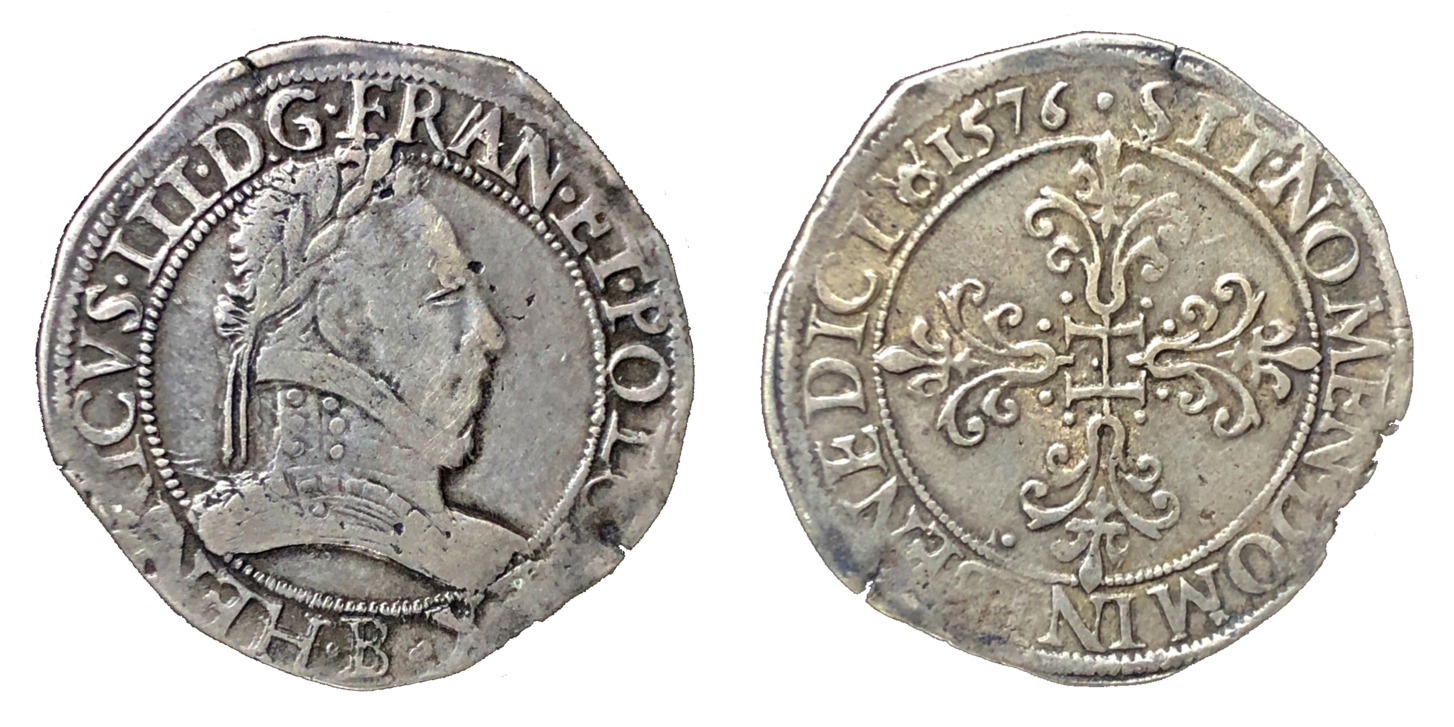 The reverse features what I would term a "lazy H" at the center, caught lying down on the job. Furthermore, there is a curious engraver's mark near the date at 10 o'clock. which I have not encountered on any other French coin. 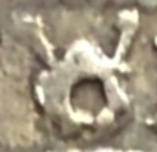 Perhaps an enraged Martian? |
|
Pillar of the Community
Sweden
2124 Posts |
Quote:
the custom of naming all males in the ruling house Heinrich had been established. Ok. I don't mind family traditions, but it is possible to overdo it!  Quote:
there is a curious engraver's mark near the date at 10 o'clock With the H engraved laying down and the mintmark looking like a blob on top of the V in BENEDICTV, on might suspect it was the apprentice's mark! But it is in fact the mark of Claude le Roux, mint master in Rouen 1570-76. It represents a crown of thorns and two nails. Here is another one: https://www.monnaies-royales-franca...6-ROUEN.htmlHenri was a name that ran also in the Nassau family in Orange, apparently. Here is the grandson of Frederic-Henri. Guillaume-Henri de Nassau, Orange 1660, 1/12 ecu.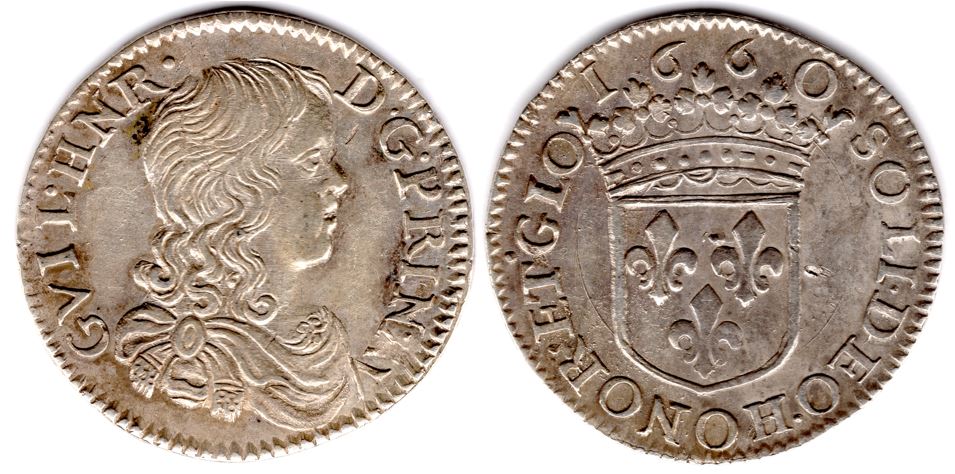 In 1660 Guillaume - or William in English - of Orange was just 10 years old. He made a remarkable career, ending up as king William III of England, Scotland and Ireland in 1689.* Despite a strained relationship with France, Orange gladly minted coins that were look-alikes of those of its mighty neighbor - to the benefit of the principality's international trade, no doubt. This 1/12 ecu is almost a direct copy of the French denomination, although with the portrait of the equally young Louis XIV replaced with that of William. The reverse requires more than a casual look to distinguish it from the coat of arms of France. You can compare with the "original" here: http://goccf.com/t/364499&whichpage=391#3342686That was the last Henri from me! * So if you have any William III of England coins, they are eligible to be shown here since his full name was William Henry! |
|
Moderator
United States
194932 Posts |
Nice examples! |
| |
Replies: 78 / Views: 5,682 |







 First Page
 Previous Page


 Posted 02/16/2022 3:37 pm





