| Author |
 Replies: 18 / Views: 6,789 Replies: 18 / Views: 6,789 |
Page 2 of 2
|
|
|
|
Moderator
 United States
23522 Posts |
Well, that's why I deferred; I've no expertise with the formative stages of verdigris and if it's that liquid in the early stages I'd never know. I *can* say that damage from PVC outgassing would never proceed that quickly, so you probably got it right for the coins.
|
|
Pillar of the Community
 United States
1536 Posts |
I am thinking they may have been sticky because of the moisture, the same reason there was verdigris on it. I don't think that was a proper container to ship them in because of that jewelry box was probably coated with PVC and who knows what. I don't really know too much how verdigris progresses either, but luckily the verdigris was removed early and their appears to be no damage to the coin underneath. I think the longer it sits on the coin the harder to get off and the more damage done. This of course is BadThad's expertise. Soaking 90% alcohol was just something that was told to me by the moderator of the About.com forum to kill germs. I notice it is also good for removing tape adhesive and crud without discoloring the coin. Of course after removing crud off of some coins, there was verdigris underneath that needed to be removed.
I actually prefer to leave coins alone, but sometimes something needs to be done to stop damage from occurring.
Edited by buddy16cat
05/13/2013 9:42 pm
|
|
Pillar of the Community
United States
624 Posts |
I got virdigris on a 1934 German (Nazi) Reichstag clad coin. It appeared only in high relief areas. My best guess is that it was a combination of storing in a PVC plastic holder and moisture. I experimented a little and soaked the coin in 100% Acetone for 3 days and the green wiped off with light tamping from a couple of Q-tips.
|
|
Bedrock of the Community
United States
20057 Posts |
I don't like using isopropyl alcohol on coins at all....I don't recommend it. It's usually ineffective and I've seen it alter the patina.
In reference to your thread title, verdigris forms from exposure to air. Verdigris needs to only one thing to develop....AIR. There is sufficient carbon dioxide and water in air to start the formation of copper carbonate. Then toss in chlorine, phosphorus and sulfur, and you can make the different chemical variants.
Lincoln Cent Lover!VERDI-CARE™ INVENTOR https://verdi.care/
|
|
Bedrock of the Community
United States
20057 Posts |
Here is my definition of verdigris I wrote for my book and Wikipedia:
Verdigris is a variable chemical mixture of compounds, complexes and water. The primary components are copper salts of acetate, carbonate, chloride, formate, hydroxide and sulfate. The secondary components are other metallic salts, acids (organic and mineral), atmospheric gases and water. All the components are in an ever-changing and extremely sophisticated electrochemical reaction equilibrium that is dependent on the ambient environment.
|
|
Bedrock of the Community
United States
12437 Posts |
Green and sticky sounds more like PVC residue, not verdigris.
|
|
Pillar of the Community
United States
1536 Posts |
I have soaked coins in alcohol but think it is best not to do it for more than 30 seconds. I have used acetone on coppers in the dark because it will react in the light I read. For those coins that are worth a little more, I only used distilled water before applying Verdi-care to them. Fortunately the green stuff came off just by rotating it on a cloth with Verdi-care on it. Maybe acetone in the dark is better than alcohol? I just heard soaking coins in alcohol from the forum admin from About.com. I find it removes crud rather quickly. If it was PVC though acetone is good for that but if not done right it can discolor coppers I heard.
|
|
Pillar of the Community
United States
1536 Posts |
Huh, maybe it was PVC. I see some still on one coin but maybe there was verdigris and PVC on them. I probably could have just used acetone with a distilled water rinse. I soaked them briefly in acetone but am a little reluctant even in the dark because of stories of coppers discoloring. They look good except they are still wet from Verdi-care. 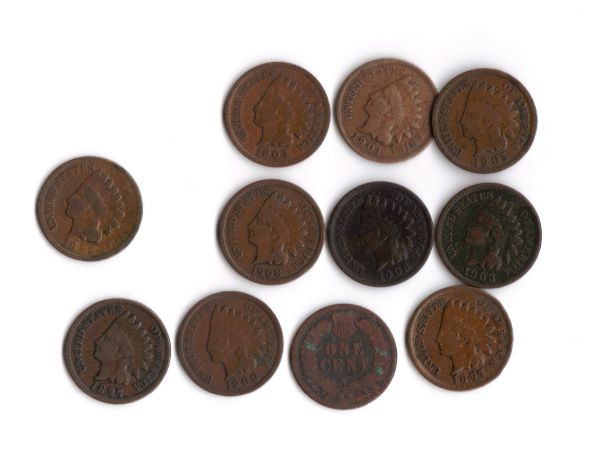 Edited by buddy16cat
05/15/2013 10:23 pm
|
|
Bedrock of the Community
United States
20753 Posts |
Quote:
I have used acetone on coppers in the dark because it will react in the light I read. I've used Acetone on Copper coins in a jar in the Sun, in the shade, in total darkness. If you find someone that says the Sun and Acetone will change Copper, it may well be they used a different Sun than I did. Exactly what color was the contamination on your coins. If it was greenish in color, it is the reaction of Sulfur Acids in the air. If you see or know anyone with Copper pipping in their homes and it goes into the house, you may also see that same green color to their Copper Pipes. In many areas the burning of Sulfur rich coal emitted Sulfur Oxide into the air and when that mixes with the moisture in the air, it becomes an Acid. You may have heard of damage to statues and other outdoor items from what has been called Acid Rain. That is the rain that goes through the Sulfur Oxided Air and becomes an acid. On many coins, if left exposed to this, they usually turn green. That is the remains of Copper Sulfate or Copper Sulfite. However, on coins it now has become part of the coin and when you remove it, your also remove part of the coin's metal. Slight, but part of the coin is now gone. The stickyness you explained could be almost anything that was in that container or what the container was made of. As already noted Alcohol is not a good thing for cleaning coins. That paper box may well have had Sulfur in the paper mixture. Regardless, get all those coins away from that box. |
|
Bedrock of the Community
United States
20753 Posts |
Not to get to boring about Acid Rain but some time back we were testing the grounding system at a power station. It was found that almost all the Copper Grounding system was crytalized into Copper Sulfate and almost completely useless. All had to be replaced with Lead Covered Copper cables and stainless Steel Ground rods.
|
|
Pillar of the Community
United States
1536 Posts |
You are right, the stickiness could be anything. I was told that alcohol doesn't affect coins, I will have to Google that. I only soaked them in alcohol for 30 seconds since it does remove tape residue if that was what it was. I probably should have just left them in acetone for a little while and that is all. I always give a distilled water rinse after soaking in anything. People have told me several times that acetone can discolor coppers I personally haven't had an issue but people swear it will discolor coppers. Distilled water is always the safest. I had a 1874 with some green stuff on it, that one I just soaked in distilled water and applied Verdi-care and that is all.
Yes, I took the coins out of the jewelry box. I have coin envelopes and mylar flips.
Edited by buddy16cat
05/15/2013 10:42 pm
|
|
Pillar of the Community
United States
1536 Posts |
Anyone know about nickels having verdigris? I soaked this nickel in acetone and it turned green. I treated it with Verdi-care and it is gone. It is dark but not as dark as it was with the crud. 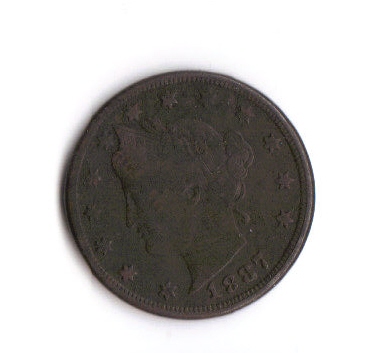 |
|
Valued Member
United States
60 Posts |
All-
I can't add much about the causes/cures of verdigris, though I can speak to using ethyl alcohol to "clean" coins: don't! At least not copper, bronze, or aluminum-bronze coins- it will alter the patina by turning the coin various shades of purple (due to formation of copper oxides and sulphates, I believe). While the "purple haze" finish is interesting looking, even pretty, the coins stand out like a sore thumb and yell "cleaned!". Copper-nickel coins seemed to do fine, though you have to beware of residues from evaporation(unless you use laboratory grade 100% EtOH, which I doubt you would). Of course you can get rid of the residue by rubbing the coin with a cloth. Of course rubbing the coin with a cloth adds unnatural lustrous highlights to the raised parts of the design. Of course unnatural highlights yell "cleaned", so maybe not using alcohol at all is the best idea...
cheers,
tbg
|
|
Pillar of the Community
United States
1536 Posts |
Huh, I don't have purple hue on my coins then again I only soaked them in 90% alcohol for 30 seconds just to get the sticky nastiness of them. This is what they looked like before. Some didn't need anything so I didn't bother and I did not soak the 74s or 61 at all although I did apply some Verdi-care to one 74 that needed it. 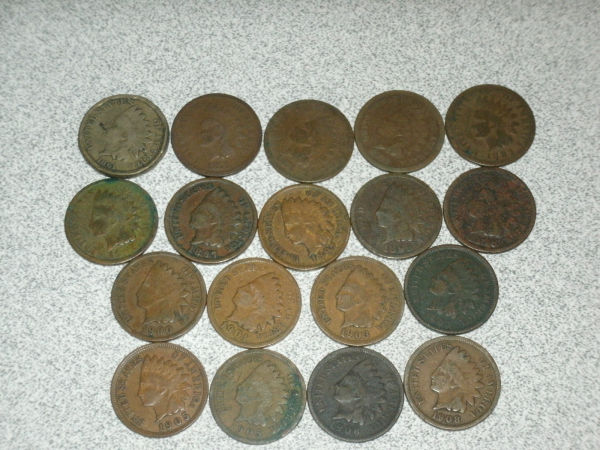 |
|
New Member
United States
1 Posts |
I realize this thread is old, but acetone will not react with metals, whether in the dark or under bright lighting. It won't even remove tarnish. But it will quickly and completely dissolve PVC (and most every other petroleum based plastic). I have safely used it on several coins in my registry set. It evaporates very quickly, and it is important to avoid breathing any fumes. I suggest using it in a glass covered dish. Personally, I use a glass covered butter dish, and a use a can of compressed air to blow off the still liquid acetone when I remove coins from the soak, as any dissolved PVC will be left behind on the coin after the acetone evaporates. I can provide several examples where heavy PVC residue, (which was green and gooey in the crevasses, but hazy elsewhere), was completely removed and made it through PCGS certification to be part of my Registry Set, so I speak from experience.
Verdigris on the other hand, is a tougher nut to crack, and most people don't have the time o patience to leave a coin in mineral oil or Refined (lowest acidity) Olive Oil for 6 months or longer to soften it for easier removal. However, I am currently experimenting with a process (based upon procedures I have used at work to perform accelerated life testing) to see if the 6 plus month time frame can be significantly shortened without unnaturally affecting toning of bronzes. If it substantially improves the appearance of the coin without producing unnatural toning, I'll post the process with before and after pictures.
|
|
Page 2 of 2
|
Replies: 18 / Views: 6,789 |
Page 2 of 2
|








 First Page


 Posted 05/13/2013 9:39 pm


