Hairline scratches are very fine scratches caused by lightly brushing a coin with something that is not 100% lint free. The tiny dust particles and bits of dirt leave tiny, thin scratches.
On a mint-struck coin, these lines are not usually present; they occur once the coin has been handled. They are often caused by someone "wiping" the surface of the coin with something such as a towel or cloth. On a non-mint-state coin, the lines are part of ordinary circulation.
Lines which are part of the coin as struck such as die polishing lines will always either be radial (from the center out to the rim) or parallel (running together in the same direction.) Scratches that are not parallel or radial in nature (i.e. they go off in different directions) are commonly caused by improper handling such as using a cloth or towel to wipe the coin's surfaces.
Note that having these scratches does not automatically mean the coin will get a "details" grade from a
TPG -- some amount of scratches are bound to happen to any circulated coin.
In the case of your coin, it's worth submitting it to ANACS (not that expensive) and seeing if it comes back "full grade" (no negative remarks) or "details" (cleaned, whatever.) Pictures on the internet often make great coins look worse than they really are, especially when it comes to scratches. If this coin looks good in hand, it's worth a submission, since the value if it comes back in a full grade AU will easily exceed the cost of submission.
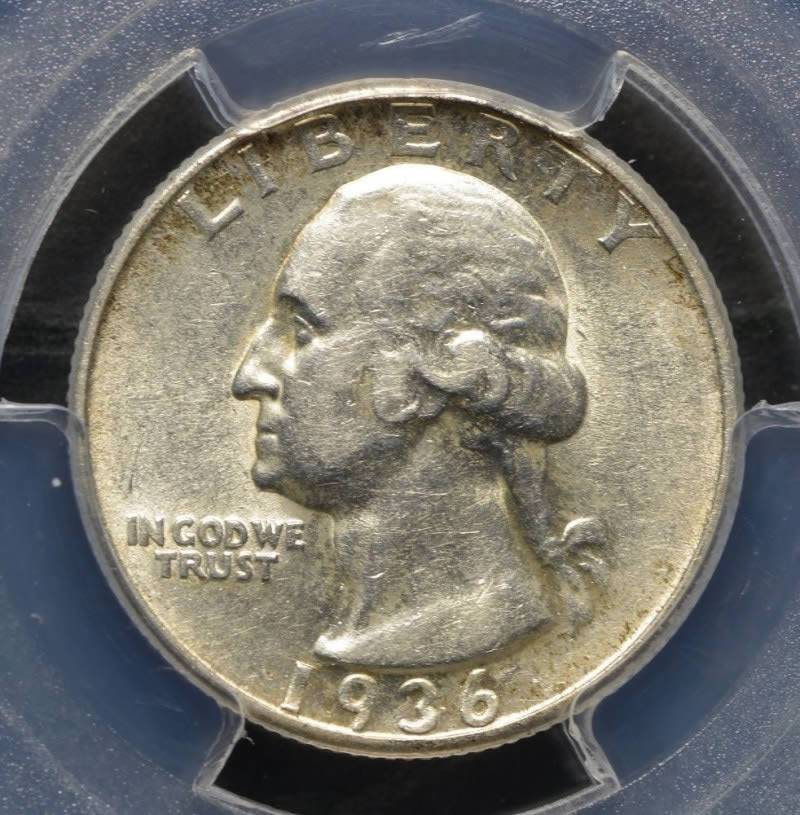
Upon a bit of study, I think your coin has a shot at a "full grade" -- a 1936-D that I own (a very tough date and MM) made a full grade PCGS AU53 holder: (Compare the scratches, from circulation.)
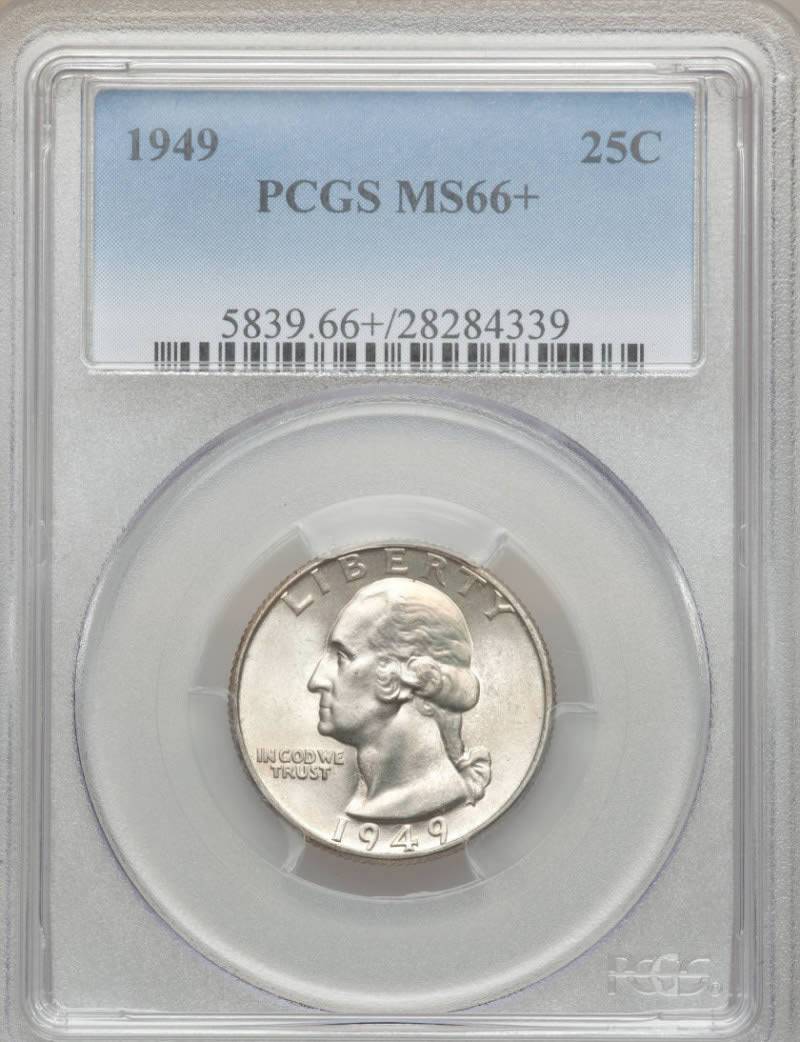
This 1949 from my Registry Set is an example of what a coin in true Mint State (i.e. no scratches)
Washington quarter can look like: (MS66+)
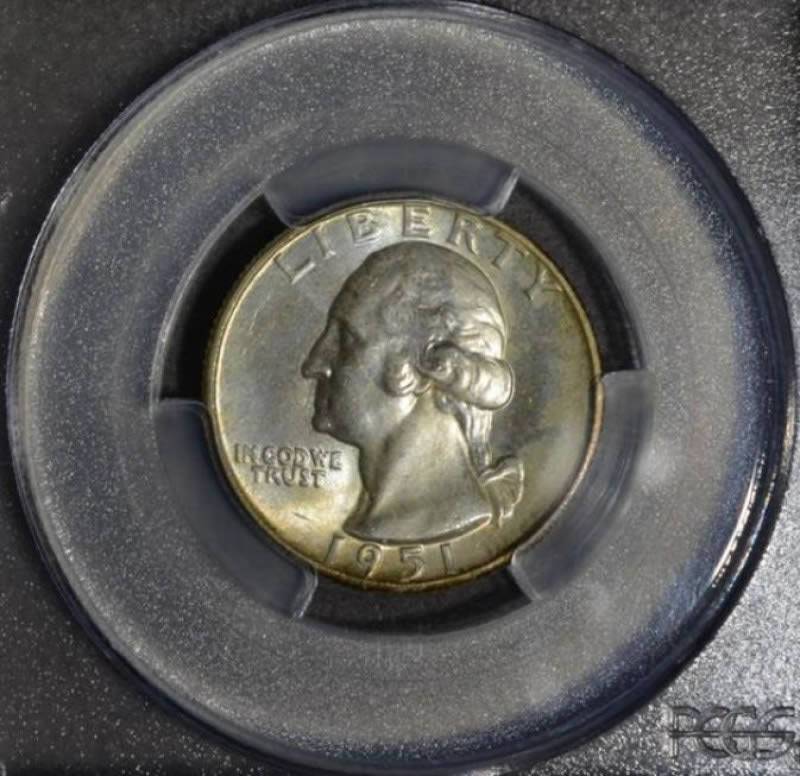
This 1951-D
DDO (Doubled Motto/LIBERTY) is also Mint State, but with some toning: (MS65)
Hope this helps you out in your pursuit of the most awesome Quarters ever :)

Member
ANA - EAC - TNA - SSDC - CCT #890
"Most of the things worth doing in the world had been declared impossible before they were done." -- Louis D. Brandeis







 First Page


 Posted 09/12/2015 06:17 am





