| Author |
 Replies: 18 / Views: 7,900 Replies: 18 / Views: 7,900 |
Page 2 of 2
|
|
|
|
Pillar of the Community
Belgium
1194 Posts |
|
|
Pillar of the Community
United States
949 Posts |
Albert, how do you keep the silver coins from tarnishing/toning in the wooden box?
|
|
Pillar of the Community
United States
7067 Posts |
For me, a Lighthouse case with removable trays. Each coin in a PVC-free flip with black archival paper in the other half of the flip so the coins "pop." My bronzes, not pictured here, have white backings. 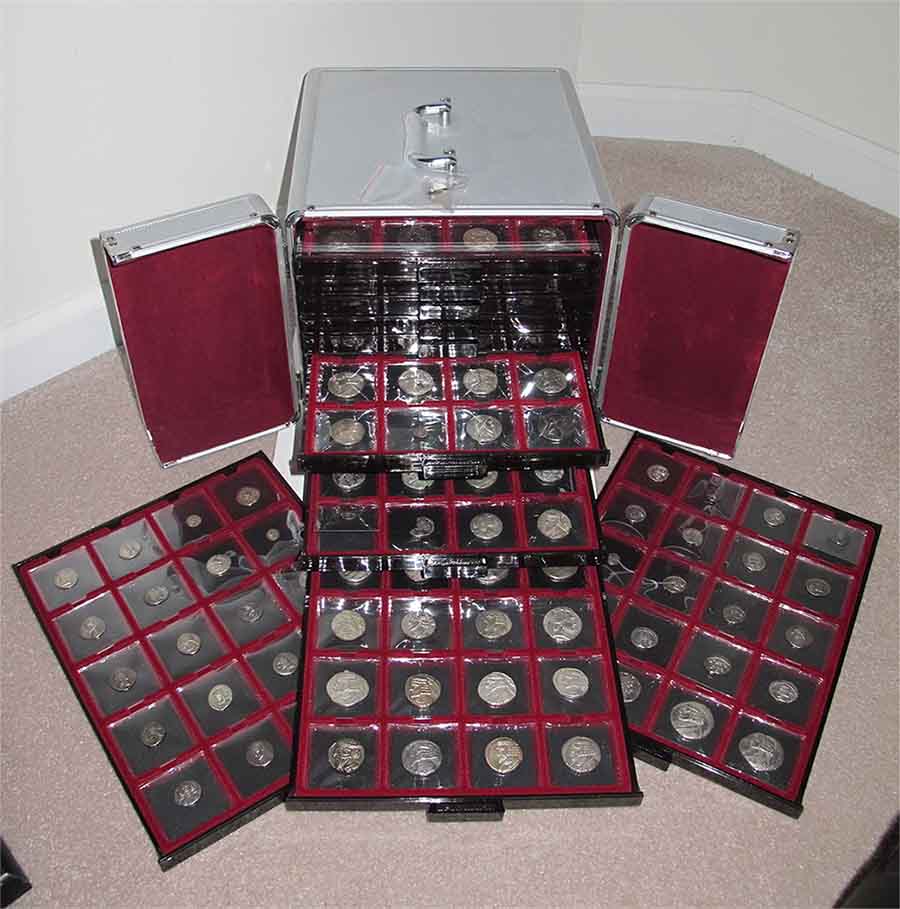 |
|
Pillar of the Community
Belgium
1194 Posts |
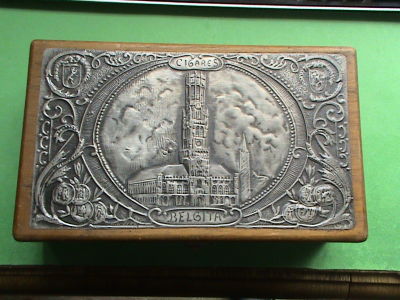
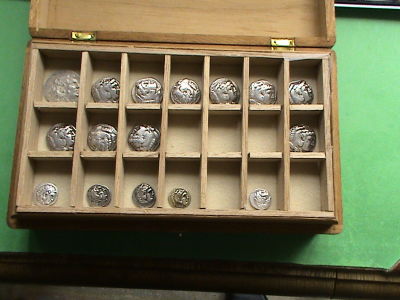
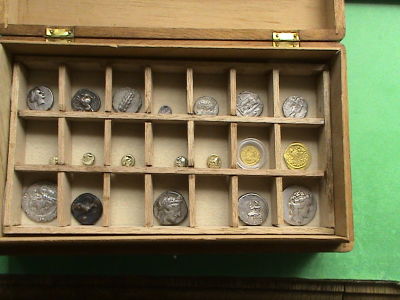
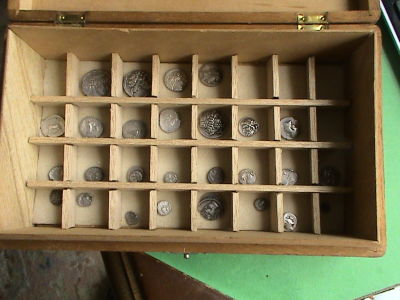
Irbguy : I have no problem , it is an old wooden bax with divisions I have made in oak and the coins lay on felt.I made my first box 5 years ago and the coins never changed.
Bob :wow ,very nice collection of Sassanid coins , you showed some , but there are still many others.I like to take and hold the coins to look them very well , so I don t like flips.albert
|
|
Pillar of the Community
  Spain
2752 Posts |
Great to see different ideas guys !
I really want to be able to touch the coins easily when I want to so I thought maybe clear capsules that can be reopened easily and a felt tray for viewing.
Any ideas on this?
|
|
Pillar of the Community
United Kingdom
2624 Posts |
I think you would find it tough to encapsulate all your coins... most ancients are not standard sizes so unless you are happy with them rattling around you would need a huge number of different size capsules. This is the benefit of Bobs flips method, easy to remove and one size fits all. Silver needs the presence of moisture to tarnish and oxidise, so maybe that is why Albert hasn't had any problems in that regard, though since there are oils in our skin regular handling of silver coins might well do it? In any case (see what I did there?!) a very nice collection of coins, I bet you didn't acquire that lot over night ^^ Bob, you too... nice collection :) and a very professional style of keeping them. I started a thread in the main coin forum about what's in peoples collection and how is it kept (on a shelf, in a box, in a cupboard or in folders etc etc) which met with very lukewarm reception (basically nobody would talk a photo of their collection) Mine is kept like this: 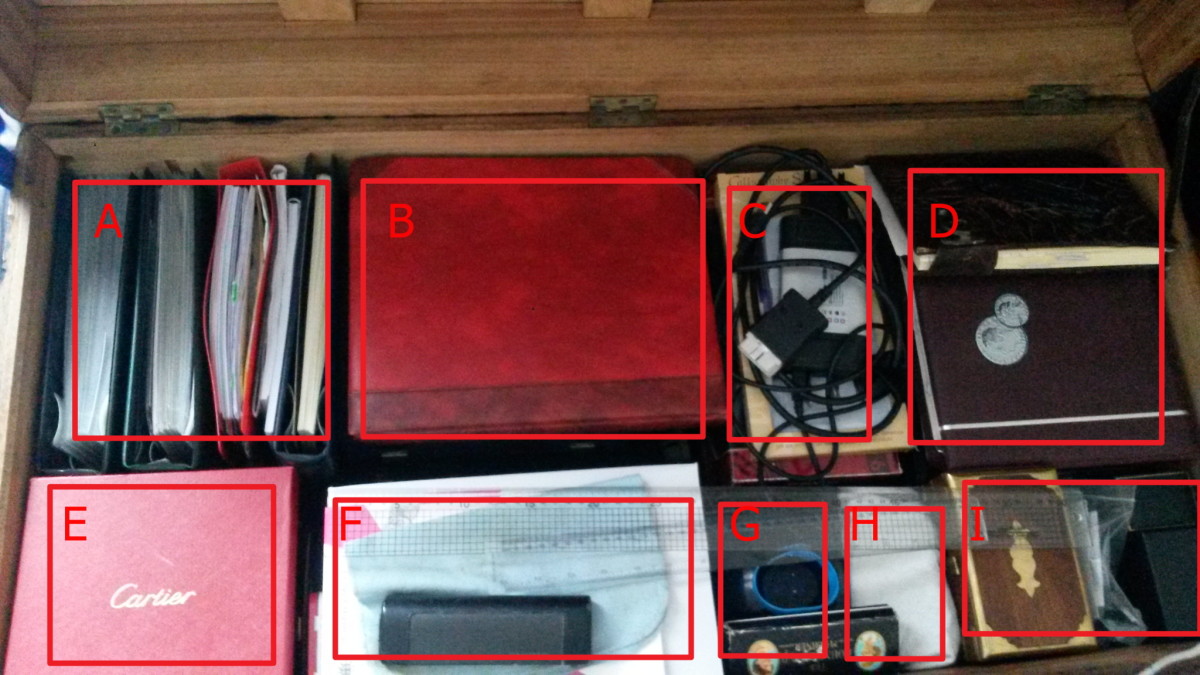 D is the folder with Ancients in it... 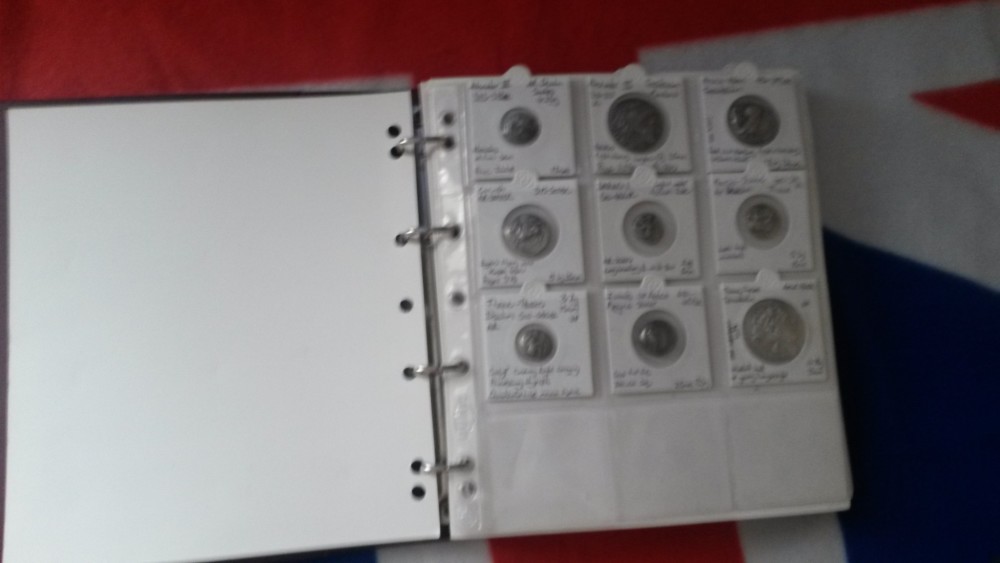 |
|
Bedrock of the Community
Australia
21792 Posts |
The good old standard Mylar / cardboard 2x2 is the best, because the Mylar won't ever hurt a bronze coin because Mylar is inert, and the cardboard flip in which the coin is held is available to write a full identification pertaining to the coin.
Do not store any bronze coin affected by verdigris (bronze disease) with coins that are not affected. A even, thin green patina on a copper or bronze is NOT considered to be verdigris, and in fact, can add value to an ancient coin.
Store all 2x2's in non PVC album pages.
Store all albums in low humidity environment. If you live in a humid environment, store your albums in a sealable box or case with silica gel.
|
|
Pillar of the Community
United States
949 Posts |
A closed case with silica gel sounds like a good idea for me. But a quick correction: verdigris and bronze disease are not the same things, and the terms are not synonymous.
Vergiris is the formation of a copper acetate bonded to the coin surface in interaction with airborne materials (most particularly acetic acid).
Bronze disease is the formation of a cuprous chloride from materials in the coin, most often in reaction to hydrochloric acid, and eats away at the surface of a coin once it begins.
Neither is desirable, but of the two, verdigris is less destructive than bronze disease. Bronze disease can spread from one coin to another, but verdigris does not. Coins with BD should be isolated. The treatment of BD most often involves the use of sodium sesquicarbonate.
Coating a coin with microcrystalline wax (e.g. Renaissance Wax) will help to isolate it from atmospheric pollutants, but using it on a coin with bronze disease will not stop the action if a coin is already being attacked. The conversion to chloride will continue beneath the wax coating.
Perhaps a new thread should be started on this topic separately. I have not checked, but it has probably been discussed here before.
Edited by lrbguy
11/03/2015 12:29 pm
|
|
Bedrock of the Community
Australia
21792 Posts |
As I undrerstand it verdigris is a complex double salt of copper hydroxycarbonate
|
|
Pillar of the Community
United States
567 Posts |
Seeing as we are all posting pictures of our storage methods and their thoughts on it here's mine. I like to keep mine loose, this way I can handle them almost every day without hassle, and I like to think it's something closer to how they would've been kept in their time. I know this sounds ridiculous, but I think confining coins does make them lose some of their character, and so I like to keep mine loose and available. 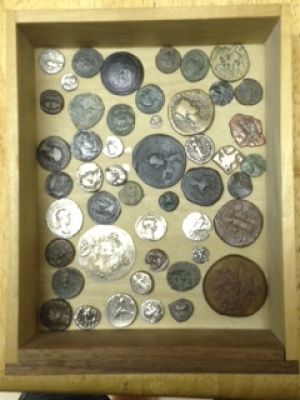 |
|
Pillar of the Community
United States
949 Posts |
Quote:
As I undrerstand it verdigris is a complex double salt of copper hydroxycarbonate Actually, the term "verdigris" is a common name given to a type of pigment that can be made from a number of different copper bearing salts/compounds including copper carbonate, copper sulfate, copper chloride, and copper acetate. Neither the acetate nor the carbonate cover it all. Moreover, because copper has two primary valence states these can come in a variety of configurations, particularly when bonded with other materials. The subject is huge. But to our original point, consider these remarks from a Wikipedia page on "bronze disease:" Quote:
Bronze disease typically affects isolated patches of the object in severe cases being a visibly and tactilely raised bloom of microscopic crystals as well as being associated with pitting. The patches of bronze disease can be scraped off the surface using a fingernail or a wooden pick. These properties are all in comparison with verdigris which is normally a duller shade, uniform across the whole of the affected object, and cannot be scratched off with wood or fingernails. Unlike bronze disease, verdigris serves to protect the metal.
[emphasis mine] In terms of how these are formed on a coin, verdigris and patina have much in common. Bronze disease is something entirely different. Bronze disease will completely destroy a coin unless stopped - verdigris will not. In terms of storage, it is wise to isolate coins with BD, but coins bearing verdigris are okay. Just make sure you know how to tell the difference. Edited by lrbguy
11/04/2015 10:54 am
|
|
Pillar of the Community
Spain
2752 Posts |
Thanks guys!I think I'll go with Davids system of 2x2 Mylars and a simple album.
I like the idea of them being free but I can be very clumsy at times!! So I'll keep on the safe side.
Thanks again!Saludos Paul
|
|
Pillar of the Community
United States
549 Posts |
If you wipe them with mineral oil they will become darker. Usually the visibility of copper coins is less when they are darker. Mineral oil is a bad idea.
If you live in a very dry region (like Arizona) you need not worry about "bronze disease" or PVC problems so much. If you live on the coast of Florida with high humidity you have to avoid the sort of soft plastic flips that auction firms often use. Hard flips, which protect against PVC problems from soft flips, can scratch coins, so auction firms may use them to avoid having viewers accidentally scratch the coin when they pull it out and return it to the flip. Many collectors use hard flips ("PVC free") and replace any soft flips they get.
I have seen collections of many serious ancient-coin collectors, none of whom use 2x2 mylars. Most want to be able to get their coins out of flips and handle them and look at the surface without having to view it through highly reflective mylar.
|
|
Valued Member
United Kingdom
90 Posts |
I'll just add in case no has already that silica gel is very good at preventing moisture if your coins are stored in a box or chest. I collect the little bags of it when it comes with stuff in the post.
|
|
Bedrock of the Community
Australia
21792 Posts |
Mylar 2x2's allow the full identification of the coin to be attached to it. That way allows for the moving of the coin from one pocket to any other, and the identification travels with it. Very convenient, when you re-oragnize your collection from time to time.  |
|
Page 2 of 2
|
Replies: 18 / Views: 7,900 |
Page 2 of 2
|







 First Page


 Posted 11/01/2015 6:02 pm





