| Author |
 Replies: 17 / Views: 5,570 Replies: 17 / Views: 5,570 |
Page 2 of 2
|
|
|
|
New Member
 United States
4 Posts |
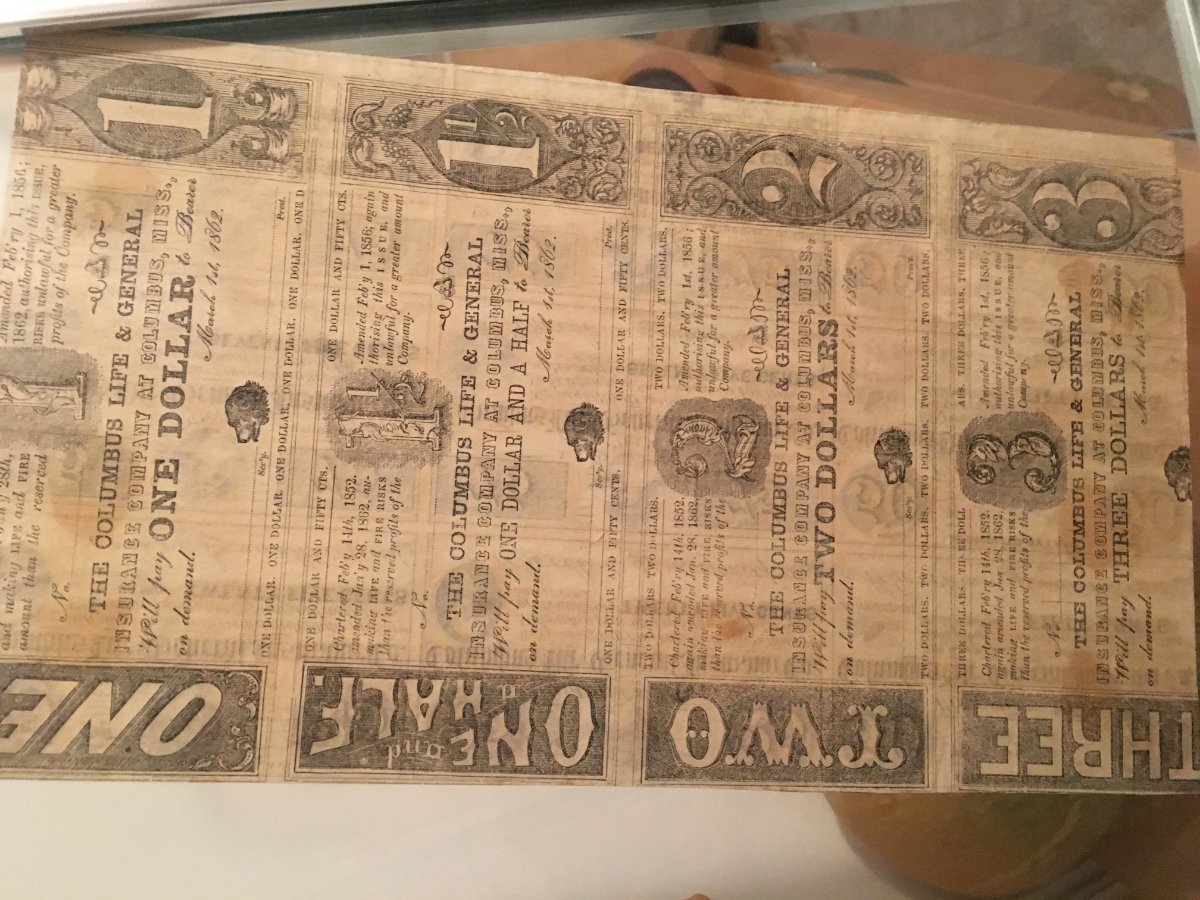
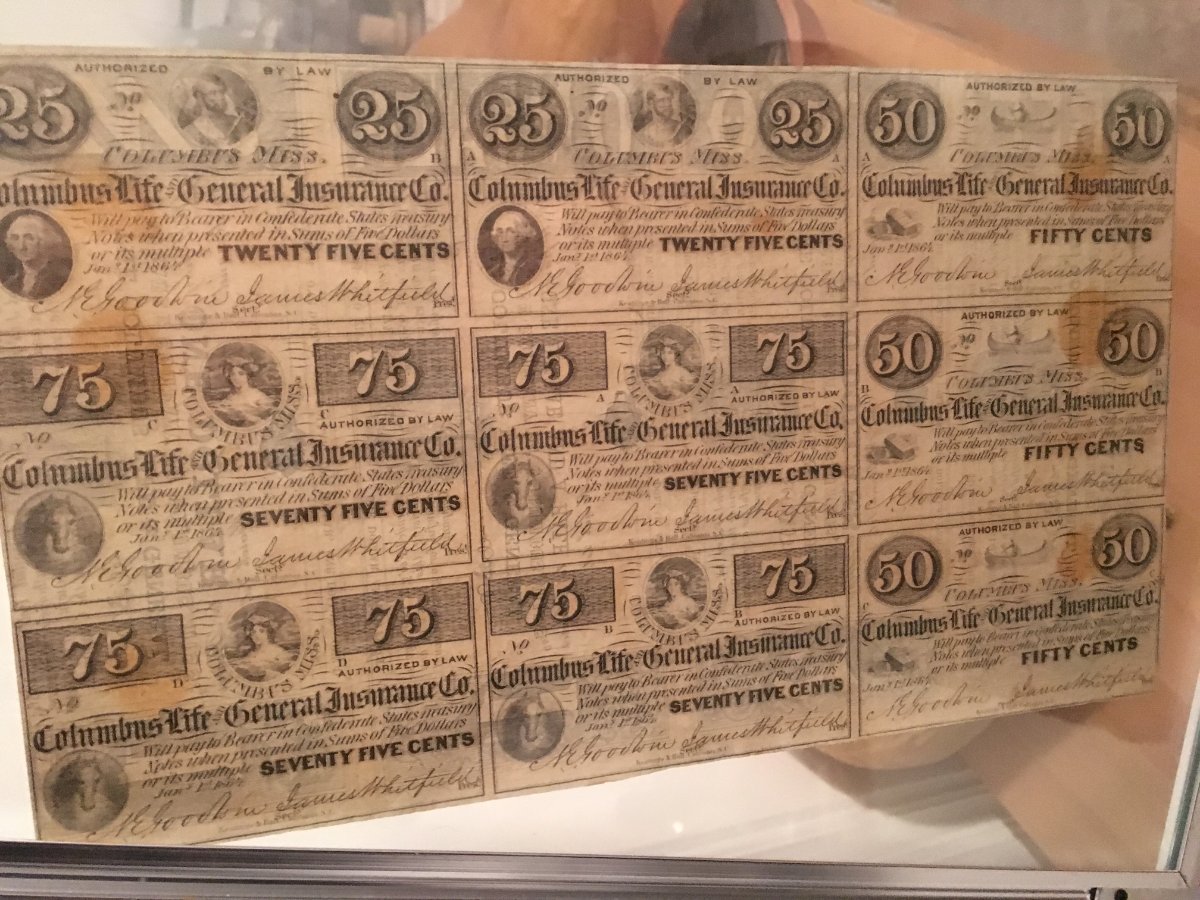
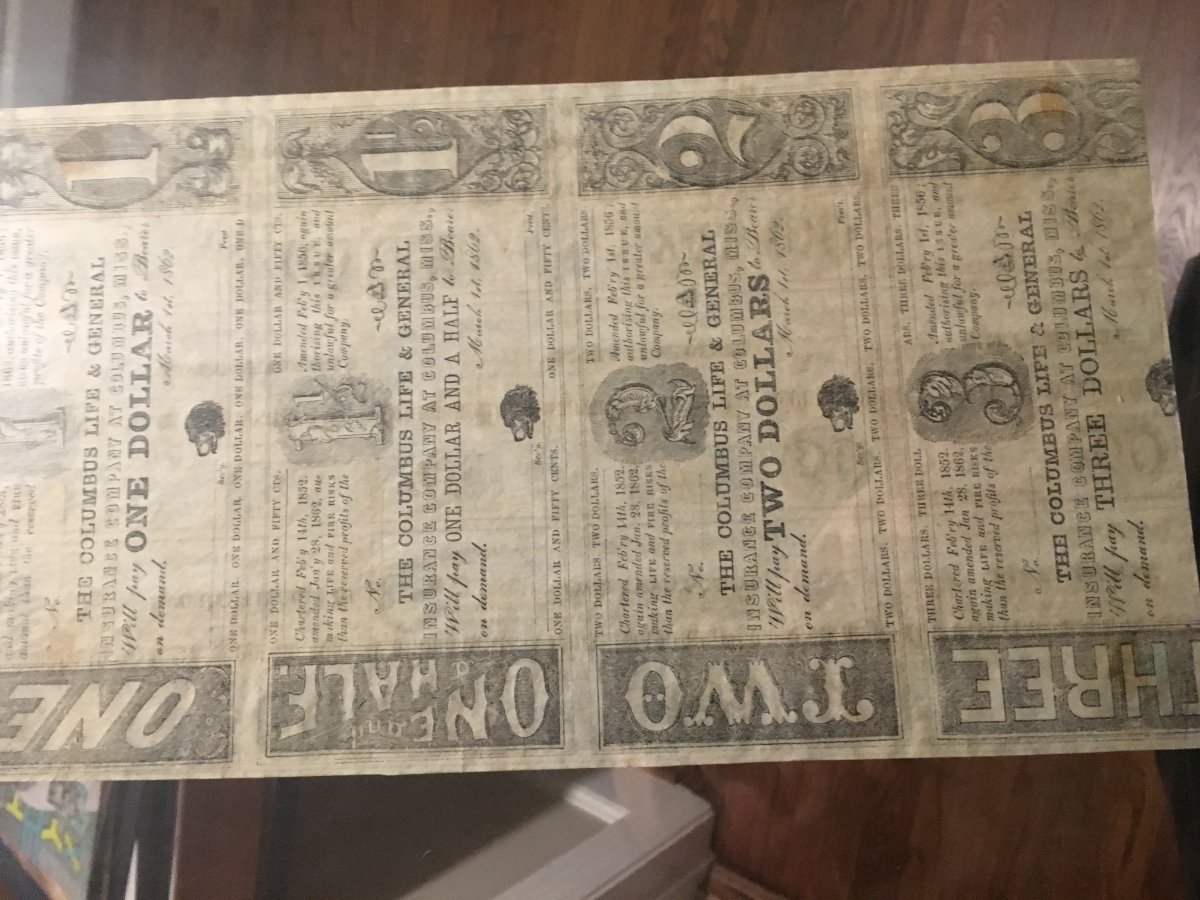
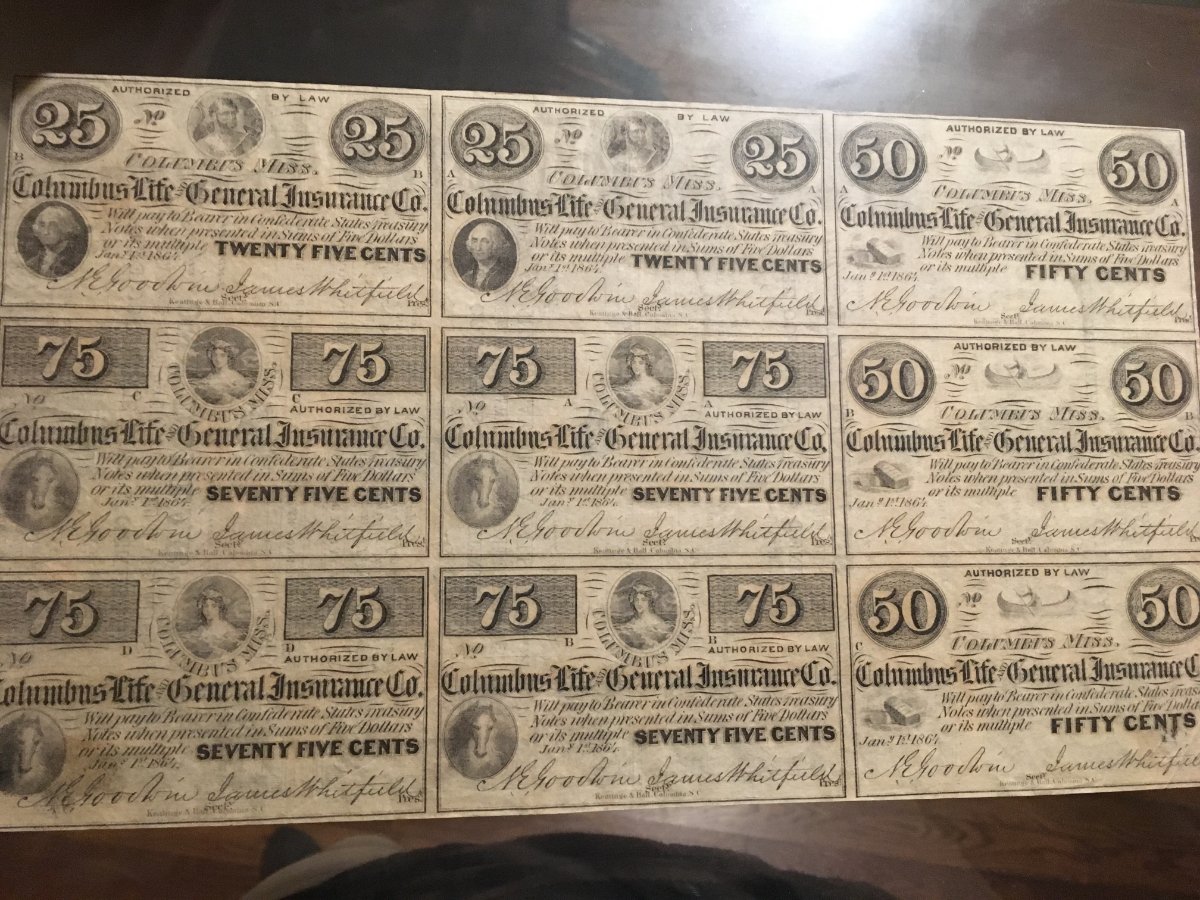
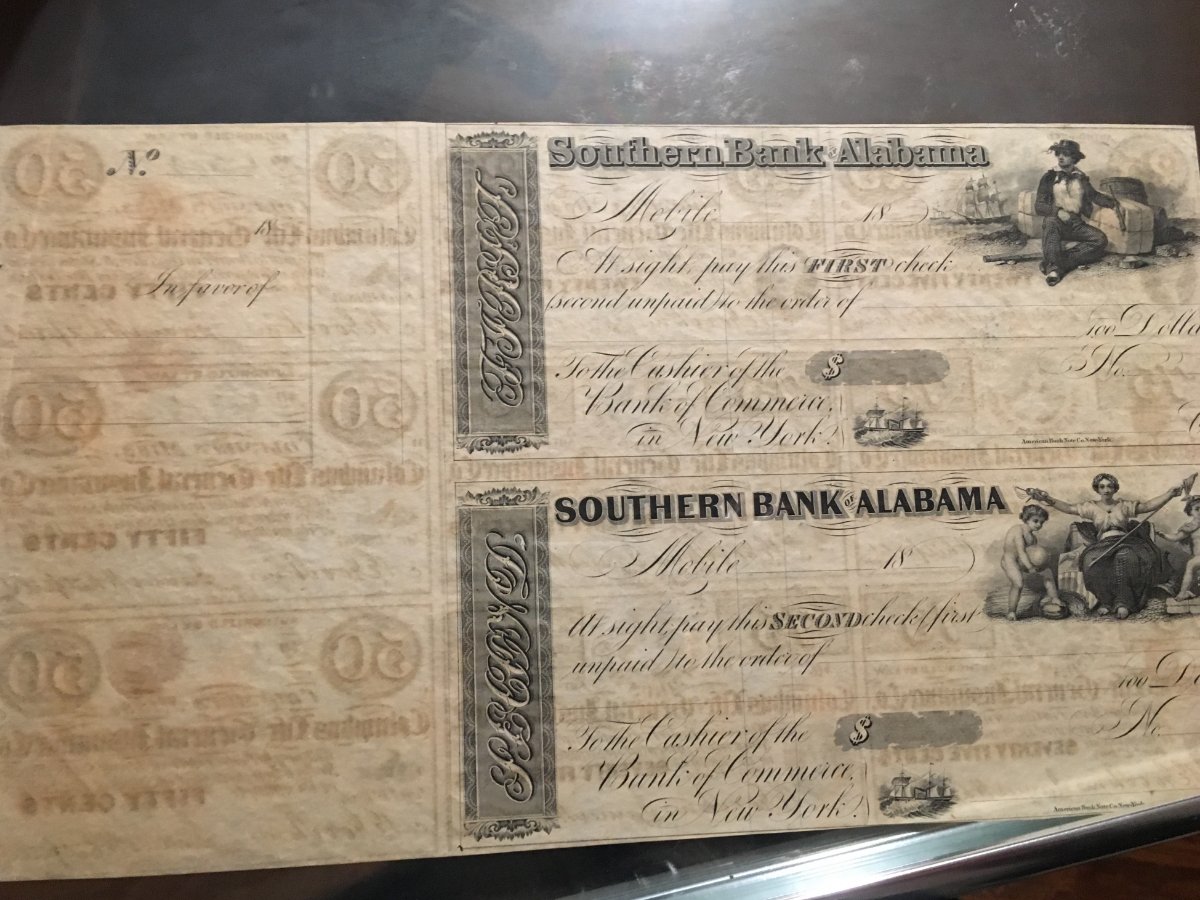
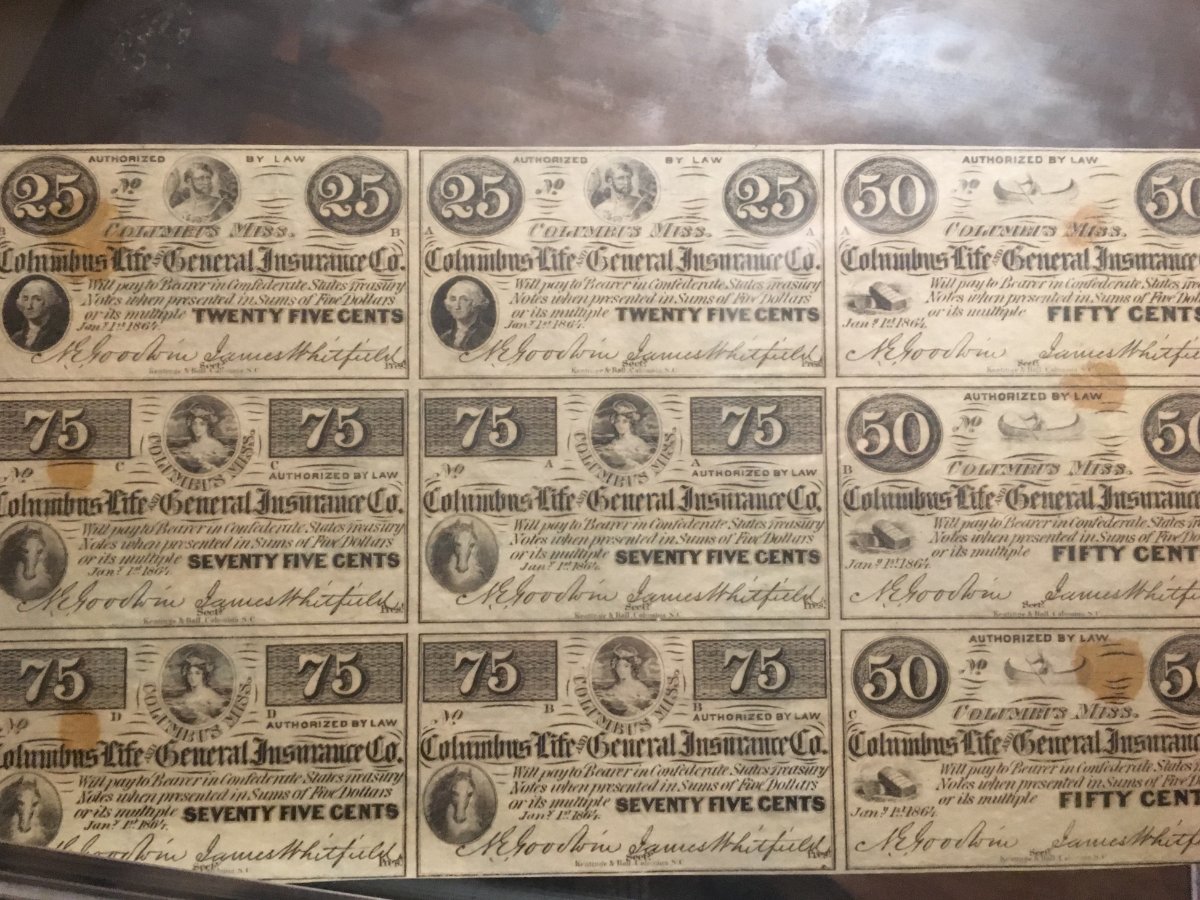
So looking closely at these last night with my loope, they were printed in Charleston SC by Keating & Ball. The drafts on the other side were from the American Bank Note Company in NY., where Keating, the engraver, was a former employee.
So, why were these notes issued by the Columbus Life and General Insurance Co. Vs. The State of Mississippi? Was inflation so bad the general public had no faith in the Government?
Edited by Pjones2127
01/29/2017 09:53 am
|
|
Pillar of the Community
United States
4409 Posts |
There was a lack of small change in circulation as the population and businesses were hoarding it. Businesses particularly those in the South needed to be able to give customers back change under a dollar without depleting their specie.
For example a person paid the Insurance Company $24.50 for his/her insurance premium with two Confederate $10's and a $5. The company owes them 50 cents. By having these fractional notes, it served 2 purposes:
1. amounts under a dollar could be tendered without letting go of valuable specie
2. the notes were only good for use with that particular business ensuring a repeat customer
|
|
New Member
United States
4 Posts |
Interesting, so these fractional notes are more scrip than bonafide currency? Do they still fit in the genre of "Confederate Currency"? Would one value notes such as this less than actual State issued notes, or is it more about rarity and condition?
|
|
Pillar of the Community
United States
4409 Posts |
Quote:
Interesting, so these fractional notes are more scrip than bonafide currency? Yes, as scrip is defined as a substitute for legal tender Quote:
Do they still fit in the genre of "Confederate Currency"? From my limited research, it appears that they fall under the category of Obsoletes Quote:
Would one value notes such as this less than actual State issued notes, or is it more about rarity and condition? I admit I am unfamiliar with this area of paper money and cannot answer this question completely. I imagine rarity and condition will come into play when determining what it is worth. -MV |
|
Pillar of the Community
United States
844 Posts |
This is a really interesting sheet -- thanks for sharing! Keating & Ball was just about the only firm doing engraved (intaglio) printing after all the Yankee banknote companies suspended business with CSA states in the face of treason charges. K&B also printed numerous Confederate bonds and currency. What others have mentioned about the Southern paper shortage during the Civil War is quite accurate. This was particularly true for scrip issued by businesses and municipalities, especially later in the war. Local printers used anything they could lay hands on -- bank drafts, newspapers, quack medicine advertisements, maps, circus flyers, banknotes, unissued stocks and bonds -- I've even seen one printed on the back of a personal letter. For fun, I've been working on a project of piecing together a previously unknown railroad bond using images from the back sides of scrip from Nacogdoches County, Texas. Here's the result so far: 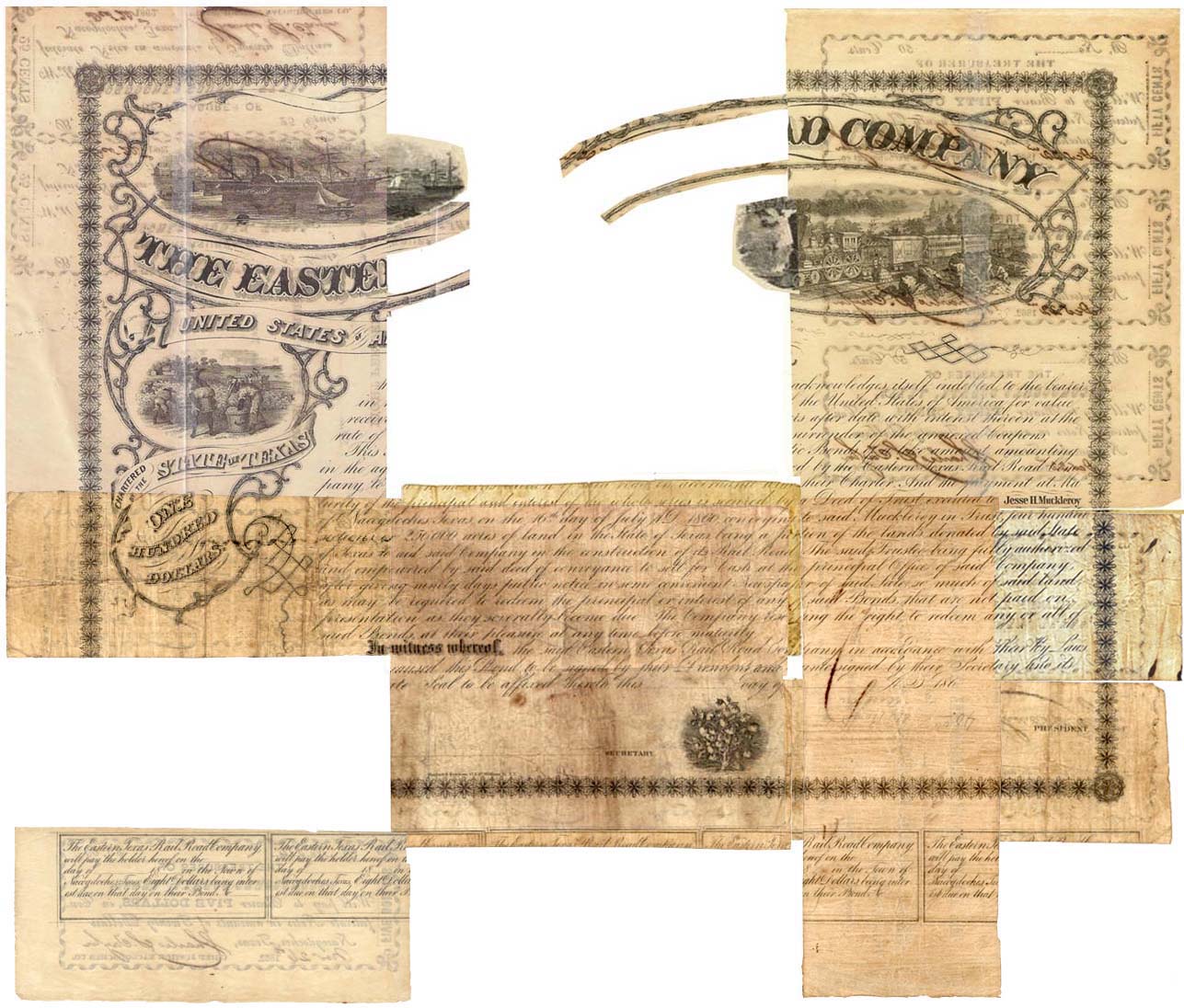 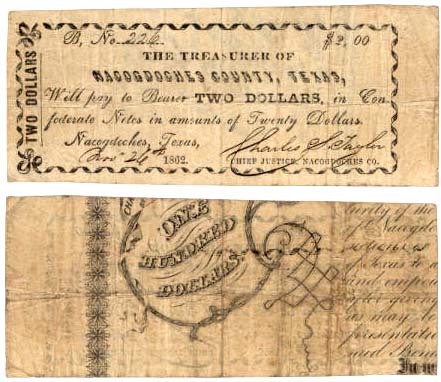 |
|
New Member
United States
4 Posts |
Searching the web, I found a single note on a dealer site from the same printing. 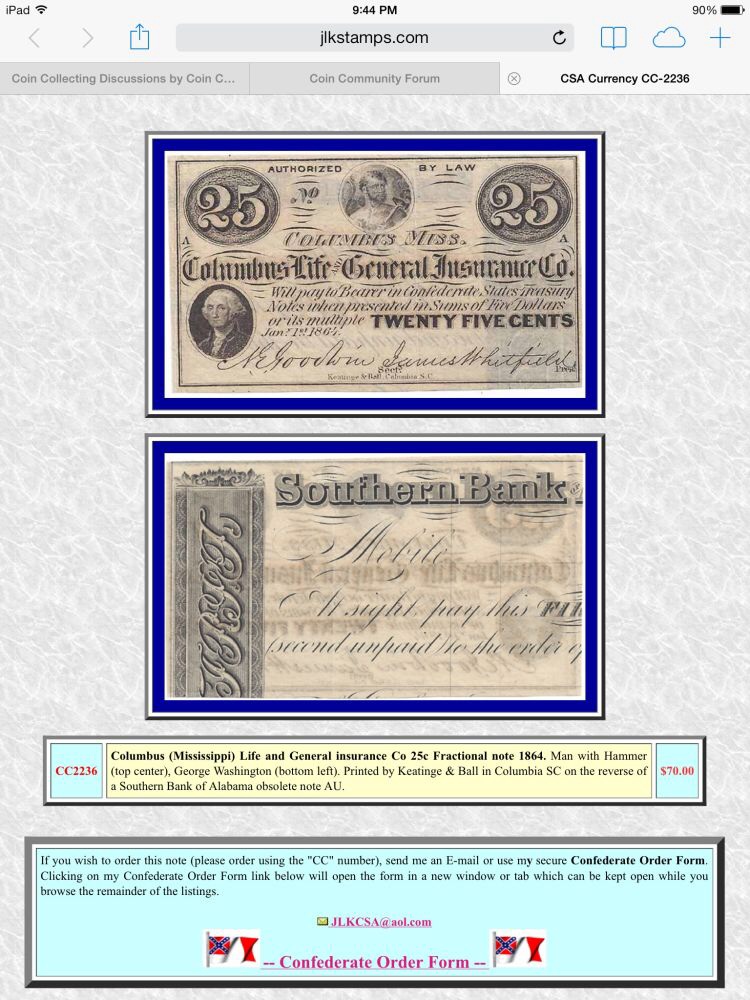 |
|
New Member
United States
2 Posts |
I also inherited an identical-looking sheet - also printed on the back of Southern Bank of Alabama checks printed by American Bank note Co. Curious what it might be worth. |
|
New Member
United States
2 Posts |
|
|
Pillar of the Community
United States
4409 Posts |
oldpaper,
Your uncut sheet(s) are likely worth more intact than the individual notes---I am not experienced when it comes to pricing these things as it is not an area I am versed in.
My advice is do not try to improve them in any way or expose them to harsh light or direct sunlight.
Maybe someone here will be able to chime in with a better answer.
-MV
|
|
Moderator
 United States
196859 Posts |
 to the Community, oldpaper! |
|
Pillar of the Community
United States
5029 Posts |
to CCF Interesting items. |
|
Pillar of the Community
United States
1285 Posts |
Okay, here we go. The Bowers obsolete book:
Whitman Encyclopedia of Obsolete Paper Money, Vol 7, pages 381-382
25 cents note: W-MS-200-00.25-G010 EF $60; Kraus-51540
50 cents note: W-MS-200-00.50-G020 EF $60; Kraus-51541
75 cents note: W-MW-200-00.75-G030 EF $75; Kraus-51542
All listed as rarity URS-10 (250 to 499 known)
Notes as Unlisted in Haxby
Kraus numbers refer to: Mississippi Obsolete Bank Notes, Post Notes, Scrip and Government Issues by Guy Carleton Kraus, pages 288-289
|
|
Pillar of the Community
United States
1285 Posts |
Now, let's talk about the $1, $1 1/2, $2, $3 dollar notes. Hang onto your hat on these because I haven't seen any in a while.
Bowers lists them as follows:
$1 note: W-MS-200-001-G050; Fine $125 rarity 8 (65 to 124); Kraus-51500
$1 1/2 note: W-MS-200-001.50-G070; Fine $300 rarity 4(5 to 8);Kraus-51501
$2 note: W-MS-200-002-G090; Fine $350 rarity 4 (5 to 8); Kraus 51502
$3 note: W-MS-200-003-G120; Fine $$350 rarity 4 (t to 8); Kraus 51503
Bowers pages 382-383
Kraus pages 285-286
Edited by techwriter
11/10/2018 3:20 pm
|
|
Bedrock of the Community
United States
37206 Posts |
to CCF. Very nice uncut sheet. |
|
Pillar of the Community
United States
844 Posts |
Quote:
Your uncut sheet(s) are likely worth more intact than the individual notes Definitely keep them intact. And as Techwriter has pointed out, sometimes the original notes are worth more than the ones printed on the sheet later. Those Southern Bank of Alabama drafts likely have some value also. Edited by GregAlex
11/16/2018 10:50 pm
|
|
Page 2 of 2
|
Replies: 17 / Views: 5,570 |
Page 2 of 2
|





 First Page

 Posted 01/30/2017 1:20 pm