| Author |
 Replies: 17 / Views: 6,811 Replies: 17 / Views: 6,811 |
Page 2 of 2
|
|
|
|
Pillar of the Community
United States
610 Posts |
What do you do with all the slugs? I cant imagine keeping a bucket full of slicks. P.S. As an electrician, your setup give me anxiety......I kinda want to try it now.  Edited by Half
06/06/2018 10:41 am
|
|
Valued Member
Canada
66 Posts |
Nice results! I have seen some terrible "cleaning" jobs using electrolysis .. as
I am sure most of us have.. Just pure destruction.
Looks like you have a pretty good handle on it and there is no denying the end product!
|
|
Moderator
 United States
23731 Posts |
I have been collecting ancient coins for a good many of years now and have seen plenty of coins that have been zapped. It's easy to tell that they were by the stripping away of the patina and the pitting it caused to the surface. It may not damage a modern coin in the same way as an ancient one just because of the age and compensation of the metal, but it does pit the surface on ancient coins. Again I strongly suggest to never use this method. There are many more safer methods to clean ancient coins.
|
|
Pillar of the Community
United States
3520 Posts |
Quote:
There are many more safer methods to clean ancient coins. For those of us not so familiar with ancients, what are the prefered methods of cleaning them? |
|
Moderator
United States
23731 Posts |
|
|
Valued Member
 United States
224 Posts |
I have tried multiple sessions on Roman coins as tests, but never caused pitting. But -- as you say -- every case is different. And may be alloys I haven't tried. But one way to certainly destroy with electrolysis -- screw up and put the coin on the anode!!
|
|
Valued Member
Canada
66 Posts |
I have never used electrolysis. But I see no issue in trying a "Hail Mary" on coins like this. This is after 7 months of olive oil, distilled water, brushing, etc. I was successful with a bunch of coins from this lot - but have 6 or 7 like this. They are beyond being salvaged and I don't think electrolysis will help either.. but I have no issue if someone wanted to try. I gave them a nice brush for this photo and now they back in a fresh distilled water bath. I do not expect any improvement. 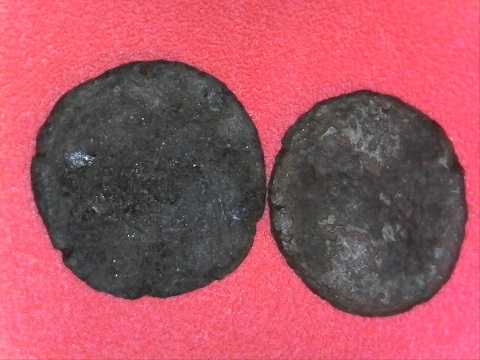 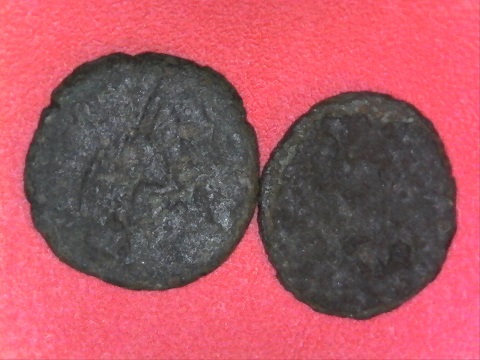 |
|
Valued Member
United States
224 Posts |
A proposal -- I'm guessing that many of you have backgrounds in technical fields like myself (much of it in chemistry). So we like to draw our conclusions based on hard data. Two things are obvious -- being buried for centuries puts corrosion on Roman coins, and 2. Zapping removes the corrosion and exposes the underlying pitting. This also removes the portion of corrosion called patina. But there still seems to be some question as to whether zapping, properly done, can cause additional pitting or damage. So far, I have never been able to cause pitting on any coin, old or new. However, as someone mentioned, there may be other alloys that might be damaged. Could some of you please experiment on some low value coin and see if you get the same result? You could even use a pitted trash coin but see if the zapping adds further damage. Just use the method I mention above. And do NOT, as I once did when careless, hook up the coin to the anode. Complete disaster!
|
|
Valued Member
United States
224 Posts |
Claudius, I would not be surprised if zapping reveals an image on that lower left surface. Use one- hour sessions, brushing between them. The fun is in seeing something gradually revealed. And if you're like me, you will need to have two boxes -- one labeled "total slug", and one labeled "some image, but not enough to identify". :-). Have fun!
|
|
Valued Member
United States
224 Posts |
Claudius, this may be just like seeing the image of a man on the moon, but, having seen many coins like it, that lower left image looks like it might be a very common image -- a fallen horseman being speared by a Roman soldier. The coin is upside down. 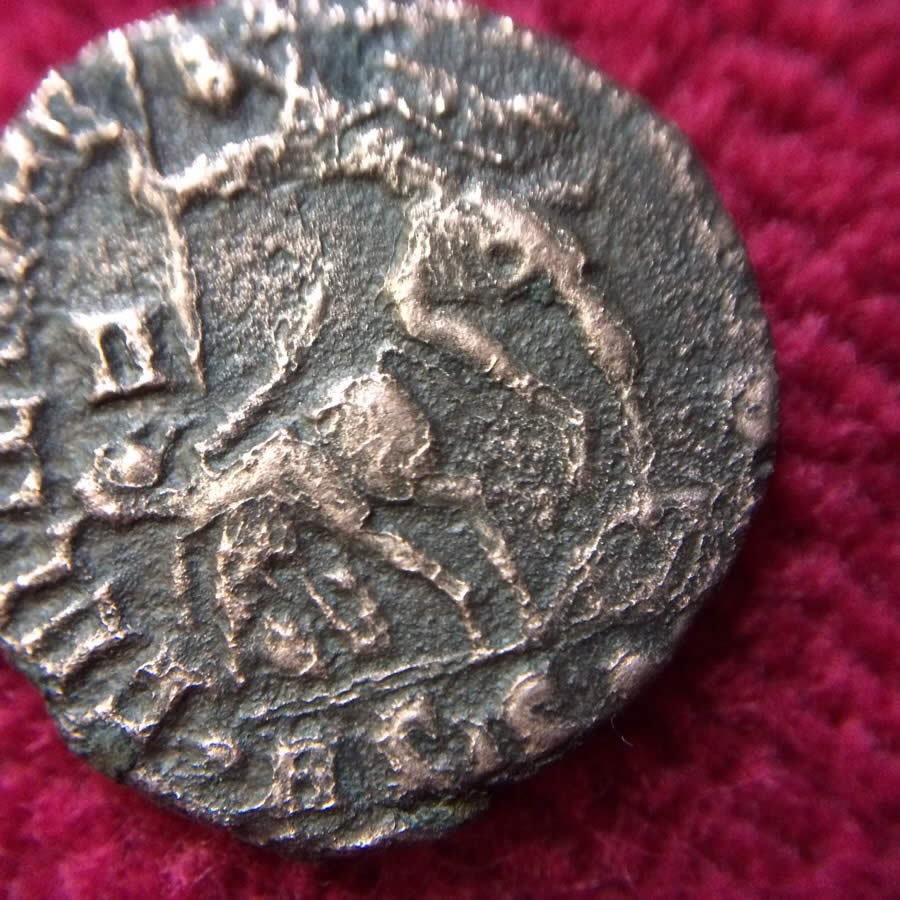 Edited by gtkwml
06/06/2018 5:37 pm
|
|
Valued Member
Canada
66 Posts |
Yep looks right - good catch. The chances of it being a Fallen Horseman are pretty high.. get a ton of those in these lots. If you deal with a lot of Late Roman Bronzes (LRBs) like I do I suggest you look at purchasing this book.. it is amazing and for $24 well worth it. You may even be able to find it in .PDF form online for free.. not sure: It is an excellent guide to attribute the coins. https://www.amazon.com/Guido-Bruck/e/B00RXIPNIQ |
|
Valued Member
United States
224 Posts |
Thanks for the tip, Claudius. I went right there and ordered a copy. Though The earliest coin I've gotten was from the reign of Tiberius, most are indeed late Romans.
|
|
Valued Member
United States
224 Posts |
I usually use numismatics.org/ ocre/ identify, followed by a visit to wildwinds.com/coins/ric/ i.html
|
|
Valued Member
Canada
66 Posts |
Yes both are great resources.For LRBs that aren't in great shape I have had great success with Bruck's book.
If I know the Emperor for certain then Wildwinds...but I also find that a good shortcut is going to VCoins.
Type in the ruler.. and in many cases I find the coin for sale with a full attribution. Very nice and quick when that works out.
I am sure the collectors with more experience have better methods. But I seem to get to the correct result eventually. If I am stuck I just ask for help.
Edited by Claudius
06/06/2018 10:15 pm
|
|
Valued Member
United States
224 Posts |
Yeah, asking for help here is great. Truly amazing how much these guys know!
|
|
Page 2 of 2
|
Replies: 17 / Views: 6,811 |
Page 2 of 2
|





 First Page


 Posted 06/06/2018 11:48 am


