| Author |
 Replies: 25 / Views: 4,788 Replies: 25 / Views: 4,788 |
Page 2 of 2
|
|
|
|
Pillar of the Community
3660 Posts |
No, not by a long shot. I am not entirely sure of the sequencing of the Confederate notes, but I would imagine that it followed a similar path as the Federal issues that were born at the same time for the same reasons. Since Confederate notes bore no series number (that I can detect), I presume that the date of issuance determined the sequencing. Consider this, once a run of notes reached a certain high number, say 10,000 for a $100 note, the serial numbers would start all over again at #1.
Take the 1862 Federal one dollar bill for instance; there were over 28 million notes issued between 1862-1869. The serial numbers ranged from #1 - #100,000. This means that the numbering sequence started at #1 (284 times). There were 284 notes issued with the serial #1, but only one (series #1, serial #1) was the first one. On the Federal notes, a series number was located (in various places) on the face of the note.
If you own an 1862 one dollar note with a series number of say 234, this means that your note was not actually printed and issued until a year or two after the civil war was over. Serial #1 of series #1 was the very first one dollar bill issued by the US in 1862. It was presented to then Secretary of the Treasury Salmon Chase (whose portrait was on the note), and is now in the safekeeping of the Chase Manhattan Bank in New York.
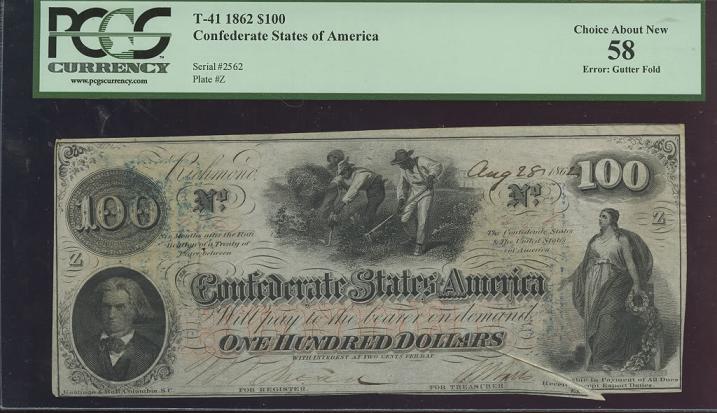
Your particular note is not 'the' second note of this type printed (for sure) as the date of August 28th is somewhere in the middle of the run of this type. The other serial #2 that I have seen was dated April something. No matter. $15K will mean a nice profit margin on whatever you paid for it.
|
|
Bedrock of the Community
United States
10045 Posts |
Quote:
Yes, I definitely agree with both of you Siuol and biokemist6. Very funny.   Looks like that guy in "Scanners" Ser. #2? I wouldn't let that go until you're very sure as to value.  |
|
Pillar of the Community
3660 Posts |
Here is a scan of the 3,310th note issued by the US government. It is series #1, serial #3310. (Note the location of the lower serial number). Wish I still owned it. 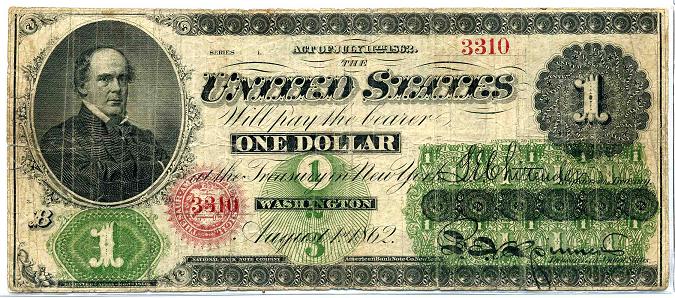 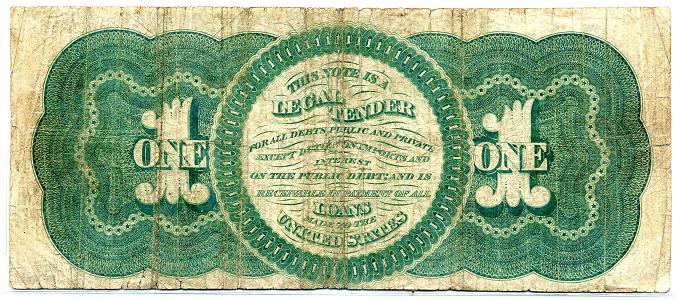 |
|
Bedrock of the Community
United States
14454 Posts |
Quote:
(Note the location of the lower serial number) what does this mean? |
|
Pillar of the Community
3660 Posts |
Approximately the very first 5000 $1 notes were issued with the lower 'red' serial number directly on top of the 'red' Treasury Seal. In an effort to remedy this color clash, the number was hastily moved to the location of on top of the numeral '1' in (the viewer's) lower left corner of the note. Check it out, 'any' 1862 one dollar note you will ever find or see will have the lower serial number in the lower left corner. (If the serial number is over the seal as this one is, well, you know what to do, if you can afford it). There are only a very small handful of these notes known to exist.
|
|
Pillar of the Community
3660 Posts |
You are asking questions and I am giving honest answers: There is no way of finding out who signed the note. These notes were hand signed by one person (a nobody) who was hired to sign notes. These are not the signatures of the officials that are titled below them. Same nomenclature for the Federal Demand Notes of 1861. The Secratary of the Treasury and the Treasurer had more important things to do than hand sign notes all day, that is why the word 'for' precedes the title. Despite your assurance of the note being 100% authentic, and an appraisal from a dealer (which amounts to little more than just an opinion), the fact of the matter is, that so far, this note is uncertified and therefore 'questionable'. This note displays the boldest inkings (on both face and reverse) of any Confederate note that I have seen, despite condition, but then I am far from being an expert on the subject of Confederate notes. The inkings may add value to it, or may go the other direction. I would strongly recommend that you get this note set in a TPG holder from PMG, PCGS, or the like, which would serve to insure authenticity of the note and multiply it's perceived value many fold to any perspective buyer. "Then' submit to a large auction house. If you decide against TPG certification, I would jump on that $1500 offer without delay as I consider it to be very high for an uncertified Confederate note, despite the serial number. It may be prudent to hold back on that victory dance of all the smiley faces until you actually have cash in hand. |
|
Pillar of the Community
 United States
851 Posts |
Whether it's 1500 or less I am still making a profit and will still be happy about it. I just like surprises such as this. I have it packaged and ready to ship to PCGS Currency tomorrow since I have a voucher for 6 free submissions.
|
|
Pillar of the Community
3660 Posts |
That is playing it smart. Way to go!
|
|
Pillar of the Community
United States
2130 Posts |
That is an amazing story. I wish you luck on your submission.
|
|
Pillar of the Community
United States
851 Posts |
Just offered by another dealer who deals strictly in Confederate Notes a very generous $250 because he only wanted to put it in his collection, and not resell it.
Edited by coins92
01/11/2010 3:20 pm
|
|
Pillar of the Community
3660 Posts |
Hopefully you told him that it is in the mail on it's way to PCGS.
|
|
Valued Member
United States
292 Posts |
This is very cool! Please keep us updated. I would very much like to hear what PCGS has to tell you...
|
|
Pillar of the Community
United States
851 Posts |
Does anyone know if PCGS would note the fact of the serial number 2 on the slab/sleeve when they grade it. How would I be able to find out how many number 2's for this series and signature exist?  |
|
Pillar of the Community
3660 Posts |
|
|
Pillar of the Community
United States
851 Posts |
Thank you. I am looking through the yellow pages right now!  |
|
Page 2 of 2
|
Replies: 25 / Views: 4,788 |
Page 2 of 2
|








 First Page

 Posted 01/10/2010 01:14 am