| Author |
 Replies: 19 / Views: 4,232 Replies: 19 / Views: 4,232 |
Page 2 of 2
|
|
|
|
Pillar of the Community
 3660 Posts |
Thanks Dave, I do appreciate the interest and your words. Do you have any interest is Strike Doubling? If so, check this out (It might make your eyes hurt a little bit): 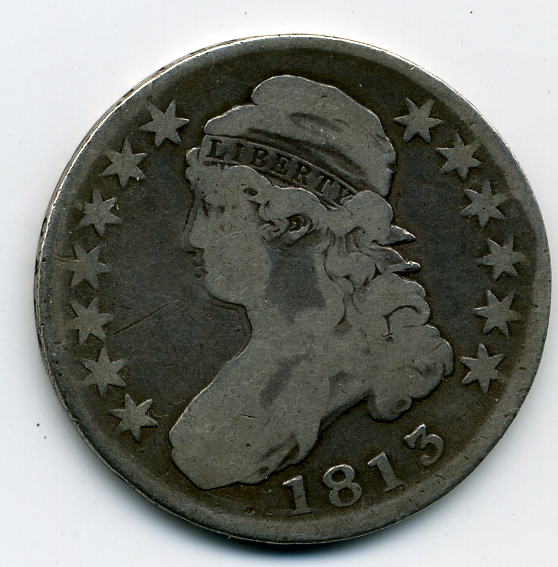 |
|
Pillar of the Community
United States
1418 Posts |
I like all those with a lot of Cud. |
|
Rest in Peace
United States
1943 Posts |
I like Cuds too. They are an error. The cent and dollar look good. The 1942 dime looks like solder was on the coin and has worn down from time. There is no Cud on this coin. The other dimes listed above look suspect. A picture of the reverse of each is needed. |
|
Pillar of the Community
3660 Posts |
You've got eagle eyes Bob, and I do believe that you just might be correct. I will whip up some scans tomorrow, and I am going to feel kinda bad (and silly as well) about thinking what I have about them, and not 'really' looking at these coins. I will also give the reeding a good going over as well. I have an awful lot of Cud coins that I need to actually 'look' at now. They might turn out to be 'lake coins' after all. |
|
Valued Member
United States
156 Posts |
Three large Cuds on the obverse. When I see a coin like this, I think "How much longer could the die have lasted before shattering? Was this the last coin struck?  |
|
Pillar of the Community
3660 Posts |
Possibly I am unclear as to the definition of ' Cud'. I had envisioned the term in association with a crack that developed into a break (usually at the periphery of the die). I am not in any hurry to rock the boat with my own ideas and definitions (yet). That is one very interesting coin you have there Buzzard. 'Very' interesting. |
|
Moderator
 United States
23522 Posts |
Quote:
I had envisioned the term in association with a crack that developed into a break (usually at the periphery of the die) Quite correct; a " Cud" involves a complete die break which by definition runs edge-to-edge. You're posting "full" Cuds, where the broken piece of die has fallen away, as opposed to "retained" Cuds which still show detail in the broken area. |
|
Rest in Peace
United States
1943 Posts |
Also Cuds involve the rim of the coin. Buzzard's coin would not be a Cud. I think it would be large enough to be called a die break. When smaller areas are missing and not touching the edge they are called die chips. The key to look for on larger Cuds or die breaks is an area of weakness in the design exactly opposite the Cud on the other side. When the metal pushes up into the missing area of the die it leaves less metal to push into the design on the other die. So whenever you see a larger Cud or die break look at the other side for this weakness. Buzzard, check that on your coin. I think your coin is just post mint damage also. Possibly also just solder. |
|
Bedrock of the Community
United States
17884 Posts |
I do like Cuds. nfortunately I believe that most of the cons shown in this thread so far are just damaged coins and not Cuds. I think the FE cent and the 21 Morgan are real, but none of the others are. |
|
Pillar of the Community
3660 Posts |
Yes, good eyes Bob & Conder. Correct assessment by both of you. I have looked at these coins now with discernment and feel that the Barber coin is soldered (probably once in a crude bezel) as the pseudo Cud extends above the surface of the coin's reverse. The 1939 S however, is low at the rim in the points of interest, and I really do not know what to think about that. No matter, they should both be good skimmers for my next trip to the lake. I will definitely 'look' before I post another picture. Speaking of that here are the pictures of the other sides of each that you requested Bob: 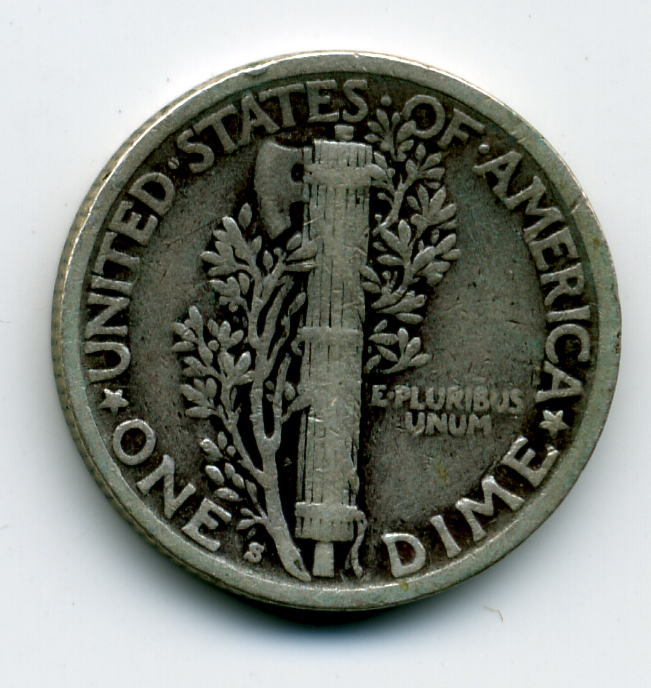 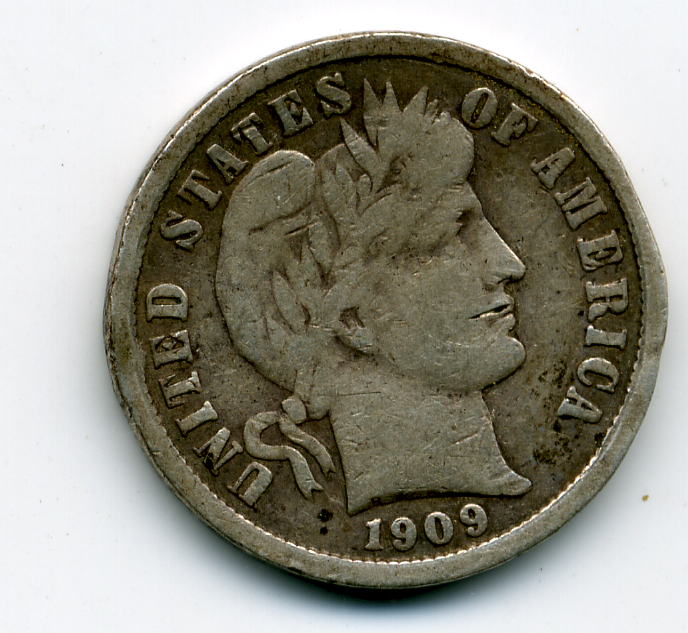 |
|
Valued Member
United States
156 Posts |
To add a little more detail about the 1837 Guanajuato peso posted above: the raised areas appear to be the same material as the rest of the coin. The dealer that I purchased it from (an ANA member) described the areas as Cuds, so I was willing to accept them as examples of Cuds. I also think that the coin is likely to be a contemporary counterfeit. |
|
Bedrock of the Community
United States
12437 Posts |
zeewool, Based on the reverse pics, the Barber dime was soldered(probably a pin attachment). The 1939S Merc has damage of some sort and the 1942 Merc is damaged as well in addition to some solder on it(you can see bubbles). Buzzard, If a dealer called those marks " Cuds", then that dealer is not very familiar with errors. Unfortunately, it is one of the most misused terms in numismatics. You cannot have a Cud in the center of a coin, that would be an interior die break but that is not what it is either. A Cud is a specific type of die break that affects the face and shank of a die and will create an area of weakness on the opposite side of the coin. The shapes are way too irregular to be die breaks not to mention that the left side of the blobs form a perfectly straight vertical line bisecting the coin. Most likely explanation is left over solder from a pin attachment.
|
|
Pillar of the Community
3660 Posts |
Yes, I am in total agreement with all of that stuff you just said, bio.
|
|
Pillar of the Community
United States
1173 Posts |
I believe this is a Retained Cud...because some of the denticles are apparent in the cut. I apologize for the photo quality. I haven't taken the time to reshoot this coin after getting better equipment. And, yes, the coin was cleaned at some point. I like Cuds, so I keep this one.    Edited by hunter20ga
01/18/2010 11:46 am
|
|
Pillar of the Community
3660 Posts |
Oh yes, I like that one too hunter. I love seeing pictures of them even more than holding them in my hand.  Here is an itsy bitsy one: 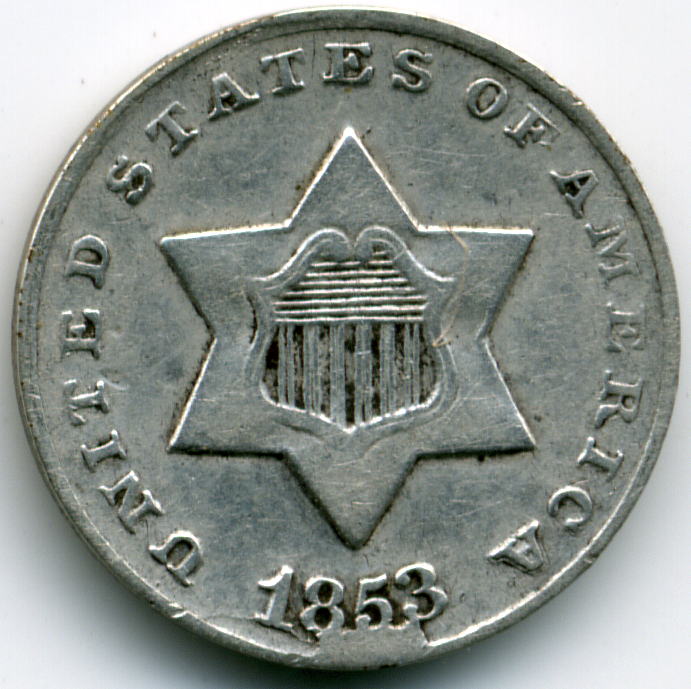 |
|
Page 2 of 2
|
Replies: 19 / Views: 4,232 |
Page 2 of 2
|






 First Page

 Posted 01/10/2010 7:42 pm





