| Author |
 Replies: 35 / Views: 7,991 Replies: 35 / Views: 7,991 |
Page 3 of 3
|
|
|
|
Moderator
 United States
23796 Posts |
quote:
Originally posted by Stujoe
quote:
Originally posted by Stujoe
I notice how they say the 'design is ineligible for copyright' which is true, as I understand it, as it is a work of the government.
After doing a little reading on the mint site, apparently Wikipedia is wrong even with that blanket statement in regards to the rote copy of US coins. The Sacagawea dollar design is copyrighted and some State Quarter designs are copyrighted and only licensed by the mint.
quote:
Certain coin designs are also covered by copyright (for example, the design of the new "Sacagawea" Dollar Coin is owned by the United States Mint, and designs for certain 50 State Quarter coins are also covered by copyright and licensed to the United States Mint).
http://www.usmint.gov/kids/index.cf...pyRights.cfm
I believe you are correct the designs are protected under copyright law but not pictures of the coins. I can post a coin picture but I can not take the design off of a coin and use it with out permission such as a picture of Sacagawea from the dollar to be used in for example my company logo. does that make sense? |
|
Valued Member
United States
421 Posts |
There are really 2 issues at work here as I understand it. One is the copyright of the design and the second is the copyright of a photo of that design. Speaking of US...as I understand it, the work of a government employee while in the performance of his official duties is generally not eligible for copyright. Many US coin designs would fit into that definition. Although apparently not all as I imagine some designs are based on copyrighted work or possibly created outside the mint. But I can see where the design would generally not be eligible for copyright with some exceptions. Now, the way I understand it, a photo of a coin and whether that is eligible for copyright is quite different and has nothing to do with the design being eligible for copyright or not. Just as my US flag is not copyrighted, I can take a photo of it and if it meets a minimum of artistic merit, originality, etc then that photo of my flag can be copyrighted. I fail to see how that would not also apply to a coin photo. If it is a photo that has originality, artistic merit, etc then I have a hard time seeing how it would not be eligible for copyright in the US. I would have a hard time looking at a photo like this: 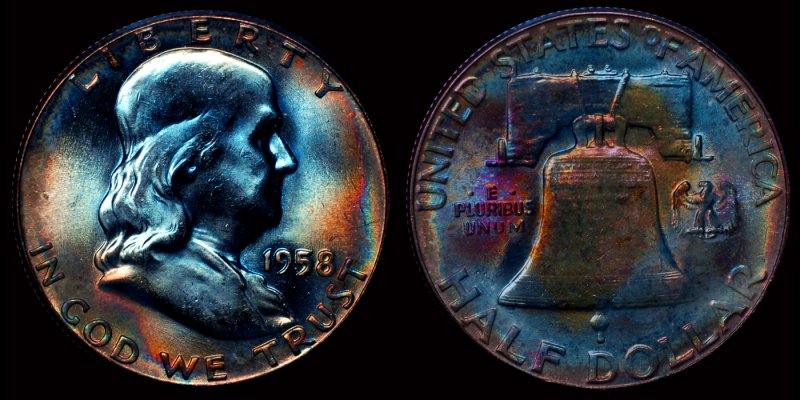 and saying that it is not a work of art or there is no originality to it. It is obvious that skill went into choosing the proper lighting, etc to make that photo look like that. It is not a rote copy of the design. You could change the lighting or angle or other variable and get a very different picture. In a very real sense, it is as artistic as a photographer taking a picture of a sunset in just the right way to bring out the true beauty of it...and that photo of a sunset would absolutely be elligible for copyright. Edited by Stujoe
09/24/2006 11:34 pm
|
|
Forum Dad
United States
24227 Posts |
quote:
It is obvious that skill went into choosing the proper lighting, etc to make that photo look like that. It is not a rote copy of the design.
I disagree, the artistic value is the the picture itself, not the making of the picture. No matter how you take the picture, it's still a straight on picture of a coin. Now take that picture above and merge it with a flattering background or make some type of collage, now the picture itself has artistic value. I think a seller of coins would be stuck in a catch 22 in court. If the dealer would prove in court that his photos have artistic or creative merit, then in essence he would also be admitting to fraud on some level. If the photo is not just a photo of the coin he's selling, but a photo with his or her creative or artistic value added, then it's misrepresented. Now let me ask you this. I can take an identical closeup picture with my camera and loupe as 99% of people can with a fancy microscope and special camera. Now because they have the skill to set up a $500 microscope and a $1000 camera with the proper lighting, does that mean that their picture (identical to mine) has more right to a copyright than mine? |
|
Valued Member
United States
421 Posts |
I am pretty sure whether the closeup would be copyrighted is dependant upon whether it is a rote copy of the, say mint mark, or whether there is a minimal amount of creativity that went into the picture. That might be a hard sell to claim copyright with a photo like that under most circumstances. Now, light that photo a certain way, take it at a chosen angle to make it look a certain way, crop that photo, place it on a special background, etc and you may be getting into creativity.
As far as a seller being in a catch 22. I don't see it unless there is some kind of an intent to defraud. A coin can look a hundred different ways depending upon how a photo is taken. A seller might set the photo up to show luster better or toning better or surfaces better or whatever. As long as there is no intentional deception involved (like photo-shopping to make the coin look like something it never could be) , he is probably safe.
I would say that not all coin photos are eligible for copyright as some are rote copies of the design. And I think that is where the big difference is. A scan is pretty much a rote copy as are some pictures. In some cases, there is nothing extra in terms of artistry or creativity that goes into it. It is just a copy of the design.
Many coin photos are different, in my eyes. I know when I take a picture, I am going for a certain look. There are decisions I make with lighting and angles and setup and post processing (such as placing it on a digital background, adjusting color), etc that are every bit as artistic or creative as someone framing and lighting any other photo of anything else.
I think that is why Wikipedia words the notice the way they do. They are right, in most cases, that the design is ineligible for copyright and therefore a rote copy of it is not eligible either. But, I think that is way different from saying AF's Frankie above is just a rote copy of the design.
Another thing about copyright is that I can step up to the grand canyon and take a picture. When I walk away, you can stand in the exact same spot with better skill and better equipment and take the same picture. The way I understand copyright, they are both eligible for copyright protection regardless of how alike they are.
I think what would save most people in real life is that it would be expensive for someone to defend their copyright and, in most cases, difficult to prove damages. But that is true when using most photos. There is nothing special about coins in that regard.
Edited by Stujoe
09/25/2006 09:00 am
|
|
Pillar of the Community
United States
830 Posts |
quote:
Originally posted by bobby131313
No matter how you take the picture, it's still a straight on picture of a coin.
Bobby, that particular shot that Stujoe used in his example is mine, and it is in no way a "straight on picture". The method used to shoot that involves lighting and angles and straightening the image to make it "round" again. There's a lot more to it than just hitting the shutter release. Stu, thanks for the compliment  |
|
Forum Dad
United States
24227 Posts |
quote:
Bobby, that particular shot that Stujoe used in his example is mine, and it is in no way a "straight on picture". The method used to shoot that involves lighting and angles and straightening the image to make it "round" again. There's a lot more to it than just hitting the shutter release.
I understand there's more to it than hitting the shutter release. I take photos of coins about 30 hours a week. While your image is definitely beautiful, to a layman, your photo looks like nothing more than a very good image of a toned coin on a plain black background. Sorry. Click to enlarge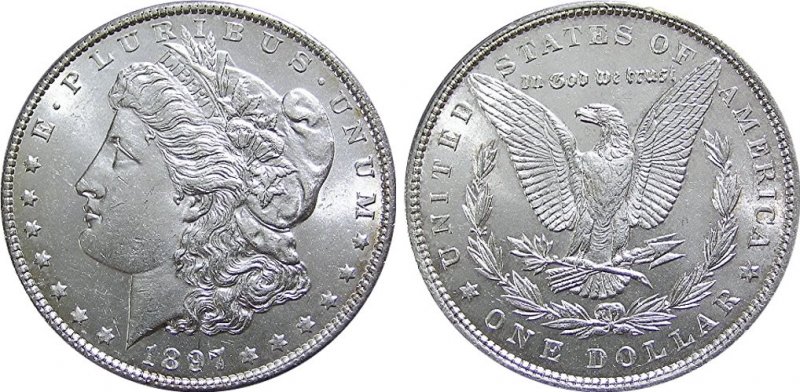 The image I took above also involves "lighting and angles". Do I think it could be copyrighted. No. So why can yours? Because it's toned? Because it's a prettier coin? |
|
Valued Member
United States
421 Posts |
I would say that picture definitely is more than just a rote copy of the design. There is light detail in the luster that was captured that renders it creative in my book.
I can go outside right now and take a picture of my house and to the layman, it would be just a good picture of a house. But I am pretty positive the photo would be eligible for copyright. I can't see how it would be different just because the object I am photographing is a coin.
It almost sounds like to me that your definition would lend very few photos of any object to being eligible for copyright and I just don't think that is the case. Most every definition I have seen of image copyright is "Original works of authorship fixed in a tangible medium of expression" and that is almost always expanded on by "Requires only a minimum amount of creativity". Most coin photos qualify the way I understand those statements.
|
|
Pillar of the Community
United States
830 Posts |
quote:
Originally posted by bobby131313
[quote]Do I think it could be copyrighted. No. So why can yours? Because it's toned? Because it's a prettier coin?
Bobby, I apologize if I gave that impression. No, my coin is no more "worthy" of being copyrighted than anyone else's. The fact of the matter is that I own the copyright as soon as I take the photo - NOT for the design of the coin, or the color, but for taking a photograph of it. You own the copyright on your photo as well, whether you want it or not. If you take a photograph of a tree, you own the copyright for that particular photo, but certainly not for the tree. That's the only point I was trying to make. |
|
Valued Member
United States
421 Posts |
After looking at a number of law sites and some cases (mostly dealing with copies of public domain artwork), the only exemption to a copyright on something I can find is if it is a 'slavish reproduction'. That means that there is no creativity or originality added to it at all. I can see a scan of a banknote meeting that criteria. Maybe a scan of a coin too in some cases.
But the majority of coin photos like what are shown here? I can't see it. The mere fact that you achieve a certain look through adjusting light, angles, post processing, etc adds the minimum amount of creativity and originality needed to qualify for copyright in my mind. I wouldn't want to argue slavish reproduction in court on the 2 photos posted here.
Now, is anyone likely to get hauled into court over using pics like that without permission? The odds are seriously against it. There are about 10 bazillion pictures on the Internet and probably 9 bazillion of them have been swiped from somewhere else and violate someones copyright. It ends up probably being more of a moral issue in all practicality since one's odds of someone actually spending their money to defend their copyright in court is pretty slim.
Edited by Stujoe
09/26/2006 11:46 am
|
|
Forum Dad
United States
24227 Posts |
Well, I think we could argue about this for a while and not agree. I think we'll just have to agree to disagree. As far as a court battle, in my opinion it would depend hugely on the jury. If you had a jury full of photographers or people that know people that make a living at photography or collectors that have ever tried to take a picture of a coin, you may be in trouble. If you had jury of people that are disconnected from photography and coins, I think you'd cruise right through with no problems. These people would look at the photos posted in this thread and say "Big deal, it's a picture of a coin". We know different but they don't. |
|
Pillar of the Community
United States
7123 Posts |
I think that the question as asked is to broad to be answered in detail,, there are such things as how and where the photo was disseminated IE was it posted to a public message board, were all appropriate disclaimers and exclusions listed ,, were any restrictions for use by the public denied in writing ,, our laws as cool as they are are filled with minutia that failure of any of the minute details renders them inactive.
|
|
New Member
Netherlands
8 Posts |
There are many pictures on the internet and the rights of each picture does belong to the photographer who took it.
I read something about ART...well also art pictures can be copyright, and I give you an example.
Lets say your a photographer takes pictures from a model...faceshot.
It can be art the way they make the pictures...but it,s the work of the photographer and the rights belong to him
as he was the one who took it. For this reason a model does sign for it...as he did hire her.
A picture from a coin can also be copyrighted as it can't protest against it or claim the rights
from as it is an object...a person can on the other hand claim this right if he or she did not
give permission to use the pictures.
Still te best way to protect pictures, at least if you own the rights and dont want others to use them, is to mark them.
An example for coins can be seen on my site...
There is also called a public domain...for pictures...they belong to all but only
if the pics has been released for the public...like on the stock exchange.
|
|
Rest in Peace
United States
2684 Posts |
Just to throw gas on the fire, I did a Google on "copyrighting photographs" and came up with a LOT of sites. It appears any photograph of anything can be copyrighted for a $45 fee and with the correct application form. http://photography.about.com/cs/bus...opyright.htmhttp://www.copyright.gov/From the above US Copyright Office site: "Copyright in a work that portrays a useful article extends only to the artistic expression of the author of the pictorial, graphic, or sculptural work. It does not extend to the design of the article that is portrayed. For example, a drawing or photograph of an automobile or a dress design may be copyrighted, but that does not give the artist or photographer the exclusive right to make automobiles or dresses of the same design.". The way I read it, any person can copyright any pic of any coin (or a pic of anything else for that matter), but not of the object being photographed (in this instance, a coin). But, why would anyone want to do so when somebody else can come along, take a pic of the same coin and copyright that picture? There might be isolated examples of images of specific rare coins (say, an 1804 Bust dollar) in which the owner of the coin wants to protect the coin's ownership by photographing it for the record, then copyrighting it such that he has a legal basis in the instance that someone else attempts to state that the coin belongs to him. Just my two FECs. Fred |
|
Valued Member
United States
421 Posts |
quote:
Originally posted by Morgan Fred
Just to throw gas on the fire, I did a Google on "copyrighting photographs" and came up with a LOT of sites. It appears any photograph of anything can be copyrighted for a $45 fee and with the correct application form.
Just to clarify...That is just for registering the copyright which is necessary to bring a lawsuit and collect damages but it is not a requirement for a copyright to exist. A copyright exists from the moment of creation. From: http://www.copyright.gov/help/faq/faq-general.htmlDo I have to register with your office to be protected?
No. In general, registration is voluntary. Copyright exists from the moment the work is created. You will have to register, however, if you wish to bring a lawsuit for infringement of a U.S. work. See Circular 1, Copyright Basics, section "Copyright Registration." quote:
Originally posted by Morgan Fred
But, why would anyone want to do so when somebody else can come along, take a pic of the same coin and copyright that picture?
Probably for the same reason anyone would want to have a copyright any image be it a coin, a landscape, a tree, etc. It exists to give ownership and control over your work. If someone uses your work for profit without permission, it is your money they have taken. But that is probably why you aren't going to see a lot of lawsuits over a coin image. Lawsuits are expensive and damages would not be high. |
|
Pillar of the Community
Czech Republic
803 Posts |
There is a thin line between illegal and immoral when it comes to photo copyright. It's immoral to use someone elses work without giving them credit for it (just add something like "image courtesy of so-and-so when you post), and it becomes illegal when start talking about making money off of this photo. To make this clearer - if your using of someone elses photo affects their financial situation in any way - it can be grounds for a lawsuit.
At least that's what I remember from my digital copyright class. You have to keep in mind that issues with digital media have only been appearing in the last 5-or-so years and most of the conventional non-digital laws do not apply, while correction to these laws have not been made yet to include digital.
~Roman
Edited by TwoKopeiki
10/05/2006 09:31 am
|
|
Page 3 of 3
|
Replies: 35 / Views: 7,991 |
Page 3 of 3
|








 First Page
 Previous Page


 Posted 09/24/2006 11:31 pm


