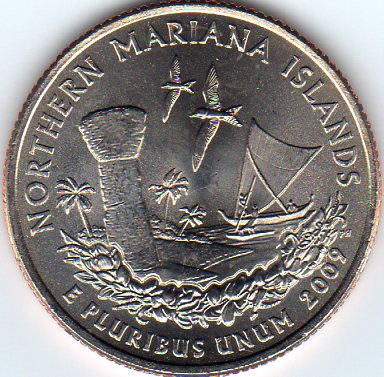
| Author |
 Replies: 25 / Views: 4,609 Replies: 25 / Views: 4,609 |
Page 2 of 2
|
|
|
|
Valued Member
 United States
91 Posts |
|
|
Valued Member
United States
91 Posts |
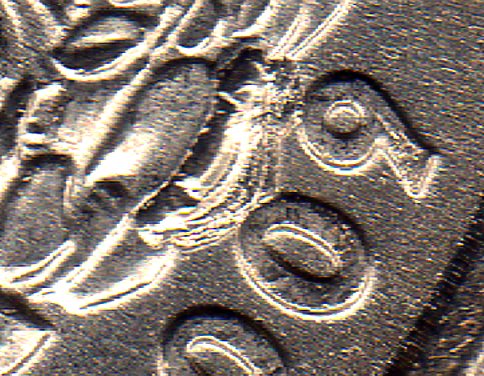
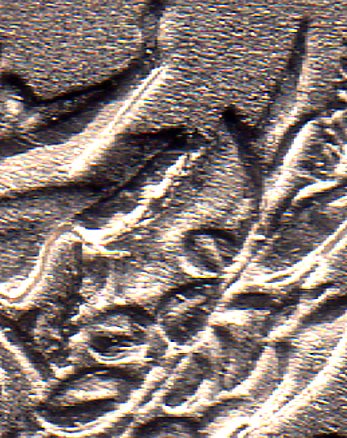
The image (banner look) isn't a gouge. It is all above the surface of the coin and is the result of a "U" shaped die crack above the 09 in 2009.
|
|
Valued Member
United States
91 Posts |
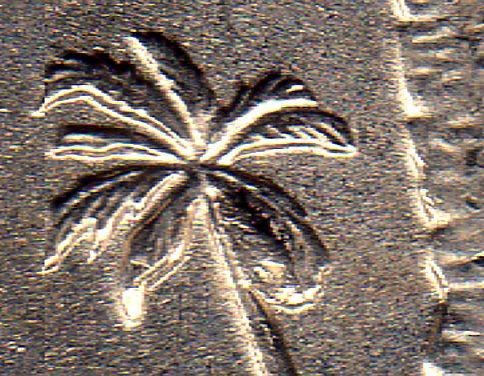
The Image of the Coconut in the tree is the result of a die crack that ran down that specific branch in that tree.
|
|
Valued Member
United States
91 Posts |
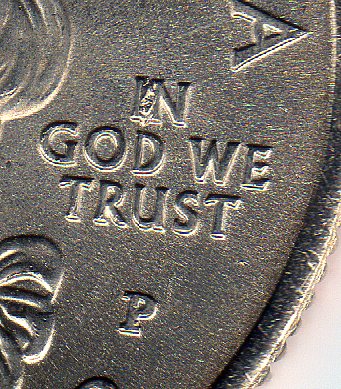
One more Cud on this specific quarter which is located inbetween the "IN" on the obverse. 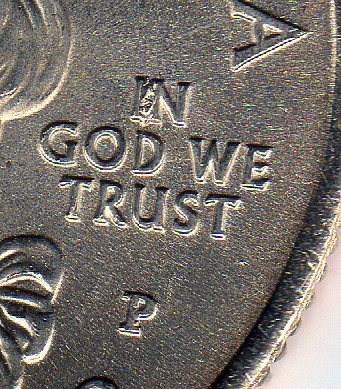 |
|
Pillar of the Community
United States
1882 Posts |
That isn't a Cud...it's a die break between the "I" and the "N". |
|
Valued Member
United States
91 Posts |
Can the result of a die break be a Cud? It seems confusing reading various definitions on these. What I don't understand is if there is a die break and the progressive result produces metal protruding from it, would it be a Cud or what please? |
|
Locked
822 Posts |
Quote:Some experts in the error-variety hobby insist that for the blob to be called a Cud, the damaged part of the die must include part of the edge of the die. Although this is the purist definition, in common parlance you'll see the term " Cud" used to describe the blob created by any die chip or serious die crack, regardless of its placement on the die or coin. OK, let's really read it now. "Although this is the purist definition" ..... Another word for "purist" is "correct" ..... Just because tons of people throw around the word Cud incorrectly referring to the interior doesn't make it right, it just makes tons of people wrong. |
|
Pillar of the Community
United States
1882 Posts |
A Cud is on the edge of the coin. If I understand you correctly, you are asking what to the result of the die break is called. When looking at the coin, it is called a die break. It shows as a raised section or blob on the coin. Just like a coin from a doubled die is referred to as a doubled die. Similarly, a coin with a die crack on it is really the result of a die crack. You aren't seeing the die crack itself. If someone says, "That's a die gouge", it is raised on the coin. Because the gouge is on the die. And another: you see fine, raised lines on a coin, and someone tells you those are die polish lines. The die polish lines happened on the die, and are shown on the coin. Hope that makes some sense. Edited by steve199
04/16/2010 6:27 pm
|
|
Valued Member
United States
91 Posts |
Scubu . . .I like the way you put that  |
|
Valued Member
United States
91 Posts |
BTW. . . am just curious if anyone has run across this specific die break on the Northern Mariana Quarter. I found about 30 or so coconut looking ones and only about 5 with the coconut and banner look. These came out of the 100 count bags I had gotten from the mint. Anyone else?
|
|
Valued Member
United States
91 Posts |
|
|
Bedrock of the Community
United States
12437 Posts |
As I stated earlier- Quote:A genuine Cud is an error caused by a die break affecting the face and shank of a die. Since the shank must be affected, a Cud will always emanate from the edge of the coin. |
|
Valued Member
United States
91 Posts |
Yes Bio... I am learning  |
|
Bedrock of the Community
United States
12437 Posts |
I suppose it would be good to provide a visual aid of what a die looks like, a State Quarter die in this case-  The shank would be the smallest cylindrical portion below the face of the die. Edited by biokemist6
04/16/2010 11:34 pm
|
|
Valued Member
United States
91 Posts |
Cool...as I have never seen this
|
|
Page 2 of 2
|
Replies: 25 / Views: 4,609 |
Page 2 of 2
|







 First Page


 Posted 04/15/2010 2:57 pm