| Author |
 Replies: 18 / Views: 2,232 Replies: 18 / Views: 2,232 |
Page 2 of 2
|
|
|
|
Valued Member
United States
383 Posts |
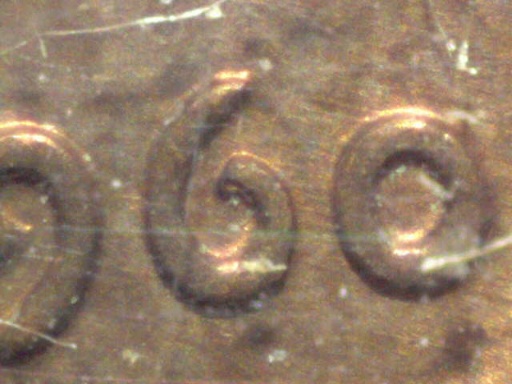
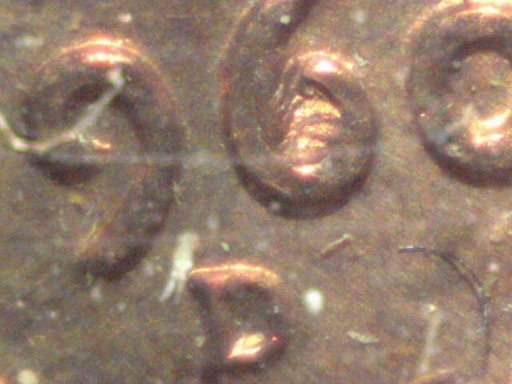
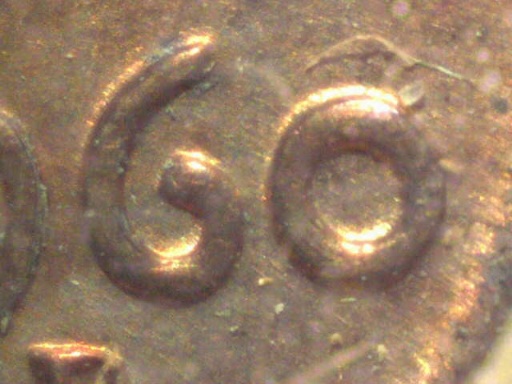
That is a normal 6 for the small date.
|
|
Pillar of the Community
United States
7123 Posts |
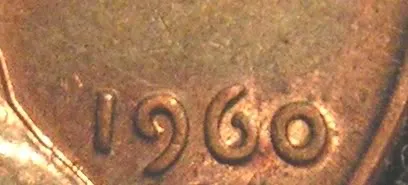
I cant tell for sure , but I think that is a large date 6,, Breens does not list this particular coin,, but it is not the small over large date variety,, those are known to occur on the 60-D and Proof 60 cents,, the doubling look like Mechanical Doubling on the 6 in the photo. Rick |
|
Pillar of the Community
 United States
5362 Posts |
Joeyuk - is there a site where they post a clear picture of all the digits of the small date? I wish I could show the rest of the coin here. But the file is simply huge and I can't figure how to get it down to reasonable size. The 9 also has a very odd looking feature. It definitely seems to be a round over square tail. That could be a hub feature and all small date 1960 coins may have it. I checked Breen and this is definitely a small date die because the 1 in the date is clearly HIGHER than the 9 - but he shows neither of the features I see here. Why doesn't Breen mention it? These two features are far clearer to me than the position of the 1. I now have found 5 identical copies of the 1960 with both features - four are identical down to the die scratches but the 5th copy is from a much later die showing deterioration and additional rather deep scratch lines with a totally different orientation. Anyway, here is the tail of the 9. I also checked the copper website but couldn't get it to work this morning. I will try again later. 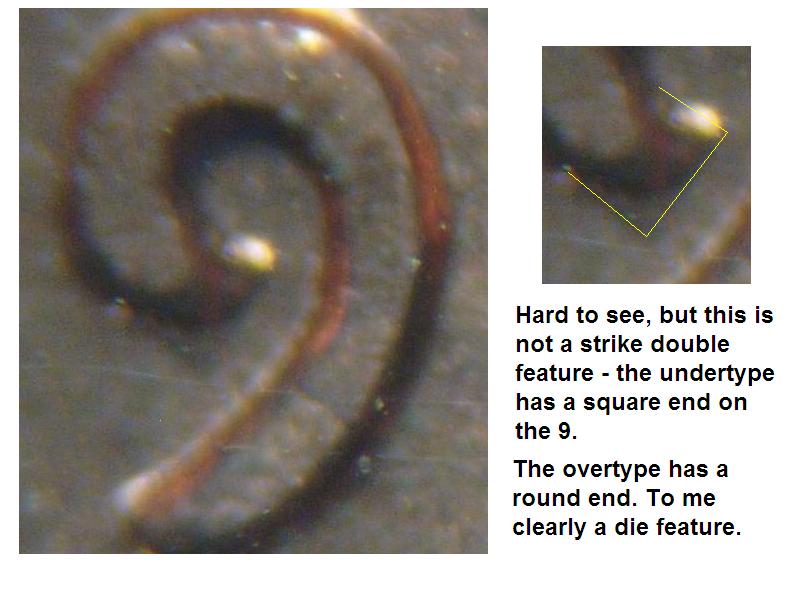 Metalman Metalman - I don't think this is a striking double. I am finding some of those as well and this one is different. It could be a hubbing double where the master hub moves during the hubbing process but even that seems doubtful. I think it is two different master hub impressions one over the other. Here is one of the mechanically (strike) doubled coins that I have found so far. Again pardon the size but the coin is a 1957 D. All 4 digits of the date show Strike Doubling - I picked the 9 because on that digit the lower shelf like appearance is the clearest. 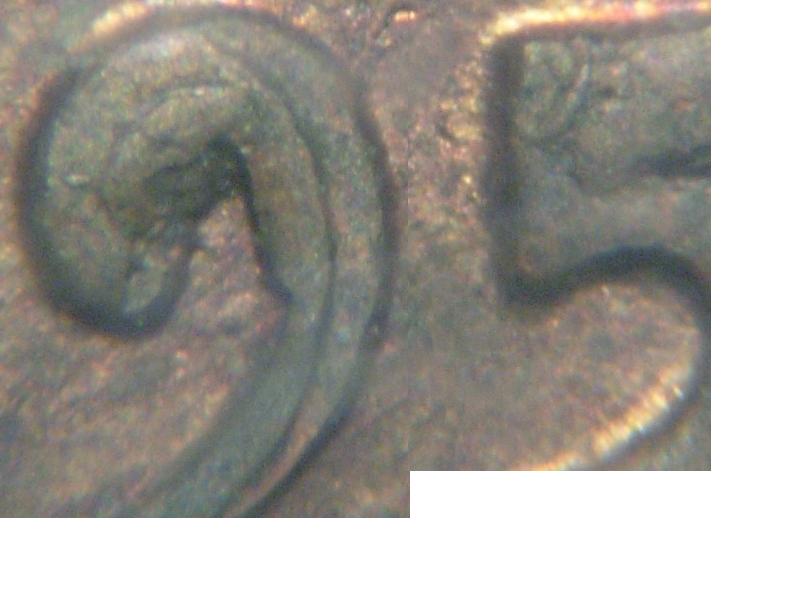 Looking through this old accumulation is increasing my interest in US coins a small amount. I don't think I will give up on counterfeits or substitute US for Mexican any time soon, but these die varieties were not that well know when I made the conversion away from modern US to the early Republic issues. So this has become a learning exercise for me. I have found two more RPMs both 1960 D and I am just now appreciating how many of these there are. So far I have searched only 50 loose coins. This project will likely take all winter. Not a great investment cost/time ratio. But fun.
|
|
Pillar of the Community
United States
7123 Posts |
Bob
Are any of the other design details doubled ? In your senario there would be multiple areas of doubling on the coin.
Rick
|
|
Valued Member
United States
383 Posts |
The following link is to the die variety search feature on coppercoins site for 1960 cents. Page 11 starts some small date coins. Start with 1960D-1MM-101 and look at the pics. They show the same 6 you have and they are only listed as RPM's. They have many small dates listed with a pic. showing the 6. http://www.coppercoins.com/diesearc...1960&page=10Here is what all the coins in my 1960-D sm date roll look like. I never noticed it before but you can see the 9 is squared off. 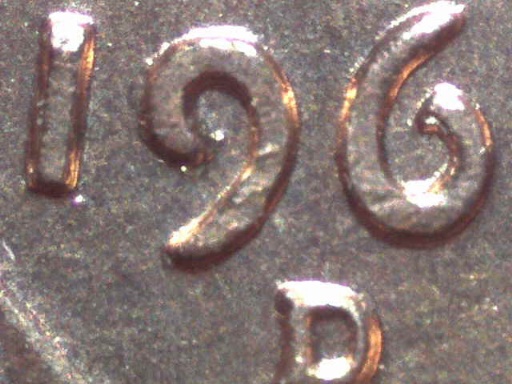 Edited by Joeyuk
09/08/2006 8:35 pm
|
|
Bedrock of the Community
United States
14454 Posts |
swamperbob email me and I will send you my email address and you can email me those pictures and I will resize them for you and then upload them for you as well that way you can get all the pictures you want uploaded so everyone can see what you are refering to
|
|
Pillar of the Community
United States
5362 Posts |
Joeyuk - correct me if I am wrong but doesn't the citation under 1960D-1MM-100 which says "This die is also listed as 1960D-1DO-001." mean that at least someone classified it as a Doubled Obverse die? Now that could simply mean that all small dates may in fact be double dies (created from a doubled hub) and that the 1DO reference has since been dropped.
Your 1960 D clearly shows the same squared tail under the round tail as my P versions - so until I find a small date without these features I will assume that all small date coins P and D share this common hub variety.
Metalman on two of my copies I see one or two letters primarily the angle of the G in IN GOD WE TRUST where there seems to be a doubled corner. Since it requires a particularly strong/clear strike to see the "split" - not all the coins exhibit that feature.
|
|
Valued Member
United States
383 Posts |
The 1960D-1DO-001 is the small date hubbed over the large date when they made the die. The pic. on Chucks site shows it very prominant on the 0 in the date. if the doubling in the 6 was part of that the doubling in the 0 whoud be present on all small date's. Here is a pic. of the small/large date. 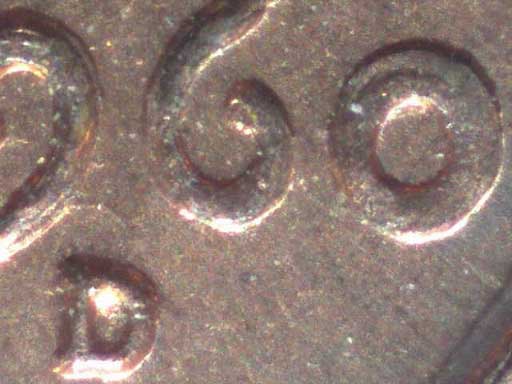 |
|
Bedrock of the Community
United States
14454 Posts |
Edited by Bryan1315
09/08/2006 9:35 pm
|
|
Pillar of the Community
United States
5362 Posts |
OK - I think I see what happened. The hub that created all the small date dies had the two features that I noted - the double tailed 6 and the round over square tail 9. On that last picture of yours it appears that the tail of the 6 has an extra line - a doubling of the hub feature.
I have not opened any of the 1960 D small date rolls - but when I do I will confirm that the double tail is on all of them.
|
|
Pillar of the Community
United States
891 Posts |
Here is one I pulled from a roll. 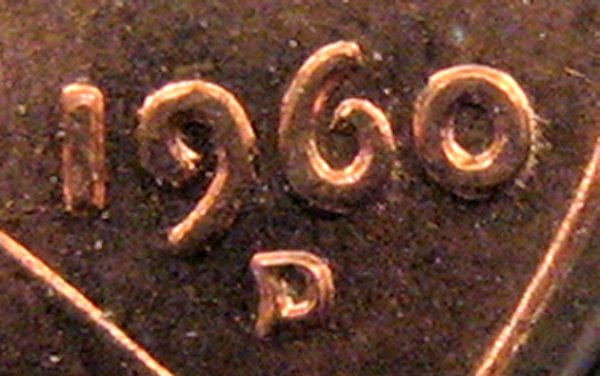 |
|
Pillar of the Community
United States
7123 Posts |
I have several examples of the small date 60-P that do not show the attributes of yours.
Rick
|
|
Pillar of the Community
United States
5362 Posts |
Metalman - do you have any pictures of the 96 ? If all of the coins do not have the feature then there has to have been more than one small date hub used.
|
|
Pillar of the Community
United States
7123 Posts |
 Bob how many working hubs do you think were made for these cents ? There had to be at least four,, both large and small date P and D . Rick |
|
Pillar of the Community
United States
5362 Posts |
Metalman - I may be slightly off when it comes to modern US die making practices but I think there was One Master hub used to make Working Hubs that then made working dies. The working hubs are "positives" while the Master hub and Working dies are negatives. So in 1960, there had to be one small date master hub and some unknown number of large date master hubs (possibly one). Working hubs were made from the master hubs WITHOUT mint marks. The mint marks were added to each die individually at the mints. So since all examples of small date coins contain the same two odd features - I presume that it was simply a feature on the Master Hub that created all of the small date Working hubs and dies. Minor changes (weakening of the features) is attributable to wear of the working hub. As to how many dies existed with the small date - I don't know - the mint records might give a total number of dies but I doubt that they were aware of the change in design until it was too late. They don't like to make "varieties". So I doubt you can get anything more than an estimate of how many dies were involved.
|
|
Page 2 of 2
|
Replies: 18 / Views: 2,232 |
Page 2 of 2
|





 First Page


 Posted 09/08/2006 07:57 am