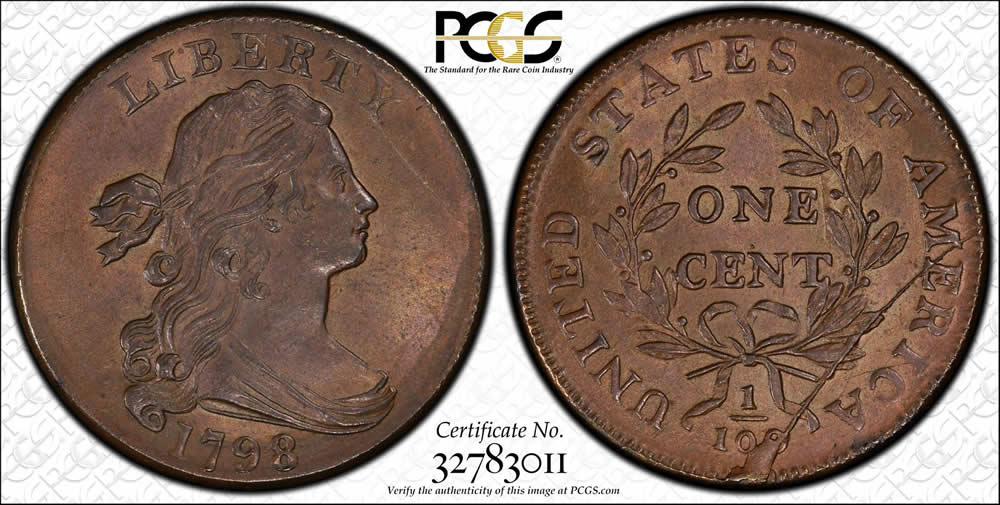
PCGS - PCGS experts draw from a wide range of techniques and technologies to verify the authenticity of frequently counterfeited coins. Sometimes, however, the quickest weapon is simply to have done your numismatic homework. Consider the following 1799 Cent recently submitted for authentication and grading. Do you notice anything suspicious? No magnification necessary!
The Aristocrat Among U.S. CentsOne of the most famous rarities of early American numismatics, the 1799 was called "the aristocrat among U.S. cents" by Theodore J. Venn in his 1915 work on the series entitled Large United States Cents: A Monograph on the Big Copper "Pennies" Coined by the U.S. Government from 1793 to 1857. The issue's scarcity was widely noted after the transition in 1857 from large cents to "small" cents, which are of the physical size most collectors know today and ignited an immediate interest in the departing diameter. Most found the 1799, along with the ever-elusive 1815, among the last to be located for their collections, while rumors of wild prices for choice specimens built an increasing romance around the final cent of the 18th century.
Coveted and scarcely attainable even at the dawn of numismatic consciousness in the United States, the 1799 was in all likelihood the most counterfeited of all
US coins until the advent of mintmark rarities provided easier targets for alteration. Another of Venn's notes indicates the problem's prevalence even a century ago: "the greatest danger lies in the altered dates of the 1798 cent." Luckily, the issues are distinguished by much more than the date alone.
 Read the entire article
.








 Posted 01/30/2020 4:26 pm


