Collectors of the classic series of US commemorative coins (1892-1954) are likely familiar with the 1928 Hawaiian Sesquicentennial Half Dollar. The coin was issued to mark the 150th anniversary of the Hawaiian Islands being visited by the British Captain James Cook in 1778 during his Third Voyage; Cook named the islands the Sandwich Islands after John Montagu, fourth Earl of Sandwich, First Lord of the Admiralty - Cook's patron.
Side Note: The name of the islands transitioned to the Hawaiian Islands (after Hawai'i, the largest island of the chain) in 1840 when the islands were name as such in Hawaii's first constitution..Folks in the United States are mostly aware of Hawaii becoming the 50th US State in 1959, just a few months after Alaska (August vs. January). It was in 1959 that the US Congress considered Hawaii to have met all criteria for Statehood; it thus passed the Senate bill calling for the Territory's transition to a State of the Union. This was formally accomplished via the "Hawaii Admission Act" approved on March 18, 1959.
The Act found that the Hawaii State Constitution was "republican in form and in conformity with the Constitution of the United States and the principles of the Declaration of Independence, and is hereby accepted, ratified, and confirmed." The Act became effective on August 21, 1959 when President Dwight David Eisenhower signed and issued Proclamation 3309.
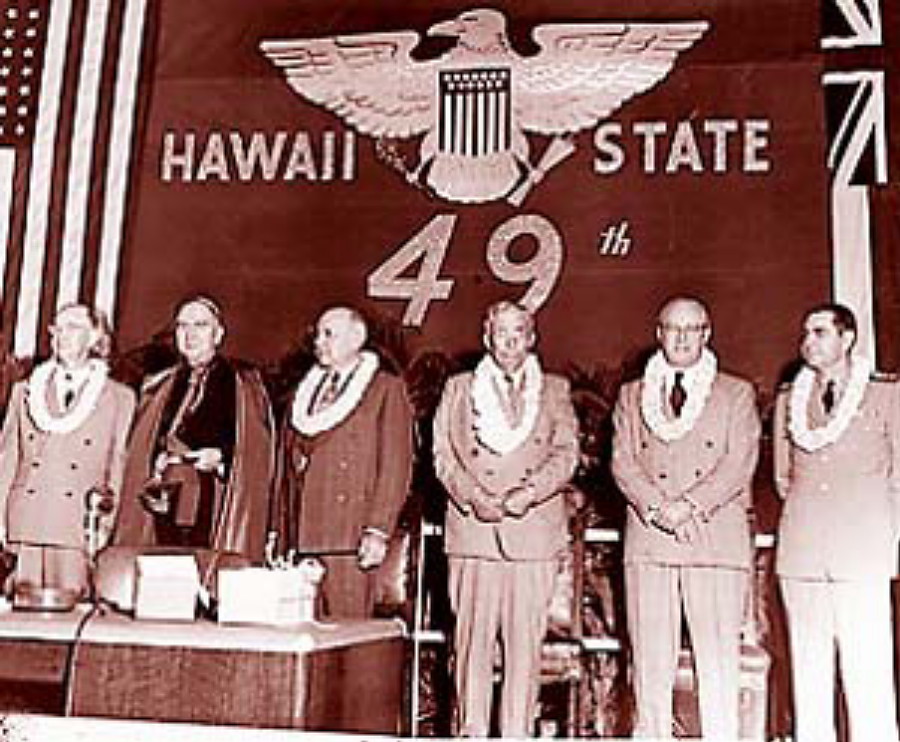
Almost a decade earlier, however, on November 7, 1950, the people of Hawaii went to the polls and voted to approve the Hawaii State Constitution - one of the criteria for Statehood. The vote was 82,788 to 27,109 for - an approval for statehood via 75% of the vote.
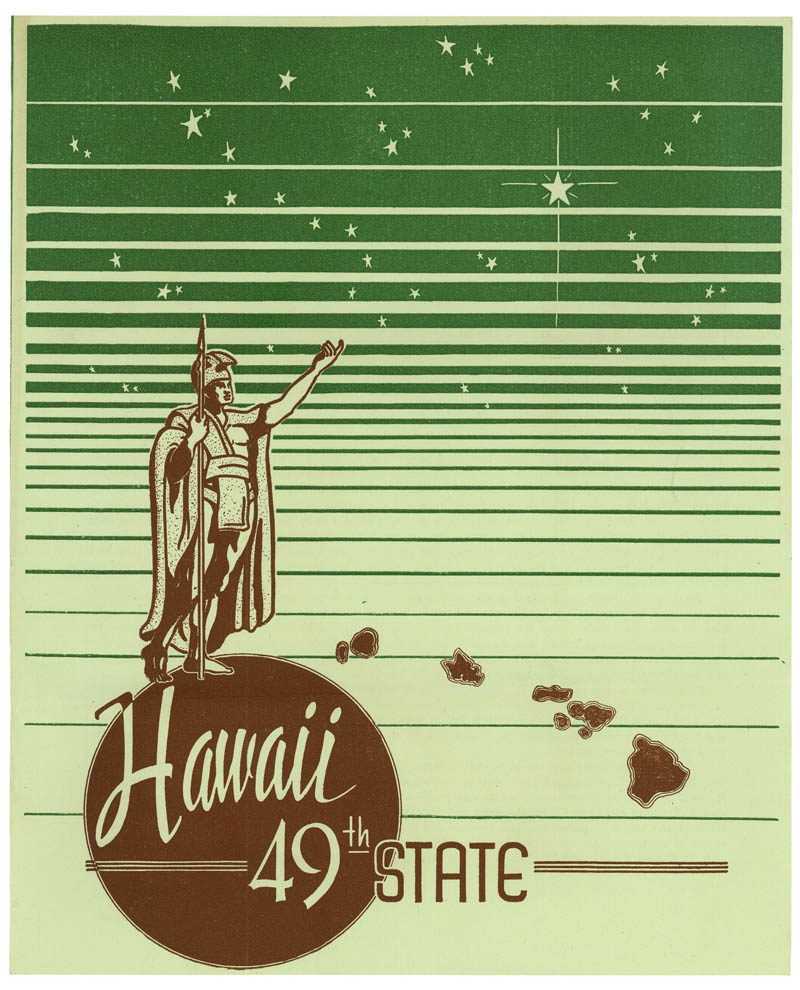
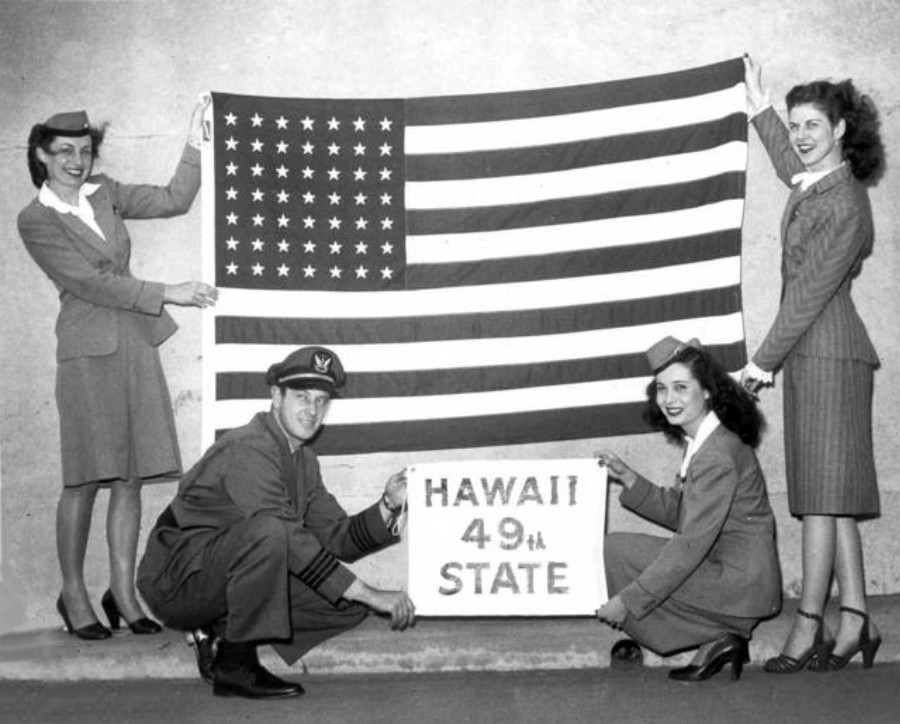
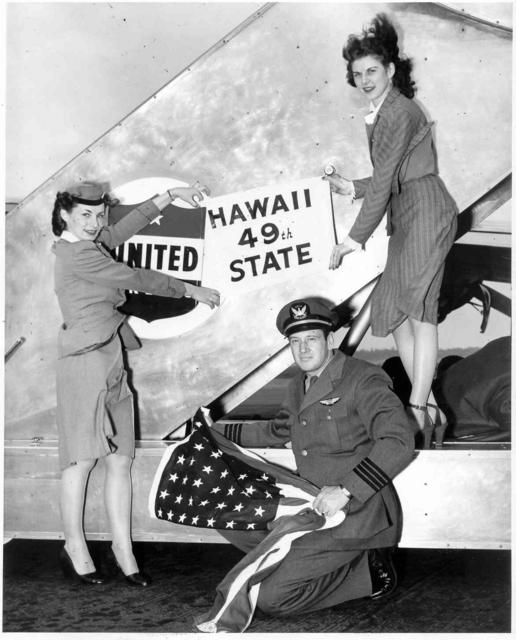
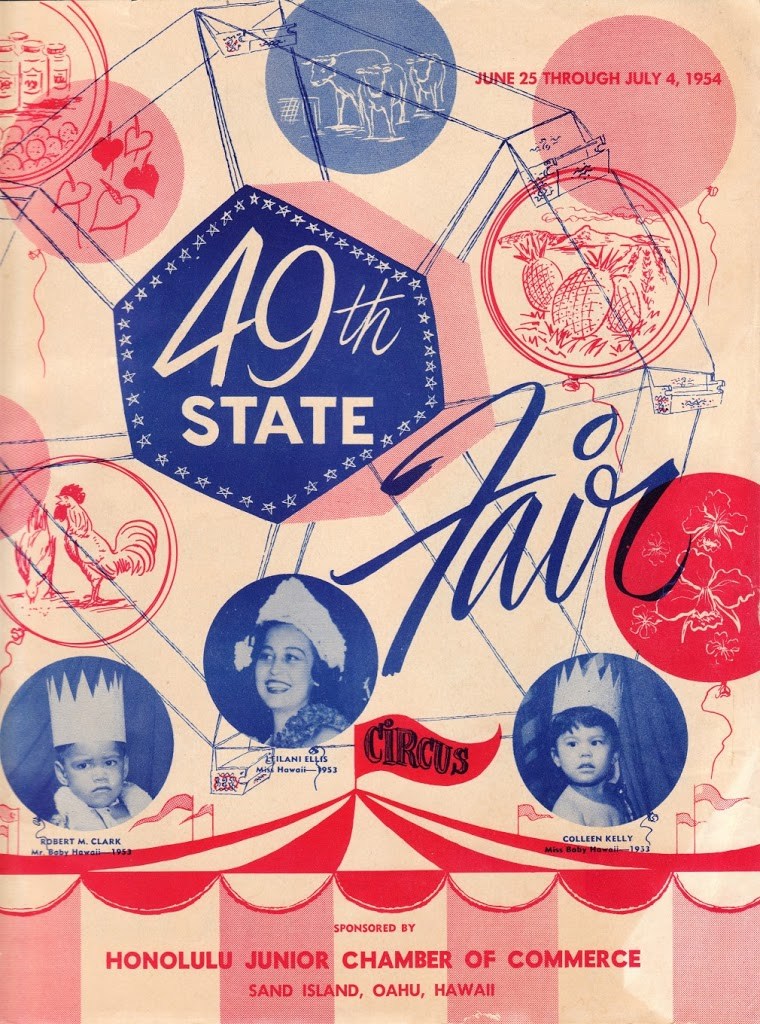
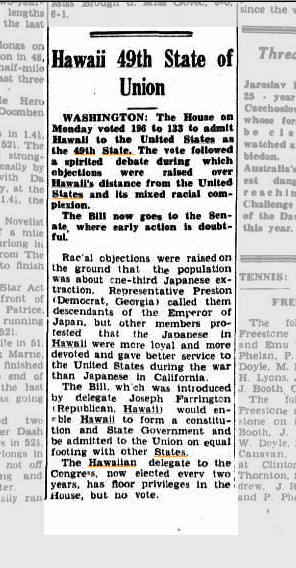
It was in anticipation of this vote that Representative Joseph Rider Farrington, the Delegate to Congress from Hawaii, introduced a bill in the House that called for half dollars "in commemoration of the admission of the Territory of Hawaii to the United States as a State." Farrington introduced the bill in September 1950. It was a bit premature, however, as there was still work to be done before the vote in Hawaii would result in the formal admission of Hawaii to the Union.
The bill's language (i.e., included provisions) appears to have been calling for a circulating commemorative coin vs. a privately-sponsored piece. The bill did not list a sponsor for the coin, did not include an expiration date for coinage and did not include the standard requirement that the coin be struck only if at no cost to the US Government. In addition, the bill was TBD in regards to the number of coins to be struck. It also did not specify a year/date to appear on the coins, keeping their issue a bit open-ended. It's possible it was just a poorly-worded bill, but, considering how many commemorative coin bills had previously been successfully introduced in Congress, there were many templates available to Farrington to give him a solid start on what to include if a privately-sponsored/fund-raiser type of coin was sought.
The bill did specify, however, that the coins were to feature "the proposed Seal of the State of Hawaii."
Adopted Seal of State of Hawaii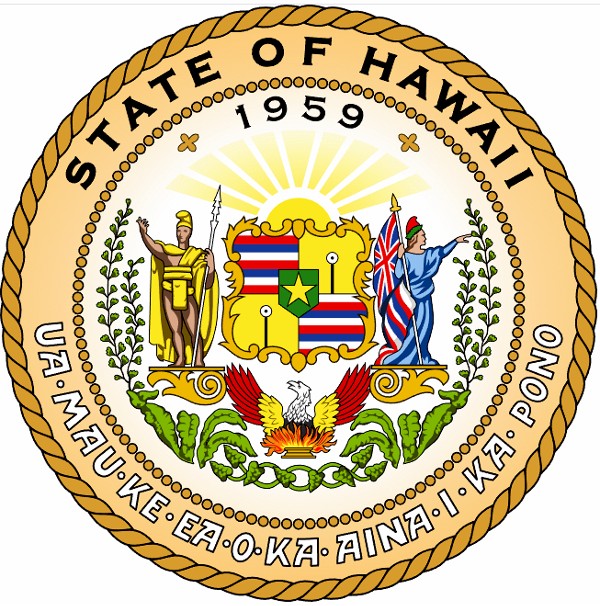
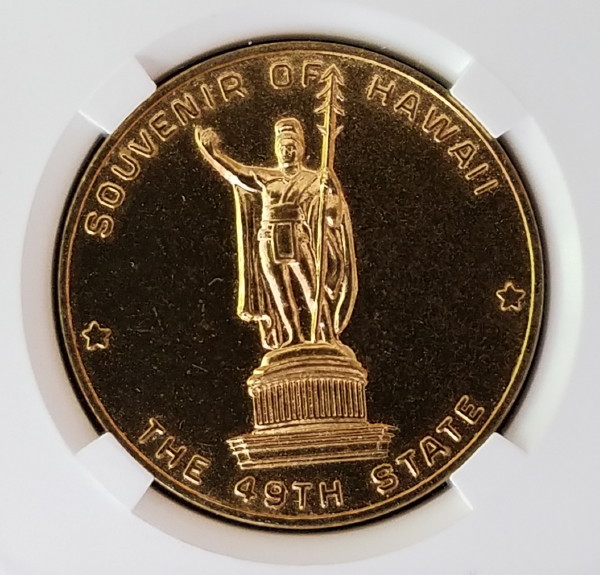
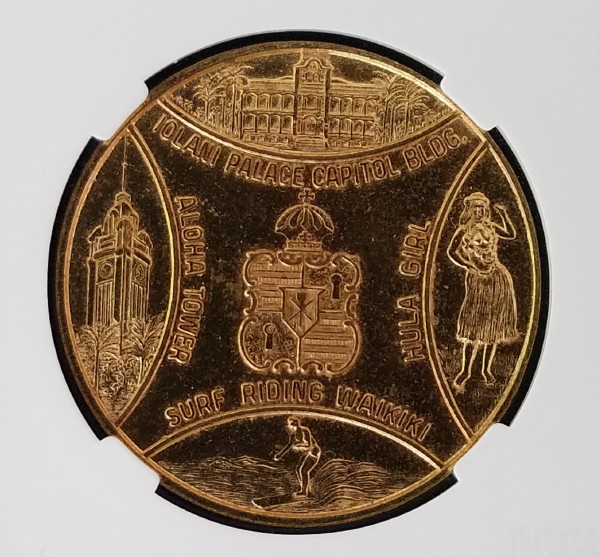
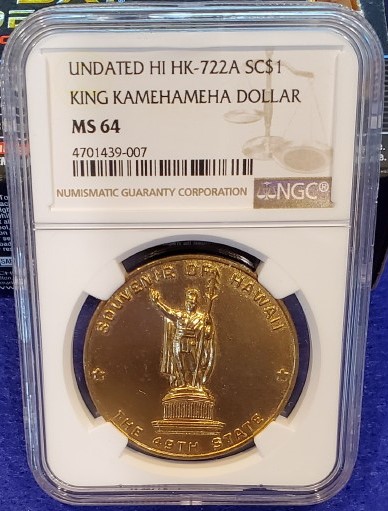
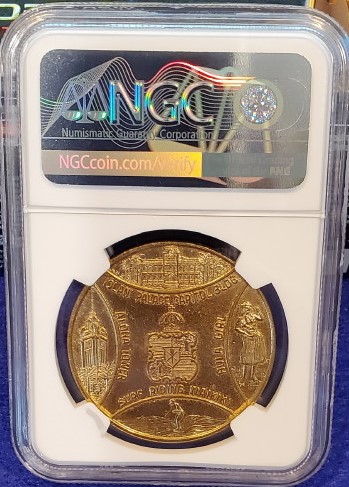
The bill was referred to the House Committee on Banking and Currency, but was not acted upon or reported out by the Committee. So, no Hawaii Statehood half dollar. When Hawaii was formally admitted to the Union in 1959, a number of privately-struck medals and tokens were struck to celebrate; the US Mint was not engaged in the striking of any commemorative coins/medals for the event, however.
Hawaii Trivia: Hawaii is the only US state to include a second language (in addition to English) as an official language. The Hawaii Constitution, per a 1978 revision, specifies that Hawaiian. the native language of the islands, is also an official language).For other of my topics on commemorative coins and medals, including more What If? stories, see:
Commems Collection.










 Posted 10/17/2022 7:18 pm


 .
.