Quote:
Does "2/5 Surface" indicate an overly aggressive cleaning in the past?
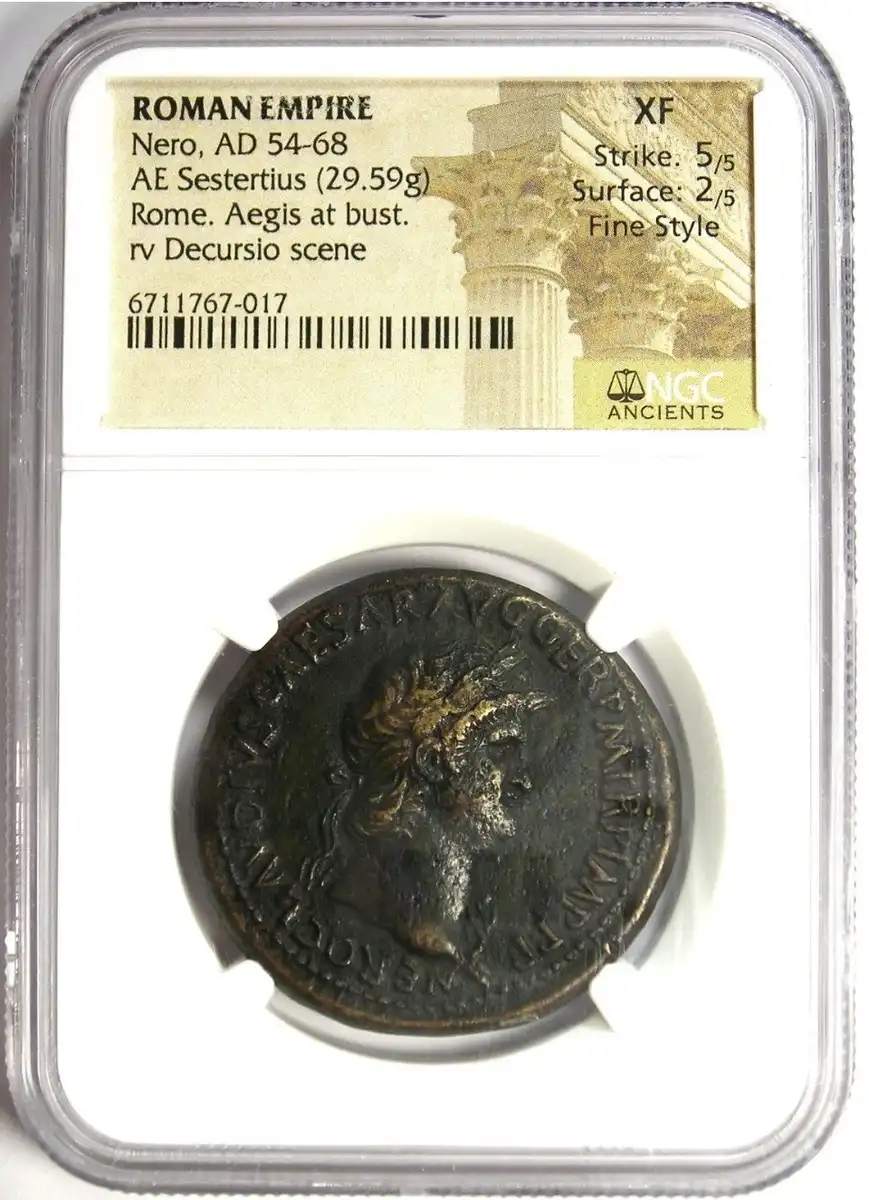
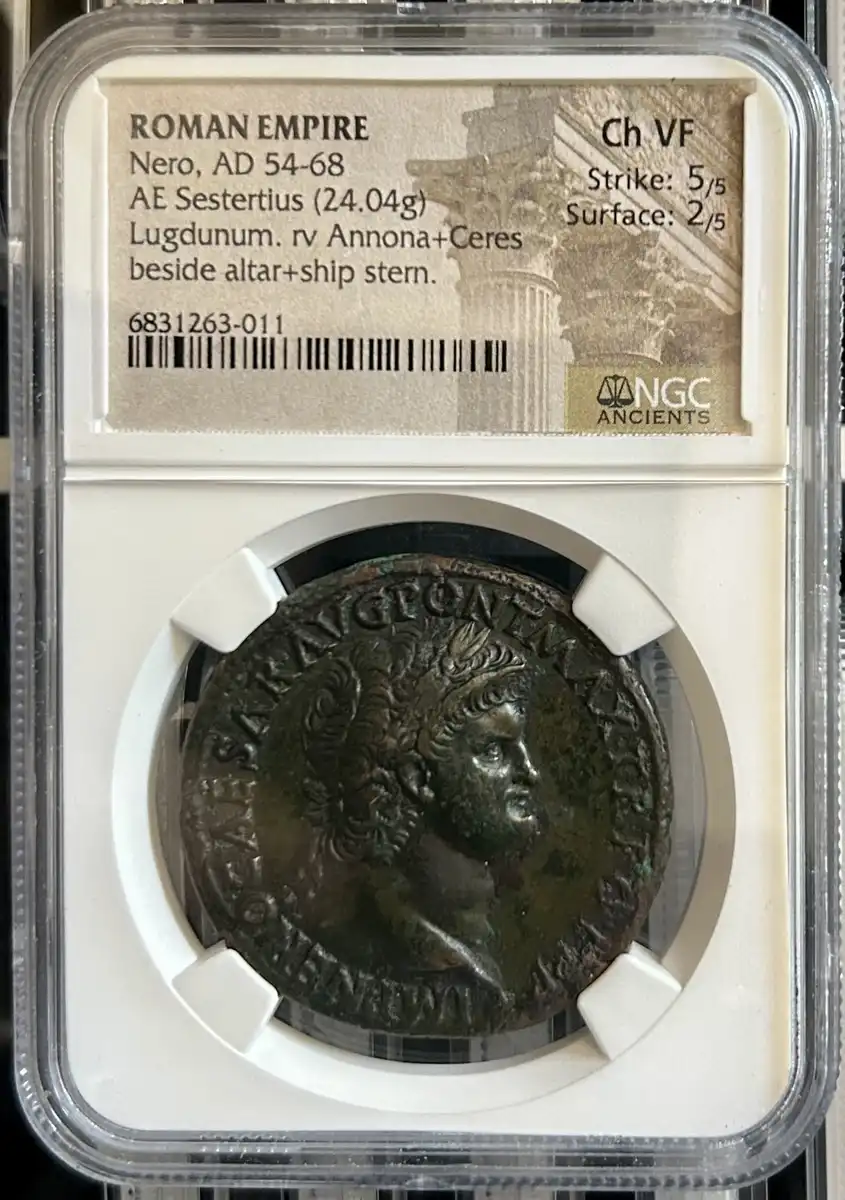
Sometimes, but not always. The "surface" component of the grade reflects the degree of intactness or originality of the coin's original surface - "original" being "the surface it had when it was originally lost and buried". In this context, "wear" does not reduce the "surface" quality.
Things that affect "surface" would include harsh cleaning, but would also include corrosion, physical damage from plough or trowel, or simply indentations caused by compression into dirt. As a general rule, "low surface" will have as it's chief symptom "porosity" - cratering like a mini-moonscape, looking like the surface of the coin is either corroded, or corrosion was removed by harsh chemicals.
Note that it's possible for a coin - particularly a copper, brass or bronze coin - to have "good surfaces" and yet still be covered in green corrosion. An ancient bronze coin's patina can be quite thick, up to several millimetres thick - which means that "the original surface" is not even preserved in the raw metal of the underlying coin, but in the patina - in effect, the coin's original surface is kind of like a fossil, where the original metal has been replaced by minerals from the surrounding soil. Strip away this thick patina by overly zealous cleaning - the proverbial "strip the coin all the way back to bare metal" - and you will completely remove that original surface, giving you a 0/5 score.
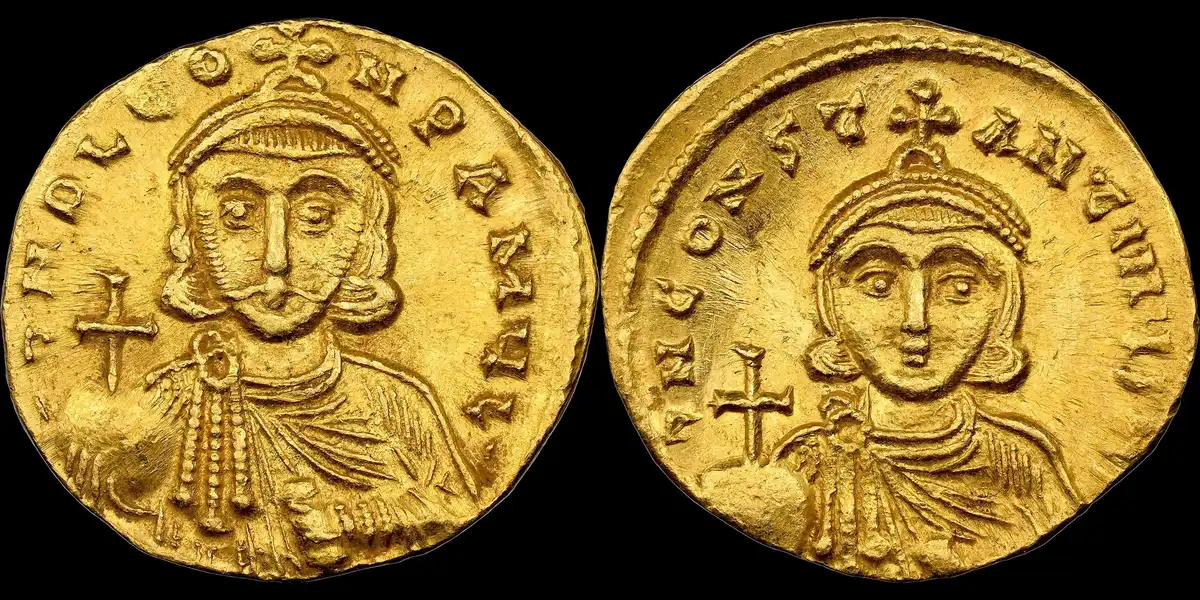
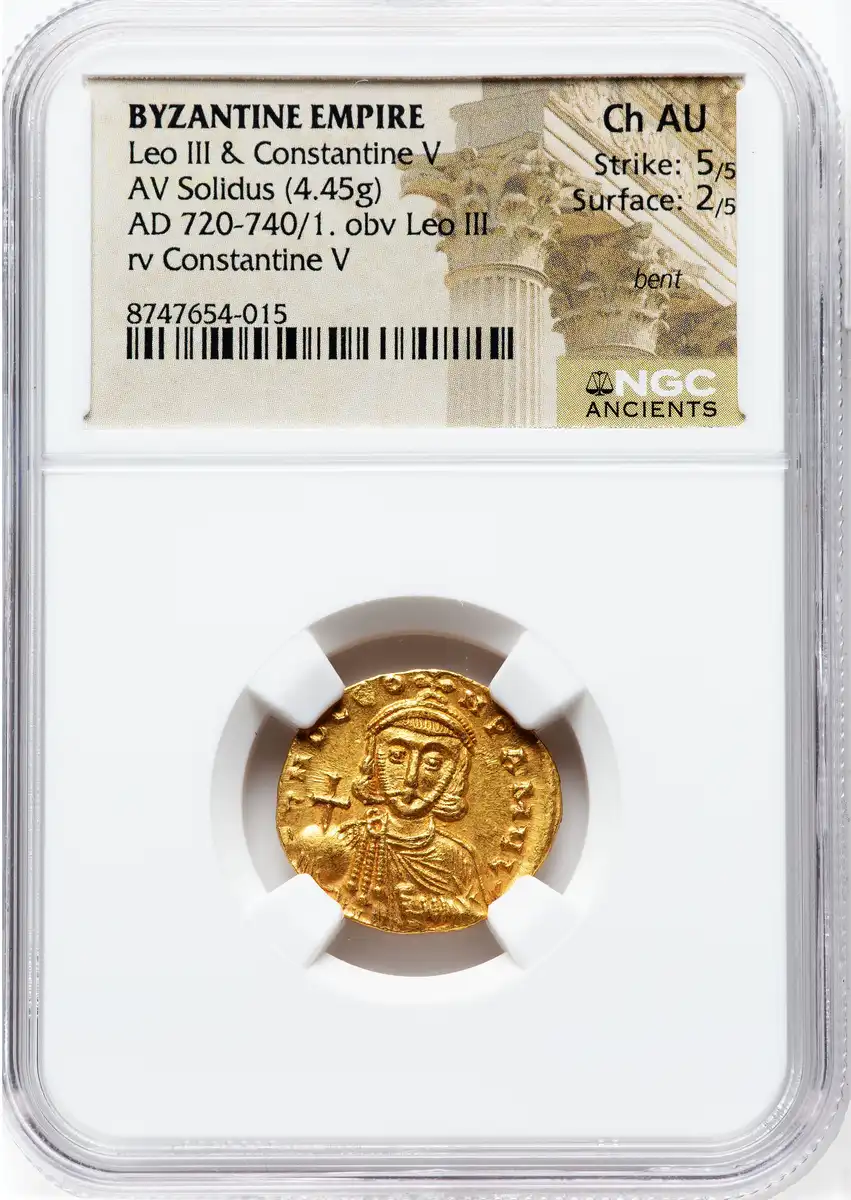
For a high-purity gold coin like the OP coin, corrosion of the coin itself should not be a problem - the surface damage is likely going to be physical (from the coin being in direct contact with something underground). There's also indications on this coin that it may have been buried with other metallic objects (either baser-metal coins or something else), and that other metal has corroded, causing secondary corrosion-like damage to appear on this coin. That, at least, would be my explanation for the staining on the emperor's shoulder and onthe reverse around the N of CONST, and the "rough spots" on the E in Leo and the cross atop the emperor's crown. That, I would assume, is the kind of burial-related damage that's causing the low-surface rating.
Don't say "infinitely" when you mean "very"; otherwise, you'll have no word left when you want to talk about something really infinite. - C. S. Lewis









 Posted 06/19/2026 09:03 am