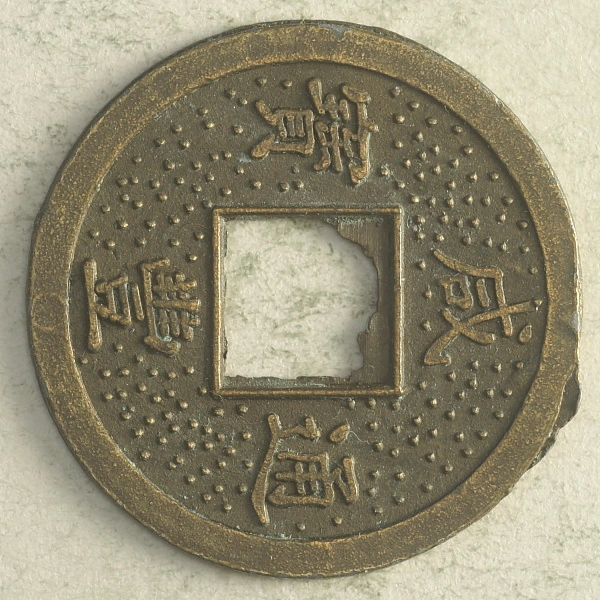
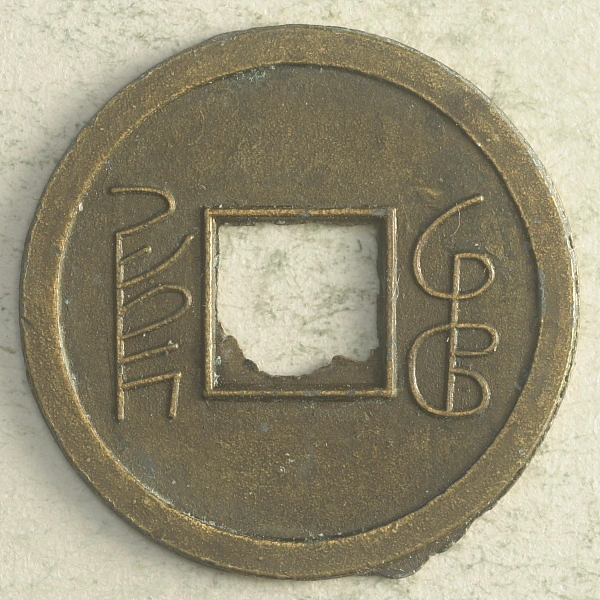
Yes, it is an imitation of a cast Xianfeng cash, Revenue mint. The dots, as already noted, are a dead giveaway as to the fakeness- the dots are there to give some kind of representation of the grainy, sandy background that a genuine cast cash coin has. And while the Chinese characters are quite clear and legible, the Manchu script on the reverse (which on genuine coins gives the mint-name) is quite sloppily written. Curiously, these types of replicas are normally machine struck, but this particular example has clearly been cast - so what we have here is a cast copy of a machine-struck copy of a cast coin.
Replica cash coins are very popular in the "Feng Shui crowd", for making traditional-style charms and amulets. Assembling sets of 12 coins, one from each Qing Dynasty emperor, is a common motif with these charms, which is why replicas in the name of all 12 emperors can readily be found. Indeed, I have read that the common teaching is that replica coins are actually "better" for turning into charms, because genuine old coins might have picked up bad vibes over the past 200-plus years since they were made so would need to be ritually cleansed before use.
Don't say "infinitely" when you mean "very"; otherwise, you'll have no word left when you want to talk about something really infinite. - C. S. Lewis







 Replies: 5 / Views: 89




 Posted Today 3H 11M ago


