









 to the Community!


 Posted 01/21/2026 6:48 pm


Hello and welcome. 
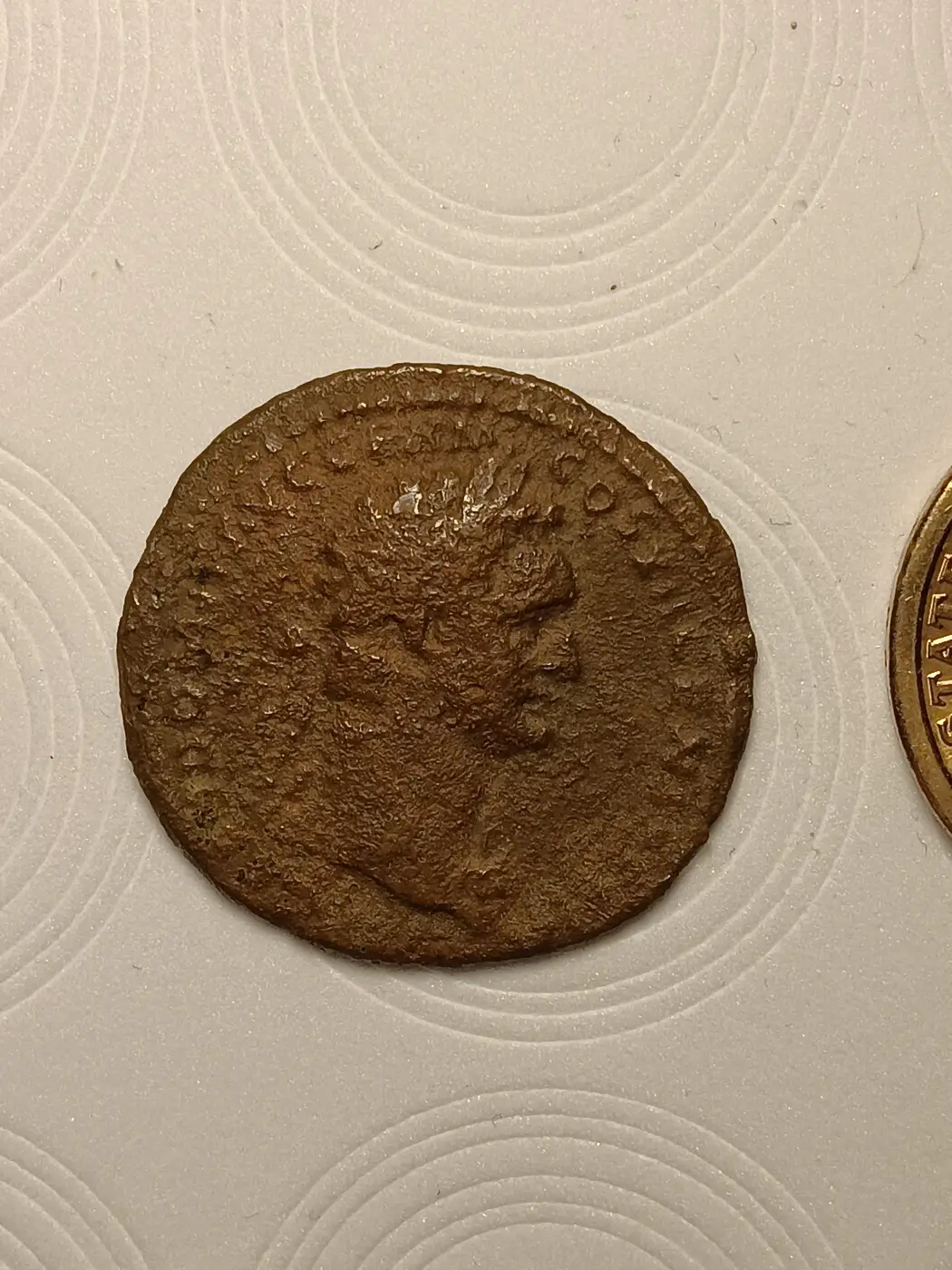
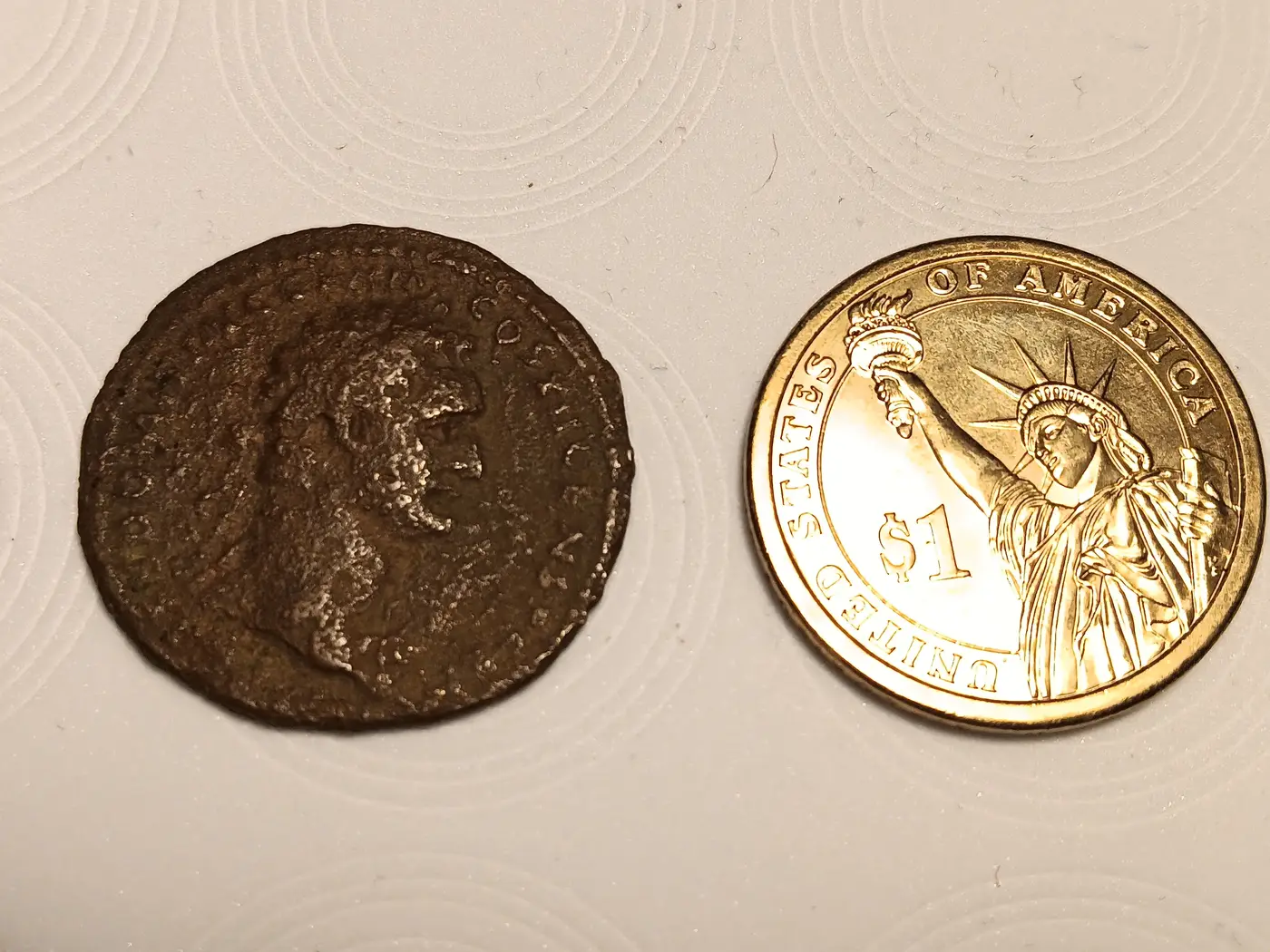
Your coin is indeed ancient. Specifically, ancient Roman. On the obverse we have emperor Domitian (emperor from AD 86 to 91), on the reverse is the minor goddess Annona. In the Roman pantheon, Annona had just one job: she was the goddess responsible for making sure the annual grain shipments from Egypt arrived safely in Rome, thus preventing the city of over a million people from starving.
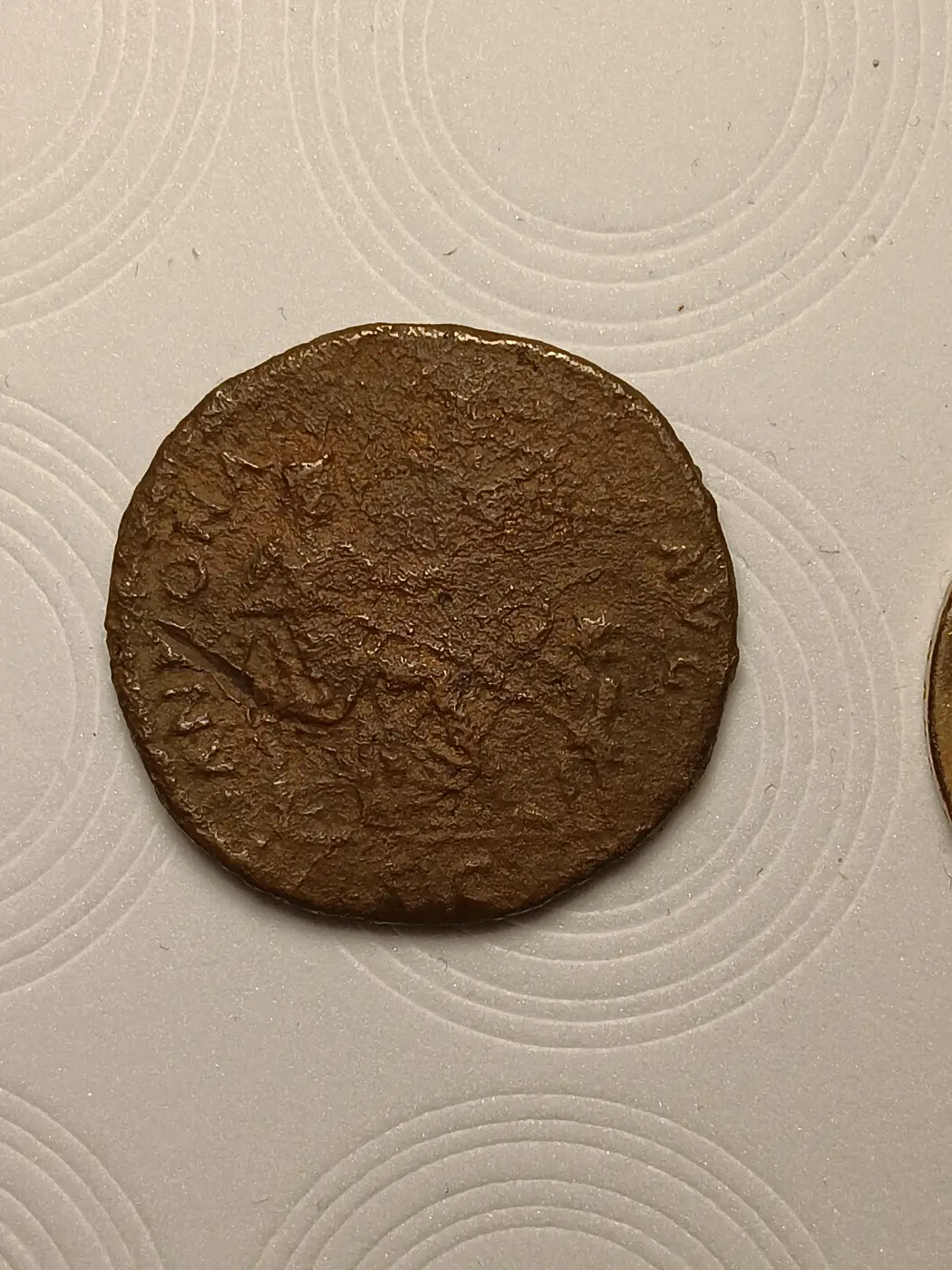
The coin's denomination is an "as", or one-sixteenth of a denarius. The reverse depicts Annona seated, with a ship's prow on the right and a child-sized person from the ship is handing Annona some grain. The imagery is powerful political propaganda for the emperor: "fear not, good citizens, for I your emperor have have acquired Annona'a blessing and ensured that you won't starve".
Most Roman coins don't bear a date like most modern coins do, but this coin is an exception: at one to 2 o'clock int he obverse legend is the phrase "COS XII". Domitian was proclaimed Consul for the 12th time in AD 86, so this narrows down the date for your coin to that year.
Here is a nicer-looking example of the same coin type as yours on ACsearch.info: https://www.acsearch.info/search.html?id=6178887
And so we come to an important question: is your coin genuine? It's always worth considering this, especially for new collectors of ancients who aren't going to know how to tell fake from real. Your coin is in quite bad condition, severely corroded and (by ancient coin collector standards) harshly cleaned. It might be fake, but generally, if you're going to make a fake ancient coin and try to sell it to tourists, you're going to make it look nicer than this because a tourist isn't going to be attracted to this piece looking like this. So my opinion is that it's genuine.
Your coin is indeed ancient. Specifically, ancient Roman. On the obverse we have emperor Domitian (emperor from AD 86 to 91), on the reverse is the minor goddess Annona. In the Roman pantheon, Annona had just one job: she was the goddess responsible for making sure the annual grain shipments from Egypt arrived safely in Rome, thus preventing the city of over a million people from starving.
The coin's denomination is an "as", or one-sixteenth of a denarius. The reverse depicts Annona seated, with a ship's prow on the right and a child-sized person from the ship is handing Annona some grain. The imagery is powerful political propaganda for the emperor: "fear not, good citizens, for I your emperor have have acquired Annona'a blessing and ensured that you won't starve".
Most Roman coins don't bear a date like most modern coins do, but this coin is an exception: at one to 2 o'clock int he obverse legend is the phrase "COS XII". Domitian was proclaimed Consul for the 12th time in AD 86, so this narrows down the date for your coin to that year.
Here is a nicer-looking example of the same coin type as yours on ACsearch.info: https://www.acsearch.info/search.html?id=6178887
And so we come to an important question: is your coin genuine? It's always worth considering this, especially for new collectors of ancients who aren't going to know how to tell fake from real. Your coin is in quite bad condition, severely corroded and (by ancient coin collector standards) harshly cleaned. It might be fake, but generally, if you're going to make a fake ancient coin and try to sell it to tourists, you're going to make it look nicer than this because a tourist isn't going to be attracted to this piece looking like this. So my opinion is that it's genuine.
Don't say "infinitely" when you mean "very"; otherwise, you'll have no word left when you want to talk about something really infinite. - C. S. Lewis


