| Author |
 Replies: 9 / Views: 207 Replies: 9 / Views: 207 |
|
|
New Member
Spain
2 Posts |
Hi everyone, I wanted to share this 1997 round UK one pound coin from my collection. After checking it closely, I believe it features a significant multi-error from The Royal Mint, and I would love to get your expert opinions on it. Here is what I have noticed: • Obverse: Strong die clash marks (ghosting of the lions' limbs) in the left field in front of the Queen's face. The right side of the legend and the "1997" date are almost invisible / extremely weak. • Reverse: Ghosting lines from the Queen's profile behind the top lions, and the "ONE POUND" text at the bottom is heavily faded. • Edge: The "DECUS ET TUTAMEN" inscription is incomplete, leaving a nearly smooth area between the letters (reads like "E _ _ _ UTA"). • Rims: Slight die misalignment on both sides. The coin is uncleaned and shows natural circulation wear, but the clash details are quite sharp under angled light. Does this look like a textbook Die Clash combined with a Weak Strike to you? Any thoughts on its rarity or potential value to UK error collectors would be greatly appreciated! Thanks in advance for your time! 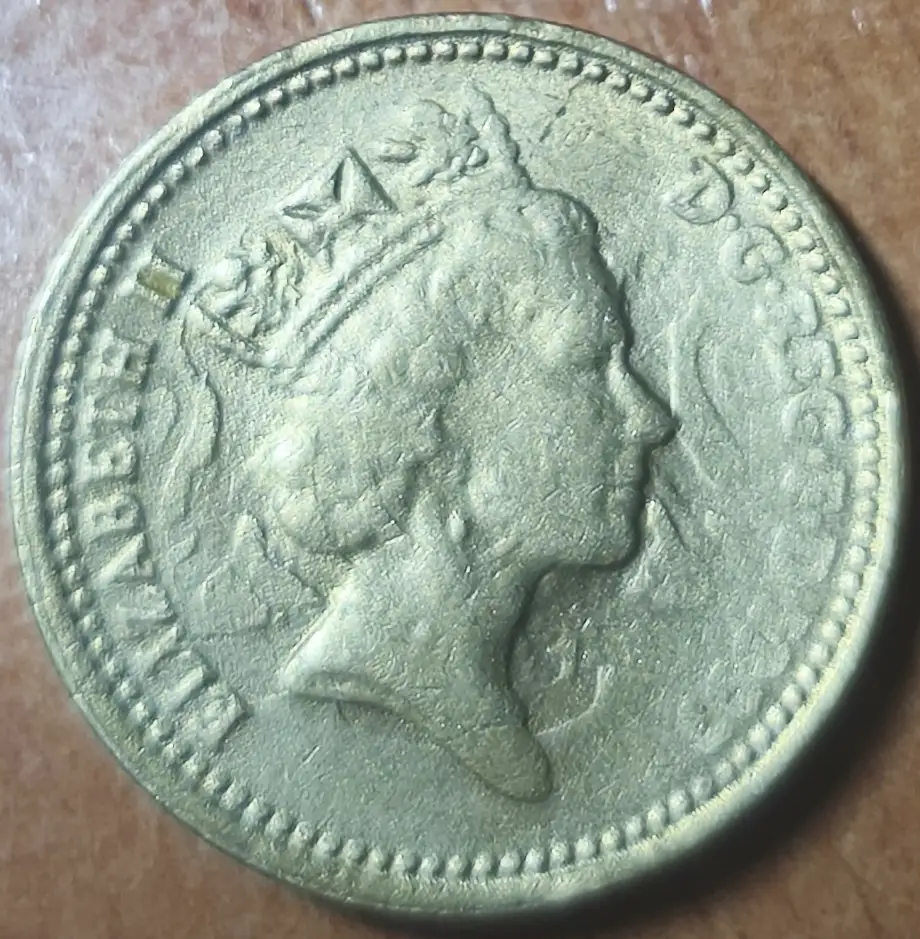 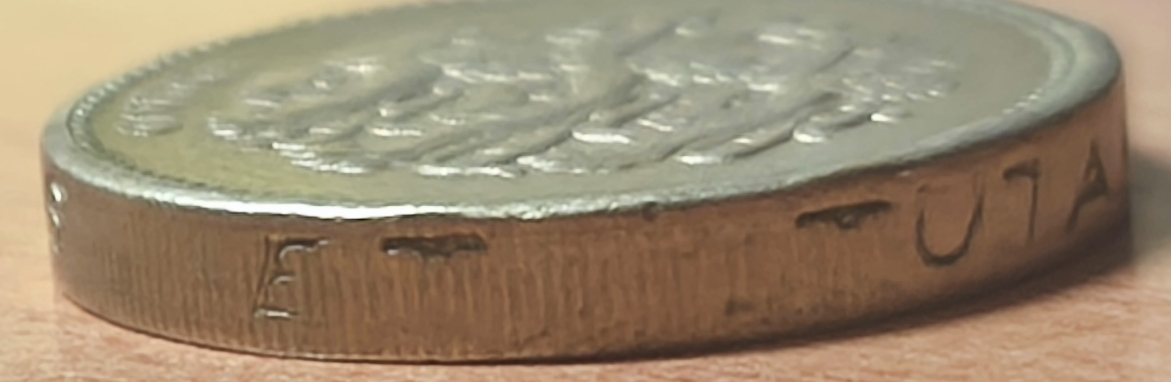 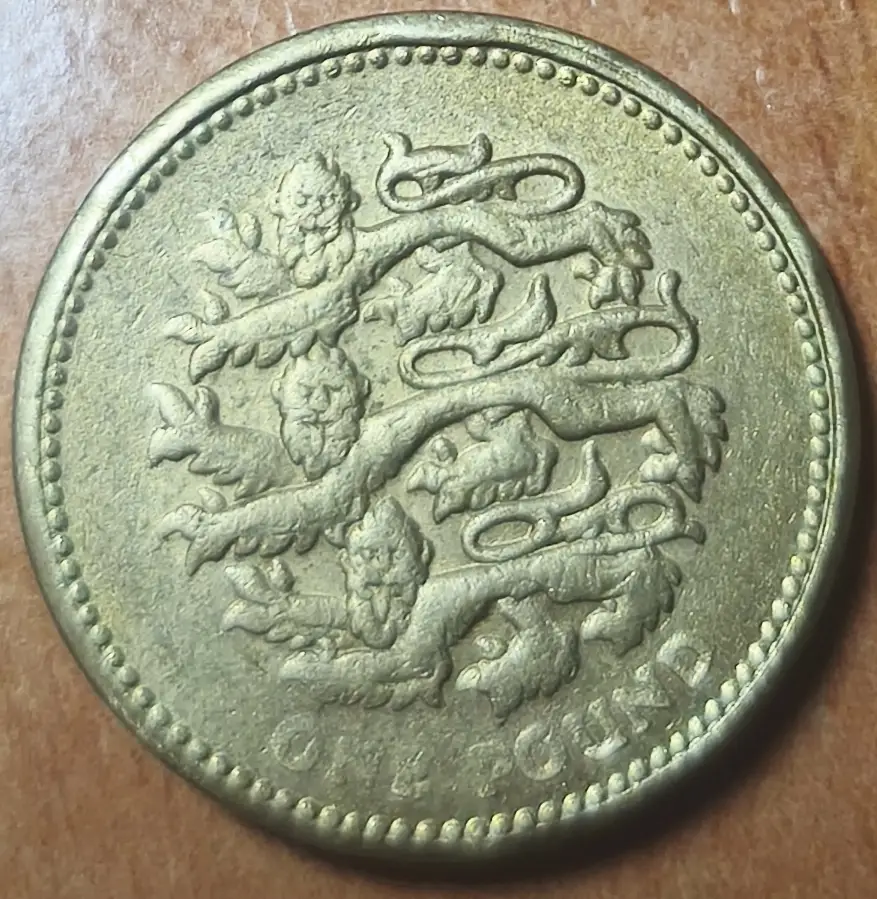 |
|
|
|
Pillar of the Community
 United States
6688 Posts |
While the obverse certainly shows what appears to be a die clash, the reverse doesn't. The coin's features are really mushy, almost like it has been eaten with acid. Is it definitely an authentic coin?
|
|
Bedrock of the Community
United Kingdom
18105 Posts |
Edited by NumisRob
08/02/2026 5:55 pm
|
|
Moderator
 Australia
16920 Posts |
I would agree that all of the "errors" you are pointing at are in fact signs that this coin is a counterfeit.
Fake £1 coins made up a shockingly large percentage of the overall number of £1 coins in circulation - the figure of 3% was floated around in the early 2000s. This was the primary reason why the £1 coin was redesigned and modified in 2017 to add the bimetallic ring and other security features making it harder to counterfeit.
Don't say "infinitely" when you mean "very"; otherwise, you'll have no word left when you want to talk about something really infinite. - C. S. Lewis
|
|
Valued Member
United Kingdom
399 Posts |
Yes. I agree with NumisRob. It's a fake.
|
|
Bedrock of the Community
United States
76406 Posts |
 To CCF! I agree. The mushy and soft details is a tell tale sign of it being counterfeit. Still an interesting counterfeit coin. I'd keep it for Counterfeit Detection purposes. Errers and Varietys.
|
|
Valued Member
United Kingdom
399 Posts |
Yes. I've got a small collection of these. Most of them show flaws of one kind or another. The one illustrated is pretty alarming, which makes it more interesting than most. I'm convinced that The Royal Mint wouldn't have let a genuine one out into circulation with a die lash like that on its obverse. |
|
New Member
 Spain
2 Posts |
Thank you so much for your insight! It's absolutely fascinating to learn that it's a high-quality contemporary counterfeit with its own workshop error.To add a bit more context, I have conducted some physical tests on it, and it behaves exactly like a genuine strike:Magnetism: It is completely non-magnetic (no iron/steel core).Acoustics (Ping Test): It has a very clear, high-pitched, and long-lasting ring, identical to a genuine round pound. It doesn't have the dull thud of a typical lead or cast fake.Weight: It registers at 10g on a standard scale, which aligns closely with the official 9.50g density.Since you mention it is "more interesting than most" due to that alarming die clash on the obverse, what kind of value or interest do pieces with this level of detail usually hold among collectors of contemporary forgeries? I'd love to know more about this niche!
|
|
Moderator
United States
191952 Posts |
to the Community! |
|
Moderator
Australia
16920 Posts |
Finding the "market value" of a fake coin is tricky, because there isn't supposed to be a "market" for them. An issue is, owning a collection of counterfeit coins is somewhat of a legal grey area in Britain - you can possess counterfeit coins with a "lawful excuse", so in theory you might need to prove your bona fides as a coin collector in a court of law if you were ever caught with a quantity of such coins in your possession. Certainly openly "selling" a counterfeit coin is illegal, under any circumstances; the amount of money a counterfeit coin is sold for is irrelevant (though the law is aimed at counterfeiting rings who sell fake coins in bulk for much less than face value). Collectors of fakes in Britain, therefore, tend to assemble their collections from circulation, or they might meet in person at coin clubs to swap and sell. But you won't find fake pounds for sale on British ebay (or at least you shouldn't), since such listings are both illegal and against ebay policy. As you're not in Britain, you might find yourself contending with local laws if you were to try to sell it. For example, in Spain it is illegal to sell counterfeit foreign coins if those coins are still current in their country of purported origin. Since these "old pounds" are no longer legal tender, it might technically be legal - but I wouldn't want to see you wasting time and money proving this in a Spanish court. Anti-counterfeiting laws around the world would say that the safest thing to do is to permanently mark or deface it (such as the American law requiring "COPY" be stamped onto it) so that no future owner could reasonably convince someone else that it was genuine. This would of course negate much of the interest an actual fakes-collector would have for it. Don't say "infinitely" when you mean "very"; otherwise, you'll have no word left when you want to talk about something really infinite. - C. S. Lewis
|
| |
Replies: 9 / Views: 207 |
|










 Posted 08/02/2026 5:52 pm


