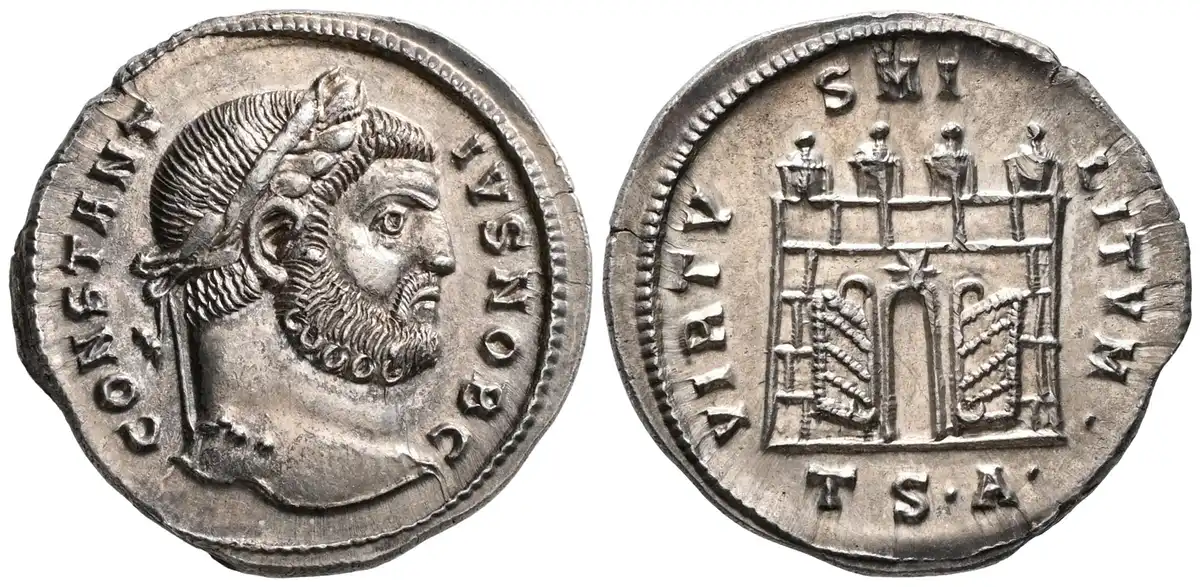
The Romans never enumerated their emperors. For the (quite numerous) instances where different emperors have the same name, you need the wider context of the coin to determine which specific emperor is on any given coin.
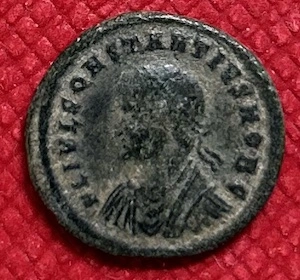
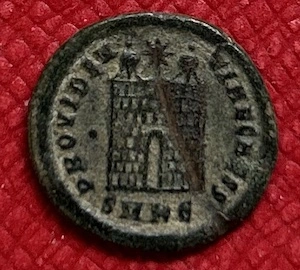
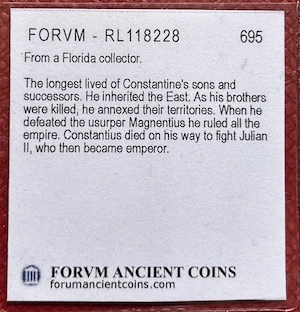
In this instance, Constantius I (also known as Constantius Chlorus) ruled in an earlier time-period, and the "campgate" coins had not yet been invented. Constantius III ruled much later in time, long after the "campgate" series had ceased. So, a coin with an emperor named "CONSTANTIVS" and a campgate must be Constantius II.
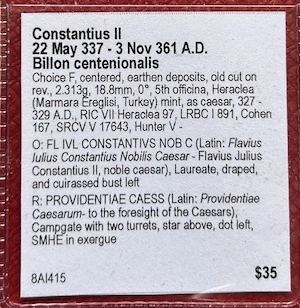
For further evidence, there's always the emperor's names and titles. The emperor on this coin is named "Flavius Julius Constantius"; neiher of the other two contenders have "Julius" (or "IVL" as it appears on this coin) on their coins.
In practice, it's even more complex as it might seem, because sometimes, different emperors with the same name are known by a different name in the history books. For example: "Antoninus Pius". The first emperor by that name was widely regarded as a "good ruler". The two subsequent emperors of that name were widely regarded as "bad rulers", so rather than sully the name of the good ruler, historians of the day (and continuing to the present) call those subsequent emperors "Caracalla" and "Elagabalus" instead of "Antoninus Pius II" and "Antoninus Pius III". But this does mean you will never find a coin with "Caracalla" as the emperor's name; all of Caracalla's coins say "Antoninus".
Don't say "infinitely" when you mean "very"; otherwise, you'll have no word left when you want to talk about something really infinite. - C. S. Lewis








 Replies: 6 / Views: 151




 Posted Yesterday 10:06 pm


 "
" "
"