Okay, I know my post is a little late, and sorry for the bad photos (I wanted to make the photos at a better time than midnight, but didn't get the opportunity).
As I looked at the list of dates, I immediately thought I wouldn't have anything for this one. For my ancient coins collection - at least the part that isn't medieval or BC - 472 is far too late, and 203 is far too early.
Then I realized that I have two Byzantine coins; one of them, as far as I know, doesn't fit in the dates either, but the other fits just fine (probably - some chronologies give a range that doesn't quite include the eruption date, but it's within several years either way).
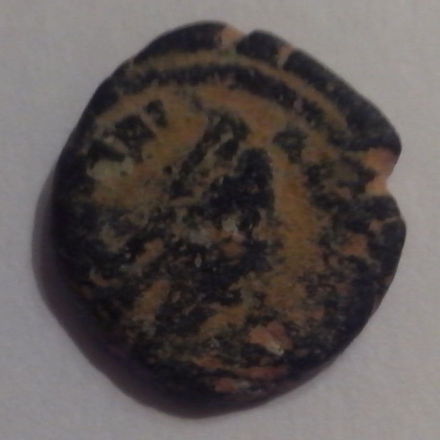
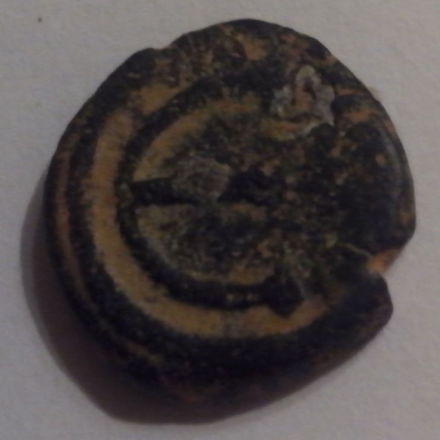
Anastasius I, (post-reform?) pentanummium, 491-518 (note: some sites claim 513-518, which misses the 512 eruption date).
Bust of Anastasius, legend around/large epsilon (referring to the denomination - 5 nummi). Probably Constantinople mint (but I only say that because Wildwinds doesn't have an Antioch type listed - considering the "provenance" of that coin, I hightly suspect it's actually from Antioch).
Sorry for such a bad condition, these tiny coppers got pretty darn awful by the early sixth century

Spoiler: the entry below is
blatant cheating. If you, as in you the organizer of this smackdown, don't like this particular piece of cheating, you can just tell everyone to ignore this entry. Or I suppose you could possibly actually consider it clever

But on with the entry...
...Okay, thought I, but that's only one coin. This is a bit silly. I need another.
By the way - the words "Pompeii eruptions" don't make sense. Pompeii is a city, the mountain is Vesuvius. Wait - surely it had erupted at some point before 79 AD; maybe I have a coin from that period?
That was basically a shot in the dark; I have like two BC-era coins with anything remotely resembling a definite dating (well, there's also the Olbia dolphin, but I've heard figures for that one ranging from the 7th to the 2nd century).
But still, I checked the Wikipedia article on Vesuvius just in case. And it said (I'm slightly paraphrasing) that there "might have been" (from the clues they listed, it sounded pretty likely) an eruption in 217 BC.
Wait, I thought, that's right when the older of my two BC coins in from. Now where was that site I found the date range for it at...
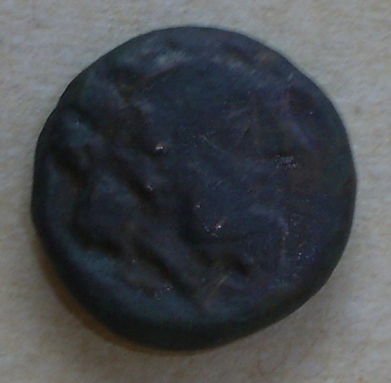
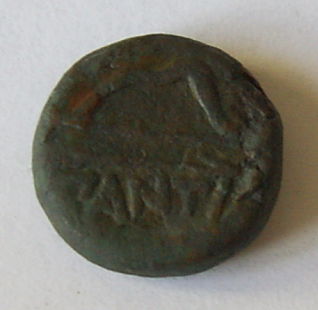
Pantikapaion tetrachalkon?, 220-210 BC.
Head of bearded satyr right/bow, arrow, legend.
Supposedly referenced as Anokhin 145 (whatever the ch*rp
that means).
P.S. Sorry for delaying my post so much... about a hour after even the figure I originally said

(if that's any consolation, in London - or in Illinois for that matter - it's still Friday).






 First Page




 Posted 03/21/2014 11:13 am






 thanks for posting J1M.


