| Author |
 Replies: 57 / Views: 4,681 Replies: 57 / Views: 4,681 |
|
|
|
Pillar of the Community
 United Kingdom
3626 Posts |
Thanks, it is not quite as good as the Diocletian, but the surfaces were different. I am unable to find a reference for it. Left facing with no sceptre over his shoulder. I have been through RIC but can't find a reference to Genius with an altar.
|
|
Pillar of the Community
United States
5155 Posts |
FR?
AN?
Those are easy ones we take for granted sometimes and assume everyone must know.
FR and AN are abbreviations for CCF member's usernames. In this case FR is FVRIVS_RVFVS, a beloved, older, expert, level collector who specializes in coins of Cupric materials and lives by the words"Bronze is Beautiful."
AN is me.
Edited by Ancientnoob
04/14/2015 5:01 pm
|
|
Pillar of the Community
Spain
629 Posts |
sorry, but I´m still laughing myself...
I was looking for cleaning methods abreviatures, chemical products...
How stupid I´m sometimes!
jejejeje
Edited by Athalbert
04/14/2015 5:05 pm
|
|
Pillar of the Community
United Kingdom
3626 Posts |
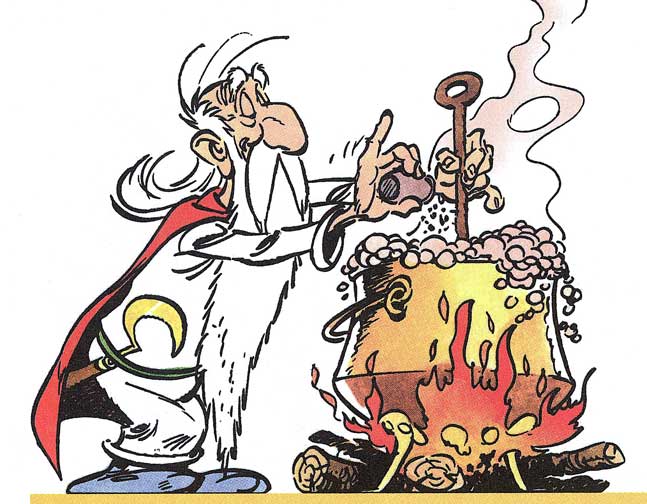
Athalbert, the "soup" is the recipe that FR gave me. He doesn't want it written up on the forum.
|
|
Pillar of the Community
Spain
629 Posts |
|
|
Pillar of the Community
Spain
629 Posts |
But I must say that I can understand him...
jejeje
|
|
Pillar of the Community
United Kingdom
3626 Posts |
|
|
Pillar of the Community
United States
3495 Posts |
I thought that was Redimix ?
Long time since I read the "Indominable Gauls"
I have a few books somewhere
Filed away along with the "Cartoon History of the Universe"
Another must read
|
|
Pillar of the Community
United States
5010 Posts |
fantastic job pish...looks good. looks like the porosity was caused by the BD, you've saved this poor fellow for the time being.
keep an eye on him....that pesky BD tends to come back.
|
|
Pillar of the Community
Spain
629 Posts |
To Furyus:
Yes, I suppose so but his name in Spanish cartoons was "Panoramix"
|
|
Pillar of the Community
United States
949 Posts |
After all the oohing and aahhhing over the work that went into this coin, my comment is probably going to fall on deaf ears, but as a responsible conservator of the material in my care I feel it necessary to point this out. I do not wish to embarrass anyone or make any enemies over it. There's nothing personal here.
If you look at the surface of the coin in the "before" picture you will see a glossy sheen to the coin. Easiest to see in the forehead and around the eye. Some of you referred to it, but not by name. That glossy look is natural patina, and you always want to clean a coin in such a way as to preserve that. It is the patina that has protected the coin for the past 1500 years during its time in the ground. Patina is a chemical reaction between the outer surface of the coin and certain chemicals (mainly carbonates) in the soil. Part of the coin metal is "converted" into patina, and supplemented, so if you remove that you have altered/reduced the composition of the coin.
As you can see from the first of the "after" pictures, and all which follow, that glossy look on this coin is now gone. The unidentified "soup" has stripped this coin of its natural patina, and that shows in the final pic. To be sure, the unsightly surface debris is gone, but the coin has been seriously injured. Fortunately this is RIC VI 113b for the first officina at Lyon (Lugdunum)which is listed as a very common variety. Few would ever miss it. But this problem need not have happened.
If this coin had come into my hands and I sought to make it more presentable, I would not have used a chemical means to do it. That is the quick approach for those in a hurry, but the coin usually suffers when harsh chemical(s) are used along with scrubbing with bronze or stiff plastic bristle brushes. There is only one tool combo I would have used or recommended for this coin, and I guarantee it would have come clean and kept its patina. But it is not a tool for beginners - it takes practice to learn the touch, and you would not use it for coins still enveloped in encrustation. Yet for verdigris and other mineral deposits on the surface (not bronze disease) as well as soil adhering to the true patina, the tool combination of choice has to be the microscope and needle. [I'll pause here for you to gasp or guffaw or otherwise express doubt, bewilderment or disbelief.]
Any time a coin with sound patina needs a final touchup my tool of choice has been a microscope and needle for the past 30 years. You'd think it would scratch hey out of the surface, but in the hands of someone who knows how to do it, you'd be wrong. Bronze stands up to that so well that normally the needle does not break the patina at all. Silver is far more delicate but I have successfully used the needle with silver coins as well. It can be done. And for the good of preserving natural patina, I recommend that you master the technique of using the microscope and needle for the most delicate cleaning.
Edit: BTW that green stuff on the surface was NOT bronze disease, it was verdigris, and it was not a further threat to the coin. Verdigris is a mineral deposit, bronze disease is a form of oxidation (actually via chlorides) that alters the chemical composition of the metal a bit at a time. Technically verdigris does that too, but only so long as the coin continues in contact with the minerals that were producing the verdigris reaction in the first place. Acetic acid will produce an acetate verdigris on copper coins, so if that is in the air, then the coin needs to be shielded. But now I digress.
Edited by lrbguy
04/16/2015 11:54 am
|
|
Valued Member
United States
129 Posts |
lrbguy, are you saying that you would also avoid treatment in distilled water and/or olive oil? just curious.
|
|
Pillar of the Community
United Kingdom
3626 Posts |
lrbguy thank you for your comments and input.
For your information I normally clean under the scope with a scalpel or needle. This coin had verdigris which I wanted to remove. It also had BD which has been treated with verdi-care.
You certainly haven't made any enemies, we all welcome a frank and open discussion.
|
|
Pillar of the Community
United States
949 Posts |
Thanks for asking, cap'n. This is not an all-or-nothing proposition, as if I thought that the manual approach were the ONLY approach. With coins that are fully encrusted in a hard matrix I have been known to use a dropper and concentrated hydrochloric acid if the matrix would respond to it. But if that acid were to hit the coin metal, bronze disease would not be far behind. Distilled water is great for controlling the action of a solvent, for an initial cleaning of practically any coin, and even as a longer term solvent in some cases. But even with that you need to stay on top of how the coin is responding to it and make sure not to overdo it.
Olive oil and renaissance wax can do a lot of good, but I have had coins (that I neglected) sit in olive oil too long and darken. But by the same token, I am not at all averse to using small amounts of olive oil on a Q-tip to help smooth out a surface or by rubbing a coin drenched in it between the fingers. The nature of the problem will determine the nature of the solution. And I do mean NATURE.
We have lots of tools to do the conservation job, and it pays to know what they do and how to control them so the "patient" is not harmed. All I was saying in my earlier post is that for me, a patient that presents with these symptoms goes under the microscope for surgery.
|
|
Moderator
 United States
23731 Posts |
Irbguy, I've never been a proponent of using chemicals to clear, but over the last few years several solutions have been developed that clean the coin without harming the patina and surface. I'm from the old school though, after washing whatever loose dirt with mild soak a water drying the coin I have solely used olive oil and picks to do the tough cleaning. While most feel that distilled water is the preferred method of soaking. While it may work, it takes a very long time. Olive oil on the other hand works much quicker to soften the hard material. The draw back is that as you say it does tend to darken the coin if left in too long. A good microscope is also a must along with something the help hold the coin steady while cleaning. I use to work on old pocket watches and have movement holders that work perfect for that.
|
| |
Replies: 57 / Views: 4,681 |








 First Page


 Posted 04/14/2015 5:00 pm